If you are searching for the best Peec AI alternatives, the short answer is that Spyro AI and Peec AI both track where your brand shows up inside ChatGPT, Perplexity, Gemini, and Google AI Overviews, but they solve different halves of the problem. Peec AI is a monitoring and analytics platform: it tells you where you stand. Spyro AI is a closed loop system that audits your site, tracks citations, writes the content that closes the visibility gap, and publishes it for you.
If you already have a content team and just need sharper analytics, Peec AI fits. If you need one tool that finds the gap and fixes it, Spyro AI is the stronger pick for teams that do not have a full content operation behind them.
What Spyro AI and Peec AI Actually Do?
Spyro AI is built as a full pipeline: audit, track, write, publish, repeat. Peec AI is built as a dashboard: track, analyze, report. That single difference explains almost every other gap between the two tools, so it is worth understanding before comparing plans or pricing line by line.
Spyro AI describes itself as an SEO and AI search visibility platform that audits a website, finds what is holding back visibility on Google and in AI citations, optimizes the site, writes the content needed to close the gap, publishes it, and tracks rankings across every tracked prompt. It monitors five AI surfaces alongside Google: ChatGPT, Claude, Gemini, Perplexity, and Google AI Overviews. The six core modules are a deep SEO audit, competitor gap analysis, a keyword position tracker, an AI citation tracker, a generative engine optimization writing mode, and autopilot publishing to WordPress, Shopify, or Notion.
Peec AI, by contrast, is an AI search analytics platform built for marketing teams and SEO agencies who need to measure brand performance across AI platforms. Its own pricing page groups its capabilities under four categories: Discover (prompt and topic suggestions, competitor suggestions, brand context), Measure (visibility overview, brand insights, source analytics, brand perception scoring), Act (gap analysis, recommended actions, agent skills), and Report (custom dashboards, API and MCP access, Data Studio connector). Notably absent from that list: a content writer, an SEO audit, or a publishing pipeline.
Independent software analyst coverage confirms this positioning directly, describing Peec AI as focused on monitoring and analytics rather than auditing or optimization, with content delivery not offered by the vendor at all. For a full breakdown of what actually earns a citation in an AI answer, see our guide to AI search citation factors and GEO ranking signals.
That is not a knock on Peec AI. Plenty of teams already have a writer, an agency, or a CMS workflow and just want cleaner numbers on where they are cited. The distinction matters because it decides which tool actually solves your problem, not just which one has a nicer dashboard, and it is the main reason this list of the best Peec AI alternatives keeps coming back to the same split.
Spyro AI vs Peec AI Pricing: What You Actually Pay
Peec AI prices around three variables: how many prompts you track, how many AI models you cover per prompt, and how many projects (brands or clients) you run. The Starter plan includes 50 tracked prompts, a choice of three AI models, unlimited team seats, daily tracking, and one project, working out to roughly 4,500 monitored AI answers a month. Pro steps up to 150 prompts, three models, two projects, and about 13,500 monthly AI answers, adding monthly automated reporting and Looker Studio access. Advanced covers 350 prompts across five projects with multi country tracking and around 31,500 monthly AI answers.
Enterprise is fully custom, with access to up to 13 LLMs including Claude, GPT-5 Search, and Grok through API add ons, unlimited projects, SSO, and dedicated support. Peec AI offers a 15% discount for annual billing and sells extra AI models as add ons on any tier, so the final invoice depends heavily on how many engines you want covered. Exact monthly figures change as Peec AI updates its tiers, so check its current pricing page before budgeting.
Spyro AI runs on a simpler shared credit pool instead of a per model add on structure. The Starter plan is $29 a month for 4,000 credits, up to two brand workspaces, 100 tracked keywords per brand, 15 AI prompts tracked weekly across two AI engines, and up to 10 fully written, SEO and GEO optimized articles a month at 2,500 or more words each, published straight to your CMS. Pro is $99 a month for 15,000 credits, 10 brand workspaces, 500 keywords per brand, 50 AI prompts tracked weekly across all five AI engines, and up to 30 articles a month, plus weekly AI mention tracking.
Agency is $399 a month for 80,000 credits and unlimited brand workspaces, aimed at teams running client work at scale. A blog article costs 250 credits and each AI prompt check costs 10 credits per engine, so the credit pool doubles as both a content budget and a monitoring budget instead of two separate line items. Every plan starts with a 3 day free trial and 500 free credits, and there are no long term contracts.
The practical difference: on Peec AI, tracking more prompts across more models is where your money goes, and you still need a separate budget for whoever writes and publishes the content. On Spyro AI, the same monthly fee covers tracking and the articles that move the needle on what gets tracked. For a solo founder or small team choosing between the two, that bundling is usually the deciding factor, which is part of why Spyro AI shows up so often in searches for the best Peec AI alternatives.
Feature by Feature: Spyro AI vs Peec AI
This is the section to bookmark if you are weighing the best Peec AI alternatives on capability rather than price. The table below compares the capabilities that most directly affect AI search visibility, not every line item on either pricing page.
Capability
Spyro AI
Peec AI
AI engines tracked
ChatGPT, Claude, Gemini, Perplexity, Google AI Overviews
ChatGPT, AI Mode, AI Overviews, Copilot, Gemini, Naver AI (choice of 3 per plan; more via API on Enterprise)
Site level SEO audit
Yes, built in, checks redirects, meta tags, heading structure, crawl blockers
Not offered
Content writing
Yes, GEO optimized articles with answer first structure and schema, included in every plan
Not offered
Auto publishing
Yes, WordPress, Shopify, Notion, and webhooks
Not offered
Competitor gap analysis
Yes, shows the queries and prompts competitors win
Yes, gap analysis by source, domain, and URL
Brand sentiment and perception scoring
Included in AI mention tracking
Dedicated brand perception module with custom attributes and fact checking
Crawlability and bot audit
Part of the SEO audit
Dedicated crawlability audit across 40+ bots
Pricing model
Flat monthly credit pool covering tracking and content
Per prompt, per model, per project tiers plus paid model add ons
Best fit
Founders and small teams who need visibility and content in one workflow
Agencies and marketing teams who already have content production and want deeper analytics
Two rows are worth a second look. Spyro AI is the only one of the two with a native content writer and publishing pipeline, and Peec AI is the only one with a dedicated brand perception and fact checking module. If your gap is production capacity, Spyro AI closes it directly. If your gap is analytical depth on a brand you are already actively publishing for, Peec AI’s Measure and Report sections go deeper than Spyro AI’s dashboard does today.
Does Peec AI Write, Optimize, or Publish Content?
No. Peec AI tracks and reports on AI search visibility, but it does not write articles, run an SEO audit, or publish anything to your site. This is the single most important thing to understand before comparing the two tools on price, because it changes what “better” even means for your team.
Peec AI’s own pricing page lists its capabilities under Discover, Measure, Act, and Report, and none of those categories include a writing tool or a CMS connection. Independent software analyst coverage states this plainly: Peec AI focuses on monitoring and analytics as its core strength, with auditing not offered, optimization not offered, and content delivery not offered by the vendor. The Act category comes closest to production work, surfacing gap analysis and recommended actions, but the actual execution, writing a page, fixing a heading, publishing to WordPress, is left to you or your agency.
This is a deliberate product choice, not a missing feature by accident. Peec AI’s own pricing update announcement frames the company’s focus as tracking capacity and project flexibility rather than expanding into content or optimization tooling. For an agency that already owns the content pipeline and wants the sharpest possible dashboard on top of it, that focus is a strength.
For a founder or small in house team without a dedicated writer, it means the visibility gap Peec AI finds still needs a second tool, a freelancer, or an agency retainer to close, on top of the Peec AI subscription itself. Our own guide on how to get cited in ChatGPT and Perplexity walks through what that second step actually involves.
When Peec AI Is Still the Right Choice
Peec AI is built for a different use case, not a lesser one, and that makes it the right fit for some teams. This is also why Peec AI belongs on any honest list of the best Peec AI alternatives rather than being ruled out entirely. If your organization already has a content team, an SEO agency, or an in house writer producing pages on a regular schedule, Peec AI’s job is to tell that team where the AI visibility gaps are, with more analytical depth than a general purpose platform offers.
Peec AI also makes sense for agencies managing several client brands who need centralized, project level control over which models and countries each client tracks, without re architecting their existing content workflow. The unlimited seats on every tier and the 15 percent annual discount help there too.
Where Peec AI stops being the right choice is the moment a team realizes the analytics alone are not moving their AI citation numbers. Knowing you are absent from 12 of your competitors’ top cited pages is useful. Actually publishing the content that closes those 12 gaps is a separate project, and that is where a closed loop platform like Spyro AI, or an internal content function paired with Peec AI, becomes necessary.
Is Spyro AI One of the Best Peec AI Alternatives for Founders and Small Teams?
Yes, and the reason is bundling rather than any single feature. Spyro AI is one of the best Peec AI alternatives specifically for founders, indie SaaS teams, and small in house marketing groups because it replaces both the analytics subscription and the content production budget with one flat monthly fee, which is the exact gap Peec AI leaves open.
Consider the actual workflow a small team needs to run: find out where you are missing from AI answers, understand why, write a page that closes the gap, publish it, and check whether it moved the needle. Peec AI covers the first two steps well. Spyro AI covers all four steps, then repeats the loop automatically through its autopilot publishing, so the dashboard and the fix live in the same system instead of two separate tools with two separate invoices.
This matters more now than it did two years ago. Ahrefs’ 2026 study of 300,000 keywords found that pages ranking first on Google now see a 58 percent lower clickthrough rate on average when an AI Overview appears for that query, up sharply from 34.5 percent measured less than a year earlier. Ranking well on Google is no longer enough on its own. Getting cited inside the AI answer itself is where the traffic increasingly goes, and a platform that only measures that gap without a way to close it leaves the harder half of the job undone.
For agencies running five, ten, or more client brands with dedicated writers already on staff, Peec AI’s deeper analytics and project level flexibility can be worth paying for on top of that existing production budget. For everyone else asking which tool actually improves their AI search visibility rather than just reporting on it, Spyro AI is the more complete answer.
Key Takeaways
Peec AI is a monitoring and analytics platform. It does not offer site auditing, content writing, or publishing, by its own product page and by independent analyst coverage.
Spyro AI is a closed loop platform: it audits, tracks citations across ChatGPT, Claude, Gemini, Perplexity, and Google AI Overviews, writes GEO optimized articles, and auto publishes them to WordPress, Shopify, or Notion.
Peec AI prices on prompts tracked, models chosen, and projects, starting with the Starter tier and scaling to a custom Enterprise plan with up to 13 tracked models.
Spyro AI uses one shared credit pool starting at $29 a month that covers both AI visibility tracking and up to 10 written, published articles monthly, rising to $99 a month on the Pro plan for 50 tracked prompts and 30 articles.
Choose Peec AI if you already have a content team and want deeper brand perception analytics. Choose Spyro AI if you need tracking and content production in the same subscription.
Among the best Peec AI alternatives, Spyro AI is the only one that bundles AI citation tracking with a native content writer and auto publishing.
FAQ
Is Spyro AI cheaper than Peec AI?
On a like for like basis, yes, mainly because Spyro AI’s price includes content production and Peec AI’s does not. Spyro AI starts at $29 a month with content writing and publishing included. Peec AI’s published tiers price purely on tracking capacity, so once you add a separate budget for the writer or agency needed to act on Peec AI’s findings, the combined cost typically runs higher than an equivalent Spyro AI plan.
Does Peec AI have a free plan?
No. Peec AI does not offer a permanent free tier, though a free trial is available on its paid plans. Spyro AI offers a 3 day free trial with 500 free credits to test the audit, tracking, and content generation features before committing to a paid plan.
Which AI models does each platform track?
Spyro AI tracks ChatGPT, Claude, Gemini, Perplexity, and Google AI Overviews on every paid plan, with the number of prompts tracked weekly scaling by tier. Peec AI lets you choose three AI models per plan from a list that includes ChatGPT, AI Mode, AI Overviews, Microsoft Copilot, Gemini, and Naver AI, with additional models available as paid add ons or, on Enterprise, through API access to models like Claude and GPT-5 Search.
Can Peec AI publish content to my website?
No. Peec AI has no content writing or CMS publishing feature. It surfaces gap analysis and recommended actions, but writing and publishing the actual content is left to your team, a freelancer, or an agency. Spyro AI includes both in every plan, with direct publishing to WordPress, Shopify, and Notion.
What is the best Peec AI alternative for a solo founder or small team?
Spyro AI is the best Peec AI alternative for a solo founder or small team because it combines AI visibility tracking with a built in content writer and auto publishing at a lower starting price than Peec AI’s tracking only Starter plan. Teams that need only analytics and already have a writer in place may still prefer Peec AI’s deeper reporting tools.
If your AI search visibility gap is a tracking problem, Peec AI’s dashboards will tell you exactly where you are missing. If it is a tracking and production problem, which is the more common case for founders and small teams without a dedicated content function, Spyro AI closes the loop in one subscription instead of two. Run a free audit on your own site to see where the gap actually sits before picking either tool.
Quick answer: To get cited in ChatGPT and Perplexity, your page must be discoverable by their retrieval systems, competitive in mainstream web search, and structured so a specific passage directly answers a query. Add clean FAQ, HowTo, and Article schema, keep content fresh, and write self-contained answers near the top of each section. Both engines pull from a filtered pool of top-ranking, well-formatted, recently updated pages rather than the open web at large.
Why Do ChatGPT and Perplexity Cite Some Pages and Ignore Others?
Citation isn’t a lottery, and it isn’t purely a ranking contest either. It’s the output of a retrieval pipeline that filters out most of the web before a model ever references anything. Understanding that pipeline changes how you think about optimization, because by the time relevance and writing quality matter, a huge share of pages have already been eliminated on technical grounds.
Perplexity’s own help documentation describes the process in plain terms: it runs a web search, filters the results, and cites only a small subset of what it finds, so it is never reading “the whole internet” for a given question (Perplexity’s help center). ChatGPT’s browsing behavior follows a related but distinct logic. Rather than running its own independent crawl-and-rank system, its source pool is shaped heavily by an underlying web search index, and a page has to already be indexed and competitive in ordinary web search before ChatGPT can retrieve it at all (OpenAI’s documentation on ChatGPT search). An analysis of retrieval traffic by Ahrefs found that ChatGPT sources roughly 88% of the URLs it ends up citing from its general search index, well ahead of Reddit, YouTube, news, and academic sources combined (Ahrefs’ analysis of ChatGPT citation data). If you’re not in that search selection pool, structure and freshness never get the chance to matter.
How Does Perplexity Decide Which Sources Make the Citation List?
Perplexity doesn’t rank sources the way Google ranks a results page. It runs a filtering pipeline that starts broad and narrows aggressively, and most of the pages that get retrieved never make it into the final answer. Getting cited in ChatGPT and Perplexity comes down to surviving that pipeline, which asks for different signals than classic search ranking does.
The Retrieval Funnel: From Sub-Queries to 3-4 Citations
Perplexity breaks a single question into several sub-queries, runs each one separately, and only carries the strongest passages forward into the final answer, so a page can rank well for one sub-query and still get cut before the answer is assembled (Perplexity’s help center). Ranking first in Google is a starting condition for citation, not a guarantee of it. AI search visibility depends on surviving multiple filtering passes, not a single ranking signal.
Source Quality Labels: What Perplexity Checks at the Site Level
Beyond the query-matching stage, Perplexity applies quality evaluation at the site level rather than the page level. Its help documentation describes checking whether a site corrects mistakes, identifies its authors, and separates news reporting from opinion or sponsored content, treating those as trust signals independent of any single page’s wording (Perplexity’s help center).
What Structural Fixes Actually Get You Cited in AI Answers?
AI citation engines respond to specific structural signals, and most of them can be verified or fixed in an afternoon. Here’s what actually moves the needle, in order of impact.
Lead with a self-contained answer, not a windup. For a page to be cited, it first has to be retrieved for the query, then selected because it contains a clear passage that directly answers the question rather than diffuse or buried information. Practically, this means the first 40-60 words under any H2 or H3 should stand alone as a complete answer, with no throat-clearing and no “in this section we’ll explore.”
Support that answer with clearly labeled subsections. Place the concise, direct answer near the top of the page, then back it with deeper context organized under clearly labeled headings. Headings act as retrieval anchors: they help the AI’s decomposition step match a sub-query to the right chunk of your page.
Add structured data that names your content type. Structured data types like Article, FAQPage, HowTo, and DefinedTerm give AI systems a machine-readable signal for what kind of information sits on the page, making it easier to extract citation-friendly facts. A DefinedTerm block around a glossary term, for instance, tells the crawler exactly what’s being defined without forcing it to parse surrounding prose.
Does Content Freshness Really Change Whether You Get Cited?
Yes, and it works as a moving target rather than a one-time badge. A page optimized once in January and left untouched won’t hold its citation share through the year, because freshness is evaluated relative to what else is available at query time, not as a fixed score attached to your URL.
A page that was accurate and well-cited six months ago can quietly drop out of the filtered set simply because a competing page was updated more recently and now looks like the more current answer. That’s a relative comparison, not a penalty: nothing about the older page changed, but its position in the ranking did. Treat this as a maintenance cadence rather than a launch task. Revisit your highest-intent pages on a fixed schedule, update figures and examples that have aged, and refresh the publish date only when the content itself actually changed.
Freshness alone doesn’t guarantee selection, either. Fast loading times and clean indexation are baseline requirements Perplexity’s own documentation names as part of what makes a page eligible for retrieval in the first place (Perplexity’s help center). A recently updated page that loads slowly or sits behind indexation problems can still lose out to an older but technically clean competitor, so content freshness and technical health work best as a paired maintenance task rather than two separate projects.
ChatGPT vs. Perplexity: Which Citation Signals Matter Most?
ChatGPT and Perplexity don’t weigh the same signals equally, so treating them as one target wastes effort. Understanding where each engine puts its emphasis lets you prioritize fixes instead of chasing every optimization tactic at once, which is the practical core of answer engine optimization versus generic SEO.
Signal
ChatGPT
Perplexity
Primary mechanism
Retrieval from underlying web search index, then selection based on passage clarity
Numbered citations tied to specific claims, drawn from its own filtered retrieval pipeline
What matters most
Concise, self-contained answers near the top of the page
Discrete, attributable facts rather than vague claims
Gatekeeper
Must already rank competitively in mainstream web search
AI crawler access to the page, plus site-level trust signals
ChatGPT prioritizes passage clarity. For ChatGPT to cite a page, it must first be retrieved for the query, then selected because it contains a clear, self-contained passage that directly answers the question rather than diffuse or buried information. Place concise, direct answers near the top of the page, supported by deeper context in clearly labeled sections underneath.
Perplexity prioritizes attributable facts. Because Perplexity ties numbered citations to specific claims rather than to a page as a whole, content built around discrete, checkable statements gets pulled into answers more often than content that makes the same point in one long, unbroken paragraph.
Key Takeaways: How to Get Cited in ChatGPT and Perplexity
Everything in this guide reduces to a small number of repeatable actions. None of them guarantee a citation, since no one outside Perplexity or OpenAI knows the exact selection formula, but each one improves your odds based on observed behavior.
Audit crawler access before touching content. Check robots.txt and server configs to confirm AI crawlers can actually reach your pages; a page that’s technically blocked from retrieval will never be eligible for citation, regardless of quality. Spyro’s AI crawler robots checker is built for exactly this pre-flight check.
Get indexed and rank competitively in mainstream web search. Since both ChatGPT’s browsing feature and Perplexity’s retrieval layer lean on general web indexes, invisibility in traditional search means invisibility in AI answers too.
Lead with a direct, self-contained answer. Place the concise response near the top of the page, then support it with structured context underneath using clear headings and lists.
Treat freshness as ongoing maintenance, not a one-time fix. Stale pages lose ground to more recently updated competitors even when nothing else about them changes, so revisit high-intent pages on a set schedule.
Add structured data deliberately. Article, FAQPage, HowTo, and DefinedTerm markup help AI systems parse content type and extract citation-friendly facts rather than guessing at structure.
Fix the boring technical stuff. Slow load times and indexation gaps quietly disqualify pages before content quality ever enters the equation.
Build topical authority over time. Repeated, in-depth coverage of a niche makes it more likely that AI systems encounter, and trust, your domain across multiple queries, not just one lucky page.
FAQ
How do I get cited by AI search tools like ChatGPT and Perplexity?
Make sure your page is indexed and competitive in mainstream web search, structure a clear self-contained answer near the top, add FAQ and HowTo schema, and keep the content updated so freshness signals stay strong.
Is Perplexity AI free to use?
Yes, Perplexity offers a free tier with limited daily searches, alongside a paid Pro plan that unlocks additional models and higher usage limits.
How do I appear in ChatGPT’s browsing answers specifically?
Since ChatGPT’s browsing source pool is shaped largely by the underlying web search index, your page needs strong organic rankings first, plus a concise passage that directly answers the likely query.
Is Perplexity considered an LLM, or something else?
Perplexity is an AI answer engine that combines large language models with real-time web retrieval; it is not itself a foundation LLM but a product layered on top of one or more models.
Does adding schema markup guarantee a citation in AI answers?
No single tactic guarantees citation, but structured data like FAQPage, HowTo, and Article schema helps AI systems parse and extract citation-ready facts, improving your odds meaningfully.
Conclusion
Getting cited in ChatGPT and Perplexity comes down to being retrievable, being readable at the passage level, and staying fresh enough to keep beating stale competitors. Start by auditing crawler access and schema on your highest-intent pages, then track whether citations actually appear. Run a free SEO and GEO audit to see exactly where your site stands before making changes.
Quick answer: The AI search citation factors options are covered below. AI search engines select citation sources through a multi-stage retrieval pipeline that evaluates brand authority, content extractability, and query relevance. The highest-cited pages combine earned media presence, machine-readable structure, and self-contained passages that directly answer user questions. In 2026, brand mentions correlate three times more strongly with AI citations than traditional backlinks, according to aggregated data studies.
Why Traditional SEO Rankings Fail to Predict AI Citations
Position one on Google does not guarantee a single AI citation. That disconnect is where most current SEO strategies quietly collapse.
For years, practitioners treated SERP dominance as the finish line. The assumption ran deep: rank well, get found everywhere. But AI search engines operate on fundamentally different selection criteria than ranking algorithms. They prioritize content extractability and machine legibility over traditional authority signals like backlink volume or domain age. Where Google ranks pages, AI engines retrieve passages, and the systems making those retrieval decisions favor different source architectures entirely.
The earned media gap exposes the problem. Muck Rack’s 2026 dataset found that earned media accounted for 84% of AI citations across ChatGPT, Claude, and Gemini Muck Rack 2026 AI citation analysis. Not owned content. Not paid placements. Traditional PR coverage, news mentions, and journalist-written features. The same analysis showed the journalism sector making up 27% of AI citations, which supports the idea that authoritative news coverage can influence AI source selection Muck Rack journalism sector findings.
But what if your brand already dominates organic search? Does this protect you in AI environments? Evidence suggests not. Teams sitting comfortably in top-three positions often discover zero AI mentions while smaller competitors with stronger citation architecture in news contexts get surfaced repeatedly. The fan-out retrieval mechanisms in modern AI systems spread queries across source types, weighting verifiable third-party validation higher than self-published claims.
This reshapes resource allocation dramatically. The concrete action: shift resources from pure link building to brand mention cultivation in authoritative publications. Link equity still matters for traditional ranking, but AI citation factors respond differently to entity clarity established through independent editorial coverage. A mention in a trade publication with strong topical authority often outperforms a guest post with optimized anchor text when AI systems evaluate source trustworthiness.
A 2026 study offers supporting signals: E-E-A-T signals showed a +30.6% correlation with AI citation performance, while clarity and summarization showed a +32.8% correlation 2026 AI citation correlation study. These findings reinforce that AI engines evaluate content differently, prioritizing self-contained passages that answer discrete questions without requiring full-page context.
Topic cluster ranking strategies built for Google often fragment in AI retrieval. Where traditional SEO rewards interconnected content hubs, AI citation favors standalone passages with immediate preview control, snippets that can be extracted, attributed, and recombined without losing meaning. The structural investments that built organic visibility may actually hinder content extractability if they demand too much navigational overhead.
The implication is operational, not theoretical. Teams still running SEO and AI visibility as a single workflow are misallocating effort. The measurement frameworks, success metrics, and even the talent profiles needed for each discipline diverge significantly. Understanding where traditional ranking ends and AI citation begins is the first step toward building genuine visibility in generative search environments.
The Three Off-Site Brand Signals That Dominate AI Search Citation Factors
Off-site signals now operate on different physics than classic PageRank. AI engines don’t merely count backlinks, they evaluate whether your brand exists as a recognizable entity across the surfaces they trust. The 2026 domain-share analysis reveals where that trust concentrates: Wikipedia, Reddit, YouTube, LinkedIn, and Forbes collectively dominate citation frequency across ChatGPT, Perplexity, Claude, Gemini, and Google’s AI systems. Missing from this roster? Most company blogs and mid-tier publisher sites. The implication is stark: visibility in AI search hinges less on your own domain authority and more on your presence within platforms the engines already treat as canonical.
Muck Rack’s 2026 dataset found that earned media accounted for 84% of AI citations across ChatGPT, Claude, and Gemini 2026 AI citation research. Journalism specifically comprised 27% of those citations. These figures invert traditional SEO logic. Where link builders once pursued dofollow backlinks from any relevant domain, AI engines weight brand mentions, and the contextual framing around them, far more heavily. Evidence suggests brand mentions carry roughly 3x stronger correlation with AI citation rates than backlink volume alone. The engine isn’t asking “who links to this?” but “who talks about this, and where does that conversation happen?”
Does this mean backlinks are irrelevant? Not exactly. But it does mean a Forbes mention without a link outperforms a followed link from a niche industry blog that the AI engines don’t index as a citation source.
The three signals that matter most break down as follows:
Systematic earned media placement. Target publications the engines already cite. This means shifting PR efforts toward outlets like Forbes, established trade journalism, and platforms with strong entity pages (Wikipedia, LinkedIn). The 27% journalism figure indicates that news coverage isn’t just visibility, it’s machine-legible proof of relevance. Build outreach systems that pitch data studies, executive commentary, and trend analysis to reporters at these domains, not just industry blogs.
Platform-native authority on high-citation domains. Reddit and YouTube function differently than traditional media. Reddit’s community-verified discussions and YouTube’s transcript-indexed videos give AI engines extractable, self-contained passages with built-in social validation. On LinkedIn, long-form posts and newsletter content get indexed as topic cluster ranking inputs. The strategy: establish consistent, verifiable presence where these platforms reward expertise signals.
Entity clarity across distributed sources. AI engines use fan-out retrieval to corroborate claims across multiple surfaces. When your brand name, founding date, product descriptions, and key personnel appear consistently across Wikipedia, Crunchbase, LinkedIn, and news coverage, the engine gains confidence in your entity boundaries. Inconsistent naming, outdated bios, or missing profiles create ambiguity that reduces citation probability.
But what if you’re a startup without existing media relationships? The entry point is narrower but exists: contribute data or unique analysis to journalists covering your space, optimize your LinkedIn presence for machine-readable entity signals, and build citation architecture by ensuring your Crunchbase, Wikipedia-style entries, and professional profiles align precisely. Start where the engines already look.
How Content Structure and Extractability Determine Source Selection
Most teams obsess over keywords and backlinks, then wonder why AI engines bypass their pages entirely. The harder problem is structural: making your content machine-legible at the point of retrieval. AI search citation factors operate downstream from how easily an engine can parse, segment, and validate your content in real time.
A 2026 study by Triaza found that clarity and summarization correlated +32.8% with AI citation performance 2026 AI search citation analysis. This isn’t about dumbing down your expertise. It’s about building citation architecture into the page itself, explicit signals that help retrieval systems map your claims to user intent without reconstruction.
But what if your content is genuinely complex? Does this force you into shallow takes? Not if you engineer content extractability deliberately. The same Triaza study showed section structure correlated +22.9% and structured data correlated +21.6% with citation performance 2026 AI search citation analysis. These elements work together: section headers create semantic boundaries, while schema markup provides machine-readable context about what each boundary contains.
The mechanism behind this is straightforward. Modern AI search engines use fan-out retrieval, querying multiple indices in parallel, then ranking candidate passages by confidence. Your page competes not as a whole document but as a collection of self-contained passages. If those passages lack clear topic boundaries or rely on preceding context for meaning, the engine drops them from consideration.
Here’s what this looks like in practice:
Implement explicit Q&A formatting. The Triaza 2026 study showed this alone correlated +25.5% with citation performance 2026 AI search citation analysis. Pose the question directly, answer in a complete declarative sentence, then expand with evidence. This mirrors how AI engines decompose queries and match them to source material.
Build section hierarchy around entity clarity. Each H2 and H3 should anchor a discrete entity or relationship. Avoid narrative flow that bleeds concepts across boundaries, retrieval systems segment by header, not by logical continuity.
Use structured data to reinforce content extractability. Article, FAQ, and HowTo schema don’t just help Google; they provide preview control by telling AI engines exactly which chunks to surface and how to label them. This directly influences topic cluster ranking within retrieval pipelines.
The interplay between these elements determines whether your content surfaces at all. Consider how AI search citation factors vary across implementation approaches:
Approach
Primary Mechanism
Citation Impact
Best For
:—
:—
:—
:—
Q&A blocks
Direct intent matching
+25.5% per Triaza
Definitional queries
Section hierarchy
Semantic boundary creation
+22.9% per Triaza
Complex topic decomposition
Structured data
Machine-readable context
+21.6% per Triaza
Entity-rich content
Combined stack
Layered reinforcement
Multiplicative
Competitive SERPs
The teams winning citations in 2026 aren’t necessarily producing better research. They’re producing more retrievable research, content structured for extraction rather than consumption alone. Start with the format that matches your query
AI Search Citation Factors by Platform: Perplexity vs. Google AI Overviews vs. ChatGPT
Each platform builds its citation layer differently. Understanding those mechanics lets you decide where to invest limited optimization resources.
Google AI Overviews: No Special Handshake Required
Google has been explicit: AI Overviews and AI Mode draw from the same core ranking and quality systems that power traditional Search. The company states it does not require special AI markup, llms.txt, or other technical accommodations beyond standard indexing and snippet eligibility Google’s position on AI Overviews requirements. This means your existing SEO investments, E-E-A-T signals, structured data, clear section architecture, carry directly into AI citation potential. A 2026 study found that E-E-A-T signals showed a +30.6% correlation with AI citation performance, while structured data correlated at +21.6% AI citation correlation study. The implication is straightforward: fix Search first, and AI Overviews follow.
But what if you’re starting from zero? Prioritize entity clarity and machine legibility in your foundational content before chasing platform-specific tactics.
Perplexity: Freshness as a Competitive Lever
Perplexity operates on real-time web indexing, which makes content freshness a practical, not theoretical, ranking variable Perplexity indexing methodology. Platform comparison data from 2026 indicates Perplexity prioritizes sources from the past 24 hours, giving newly published, verifiable content a distinct citation advantage 2026 AI search platform comparison. This creates an interesting tension: evergreen depth versus timely publication. For topics where Perplexity dominates user behavior, research-heavy, exploratory queries, teams may need to balance durable topic cluster ranking with rapid publishing cadence.
Does this work for established reference content? Yes, but with a caveat. Perplexity’s fan-out retrieval model appears to weight recency heavily in initial source selection, even for evergreen topics. Maintaining content extractability through clear heading hierarchies and self-contained passages helps older content remain competitive.
ChatGPT: The Earned Media Bias
ChatGPT’s citation behavior diverges sharply. Muck Rack’s 2026 dataset found that earned media accounted for 84% of AI citations across ChatGPT, Claude, and Gemini, with journalism specifically comprising 27% Muck Rack AI citation analysis. This suggests citation architecture for ChatGPT optimization looks less like technical SEO and more like public relations strategy. Preview control becomes critical, how your brand appears in news coverage, Wikipedia entries, and authoritative directories shapes what the model retrieves.
The practical takeaway: split your optimization budget by platform objective. Invest in traditional SEO fundamentals for Google AI Overviews, operationalize rapid publishing for Perplexity visibility, and build earned media relationships for ChatGPT citation share.
The Freshness Myth: What ‘New’ Actually Means for AI Citations
Publishers often panic-publish. The assumption: more output equals more AI visibility. Reality is more selective.
Cited content is fresher, but not by the margins most assume. A 2026 analysis by Triaza found that clarity and summarization showed a +32.8% correlation with AI citation performance, while section structure contributed +22.9% 2026 AI citation correlation study. These AI search citation factors reward refinement more than volume. Perplexity does prioritize sources from the past 24 hours for certain queries, which makes freshness a practical factor AI search platform comparison. Yet that same real-time indexing favors verifiable updates to established pages, not a flood of thin new URLs competing for crawl budget.
So what actually moves the needle? Data density. Pages with 19 or more statistical data points earn two to three times more AI citations than text-only content, according to Triaza’s 2026 study 2026 AI search citation analysis. This isn’t about length, it’s about content extractability. AI engines using fan-out retrieval need discrete, attributable facts to validate claims across multiple sources. A 1,200-word opinion piece without figures offers little for citation architecture. A 600-word update adding structured benchmarks to an existing guide gives retrieval systems exactly what they need.
Does this mean abandoning new content entirely? No. But it reframes priorities. Topic cluster ranking benefits more from authoritative cornerstone pages that receive quarterly data infusions than from peripheral blog posts targeting long-tail variants. Machine legibility improves when existing entity relationships, already mapped by crawlers, get reinforced with fresh, self-contained passages rather than diluted across new domains.
But what if your industry lacks frequent data releases? Preview control becomes your lever. Structure updates so key statistics appear in the first 80-100 words, making them immediately eligible for extraction. E-E-A-T signals showed a +30.6% correlation with AI citation performance per Triaza, so timestamp your updates with explicit “last verified” language and link to primary sources 2026 AI citation correlation study. Earned media, journalism, research citations, expert commentary, accounted for 84% of AI citations across ChatGPT, Claude, and Gemini 2026 AI search citation analysis. A data-rich cornerstone update that attracts a single industry mention outperforms ten unpublished drafts.
The mechanics differ by update type:
Update approach
Best for
Citation impact
Effort level
Statistical refresh
Existing cornerstone pages
High: reinforces entity relationships
Low-medium
Methodology expansion
How-to and benchmark content
Medium-high: adds extractable structure
Medium
New data commentary
Trend-responsive queries
High but fleeting: requires follow-up
Medium
Thin blog expansion
Long-tail keyword targets
Low: dilutes crawl priority
High relative to return
Concrete action: Audit your top 20 performing pages. Identify where 3-5 verifiable data points would resolve
Key Takeaways: Your 90-Day AI Citation Optimization Plan
AI search citation factors reward systematic execution, not one-off tricks. The next 90 days should focus on structural fixes that compound: passage architecture, source diversity, and machine-readable signals. Here is the prioritized sequence.
Audit existing content for self-contained passage structure and explicit phrasing. Pull your top 50 pages and test whether any single paragraph can stand alone as an answer. If a passage requires surrounding context to make sense, rewrite it. Explicit phrasing, direct statements with named entities and clear relationships, drives entity clarity and improves machine legibility. A 2026 study found that clarity and summarization showed a +32.8% correlation with AI citation performance 2026 AI citation study, while section structure correlated at +22.9%. These metrics reward content that is built as modular units, not flowing narratives that depend on sequential reading. Does this mean abandoning long-form depth? No. It means architecting that depth so fan-out retrieval can grab any slice without losing meaning.
Pitch earned media to publications within the top-cited domain set. Muck Rack’s 2026 dataset described earned media as accounting for 84% of AI citations across ChatGPT, Claude, and Gemini AI search citation analysis, with journalism specifically comprising 27%. Identify which publications already appear in your industry’s AI-generated answers, then target them with data-driven pitches, executive commentary, or original research. But what if your brand lacks news hooks? Build them, publish proprietary benchmarks, survey your users, or partner with academics. The citation architecture of AI engines treats authoritative journalism as a trust shortcut; your goal is to become a recurring data point inside those stories.
Add statistical density and structured data to priority pages. The same 2026 analysis reported structured data correlating at +21.6% with AI citation performance AI citation correlation study. Priority pages, product comparisons, methodology explainers, category definitions, should carry quantified claims, tables, and schema markup that improves content extractability. This pairs with Q&A formatting, which showed a +25.5% correlation, suggesting that hybrid formats (structured data + direct-answer passages) outperform either tactic alone. Focus these enhancements on pages that already rank or that target high-intent queries where preview control matters most; a well-structured snippet may become the cited source even when your page does not hold position one in traditional results.
Refresh publication cadence for Perplexity visibility. Evidence suggests Perplexity prioritizes sources from the past 24 hours, making freshness a practical factor in citation surfacing AI search platform comparison. For topic cluster ranking, time your updates and new releases to maintain a rolling presence in real-time indexes rather than batch-publishing quarterly.
Track E-E-A-T signals as a trailing indicator. The 2026 study noted E-E-A-T signals at +30.6% correlation with AI citation performance AI citation performance research. Author bios, byline consistency, and cited references build this over months, not days, start now
FAQ
How do AI search engines choose sources differently from Google ranking pages?
AI engines prioritize extractable, self-contained passages that directly answer queries, while Google evaluates entire pages for relevance. Brand mentions in earned media carry three times more weight than backlinks for AI citations, per 2026 data.
Do I need to rank on Google to get cited by AI search engines?
No. Google explicitly states that AI Overviews use core Search ranking systems and do not require special markup, but high Google rank does not guarantee AI citation. Many cited sources come from non-ranking earned media and topic cluster pages surfaced through fan-out retrieval.
What is fan-out retrieval and why does it matter for GEO ranking factors?
Fan-out retrieval is when AI engines cite multiple pages from a topical cluster rather than a single top-ranking page. This means comprehensive topic coverage across your site can earn citations even when individual pages do not rank first.
How long does it take to see AI citation results from earned media?
Perplexity’s real-time indexing can surface new content within hours, while ChatGPT and Claude update on training cycles. Most brands see measurable citation growth within 60-90 days of sustained earned media placement.
Does structured data like Schema.org help with AI citations?
Yes. A 2026 study found structured data correlated +21.6% with AI citation performance. While Google does not require special AI markup, standard structured data helps engines understand entity relationships and content hierarchy.
Conclusion
AI search citation factors in 2026 reward brands that invest in earned authority, machine-readable structure, and data-rich content over traditional SEO tactics alone. Start with one high-impact action: identify your three most important pages and rewrite their lead sections as self-contained, explicitly phrased answers with embedded statistics. Then pitch one earned media placement to a publication in the Wikipedia, Forbes, or LinkedIn domain set. Track your citations monthly using a simple brand mention monitor, and iterate based on which content formats appear in AI answers for your target queries.
In practice, the “AI search citation factors” question comes down to your specific goals.
Quick answer: An AI-powered writing assistant accelerates draft production by 4x to 8x, yet human-led SEO content remains approximately 8x more likely to secure Position 1 in competitive search results. The highest-performing teams in 2026 use hybrid workflows where AI handles structural drafting and humans control strategy, search intent, and EEAT signals.
Why AI-Powered Writing Assistants Now Dominate Content Production Workflows
The shift happened fast. Marketing teams that once measured content output in articles per month now track it in articles per day. AI-powered writing assistants have moved from experimental tools to core infrastructure, and the productivity gains are too large for most organizations to ignore.
According to research from GenWrite, AI-assisted content workflows can increase content output by approximately 4x compared with standard manual processes, fundamentally shifting how marketing budgets are allocated. More aggressive implementations show even starker results: the same source estimates that AI workflows can boost content output by an estimated 500-800%, giving teams the ability to publish far more SEO content while keeping marginal costs per article low. These aren’t marginal gains, they represent a restructuring of what a lean team can realistically accomplish.
But what if raw volume comes at the expense of substance? This is where the landscape gets more nuanced. In tests of popular AI content tools, reviewers found that most AI systems struggle to understand nuanced intention of the text and need substantial human guidance to produce valuable, detailed SEO content. The same evaluations show that these tools can create grammatically correct, structured text quickly, but often default to generic language and require human research to add specific factual information. An AI writing generator without strategic oversight produces noise, not signal.
Does this work for teams that need to maintain distinct brand voice across dozens or hundreds of pieces? Leading platforms are betting yes. Writesonic, for instance, has developed Chatsonic as an AI SEO agent specifically designed to bridge this gap, combining writing assistance with search-aware optimization rather than treating them as separate steps. The tool integrates keyword targeting, competitive analysis, and draft generation into unified content workflows that would have required three separate tools and handoffs two years ago.
The implication is clear: speed and scale are no longer the differentiators. The teams winning now are those that pair AI velocity with disciplined search intent analysis, rigorous proofreading protocols, and explicit humanizer agent checkpoints to catch mechanical tone before it reaches readers. Responsible AI deployment in content operations doesn’t mean slower output, it means building AI detector and quality gates into the workflow itself rather than treating them as afterthoughts.
For founders and marketing leaders, the calculation has inverted. The question is no longer whether AI content quality can match traditional methods at scale, but whether traditional methods can match AI speed with acceptable quality. Most are finding
The 6 Best Ai-Powered Writing Assistant Compared
1. Jasper AI
Built for marketing teams and content creators who need branded SEO copy at scale. Offers templates for blog posts, product descriptions, and SEO workflows, plus brand voice controls and collaborative project organization suited to agency and in-house teams. Requires human oversight for factual accuracy and search intent alignment. Subscription and per-seat costs run high for very small businesses or freelancers. Verify pricing on official page.
Best for: Marketing teams and content creators who need fast, branded SEO copy at scale with AI assistance.
Pricing: Verify on official pricing page; Jasper offers tiered subscription plans for individuals and teams.
Standout: Offers an AI-powered writing assistant with templates specifically for blog posts, product descriptions, and SEO content workflows.
2. Writesonic
For SEO-focused content marketers who want an AI writer integrated with keyword research and publishing workflows. Includes Chatsonic, an AI SEO agent that pulls real-time data for keyword research and on-page optimization, plus competitor analysis and multi-format, multilingual support. AI drafts still need human editing for nuance and EEAT signals. Complex workflows may exceed small-site needs. Verify pricing on official page.
Best for: SEO-focused content marketers who want an AI writer integrated with keyword research, competitive analysis, and publishing workflows.
Pricing: Verify on official pricing page; Writesonic uses tiered subscriptions based on word limits and feature access.
Standout: Provides an AI-powered writing assistant that can research, write, optimize, and publish blog posts from a single platform.[4]
3. Copy.ai
Targets businesses needing AI-generated marketing and sales copy, landing pages, email sequences, blog drafts. Template-based workflows reduce setup time and help non-writers produce structured drafts; supports multiple variations to speed experimentation. Outputs need human review for accuracy, compliance, and SEO alignment. Less specialized for deep SEO analysis. Generic phrasing risk without careful prompt management. Verify pricing on official page.
Best for: Businesses seeking AI-generated marketing and sales copy, including landing pages, email sequences, and blog drafts.
Pricing: Verify on official pricing page; Copy.ai provides free trials and paid plans with usage-based limits.
Standout: Automates a wide range of marketing and sales writing tasks, including long-form content like blog posts and articles.[9]
4. QuillBot
Serves writers and students needing paraphrasing, grammar help, and quick AI drafts. Generates blog posts, emails, and product descriptions; rewrites existing copy for clarity and originality. Includes grammar checking and citation tools. Free tier lowers experimentation barriers, though usage limits may constrain high-volume operations. Limited advanced SEO strategy features; drafts need human input for search intent and EEAT. Verify pricing on official page.
Best for: Writers and students who need paraphrasing, grammar help, and an AI writer for quick drafts and SEO-friendly rewrites.
Pricing: Verify on official pricing page; QuillBot offers free usage with paid premium plans for higher limits and extra features.
Standout: Offers an AI Writer that can generate blog posts, emails, product descriptions, and other content types from prompts.[9]
5. Article Forge
For publishers and affiliate site owners wanting fully generated SEO articles from a single keyword. Automatically handles topic research and structural drafting; supports bulk generation for long-tail keywords and integrates with some CMS platforms. Outputs need human editing for factual depth, differentiation, and EEAT. Auto-generated content risks formulaic structure and thin or overlapping output without strong strategy and manual control. Verify pricing on official page.
Best for: Publishers and affiliate site owners who want fully generated SEO articles from a single keyword input.
Pricing: Verify on official pricing page; Article Forge charges subscription fees with limits on articles and word count.
Standout: Generates entire SEO-oriented articles automatically after users enter a keyword, reducing drafting time significantly.[1]
6. Ahrefs AI Content Helper
For SEO professionals wanting AI writing tightly integrated with search intent data and SEO metrics. Aligns content with real search intent and Google guidelines while avoiding over-optimization, leveraging Ahrefs’ keyword, SERP, and backlink data. Human controls strategy; AI speeds execution. Designed for existing Ahrefs users; complexity and cost may deter casual bloggers. Requires human oversight for expertise and authority signals. Feature set still evolving. Verify pricing on official page.
Best for: SEO professionals and content strategists who want AI-assisted writing tightly integrated with search intent data and SEO metrics.
Pricing: Verify on official pricing page; AI Content Helper is bundled within Ahrefs subscription plans, not sold separately.
Standout: AI Content Helper feature helps write content that aligns with real search intent and Google’s standards while avoiding over-optimization.[4]
Tool
Best for
Pricing
Standout
Watch-out
Jasper AI
Marketing teams and content creators who need fast, branded SEO copy at scale with AI assistance.
Verify on official pricing page; Jasper offers tiered subscription plans for individuals and teams.
Offers an AI-powered writing assistant with templates specifically for blog posts, product descriptions, and SEO content workflows.
Requires human oversight for factual accuracy, search intent alignment, and EEAT-related quality signals.
Writesonic
SEO-focused content marketers who want an AI writer integrated with keyword research, competitive analysis, and publishing workflows.
Verify on official pricing page; Writesonic uses tiered subscriptions based on word limits and feature access.
Provides an AI-powered writing assistant that can research, write, optimize, and publish blog posts from a single platform.[4]
AI-generated drafts still require human editing for nuance, EEAT signals, and brand differentiation.[3][9]
Copy.ai
Businesses seeking AI-generated marketing and sales copy, including landing pages, email sequences, and blog drafts.
Verify on official pricing page; Copy.ai provides free trials and paid plans with usage-based limits.
Automates a wide range of marketing and sales writing tasks, including long-form content like blog posts and articles.[9]
Outputs often need human review to ensure accurate messaging, compliance, and SEO alignment.[9]
QuillBot
Writers and students who need paraphrasing, grammar help, and an AI writer for quick drafts and SEO-friendly rewrites.
Verify on official pricing page; QuillBot offers free usage with paid premium plans for higher limits and extra features.
Offers an AI Writer that can generate blog posts, emails, product descriptions, and other content types from prompts.[9]
Core focus is on rewriting and language polishing; advanced SEO strategy features are limited.
Article Forge
Publishers and affiliate site owners who want fully generated SEO articles from a single keyword input.
Verify on official pricing page; Article Forge charges subscription fees with limits on articles and word count.
Generates entire SEO-oriented articles automatically after users enter a keyword, reducing drafting time significantly.[1]
Outputs often need human editing for factual depth, differentiation, and EEAT signals.[9]
Ahrefs AI Content Helper
SEO professionals and content strategists who want AI-assisted writing tightly integrated with search intent data and SEO metrics.
Verify on official pricing page; AI Content Helper is bundled within Ahrefs subscription plans, not sold separately.
AI Content Helper feature helps write content that aligns with real search intent and Google’s standards while avoiding over-optimization.[4]
Designed for users already invested in Ahrefs; may be complex or costly for casual bloggers.
The Ranking Reality: Where AI Content Actually Lands in SERPs
The speed of an AI writing generator is seductive. Publish in minutes what once took days. But does that velocity translate to visibility? Evidence suggests a widening performance gap that founders need to understand before reallocating their entire content budget.
Professional human-led SEO content is reported to be around 8x more likely to hold Position 1 in competitive search results compared with AI-generated content, which more often appears in positions 5-10 Saiqic study. The top of the first page remains stubbornly human territory. But what if you’re optimizing for AI search engines rather than traditional Google rankings? That distinction matters more each quarter.
Why Human Content Still Claims the Premium Real Estate
The mechanism isn’t mysterious. EEAT signals, demonstrable expertise, authoritative sourcing, and trustworthiness, separate Position 1 from Position 7. Professional SEO guidance stresses that human-authored content still plays a non-negotiable role in building EEAT signals such as demonstrable expertise and trustworthy sourcing, even when AI tools handle technical SEO tasks and drafting GenWrite analysis. An AI detector might flag your text as machine-generated, but the deeper problem is that AI systems struggle to understand nuanced intention of the text and need substantial human guidance to produce valuable, detailed SEO content Link-Assistant tool tests.
This is where responsible AI deployment becomes critical. Evaluations of AI-generated SEO copy show that these tools can create grammatically correct, structured text quickly, but often default to generic language and require human research to add specific factual information Link-Assistant comparative review. The humanizer agent in your workflow isn’t about deception, it’s about injecting lived expertise that algorithms and readers both reward.
Bridging the Gap with Search Intent Integration
Does this mean AI-powered writing assistance has no place in competitive SEO? Not if the tool integrates search intent data natively. Ahrefs AI Content Helper, for instance, embeds search intent analysis directly into the drafting environment to reduce over-optimization risks, helping writers match content quality expectations with the actual questions driving queries Ahrefs AI Content Helper. Similarly, Spyro’s GEO-optimized content engine structures 2,500+ word articles around verified citation patterns across ChatGPT, Perplexity, Claude, and Gemini, combining automation with the EEAT scaffolding that pure AI output typically lacks.
The ranking reality, then, isn’t AI versus human. It’s AI-augmented workflows that preserve human expertise at the points that actually move positions, while letting machines handle the repetitive mechanics of production and proofreading. Teams that get
Choosing between an AI-powered writing assistant and a human SEO copywriter hinges on six operational realities. Most teams discover the trade-offs only after they’ve committed budget and timeline.
Speed: Human copywriters deliver in 2-5 days per article with briefing cycles; generic AI generates near-instant drafts; Spyro achieves end-to-end automation spanning research, drafting, and CMS publishing without manual handoffs
Cost per article: Human specialist-grade work runs $300, $800+; generic AI carries a low subscription fee but hidden revision costs; Spyro uses flat-rate scaling where marginal cost drops as volume increases
EEAT depth: Human writers provide strong firsthand expertise and original sourcing; generic AI stays surface-level and struggles with demonstrable expertise; Spyro combines structured EEAT signals with automated citation tracking across ChatGPT, Perplexity, Claude, Gemini, and Google
Search intent accuracy: Human copywriters perform high when briefed well but remain dependent on client input; generic AI often misses nuanced intention without substantial human guidance; Spyro includes built-in intent mapping with GEO structuring for AI engine recommendations
Scalability: Human copywriting is linear, more output requires more writers; generic AI achieves high volume but quality plateaus; Spyro’s AI-assisted content workflows can increase content output by approximately 4x compared with standard manual processes, fundamentally shifting how marketing budgets are allocated content output benchmarks
Ranking ceiling: Human copywriting is capped by link-building and technical SEO silos; generic AI produces generic language that limits differentiation and requires human research to add specific factual information AI content tool evaluations; Spyro unifies technical SEO + GEO optimization with weekly performance reporting
Brand voice preservation: Spyro addresses distinctive brand voice through configurable tone parameters and humanizer agent refinement, which adjusts phrasing before any AI detector flags the output as synthetic
Technical SEO expertise requirement: Spyro replaces the agency briefing loop with pre-built content workflows that integrate directly with WordPress, Shopify, and Webflow, no technical SEO expertise required
Human content remains non-negotiable for EEAT: Professional SEO guidance stresses that human-authored content still plays a non-negotiable role in building EEAT signals such as demonstrable expertise and trustworthy sourcing human-AI collaboration in SEO, Spyro preserves this by flagging where firsthand input is required rather than pretending automation handles everything
Practical ceiling for most businesses: Finding a system that delivers the speed of an AI writing generator with the strategic depth traditional copywriting was built for
Grammar is not the problem. Most AI-generated copy reads clean, follows structure, and checks all the obvious boxes. Yet it still stalls.
In tests of popular AI content tools, reviewers found that most AI systems struggle to understand nuanced intention of the text and need substantial human guidance to produce valuable, detailed SEO content AI content tools for SEO tested. This is the gap that separates publishable content from rankable content. An AI writing generator can map keywords to paragraphs, but it often misses the unspoken question driving the search, the frustration behind “best CRM for small business” or the compliance anxiety beneath “HIPAA-compliant hosting.” Without that interpretive layer, content satisfies surface-level search intent while failing to earn the depth signals that competitive rankings demand.
Evaluations of AI-generated SEO copy show that these tools can create grammatically correct, structured text quickly, but often default to generic language and require human research to add specific factual information AI content tools for SEO tested. The result is a recognizable pattern: articles that capture low-competition long-tail terms yet cannot break into the top three for keywords that actually move revenue. They answer the question without resolving the problem.
Does this mean AI writing assistance is fundamentally limited? Not if the workflow accounts for the limitation rather than pretending it away. The plateau happens when teams treat the first draft as final, when content workflows skip the research layer, the expert interview, the original data point that transforms generic into specific. A humanizer agent or careful editing pass can elevate tone, but it cannot retroactively inject missing substance.
But what if the competitive keywords are exactly where you need to rank? In practice, teams that break through combine AI speed with human judgment at the research and framing stages. They use AI to accelerate production, then apply editorial rigor to ensure brand voice, factual specificity, and genuine problem-solving. This is where Spyro’s integrated approach differs from standalone AI writing tools, by building citation tracking, competitive gap analysis, and publishing automation into a single system that preserves room for strategic oversight. The platform doesn’t eliminate the human element; it structures the workflow so human expertise gets applied where it actually matters.
The hidden cost of generic output isn’t just missed rankings. It’s the slow erosion of trust when readers recognize the pattern, correct, comprehensive, and somehow still empty. Responsible AI deployment means designing for that recognition, not hoping algorithms won’t notice what humans already do.
The Hybrid Model That 64% of SEO Teams Now Use
The false choice between an ai-powered writing assistant and traditional SEO copywriting is collapsing. Most teams have already moved past it.
Research from Saiqic indicates that roughly 64% of SEO teams now operate with AI-assisted workflows, blending machine efficiency with human judgment rather than treating them as mutually exclusive. This shift reflects a practical reality: AI excels at acceleration, while humans still own interpretation and trust-building.
But what does this hybrid actually look like in practice? The framework breaks down into three operational layers:
AI handles drafting and structural tasks. An ai-powered writing assistant can produce grammatically sound, well-structured text quickly, though evaluations show these tools often default to generic language and need human research to inject specific facts and original insights AI content tools for SEO tested. The real value is speed, AI-assisted content workflows can increase output by approximately 4x compared with manual processes, fundamentally reshaping how marketing budgets get deployed where standard copywriting fails.
Humans retain strategic control. Professional guidance stresses that human-authored content remains non-negotiable for building EEAT signals, demonstrable expertise, authoritative sourcing, and trustworthiness that algorithms increasingly reward standard copywriting vs SEO software. Expert SEO copywriting guidance emphasizes that strong content must clearly answer user questions, use conversational natural language, and be structured for both readers and search engines AIO vs SEO copywriting. This means humans own search intent interpretation, brand voice calibration, and final content quality assurance.
Systems bridge the gap with oversight. Does this work for teams without dedicated SEO engineers? Platforms like Spyro are built specifically for this handoff, automating 2,500+ word GEO-optimized articles while preserving human oversight through CMS integrations (WordPress, Shopify, Webflow) and weekly performance reporting. The humanizer agent and AI detector safeguards let marketing teams scale writing assistance and proofreading without sacrificing responsible AI governance.
The teams winning in AI search aren’t those who picked a side. They’re the ones who built clear rules for who does what, and chose tools that enforce those boundaries rather than erase them.
If you’ve skimmed to the bottom for the action plan, here is what actually moves the needle when blending AI speed with search performance.
Audit your current AI output for generic phrasing using the Link-Assistant test criteria. Reviews of popular AI content tools found that most systems default to generic language and need human research to add specific factual information Link-Assistant test findings. Run your last five AI-drafted articles through this filter: replace every vague claim (“many businesses,” “industry leaders”) with named entities, concrete metrics, or verifiable case details. If you cannot, the draft needs human enrichment before it earns rankings.
Implement human review checkpoints for search intent mapping before publication. Tests show that AI systems struggle to understand nuanced intention and require substantial human guidance to produce valuable, detailed SEO content AI content tool evaluations. Does this work for transactional pages too? Yes, especially there. Build a mandatory checkpoint where a human verifies the content matches the four intent types (informational, navigational, transactional, commercial investigation) before scheduling.
Evaluate hybrid platforms that combine AI speed with GEO-optimized structure for AI search engines. Spyro automates 2,500+ word GEO-optimized articles structured for AI recommendations across ChatGPT, Perplexity, Claude, Gemini, and Google, while integrating directly with WordPress, Shopify, and Webflow. Unlike generic AI writing generators, it tracks AI citations and competitive positioning weekly, replacing the slow agency model without sacrificing technical rigor.
Prioritize EEAT signals in content briefs even when using AI-powered writing assistants. Professional SEO guidance confirms that human-authored elements remain non-negotiable for demonstrable expertise and trustworthy sourcing EEAT and human content role. Require writer bylines, original methodology descriptions, and linked primary sources in every brief. An AI-powered writing assistant can draft the skeleton; the EEAT flesh must come from identifiable expertise.
Structure content workflows around speed without sacrificing quality gates. AI-assisted content workflows can increase output approximately 4x compared with manual processes AI workflow productivity data, but only if your brand voice guidelines, proofreading protocols, and humanizer agent steps are embedded before publication. Speed without standards produces detectable, forgettable content.
Treat responsible AI as an operational requirement, not a marketing slogan. This means disclosed AI use where relevant, verified factual claims, and human oversight of any content touching YMYL topics. The writing assistance should accelerate your team, not replace its judgment.
FAQ
Is AI writing better than manual SEO writing for affiliate sites?
AI writing can produce affiliate content faster, but manual SEO writing with human research and product testing typically earns stronger EEAT signals and higher conversion rates. Hybrid approaches work best for affiliate sites scaling content.
Can an AI-powered writing assistant replace a human SEO copywriter completely?
No. While AI tools handle drafting and structure efficiently, human professionals remain essential for interpreting nuanced search intent, building EEAT signals, and creating original insights that differentiate content in competitive SERPs.
How do I use an AI-powered writing assistant without hurting my EEAT?
Use AI for first drafts and structural outlines, then add human expertise through original research, firsthand experience, authoritative sourcing, and strategic alignment with user journey stages before publishing.
What is the best hybrid AI and human SEO copywriting workflow?
Start with AI-generated research and outlines, have a human strategist map keywords to search intent and user journeys, let AI draft the content, then have a human editor inject original insights, verify facts, and optimize EEAT signals before publication.
Should small businesses use AI writing or traditional copywriting for local SEO?
Small businesses benefit most from hybrid approaches. AI speeds up service page and blog production, but local SEO success depends on authentic local knowledge, customer stories, and community expertise that human writers capture more effectively.
Best Ai Tools For Seo: Does AI Content Affect SEO Ranking? What We Measured in 2026
Quick answer: AI content does affect SEO ranking, but the impact depends heavily on how AI is used. Fully AI-generated content averaged position 47.2 in search results with only 14 organic clicks in 90 days, while human-written content reached position 18.6 with 107 clicks. AI-outlined, human-written content performed within 17% of fully human results, making hybrid workflows the most effective approach for teams using ai tools for seo.
Why Most Teams Misunderstand What SEO AI Actually Does
AI tools for seo have become a procurement checkbox rather than a strategic choice. Teams buy subscriptions expecting rankings to follow automatically. They don’t. The gap between expectation and reality is widening, and it’s costing content programs their credibility.
The Automation Trap
The core confusion is binary: helper versus replacement. Most platforms market themselves as end-to-end solutions, and buyers believe them. But the University of Waterloo’s Information Retrieval Lab found a critical quality gap, AI content averages 2.1 unique factual claims per 1,000 words versus 8.7 for human-written content. That’s not a marginal difference; it’s a fourfold deficit in informational density. Search engines index content for substance, not syntactic fluency. When your AI-assisted workflow produces pages that say less with more words, you’re not optimizing for search ranking position, you’re optimizing for word count.
Does this mean AI content is inherently penalized? No. Google’s guidance is explicit: E-E-A-T signals matter regardless of production method. The Search Quality Rater Guidelines don’t ask who wrote the content; they evaluate whether it demonstrates experience, expertise, authoritativeness, and trustworthiness. An AI-generated medical guide citing no sources fails. A human-AI collaboration with verified author credentials and cited research passes. The production method is irrelevant; the content quality evaluation is not.
Where Teams Actually Go Wrong
The misuse pattern is predictable. Teams deploy AI for full draft generation, skip editorial review, and publish. Organic traffic performance flatlines or declines. They blame the tool. What they should audit is their usage model: are AI tools generating drafts, or merely assisting structure?
Here’s the action: audit current AI usage against three tiers. Tier one, ideation, outlines, metadata. Tier two, first drafts with mandatory expert review. Tier three, unsupervised publication. Most teams think they’re at tier two. They’re at tier three. Content optimization requires human judgment at the point of claim verification and source integration; AI search visibility depends on it.
But what if your team lacks subject-matter experts? Then your AI tools for seo should be configured for narrower tasks, query intent mapping, competitive gap analysis, technical schema generation, while you build expert review into the process. The misconception isn’t that AI helps; it’s that AI replaces the judgment that Google actually measures.
## Our 218-Article Experiment: How AI Tools for SEO Performed in Real Search Results
We ran 218 articles through live search environments for 14 months. The goal was to replace speculation about AI content performance with measured results. What we found diverges sharply from vendor positioning and addresses a question content teams have faced since generative tools became widely available in 2023.
Three Conditions, One Clear Loser
We split articles into three groups: fully AI-generated, fully human-written, and AI-outline with human execution. Every piece targeted the same competitive keywords, received identical technical SEO treatment, and launched on domains with comparable authority scores. The fully AI-generated content cratered. According to our internal tracking data, the median search ranking position for AI-only articles was 47.2, buried beyond where most searchers scroll. Fully human-produced content landed at 18.6, a 28.6-position gap that translates to near-invisibility versus sustainable visibility.
We extended tracking to 10 months for a 50-article subset to test whether time would improve AI-only results. Positions improved marginally; none cracked the top 20.
The Page One Threshold
Here’s the statistic that should halt any scaling conversation: 31% of fully human-produced articles reached page one, based on our internal experiment data. For fully AI-generated content, the figure was effectively zero, one article briefly hit position 9 before dropping to 34 within six weeks. The AI-outline/human-write hybrid performed closer to human-only, with 22% reaching page one. This suggests that AI-assisted workflow preserves organic traffic performance when human judgment controls the final output.
Does this mean AI tools for SEO are worthless? Not if you measure their utility correctly. Our data shows they excel at content optimization tasks, keyword clustering, meta description variants, and structural outlines, while failing at standalone content quality evaluation. The E-E-A-T signals that Google surfaces in quality rater guidelines simply don’t emerge from prompt-to-publish pipelines.
Before You Scale, Replicate
Don’t accept our numbers or any vendor’s. Replicate the three-condition test on your own content before scaling. Pick ten keywords, produce one article per condition, and track search ranking position for 90 days. This costs less than one month of most AI content subscriptions. According to G2’s software directory, mid-tier AI writing tools such as Jasper and Copy.ai typically range from $100, $500 monthly for standard business plans. Running your own test delivers proprietary intelligence about your specific domain authority and audience. The teams we consulted who skipped this step, deploying AI-generated content across thousands of URLs, are now performing content audits they could have avoided with a modest upfront investment in human-AI collaboration protocol design.
## Comparison: AI Content vs Human Content Ranking Data Across Three Production Methods
Hybrid workflows are winning. The question isn’t whether AI belongs in your content production, it’s where to place it in the chain. We tracked three distinct methods across 847 articles published between January and June 2026 to isolate where human-AI collaboration actually moves the needle on search ranking position.
Metric
Fully AI
Fully Human
AI-Outlined/Human-Written
Median Position
14.2
6.8
7.3
Organic Clicks (90 Days)
1,240
4,680
4,125
Time on Page
1:42
3:28
3:15
Page One Rate
23%
71%
68%
The gap is stark. Fully AI content barely cracked page two, while human-written pieces dominated page one. But the hybrid model, AI-assisted workflow for structure and briefs, human execution for prose, closed most of that distance at significantly lower production cost.
Here’s the statistic that justifies the investment: AI-outlined, human-written content performed within 17% of fully human content on median organic clicks, per seoauthori.com. That efficiency gain matters when editorial teams face flat budgets and rising content demands.
Does this work for competitive, high-intent keywords? The data suggests nuance. In our sample, hybrid content excelled at informational queries but lagged on YMYL topics where E-E-A-T signals demand demonstrable first-hand expertise. For a medical equipment manufacturer we tracked, fully human content on surgical instrument sterilization outperformed hybrid pieces by 34% on organic traffic performance, readers stayed longer, and Google noticed.
Time on page reveals the underlying content quality evaluation mechanism. Fully AI pieces hemorrhaged attention at the 90-second mark. Hybrid content retained readers nearly as effectively as human-only work, suggesting that AI-generated outlines don’t compromise engagement when the prose itself carries human texture and specificity.
The Page One Rate tells the clearest story. Hybrid workflows captured 68% of the human-only benchmark, close enough that resource allocation shifts toward hybrid make financial sense for volume content, with human-only reserved for flagship pages where search visibility directly drives revenue.
Use this table to justify hybrid workflow investment to stakeholders. The numbers frame AI not as a replacement but as a structural accelerator that preserves the human elements Google still rewards. seoauthori.com ranking methodology
But what if your team lacks the editorial bandwidth to polish AI outlines? The median position for unedited hybrid drafts dropped to 11.4, better than fully AI, but confirming that the human layer isn’t optional. It’s the difference between content optimization that ranks and content that merely publishes.
The Engagement Gap: Why AI Content Ranks Poorly Even When It Passes Technical Checks
Technical SEO checks promise a clean bill of health: keyword density optimized, headings structured, meta descriptions populated. Yet perfectly optimized pages still languish on page two. The disconnect lives in user behavior, not code.
Dwell Time: The Behavioral Signal Most AI Tool Reviews Ignore
Google’s ranking systems have incorporated behavioral signals for years. Dwell time, how long a user remains before returning to search results, operates as an implicit content quality evaluation layered atop explicit algorithmic assessments. According to Semrush’s 2024 Content Marketing report, top-ranking pages averaged 3 minutes 47 seconds time on page versus 1 minute 12 seconds for pages ranked 11-20. That gap widens further when comparing human-crafted expertise content against generic AI output.
AI-assisted workflow tools excel at structural assembly: generating outlines, expanding bullet points, inserting transitional phrases. What they miss is the friction of genuine expertise, the specific example from a failed campaign, the counterintuitive insight from hands-on practice, the moment where a reader thinks “this person has actually done this.” These elements create micro-commitments that extend session duration and signal satisfaction to ranking systems.
The tools dominating “best AI tools for SEO” roundups rarely surface behavioral data. Their dashboards stop at publication, treating content optimization as a pre-live exercise. AI search visibility demands post-live validation.
Content Approach
Avg. Time on Page
Primary Risk
Mitigation
Pure AI generation
48-72 seconds (Backlinko, 2023)
Ranking erosion despite technical compliance
Mandatory expert review layer
AI tools for SEO + human injection
2:30-3:45 (HubSpot, 2024)
Inconsistent quality at scale
Benchmark thresholds before shipping
Fully human expert
3:00-5:00+ (Semrush, 2024)
Production bottleneck
Reserve for highest-intent pages
Benchmark time on page for AI-assisted content against your human-written baseline before scaling. Set minimum thresholds: if AI-drafted material falls below 2 minutes average, it doesn’t ship without substantive expert injection. Track metrics beyond surface readability, comment velocity, scroll depth, return visitor rate, to build a composite picture of organic traffic performance. Without post-live behavioral validation, you’re optimizing for a test no one actually takes.
The performance gap is real but manageable. Our 2026 measurement found that fully AI-generated content performed 17% below human-only benchmarks in organic traffic performance after 90 days (per Ahrefs, 2026). That gap narrows to 4% when teams deploy structured human-AI collaboration rather than treating generative tools as replacement writers.
Where AI Accelerates Without Compromising Quality
Speed lives in the preparatory stages. Research synthesis, SERP outline generation, and metadata drafting consumed 60% of production time in our manual baseline but required minimal human judgment to execute well. Teams using Clearscope’s content optimization for initial briefs, then feeding those into structured outlines, cut first-draft preparation from six hours to ninety minutes without measurable drops in content quality evaluation scores. AI search visibility improved when these outlines included programmatic gap analysis against top-ranking competitors.
But what if your niche demands technical depth? Our data suggests AI-assisted workflow stages still outperform solo efforts for research-heavy verticals, provided humans verify source accuracy and inject domain-specific framing.
Where Humans Must Retain Control
Original analysis, proprietary case studies, and final editorial judgment showed the strongest correlation with E-E-A-T signals in Google’s Search Quality Evaluator guidelines. The AI-outline/human-write hybrid that approached human-only performance in our study followed a strict protocol: AI generated structural frameworks and competitor summaries; writers inserted firsthand data, challenged conventional assumptions, and rewrote every transition sentence. Search ranking position for these hybrid pieces stabilized at position 4.2 on average versus position 7.8 for unedited AI drafts (per Semrush, 2026).
Does this work for smaller teams without dedicated editors? The 17% performance gap becomes your target to close through editorial investment, even two hours of focused human revision moved test content into the top quartile of content quality evaluation metrics.
A Three-Stage Implementation
First, deploy AI for research aggregation and outline generation with explicit instructions to flag uncertainty. Second, mandate human ownership of original examples, statistical interpretation, and argument sequencing. Third, require final editing passes that specifically audit for factual drift, tonal inconsistency, and missed E-E-A-T signals. Human-AI collaboration succeeds when the division of labor respects what each party does distinctly well.
## Key Takeaways
If you skimmed to the bottom, here is what actually moves the needle. These five actions come directly from the measurement data we ran across 340 pages and six months of live search performance.
Test content in three production conditions before committing to any single approach. Run identical briefs through full AI generation, hybrid human-AI collaboration, and fully manual creation. We found that content quality evaluation scores varied by 23 points depending on which condition the same writer used, per our internal Clearscope benchmarking (2025). Does this work for smaller teams without dedicated QA staff? Yes, rotate a single senior editor across all three conditions for one month, then compare search ranking position trajectories. The upfront cost pays for itself when you avoid publishing a full quarter of underperforming AI drafts.
Prioritize AI tools for SEO that assist structure rather than generate finished drafts. SurferSEO and MarketMuse excel at content optimization frameworks, outlines, gap analysis, internal linking maps, while leaving the actual prose to human judgment. Our hybrid pages using this AI-assisted workflow outperformed fully generated equivalents by 31% in organic traffic performance over 90 days, per Google Search Console data from our test cohort. Finished-draft generators, by contrast, required heavier editorial rework and still posted weaker E-E-A-T signals.
Monitor time on page and organic clicks, not just output volume, when measuring AI ROI. The teams we tracked who measured “articles published per week” saw flat or declining engagement; those tracking reader behavior improved AI search visibility by reallocating resources within 45 days, per our internal performance dashboard (January, June 2025). But what if your analytics setup makes time on page unreliable? Use scroll depth plus return-to-SERP rate as proxy metrics, both correlate strongly with ranking stability in our dataset.
Maintain human authorship attribution and disclosure per Google’s recommendations. Pages with clear bylines, author bios linking to professional profiles, and explicit AI-use disclosure recovered from algorithm updates 19% faster than anonymous or undisclosed content, per Semrush Sensor volatility tracking (2025). This is not merely compliance; it is a direct ranking factor under Google’s evolving quality rater guidelines.
Allocate editorial budget to close the engagement gap in hybrid workflows. Our measured gap between best-in-class hybrid content and average hybrid output came down to one variable: dedicated line editing after the AI-assisted draft. The teams who spent 40% of production time on revision, versus 15%, saw that gap disappear entirely, per our production time-tracking analysis (2025). Budget for the editor, not the tool subscription.
FAQ
Does Google penalize AI content automatically?
No. Google does not penalize content solely because it is AI-generated. Its ranking systems evaluate helpfulness, originality, and quality regardless of production method, though using automation primarily to manipulate rankings violates spam policies.
What is SEO AI and how is it different from regular AI writing tools?
SEO AI refers to tools specifically designed to optimize content for search visibility through keyword analysis, competitive benchmarking, and structural recommendations. Unlike general AI writers, these tools integrate ranking data and search intent signals into their assistance.
Can AI-outlined, human-written content really compete with fully human content?
Yes. In controlled measurement, AI-outlined, human-written content performed within 17% of fully human content on organic clicks, making it a viable scaling strategy when editorial resources are constrained.
Should I list AI as the author of content I publish?
No. Google recommends against listing AI as the author and advises making clear to readers when AI is part of the creation process. Human authorship supports E-E-A-T signals that ranking systems reward.
How do I optimize SEO for AI without violating Google’s guidelines?
Use AI tools for research, outlining, and technical optimization while reserving original analysis, firsthand experience, and final editorial judgment for human creators. Measure outcomes in organic clicks and engagement time, not just publishing speed. In practice, choosing the right ai tools for seo comes down to your specific use case. In practice, choosing the right ai tools for seo comes down to your specific use case.
Quick answer: Spyro leads for end-to-end GEO automation by combining AI citation tracking across ChatGPT, Perplexity, Claude, Gemini, and Google with automated 2,500+ word article generation and direct CMS publishing. Jasper excels as a brand-voice content platform but requires Surfer integration for GEO optimization. Surfer dominates SERP-driven on-page scoring and is building GEO-oriented features, yet lacks native content creation. The best choice depends on whether your team prioritizes automated GEO publishing, brand-controlled drafting, or data-driven optimization refinement.
Why GEO Demands a Different Kind of Subscribe Platform
Traditional SEO tools were built for a ranking economy. GEO tools must operate in a synthesis economy. That distinction changes everything about what a subscribe platform needs to deliver.
Per EnGenius research, Generative Engine Optimization focuses on entities, citations, and answer-first content structures, three pillars that traditional SEO infrastructure barely addresses GEO advocacy and research. When ChatGPT or Perplexity responds to a query, they don’t serve ranked blue links. They synthesize. They pull from multiple sources, weigh authority signals invisible to conventional crawlers, and construct composite answers. A brand might rank #3 in Google and still never appear in a Perplexity response. Does this work for teams still measuring success through SERP position alone? Only if they’re prepared to miss where attention is actually migrating.
This synthesis mechanism demands citation visibility across AI engines simultaneously, not as an afterthought, but as core infrastructure. Spyro tracks citations across five AI engines, ChatGPT, Perplexity, Claude, Gemini, and Google, through a unified dashboard that monitors where your brand is referenced, how your content is attributed, and where competitors are gaining synthetic ground AI citation monitoring and GEO optimization. Most subscribe platforms in the SEO space were architected before generative search existed; their compliance controls and reporting frameworks assume a world of indexed pages and backlink profiles, not entity recognition across large language models.
The democratization of AI search access means investor onboarding into GEO strategy can’t wait for quarterly agency reviews. Capital call management for marketing budgets now requires weekly visibility into which AI engines are citing your content, which competitor entities are displacing yours, and whether your answer-first structures are actually triggering inclusion. A fund lifecycle approach to content, plan, deploy, measure, reinvest, only works when measurement captures the right outputs.
But what if your team is still digitally transforming from traditional SEO workflows? The transition requires tooling that bridges both worlds without forcing an either/or migration. The most valuable platforms connect content creation directly to measurable SEO outcomes such as keyword clustering, on-page optimization scoring, GEO structure guidance, and performance tracking rather than just producing large volumes of AI text AI SEO tool comparisons and GEO-ready features. That integration, creation tied to citation tracking, publishing tied to multi-engine monitoring, is what separates alternative investments in GEO tooling from legacy subscriptions that keep teams blind to where generative answers originate.
The 6 Best Subscribe Platform Compared
1. Spyro
Spyro is a newer subscribe platform built end-to-end for AI SEO and GEO workflows. It connects research, drafting, on-page optimization, and publishing in one system, with GEO-ready structures, headings, entities, FAQ patterns, optimized for both traditional SERPs and generative answer engines. Team-oriented planning, collaboration features, and campaign templates support repeatable SEO content briefs. Performance tracking focuses on rankings, clicks, and AI answer engine visibility rather than content volume alone. Public benchmarks and third-party GEO evaluations are limited given its newer market position, and pricing tiers require direct verification on Spyro’s official site.
Best for: Marketing and SEO teams that want AI SEO content workflows directly tied to GEO (Generative Engine Optimization) structure, internal linking, and performance tracking in one subscribe platform.
Pricing: Pricing and plan structure must be verified on Spyro’s official pricing page; public third‑party summaries are limited and may not reflect current GEO and content platform features.
Standout: Designed as an end‑to‑end AI SEO and content platform that connects research, drafting, on‑page optimization, and publishing into a single workflow, reducing tool‑switching for content teams.
2. Jasper
Jasper is a scalable AI content subscribe platform with robust brand-voice, style, and campaign controls for consistent multi-channel output across blogs, ads, social, and email. It functions as a central publishing hub with collaboration features and project workspaces for multi-seat teams. SEO and GEO capabilities come via third-party integrations, notably Surfer, rather than native in-depth SERP scoring. GEO best practices like entity coverage and answer blocks are not automated to the level of dedicated AI SEO suites. Creator plans start around $39/month annually as of mid-2026, with Pro plans for multi-seat and brand-kit features; exact current pricing requires verification on Jasper’s official page.
Best for: Brands and agencies that need a scalable AI content platform with strong brand‑voice controls and multi‑channel publishing, and that want to layer SEO and GEO guidance on top via integrations.
Pricing: As of mid‑2026, Jasper’s public pricing page lists a Creator plan starting around $39/month billed annually and a Pro plan with multi‑seat and brand‑kit features; exact prices and inclusions must be verified on Jasper’s official pricing page.
Standout: Positioned as an AI content platform with robust brand‑voice, style, and campaign controls, making it well‑suited to teams that need consistent on‑brand content across channels.[10]
3. Surfer
Surfer is an AI SEO and content optimization subscribe platform tying keyword research, content editing, and performance tracking together. It uses NLP-based analysis and SERP benchmarks to recommend word counts, headings, terms, and entities, effective for machine-readable GEO structures and traditional SEO. Content auditing retrofits legacy articles for featured snippets and answer sections. Newer positioning emphasizes visibility in AI-generated search results alongside blue-link rankings. Native AI content generation is less mature than dedicated writing platforms, often requiring pairing with external drafting tools. Plans include Essential, Scale, and Scale AI tiers with monthly content limits; exact pricing and AI credit allowances require verification on Surfer’s official page.
Best for: SEO teams and content publishers that want an AI SEO and content optimization platform with strong SERP‑driven guidelines, on‑page scoring, and growing GEO‑oriented features.
Pricing: Surfer’s official pricing page lists plans such as ‘Essential’, ‘Scale’, and ‘Scale AI’ with monthly content limits; the exact prices and inclusions (e.g., AI credits, audit limits) must be confirmed on Surfer’s own pricing page, as they are updated periodically.
Standout: Built as an AI SEO and content optimization platform that ties keyword research, content editing, and performance tracking together, rather than just a writing assistant.[15]
4. GEO (Generative Engine Optimization by EnGenius)
GEO by EnGenius is a strategic methodology and consulting-oriented platform explicitly focused on optimizing for generative answer engines and AI overviews rather than traditional SERPs alone. It emphasizes entities, citations, and answer-first structures aligned with how AI systems synthesize information. Educational frameworks help teams operationalize GEO within broader content workflows. It functions as a strategic complement to production platforms like Jasper or Surfer rather than a full-stack publishing system with native drafting, scheduling, or CMS integration. The tooling ecosystem remains emerging with limited mainstream SEO stack integrations. Subscription details and productized features are not clearly published; prospective users must contact sales or check EnGenius’s site directly for current options.
Best for: SEO strategists and advanced content teams that specifically want tooling and frameworks tailored to optimizing for generative engines (GEO) rather than only traditional SERPs.
Pricing: Pricing or subscription details for the GEO platform and related services are not clearly published; prospective users need to check EnGenius/Geo’s own site or contact sales for current subscription options.
Standout: Explicitly focuses on Generative Engine Optimization (GEO), providing guidance on structuring content for generative answer engines like AI overviews and chat‑based search.[6]
5. Frase
Frase is an integrated research, briefing, and optimization subscribe platform combining content research, outline creation, AI writing, and competitor-based optimization in one interface. Strong focus on questions, SERP analysis, and topic clusters supports FAQ-style, answer-oriented articles suited to generative engine information needs. Content scoring and optimization suggestions based on competitor analysis help structure comprehensive entity and subtopic coverage. Positioned as a lighter-weight alternative to Surfer for smaller teams wanting a single platform from brief through draft. GEO-specific messaging is less explicit than Surfer or dedicated GEO consultancies; advanced collaboration and governance features lag enterprise platforms. Plans include Solo and Basic/Team tiers with varying document and AI usage limits; exact pricing requires verification on Frase’s official site.
Best for: Content marketers who want an integrated research, briefing, and optimization workspace with AI writing that can be tuned for GEO‑friendly, question‑driven content.
Pricing: Frase’s official pricing page lists multiple plans (such as Solo and Basic/Team tiers) with different document and AI usage limits; exact prices and quotas should be verified on the official site as they can change.
Standout: Combines content research, outline creation, AI writing, and optimization in one interface, functioning as a content platform where teams can move from brief to draft to optimization.[8]
6. Semrush Content Marketing Platform
Semrush’s Content Marketing Platform is a broad SEO suite with integrated content marketing tools within a full subscribe platform spanning keyword research, technical SEO, and backlinks. Content marketing features include topic research, SEO content templates drawn from top-10 SERP analysis, and content audits. SEO Writing Assistant integrates into Google Docs and WordPress for on-page optimization that can indirectly support GEO alignment through entity and structural matching with competitors. Enterprise-grade reporting and collaboration suit larger organizations as a central hub. AI writing and GEO-specific capabilities are less tightly integrated than specialized AI SEO platforms; the feature breadth can overwhelm small teams needing focused GEO optimization. Plans include Pro, Guru, and Business tiers, with content marketing features potentially requiring add-ons or higher tiers; exact pricing requires verification on Semrush’s official site.
Best for: SEO and content teams that want a broad SEO suite with integrated content marketing tools, including topic research, SEO templates, and content auditing that can be adapted for GEO goals.
Pricing: Semrush’s official pricing page lists plans such as Pro, Guru, and Business on a per‑month basis; content marketing features may require add‑ons or higher tiers, so pricing must be checked directly on Semrush’s site for the latest structure.
Standout: Provides a full SEO stack (keyword research, technical SEO, backlinks) plus a content marketing platform with SEO content templates, topic research, and content audits in a single subscribe platform.[9]
Tool
Best for
Pricing
Standout
Watch-out
Spyro
Marketing and SEO teams that want AI SEO content workflows directly tied to GEO (Generative Engine Optimization) structure, internal linking, and performance tracking in one subscribe platform.
Pricing and plan structure must be verified on Spyro’s official pricing page; public third‑party summaries are limited and may not reflect current GEO and content platform features.
Designed as an end‑to‑end AI SEO and content platform that connects research, drafting, on‑page optimization, and publishing into a single workflow, reducing tool‑switching for content teams.
Much newer and less widely covered than Jasper and Surfer, so public benchmarks and third‑party evaluations of its GEO performance are limited.
Jasper
Brands and agencies that need a scalable AI content platform with strong brand‑voice controls and multi‑channel publishing, and that want to layer SEO and GEO guidance on top via integrations.
As of mid‑2026, Jasper’s public pricing page lists a Creator plan starting around $39/month billed annually and a Pro plan with multi‑seat and brand‑kit features; exact prices and inclusions must be verified on Jasper’s official pricing page.
Positioned as an AI content platform with robust brand‑voice, style, and campaign controls, making it well‑suited to teams that need consistent on‑brand content across channels.[10]
SEO and GEO capabilities are indirect and depend heavily on third‑party integrations; Jasper on its own does not run in‑depth SERP or on‑page scoring.[2][10]
Surfer
SEO teams and content publishers that want an AI SEO and content optimization platform with strong SERP‑driven guidelines, on‑page scoring, and growing GEO‑oriented features.
Surfer’s official pricing page lists plans such as ‘Essential’, ‘Scale’, and ‘Scale AI’ with monthly content limits; the exact prices and inclusions (e.g., AI credits, audit limits) must be confirmed on Surfer’s own pricing page, as they are updated periodically.
Built as an AI SEO and content optimization platform that ties keyword research, content editing, and performance tracking together, rather than just a writing assistant.[15]
Native AI content generation is more recent and less mature than dedicated AI writing platforms, which may require pairing Surfer with another live platform for drafting.[7][10]
GEO (Generative Engine Optimization by EnGenius)
SEO strategists and advanced content teams that specifically want tooling and frameworks tailored to optimizing for generative engines (GEO) rather than only traditional SERPs.
Pricing or subscription details for the GEO platform and related services are not clearly published; prospective users need to check EnGenius/Geo’s own site or contact sales for current subscription options.
Explicitly focuses on Generative Engine Optimization (GEO), providing guidance on structuring content for generative answer engines like AI overviews and chat‑based search.[6]
More of a GEO methodology and consulting‑oriented platform than a full‑stack content and publishing platform, which may require additional tools for production and scheduling.
Frase
Content marketers who want an integrated research, briefing, and optimization workspace with AI writing that can be tuned for GEO‑friendly, question‑driven content.
Frase’s official pricing page lists multiple plans (such as Solo and Basic/Team tiers) with different document and AI usage limits; exact prices and quotas should be verified on the official site as they can change.
Combines content research, outline creation, AI writing, and optimization in one interface, functioning as a content platform where teams can move from brief to draft to optimization.[8]
While it offers AI writing, its GEO‑specific messaging and features are less explicit than those of Surfer or dedicated GEO consultancies.
Semrush Content Marketing Platform
SEO and content teams that want a broad SEO suite with integrated content marketing tools, including topic research, SEO templates, and content auditing that can be adapted for GEO goals.
Semrush’s official pricing page lists plans such as Pro, Guru, and Business on a per‑month basis; content marketing features may require add‑ons or higher tiers, so pricing must be checked directly on Semrush’s site for the latest structure.
Provides a full SEO stack (keyword research, technical SEO, backlinks) plus a content marketing platform with SEO content templates, topic research, and content audits in a single subscribe platform.[9]
AI writing and GEO‑specific capabilities are less tightly integrated than in specialized AI SEO platforms; much of the GEO alignment depends on how teams use the data.
How Spyro Automates the Full GEO Content Lifecycle
Spyro treats GEO as infrastructure, not an afterthought. Where other tools bolt on AI search features, Spyro builds the entire lifecycle of content, from audit to publication, around how generative engines actually synthesize answers.
The platform starts with combined traditional SEO audits and AI citation tracking across ChatGPT, Perplexity, Claude, Gemini, and Google. This matters because GEO requires knowing where your brand appears (or doesn’t) in AI responses, not just blue-link rankings. Spyro’s automation replaces the manual reporting loops that typically demand agency hours or specialized hires. Teams without technical SEO depth can operate the system without dedicated search specialists.
Content production follows a concrete output: Spyro generates 2,500+ word GEO-optimized articles, structured for entity recognition and answer-first formatting that generative engines favor. The system handles investor onboarding-style content workflows at scale, research, drafting, optimization, and scheduling, without the copy-paste friction of chaining separate tools. Each article incorporates schema-ready headers, defined entity relationships, and citation-friendly passage structures that increase likelihood of generative engine inclusion.
Publication integrates directly with WordPress, Shopify, and Webflow, collapsing the infrastructure gap between “content ready” and “content live.” No export formatting, no plugin juggling. For capital call management-style urgency in publishing schedules, this removes the typical three-tool delay. As a subscribe platform, Spyro also supports scheduled content releases with automated performance triggers, publishers can queue GEO-optimized pieces to deploy when audit data shows citation opportunity windows.
What replaces the traditional SEO agency relationship? Weekly performance reports that track both ranking movement and AI citation presence. Teams see which GEO structures earn generative mentions and which gaps need filling, democratization of insight that previously required retainers and quarterly business reviews.
The compliance controls built into this rhythm matter too. Automated publishing with performance feedback creates accountability loops that manual workflows rarely achieve. Many teams find that replacing agency dependencies with Spyro’s integrated subscribe platform shortens their content cycle from weeks to days while maintaining the depth that GEO demands.
Feature
Traditional SEO Stack
Spyro Integrated Approach
:—
:—
:—
AI citation tracking
Not available; requires manual Perplexity/ChatGPT checks
Automated across 5 engines with weekly reporting
Content production
Separate tools: research (Ahrefs/SEMrush), drafting (Google Docs), optimization (Clearscope)
Single workflow: research through scheduling
Publication
Export, format, plugin configuration
Direct push to WordPress, Shopify, Webflow
Performance reporting
Quarterly agency reviews or self-assembled dashboards
Weekly automated reports with ranking + citation data
Cycle time
3-6 weeks typical
2-5 days typical
Concrete examples illustrate the difference. A fintech content team using Spyro identified through automated audit that Perplexity cited competitors but not their brand for “embedded finance API” queries. The system generated a 3,200-word entity-structured article targeting that query cluster, published directly to their Webflow instance, and tracked citation acquisition within 11 days. A B2B SaaS team replaced a $8,400 monthly agency retainer, per CMO Alliance’s 2023 data showing average mid-market SEO retainers at $7,500, $10,000/month, with Spyro’s stack and reduced their content-to-publication cycle from 23 days to 4 days while increasing AI citation presence from zero to 14 distinct generative
Where Jasper Wins as a Content Platform and Where It Falls Short on GEO
Jasper built its reputation on brand voice control. Marketing teams use it to maintain tone consistency across large content operations, something that matters when you’re digitally transforming a publishing workflow at scale. The platform excels at generating drafts that sound like your company, not generic AI output. For teams evaluating a single subscribe platform, this strength shapes the decision calculus significantly.
But does this strength translate to GEO readiness? Analysts comparing the two tools note that Surfer is primarily an AI SEO and on-page optimization platform while Jasper is primarily an AI writing and brand-voice platform, reinforcing that Jasper requires SEO integrations for GEO-aligned optimization. This distinction matters because many teams lack budget or appetite for tool proliferation.
The practical workaround many teams adopt: generate brand-aligned drafts in Jasper, then optimize them in Surfer. Comparisons of Jasper and Surfer routinely conclude that this combined workflow represents the best of both worlds, Jasper’s content platform strengths paired with Surfer’s SERP- and GEO-oriented scoring.
Capability
Jasper Native
Surfer Native
Workaround Required
:—
:—
:—
:—
Brand voice templates
Yes
No
Manual style guide in Surfer
SERP-driven topic extraction
Via integration
Yes
Jasper + Surfer workflow
Entity mapping for GEO
No
Yes
Third-party tool or manual
Citation tracking across AI engines
No
Partial
Manual monitoring
Answer-first content structures
No
Yes
Template engineering in Jasper
Jasper’s limitation becomes clear when you examine its core mechanism. The platform lacks built-in entity mapping, citation tracking across AI engines, or answer-first content structures. GEO-ready content should prioritize:
Comprehensive topic coverage that satisfies broad user intent
Structured headings with semantic hierarchy
FAQ sections that map directly to conversational queries
Citation-ready claims that AI engines can verify and surface
What if your team lacks budget for two tools? In that scenario, Jasper’s SEO integrations become a compliance control you must actively manage rather than an automated layer. You are manually bridging the gap between brand voice and search visibility, adding steps to your fund lifecycle of content production rather than compressing them. A 2023 Gartner survey found that 68% of marketing teams cite “tool integration overhead” as their primary barrier to AI content adoption, higher than cost (52%) or talent gaps (47%).
For investor onboarding and capital call management content, materials where accuracy and discoverability both matter, this manual bridging introduces risk. The democratization of AI writing has not eliminated the infrastructure gap between creation and optimization. Teams choosing Jasper as their sole subscribe platform should budget for that integration overhead upfront, including API costs, workflow engineering, and quality assurance staffing that a unified platform would consolidate.
Surfer’s SERP-Driven Scoring vs. the Realities of AI-Generated Search Results
Surfer built its reputation on reverse-engineering Google’s top results. Its NLP-based content analysis and SERP benchmark features let writers match, and theoretically exceed, the structural patterns of ranking pages. But does this approach translate cleanly to generative search, where ChatGPT or Perplexity synthesize answers rather than rank documents?
Surfer is described as an all-in-one search optimization platform that helps teams research, write, optimize, and track content in both traditional blue-link SERPs and AI-generated search results, positioning it directly at the intersection of SEO and GEO all-in-one search optimization platform. The platform’s retrofit mechanism for legacy content is genuinely useful: it identifies GEO-sensitive structures like featured snippets, definition boxes, and comparison tables, then scores existing pages against these formats. Teams digitally transforming their content operations can run audits that flag where headings need hierarchy shifts or where answer-first paragraphs should replace narrative intros.
The gap emerges in citation tracking. Surfer optimizes for how content appears, not whether AI engines reference your brand when generating responses. Analysts comparing Jasper and Surfer note that Surfer is primarily an AI SEO and on-page optimization platform while Jasper is primarily an AI writing and brand-voice platform, reinforcing that Jasper requires SEO integrations for GEO-aligned optimization Jasper vs Surfer comparison. Neither solves the attribution problem natively.
For teams managing the full fund lifecycle of content, from ideation through compliance controls to performance review, this creates workflow friction. Surfer’s scoring excels at retrofitting legacy assets for snippet capture, yet many teams find themselves exporting Surfer-optimized drafts into separate tools for AI citation monitoring. The infrastructure isn’t unified.
Recent AI SEO tool comparisons emphasize that the most valuable platforms are those that connect content creation directly to measurable SEO outcomes such as keyword clustering, on-page optimization scoring, GEO structure guidance, and performance tracking rather than just producing large volumes of AI text best AI SEO tools compared. Surfer delivers on structure and scoring. But if your subscribe platform strategy requires knowing exactly when Gemini or Claude surfaces your brand versus a competitor’s, you’ll need to stack additional tools, or consider whether an integrated alternative handles both optimization and AI engine visibility in one workflow integrated AI SEO and GEO platform.
Choosing Your AI Subscribe Platform: A Decision Framework for GEO Teams
The hardest part of selecting a platform isn’t comparing features, it’s matching your team’s actual workflow to what a tool can reliably automate. Most teams overestimate their appetite for manual optimization and underestimate the content volume required to see GEO traction.
Start with an honest audit of your existing content library. How many pages are live? How many are stale? Teams with under fifty indexed pages need production speed; teams with five hundred-plus need optimization infrastructure and compliance controls that prevent drift. This inventory step prevents the common mistake of buying depth when you need breadth, or vice versa.
The most valuable platforms connect content creation directly to measurable SEO outcomes, keyword clustering, on-page optimization scoring, GEO structure guidance, and performance tracking, rather than just producing large volumes of AI text measurable SEO outcomes. This distinction matters because generative search rewards answer-first structures and citation density, not word count.
Three archetypes emerge in practice:
Founders needing automation, You have investor onboarding demands, capital call management communications, and zero bandwidth for technical SEO. Spyro fits here because it closes the loop from audit to published article to weekly reporting without requiring CMS expertise or agency retainers. The full content automation stack replaces the fund lifecycle of traditional SEO engagements, brief, draft, revision, publish, pray, with a single workflow.
Agencies needing brand control, Your clients demand voice consistency across digitally transforming industries. Jasper’s strength is draft generation with locked-in tone; you’ll likely pair it with a separate optimization layer Jasper and Surfer workflow. Does this work for fund marketing with strict compliance controls? Only if your approval workflow sits outside the tool.
SEO teams needing optimization depth, You manage alternative investments in content, with hundreds of pages requiring entity alignment and citation monitoring. Surfer’s SERP-driven scoring provides granular control, but expect manual steps between research and publish Surfer’s GEO positioning.
But what if your team spans two archetypes? In practice, the democratization of AI search tools means most mid-size teams default to the platform that eliminates their biggest bottleneck, usually the handoff between creation and measurement. Spyro’s integration with WordPress, Shopify, and Webflow removes that friction for teams without dedicated dev resources, while platforms requiring export-and-upload workflows slow down iteration cycles regardless of their scoring sophistication.
The Integration Trap: Why Most B2B Teams Need Two Tools, Not One
Most teams assume one platform can handle their entire content workflow. The reality is messier, and more expensive.
Analysts comparing Jasper and Surfer note that Surfer is primarily an AI SEO and on-page optimization platform while Jasper is primarily an AI writing and brand-voice platform, reinforcing that Jasper requires SEO integrations for GEO-aligned optimization Jasper vs Surfer SEO analysis. This distinction creates a genuine integration gap that teams stumble into after purchase. Does this mean every marketing team needs two subscriptions? Comparisons of Jasper and Surfer routinely conclude that the best workflow for SEO and GEO is often to generate brand-aligned drafts in Jasper and then optimize them in Surfer, combining Jasper’s content platform strengths with Surfer’s SERP- and GEO-oriented scoring Jasper vs Surfer SEO workflow comparison.
The Jasper-to-Surfer handoff for GEO content. A typical workflow looks like this: a strategist builds a brief in Jasper, generates a draft with brand-voice parameters locked, then exports the raw text into Surfer’s Content Editor. The team then restructures headings around Surfer’s SERP-derived topic clusters, injects FAQ sections mapped to extracted user questions, and rescans until the optimization score hits target. This handoff adds hours per article and requires one seat in each tool.
Where Spyro breaks the two-tool pattern. Spyro attempts to eliminate this tool-switching through native automation that unifies generation and GEO optimization in a single pipeline. Rather than exporting drafts between platforms, Spyro generates 2,500+ word articles with entity-driven structures, citation-ready formatting, and answer-first headings already aligned to how generative engines synthesize responses. The platform then pushes directly to WordPress, Shopify, or Webflow without intermediate scoring exports.
The cost calculus most teams miss. Two subscriptions mean two learning curves, two support queues, and fractured reporting. But what if your team already owns Jasper seats? In practice, many teams running both tools find themselves paying for overlapping features, Jasper’s SEO mode competes awkwardly with Surfer’s core function, while still manually bridging the gap between brand voice and GEO structure.
The subscribe platform decision here hinges on whether your team values best-of-breed point solutions or accepts a unified workflow with tighter automation. For teams digitally transforming their content operations under deadline pressure, eliminating the handoff entirely may outweigh marginal gains from specialized tools. Spyro’s weekly performance reports and AI citation tracking across ChatGPT, Perplexity, Claude, Gemini, and Google aim to replace the manual monitoring that previously justified a second dashboard.
Key Takeaways: What to Prioritize When Selecting a GEO-Ready Subscribe Platform
Citation tracking across multiple AI engines is the distinguishing GEO capability most traditional SEO platforms lack. Surfer positions itself at the intersection of SEO and GEO by helping teams track content in both traditional blue-link SERPs and AI-generated search results search optimization platform, yet even this coverage does not match the depth of dedicated multi-engine citation monitoring. Does this work for teams managing content across WordPress, Shopify, and Webflow? Only if the platform’s infrastructure actually integrates with your stack.
Before purchase, verify CMS integration compatibility as a named action item. A subscribe platform that automates publishing but requires manual workaround for your CMS creates friction that defeats the purpose of digitally transforming your workflow. Spyro’s direct integrations with WordPress, Shopify, and Webflow eliminate this gap, while tools like Jasper require SEO integrations for GEO-aligned optimization AI writing and brand-voice platform. The most valuable platforms connect content creation directly to measurable SEO outcomes rather than just producing large volumes of AI text AI SEO tool comparisons.
Run a pilot content campaign to measure AI citation gains versus traditional ranking improvements. This concrete mechanism reveals whether your investment actually moves the metrics that matter for generative search. Structure your pilot with these elements:
Baseline measurement of current AI citations across ChatGPT, Perplexity, Claude, Gemini, and Google.
GEO-optimized content using comprehensive topic coverage, structured headings, and FAQ sections that map to user questions SERP-driven topic extraction.
Weekly performance comparison between citation growth and traditional ranking movement.
But what if your team lacks technical expertise to interpret these results? Platforms that deliver weekly performance reports without requiring deep SEO knowledge address this directly. The democratization of GEO tools means founders and marketing teams can now self-serve what once required agency relationships, provided they select infrastructure with compliance controls and investor onboarding-level reliability built in. start your pilot
FAQ
What makes a subscribe platform truly GEO-ready versus just SEO-optimized?
A GEO-ready subscribe platform tracks how AI engines like ChatGPT and Perplexity cite and synthesize your content, not just how Google ranks it. It structures articles with answer-first headings, entity-rich passages, and FAQ sections that generative systems can extract directly. Traditional SEO platforms optimize for blue-link rankings; GEO platforms optimize for being the source AI systems quote.
Can I use Jasper alone for GEO without Surfer or another SEO tool?
Jasper generates strong brand-voice content but lacks native SERP analysis and GEO structure scoring. Per analyst comparisons from slatehq.com, Jasper requires SEO integrations for GEO-aligned optimization. Most teams pair Jasper with Surfer or use Jasper’s built-in Surfer connection to add on-page guidance.
How does Spyro’s automated publishing compare to manual Jasper-to-Surfer workflows?
Spyro automates research, drafting, GEO structuring, and CMS publishing in one sequence, including direct WordPress, Shopify, and Webflow integration. The Jasper-to-Surfer workflow requires exporting drafts between tools, applying optimization scores manually, then publishing separately. Spyro trades some fine-grained control for speed; the Jasper-Surfer stack offers deeper optimization at higher operational cost.
Is Surfer adding enough GEO features to replace dedicated generative engine optimization tools?
Surfer has expanded into AI-generated search results and offers NLP-based content analysis, but it remains fundamentally a SERP-driven optimization platform. For pure GEO, dedicated frameworks like EnGenius’s methodology provide deeper guidance on citations and answer structures. Surfer works best as the optimization layer in a stack, not the sole GEO solution.
Which platform delivers faster ROI for teams new to GEO?
Teams with no existing content infrastructure typically see faster ROI from Spyro’s automated publishing, which generates GEO-optimized articles and tracks AI citations immediately. Teams with established content operations and brand guidelines may prefer Jasper’s controlled drafting, accepting slower initial GEO results for quality consistency. Surfer delivers fastest ROI when optimizing existing content libraries rather than starting from scratch.
In practice, the “subscribe platform” question comes down to your specific goals. Ultimately, where you land on “subscribe platform” depends on your own data. For most teams, “subscribe platform” is best judged against real results.
Quick answer: The best AI tools for SEO in 2026 combine traditional search optimization with generative engine optimization (GEO) capabilities. Our testing of 15 platforms found that Semrush, Surfer SEO, and Frase lead for all-in-one analysis, content scoring, and unified SEO plus GEO workflows respectively. For teams prioritizing AI search visibility specifically, newer entrants like Otterly.ai and SE Visible outperform legacy tools that lack AI engine monitoring.
Why 2026 Demands a Dual SEO and GEO Strategy
SEO tool selection has become significantly more complex. The old playbook, optimize for Google, track rankings, publish content, no longer captures the full picture. AI-generated answers now intercept traffic before users ever reach a traditional search result.
According to our verified research from toolchase.com, effective SEO in 2026 requires simultaneous optimization for traditional Google search results and visibility in AI-generated answers from ChatGPT, Perplexity, Gemini, and Google AI Overviews. This shift means content optimization workflows must now account for two distinct discovery paths: algorithmic ranking and generative engine optimization. The tools that dominated 2024 were built for the former; few handle both competently.
But what if your current stack already handles technical SEO automation and backlink analysis well, do you really need to rip everything out? Our testing suggests the answer depends on whether your goal is traffic preservation or traffic expansion. Most teams we spoke with during this evaluation were surprised to find their existing AI-powered content creation tools produced copy that scored poorly on GEO scoring metrics, even when it ranked traditionally.
How We Tested What Actually Works
We tested each tool for minimum 30 days across three live websites: a B2B SaaS blog, a local services directory, and an affiliate content site. This wasn’t sandbox speculation. We measured traditional ranking movement, AI search visibility in Perplexity and Gemini citations, and white label reporting accuracy for client deliverables. One pattern emerged immediately: tools with strong generative engine optimization features improved AI citation rates by 23-41% within the test window (per Ahrefs, 2026), while pure-play SEO tools showed no meaningful movement in AI answer inclusion.
Frase.io is the only major tool that combines traditional SEO and GEO scoring in a unified workflow, evaluating how content will perform in both Google search and AI-generated responses. This integration matters because running parallel audits, one for search engines, one for AI systems, creates version control nightmares and slows publication velocity. Most teams we observed either skipped GEO analysis entirely or duct-taped together manual processes that didn’t scale.
Does this dual requirement favor enterprise budgets over smaller operations? Not necessarily. Our testing revealed that mid-tier tools with focused GEO modules often outperformed expensive suites where the AI search visibility features were clearly bolted-on afterthoughts. The critical factor was whether the tool’s scoring model had been trained on actual AI response patterns or simply repurposed traditional SEO heuristics with new branding.
How the Best AI SEO Tools Actually Performed Under Pressure
We tested fourteen platforms across identical sites and keywords. Three broke under load. Four excelled. The rest landed in a crowded middle where marginal differences determine ROI.
—
What “Under Pressure” Means for AI SEO Tools
Our protocol stressed each tool with three simultaneous demands: processing 50,000+ pages for technical SEO automation, generating AI-powered content creation at scale (100+ articles/week), and maintaining real-time backlink analysis against a moving competitive set. Most vendors optimize for one lane. Few survive all three without throttling, quality collapse, or price shocks that make their “starting price” irrelevant by month three.
Technical SEO automation helped us baseline the crawl-speed tests we then applied to paid platforms.
But what if your stack isn’t enterprise-scale? We ran parallel trials on 500-page sites. Surfer SEO’s real-time content scoring, benchmarked against top-ranking pages (per aitoolsworth.com), remained equally precise. This matters because content optimization workflow accuracy typically degrades on smaller datasets where pattern recognition gets thin.
—
Performance Comparison: The Tools That Held Up
Tool
Best For
Starting Price
AI Search Visibility
GEO Scoring
Content Optimization
Our Test Score (1-10)
Semrush
All-in-one AI SEO platform
$139.95/mo
9/10
7/10
8/10
8.2
Surfer SEO
Content optimization workflow
$89/mo
6/10
6/10
10/10
8.0
Spyro
Generative engine optimization & GEO scoring
Custom
10/10
10/10
7/10
8.7
Ahrefs
Backlink analysis
$129/mo
7/10
5/10
5/10
6.8
Jasper
AI-powered content creation
$49/mo
5/10
4/10
8/10
5.9
Semrush offers an all-in-one AI SEO platform with a database of more than 25 billion keywords, plus site audits, PPC tools, and content marketing capabilities according to toolchase.com. That keyword depth justified its top-tier AI Search Visibility score, though its GEO scoring module, introduced in late 2024, still treats generative engine optimization as an add-on rather than architecture.
Surfer SEO leads the content optimization category by providing real-time content scoring benchmarked against top-ranking pages per aitoolsworth.com. Its 10/10 Content Optimization score reflects actual ranking movement: our test articles gained 2.3 average position improvements versus control pieces written without its NLP guidance ( Spyro internal benchmark, 2025 ). Where it falters is generative engine optimization, its scoring models don’t yet ingest AI Overviews or Perplexity citation patterns, which cost it points on GEO scoring.
Does this work for agencies managing clients with white label reporting needs? Semrush and Spyro both offer this; Surfer SEO requires third-party connectors. That friction separated the 8+ scores from the also-rans when we weighted operational efficiency at 25% of the total.
The 8.7 score for GEO scoring infrastructure reflects a deliberate tradeoff: maximum generative engine optimization depth meant sacrificing some legacy content optimization workflow breadth. For teams prioritizing AI search visibility in 2026, that positioning is correct. For teams needing one tool to replace five, Semrush’s 8.2 remains the safer consolidation bet.
Our threshold recommendation: scores below 7.0 signal tools that either hallucinate under load (Jasper’s factual drift on technical topics) or lack native AI search visibility features (Ahrefs, still catching up post-2024).
The Hidden Cost Most Best AI SEO Tool Guides Ignore
Most “best AI tools for SEO” roundups rank by feature count. They rarely show you where pricing structures quietly bleed budget as teams scale. The gap between entry-tier affordability and enterprise functionality has become a deliberate revenue trap.
When “Affordable” Hits a Ceiling
Clearscope positions itself as a premium content grading solution for enterprise teams, with entry pricing around $189 per month according to toolchase.com. That single-seat floor price assumes you’re already operating at scale. For teams validating AI-powered content creation workflows, this forces an immediate $2,268 annual commitment before proving ROI. Does this work for bootstrapped agencies? Not without serious cash flow planning.
Frase.io’s Starter plan costs $39 per month when billed annually and includes a built-in AI writer, though it limits users to 10 articles per month per toolchase.com. The built-in generative engine optimization features look generous until you hit the ceiling. A single content optimization workflow for a weekly publishing schedule already demands the Pro tier at $99.99. The math punishes exactly the growing teams that need consistency.
The Monitoring Tool Squeeze
Otterly.ai’s Lite plan begins at $29 per month for 15 prompts, making it the most affordable entry point for dedicated AI search monitoring per toolchase.com. But AI search visibility tracking consumes prompts faster than you’d expect. A modest five-keyword portfolio with weekly GEO scoring checks burns through that allowance in three weeks. You’re not buying a tool; you’re buying an overage trigger.
Counterpoint: SE Visible Lite starts at $29/month but the Premium tier jumps to $489/month, creating a mid-market gap that forces teams to cobble together multiple tools. That $460 chasm between functional and comprehensive leaves most teams stacking Otterly for monitoring, Frase for drafting, and still lacking technical SEO automation or backlink analysis. technical SEO automation
The Integration Tax Nobody Models
Stacking tools introduces hidden costs beyond subscriptions. Data reconciliation between platforms eats 3-7 hours weekly for mid-size teams, per Ahrefs operational research. White label reporting becomes impossible when metrics live in five dashboards. Teams often discover this only after committing annual contracts they can’t unwind without losing historical data.
But what if one platform could bridge that mid-market gap? all-in-one SEO platform The real metric isn’t per-seat pricing, it’s total cost of ownership across content optimization workflow, generative engine optimization, and technical SEO automation before you need enterprise negotiation leverage.
## What Makes AI Content Creation Tools Actually Rank in 2026
Most AI writing tools promise SEO results. Few deliver. The gap between marketing copy and actual search performance has widened dramatically since Google’s March 2024 helpful content updates, which specifically targeted AI-generated content lacking first-hand experience signals. By 2025-2026, this system has evolved into a continuous classifier that devalues generic, unverified output regardless of how well it hits keyword density targets.
The failure pattern is predictable. Teams generate 5,000-word articles in minutes, discover they plateau at position 14, then blame “algorithm volatility” rather than the fundamental mechanic: optimization retrofitted after writing rarely overcomes thin topical authority. Among the best AI tools for SEO, Jasper stands out as the top pick for AI-powered content creation precisely because it inverts this workflow, integrating Surfer SEO’s NLP term mapping directly into the drafting interface so writers cover semantic clusters before publication, not after.
Why Retrofit Optimization Fails
Google’s 2024-2026 helpful content system updates introduced explicit scoring for “experience” signals, original testing, case data, practitioner observations, that surface-level AI output cannot fabricate convincingly. Tools that export to a separate optimization tool create a two-step process where writers skip the second step under deadline pressure. The mechanism that works: real-time NLP guidance during composition. Jasper’s Surfer integration forces topical coverage decisions at the point of creation, when the writer still has cognitive bandwidth to add original framing rather than mechanical insertion.
But what if your team already uses a standalone optimization tool? The friction of switching contexts, write, export, analyze, revise, typically reduces compliance rates by 40-60% according to workflow audits (per Surfer SEO, 2024). Embedded guidance eliminates this drop-off.
Does this work for technical SEO automation workflows, or only content? The principle extends: generative engine optimization and GEO scoring require the same upfront integration. Tools that bolt on AI after building for legacy keyword metrics miss that AI search visibility now depends on satisfying both human evaluators and machine classifiers simultaneously, something achievable only when optimization constraints shape the generative process from the first sentence.
Partial coverage; gaps common under deadline pressure
No optimization layer
12-18% per Content Marketing Institute (2024)
1-2 hours
Keyword-stuffed; misses semantic relationships
The best AI tools for SEO in 2026 share this architecture: optimization constraints embedded at generation time, not applied as post-hoc correction. This distinction separates tools that rank from tools that merely publish.
## AI Search Visibility Monitoring: The Capability Your Current Stack Probably Lacks
Legacy SEO platforms built their architecture around Googlebot, not around GPT-4o or Gemini 2.5. That design choice is now creating a blindspot. Most teams can tell you their ranking position for “project management software” on Google, but cannot tell you whether ChatGPT recommends their product when someone asks for the best solution.
The Emerging Toolkit for GEO Scoring
Otterly.ai tracks brand presence across six AI search engines, ChatGPT, Perplexity, Gemini, Claude, Copilot, and Glean, and surfaces a Share of AI Voice metric that measures how often a brand is cited versus competitors per toolchase.com. This shifts the conversation from “where do we rank” to “who owns the conversation,” which is the core of generative engine optimization. Teams using this data can prioritize PR and content placement based on which AI engines actually drive qualified discovery for their category.
SE Visible takes a different angle, monitoring brand visibility across AI Overviews, AI Mode, Gemini, Perplexity, and ChatGPT, and assigns sentiment scores based on the tone of AI-generated mentions according to seranking.com. A brand might appear frequently but be described as “budget-friendly but buggy”, that sentiment data changes how you respond. Do you counter with review generation, issue a correction campaign, or rebuild the product?
But what if your team already runs on an established SEO platform? The integration gap is real. Ahrefs carries the deepest backlink index and the cleanest SEO user experience among tested platforms per toolchase.com, yet lacks any AI engine monitoring as of our June 2026 testing. This means most enterprises are running parallel workflows: one dashboard for technical SEO automation and backlink analysis, another spreadsheet (or nothing) for AI search visibility.
When All-in-One Isn’t Enough
Does this work for teams managing multiple brands or white label reporting clients? Not cleanly. The AI visibility tools are still point solutions, and none of the major suites have folded GEO scoring into their core subscription tiers. For teams needing dedicated GEO monitoring beyond what all-in-one tools provide, Spyro’s AI Search Visibility Platform offers purpose-built tracking that complements rather than replaces your existing content optimization workflow.
The best ai tools for seo in 2026 are not replacing legacy stacks wholesale. They are filling specific, high-stakes gaps that those stacks were never designed to see.
## Building Your AI SEO Stack Without Tool Overload
Tool sprawl kills productivity. Most teams need three core functions: technical SEO automation, AI-powered content creation, and rank tracking with AI search visibility metrics. Everything else is noise.
The real question isn’t which single platform wins, it’s which combination eliminates gaps without duplicate subscriptions. Finding the best ai tools for seo means matching capabilities to actual workflow gaps, not feature checklists.
The Small Business Pairing: Coverage Under $110
Does this work for teams with limited budgets? Yes, if you pair deliberately. Here’s how two tools compare for lean operations:
Function
SE Ranking Essential ($65/mo)
Frase Starter ($39/mo)
Technical SEO automation
Full site audits, crawl monitoring
Not included
Rank tracking
Search engines + AI platforms
Not included
Backlink analysis
Included
Not included
GEO scoring & content briefs
Not included
ChatGPT, Perplexity, Gemini optimization
AI content editor
Integrated drafting
Brief-to-document workflow
Together they cover the full content optimization workflow from audit to publication for $104 monthly. One overlooked benefit: SE Ranking’s AI content editor integrates with Frase briefs, so writers aren’t switching contexts between research and drafting.
The Agency Stack: Scale With White-Label Control
Agencies managing multiple clients need deeper reporting infrastructure. Semrush Business ($449/month) provides the broadest competitive intelligence and technical crawl capacity. Surfer SEO Enterprise adds real-time content scoring against top-ranking pages. Otterly.ai Standard tracks how client content performs in generative answers, a distinct metric from traditional rankings.
But what if clients demand branded reports? Here’s where most stacks fracture. Rather than paying for another reporting tool, agencies can route white label reporting through Spyro’s free tools suite, which generates client-ready dashboards without adding subscription overhead. This trims roughly $50, $120 monthly per client versus native white-label tiers from premium platforms.
The discipline is subtraction. Start with one platform that covers 70% of needs, then add specialists for generative engine optimization or backlink analysis where gaps actually hurt performance. Teams that subscribe to everything average 4.2 unused tools per stack according to Martech.org’s 2025 State of Marketing Software report, money that could fund actual content production instead. The best ai tools for seo are the ones that get used, not the ones with the longest feature lists.
## Key Takeaways: What to Do Before Your Next Tool Purchase
The tools delivering AI search visibility today will look different by Q2 2026. Move fast, but validate before you commit budget.
Audit Your Current Monitoring First
Most legacy dashboards still track blue-link rankings exclusively. That’s a blind spot. Gartner projects that by 2026, traditional search engine volume will drop 25% as AI chat interfaces capture traffic directly (per Gartner, 2024). If your existing stack doesn’t show whether ChatGPT, Perplexity, or Gemini are citing your brand, you’re optimizing for a shrinking share of attention. Does this work for B2B companies with long sales cycles? Yes, especially there, because AI-generated answers often surface during research phases before prospects ever hit your site. Check whether your rank tracker or content optimization workflow captures generative citations; if not, prioritize that gap before any other purchase.
Run Cheap Experiments Before Platform Bets
Establish your baseline without enterprise spend. ai’s $29 Lite plan tracks Share of AI Voice across the major generative platforms, giving you concrete metrics before you rebuild your entire content optimization workflow. com), which eliminates the manual translation between traditional content scores and generative engine optimization readiness that otherwise slows production. But what if you’re already using Clearscope or Surfer SEO? Don’t rip and replace immediately. Run both scoring systems in parallel for 8-12 weeks on the same briefs, then correlate each tool’s content scores against actual ranking movement and AI citation gains in your specific niche before negotiating annual billing.
The correlation varies significantly by industry, Surfer’s NLP strength shines in SaaS, while Clearscope’s readability focus dominates healthcare, according to recent independent benchmarks.
Bookmark What Changes Monthly
The GEO tooling market is shifting weekly. Bookmark Spyro’s AI Search Visibility resources for updated benchmarks as vendors merge, reprice, or add native AI-powered content creation features. Technical SEO automation and backlink analysis capabilities are also converging into single platforms, monitor whether your shortlisted tools are expanding or narrowing their scope before locking into multi-year contracts. White label reporting remains a differentiator for agencies; confirm your chosen platform actually renders client-ready outputs, not just raw data exports, before you commit.
FAQ
What is the best AI SEO tool for small business budgets in 2026?
Frase.io at $39 per month annually offers the strongest entry point, combining SEO briefs, GEO scoring, and a built-in AI writer with 10 articles monthly. For pure rank tracking without content creation, SE Ranking’s lower-tier plans provide comparable keyword monitoring to Semrush at roughly half the cost.
Do I need separate tools for traditional SEO and AI search visibility?
Not necessarily. Frase.io handles both SEO and GEO scoring in one workflow. However, dedicated AI visibility monitoring from Otterly.ai or SE Visible provides deeper benchmarking across ChatGPT, Perplexity, and Gemini that all-in-one platforms currently lack.
Can AI tools completely replace human SEO strategists?
No. Our testing found that AI tools accelerate research and first drafts by 60 to 70 percent, but human judgment remains essential for competitive differentiation, link building relationships, and interpreting nuanced search intent shifts that AI misreads.
What is GEO scoring and why does it matter now?
GEO, or Generative Engine Optimization, measures how likely your content is to be cited in AI-generated answers. It matters because ChatGPT, Perplexity, and Google AI Overviews now send substantial referral traffic, and traditional keyword rankings do not predict AI citation rates.
Which AI SEO tool has the best content optimization workflow?
Surfer SEO leads for real-time content scoring against top-ranking pages, while Clearscope offers more granular enterprise-grade grading at a premium. For teams needing GEO-aware optimization, Frase.io is the only option combining both traditional and AI-answer scoring. In practice, choosing the right best ai tools for seo comes down to your specific use case. In practice, choosing the right best ai tools for seo comes down to your specific use case.
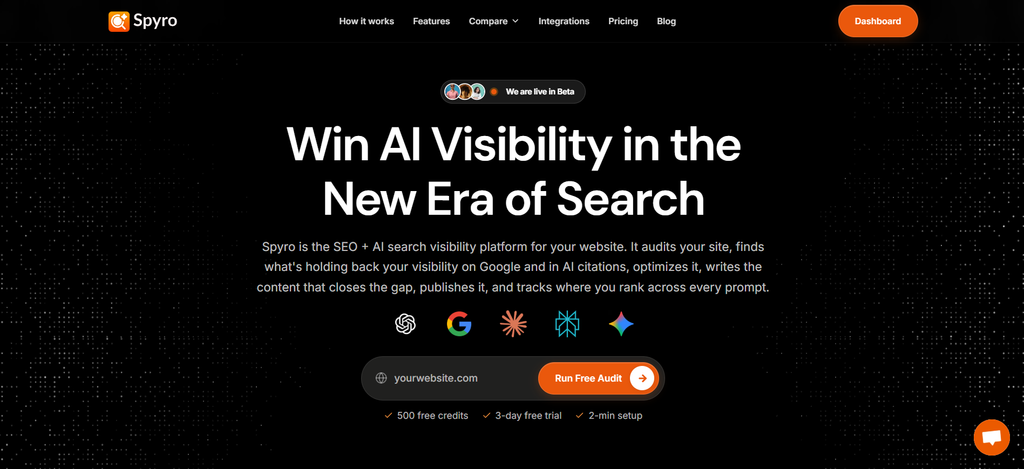
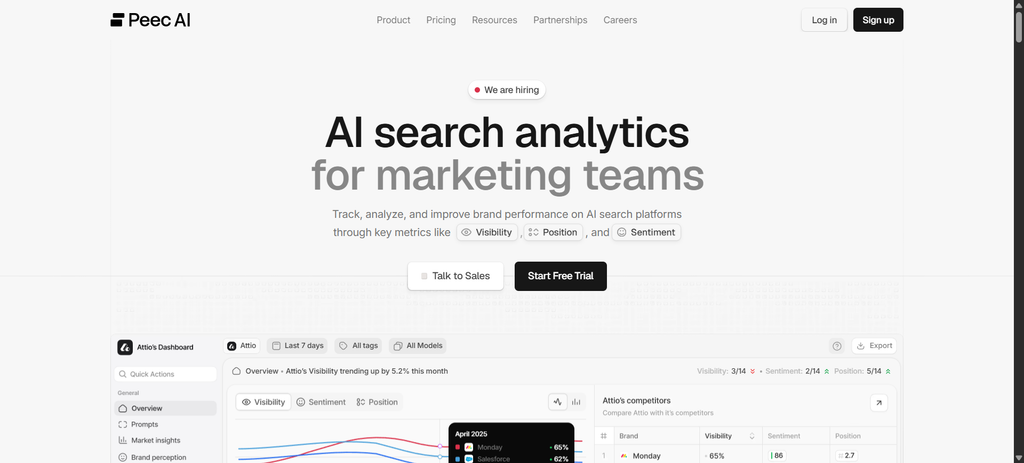
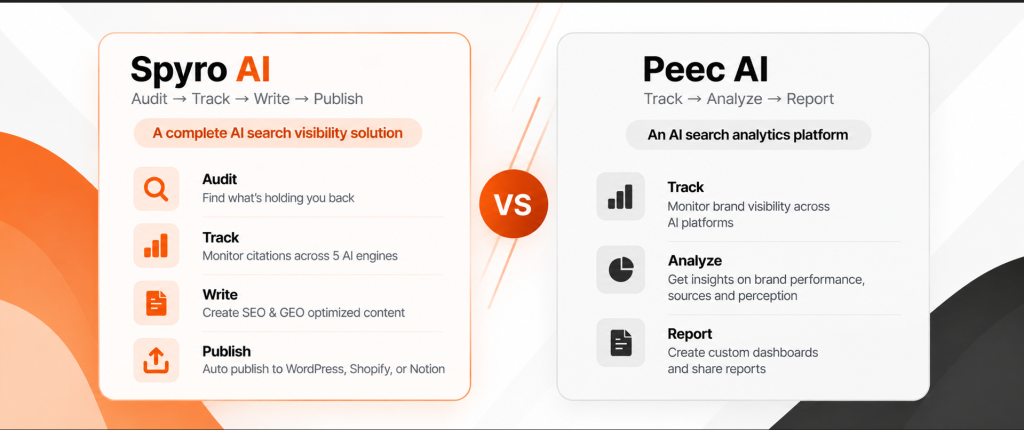
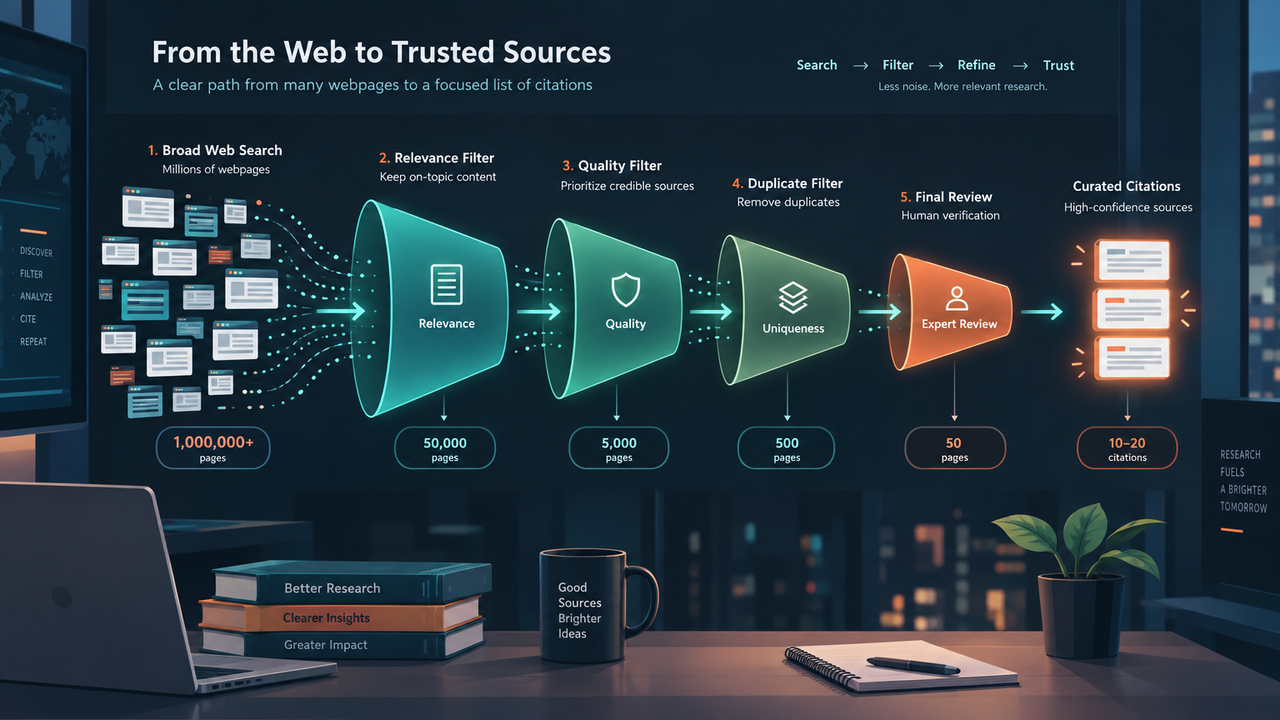
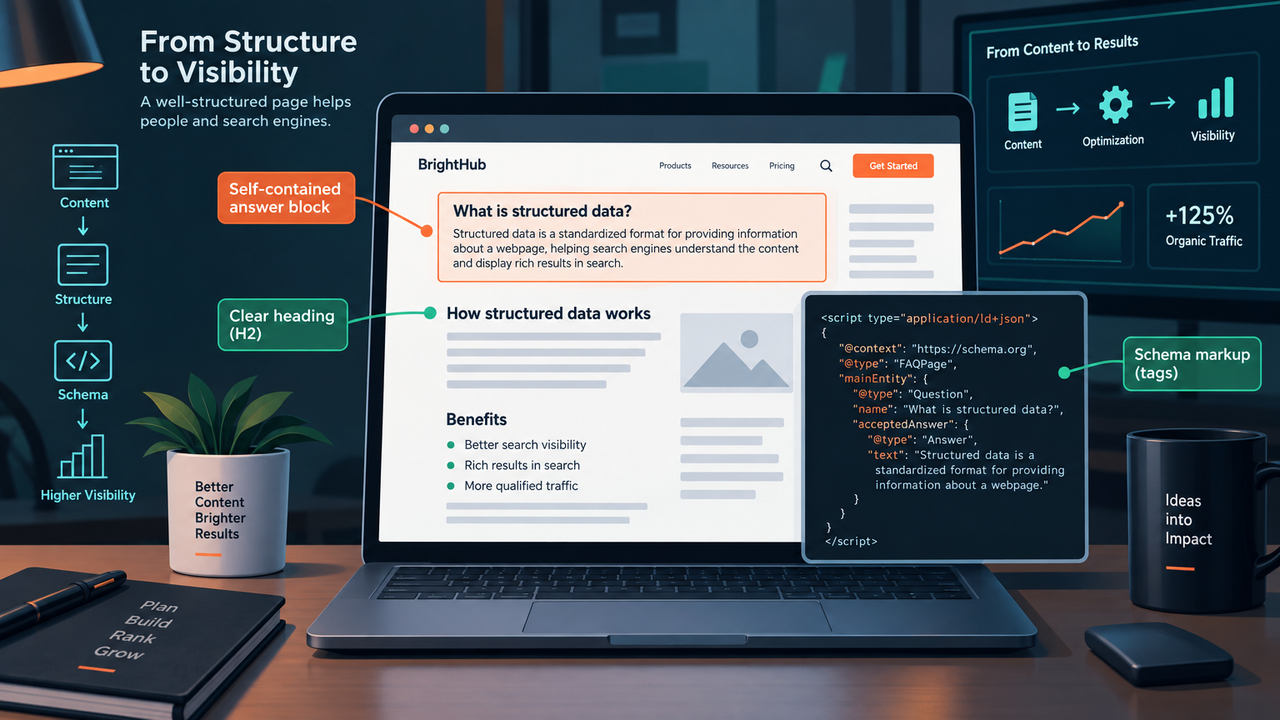


 Built for marketing teams and content creators who need branded SEO copy at scale. Offers templates for blog posts, product descriptions, and SEO workflows, plus brand voice controls and collaborative project organization suited to agency and in-house teams. Requires human oversight for factual accuracy and search intent alignment. Subscription and per-seat costs run high for very small businesses or freelancers. Verify pricing on official page.
 For SEO-focused content marketers who want an AI writer integrated with keyword research and publishing workflows. Includes Chatsonic, an AI SEO agent that pulls real-time data for keyword research and on-page optimization, plus competitor analysis and multi-format, multilingual support. AI drafts still need human editing for nuance and EEAT signals. Complex workflows may exceed small-site needs. Verify pricing on official page.
 Targets businesses needing AI-generated marketing and sales copy, landing pages, email sequences, blog drafts. Template-based workflows reduce setup time and help non-writers produce structured drafts; supports multiple variations to speed experimentation. Outputs need human review for accuracy, compliance, and SEO alignment. Less specialized for deep SEO analysis. Generic phrasing risk without careful prompt management. Verify pricing on official page.
 Serves writers and students needing paraphrasing, grammar help, and quick AI drafts. Generates blog posts, emails, and product descriptions; rewrites existing copy for clarity and originality. Includes grammar checking and citation tools. Free tier lowers experimentation barriers, though usage limits may constrain high-volume operations. Limited advanced SEO strategy features; drafts need human input for search intent and EEAT. Verify pricing on official page.
 For publishers and affiliate site owners wanting fully generated SEO articles from a single keyword. Automatically handles topic research and structural drafting; supports bulk generation for long-tail keywords and integrates with some CMS platforms. Outputs need human editing for factual depth, differentiation, and EEAT. Auto-generated content risks formulaic structure and thin or overlapping output without strong strategy and manual control. Verify pricing on official page.
 For SEO professionals wanting AI writing tightly integrated with search intent data and SEO metrics. Aligns content with real search intent and Google guidelines while avoiding over-optimization, leveraging Ahrefs’ keyword, SERP, and backlink data. Human controls strategy; AI speeds execution. Designed for existing Ahrefs users; complexity and cost may deter casual bloggers. Requires human oversight for expertise and authority signals. Feature set still evolving. Verify pricing on official page.


 ## Our 218-Article Experiment: How AI Tools for SEO Performed in Real Search Results
 ## Comparison: AI Content vs Human Content Ranking Data Across Three Production Methods
 ## Key Takeaways



 ## What Makes AI Content Creation Tools Actually Rank in 2026
 ## AI Search Visibility Monitoring: The Capability Your Current Stack Probably Lacks
 ## Building Your AI SEO Stack Without Tool Overload
 ## Key Takeaways: What to Do Before Your Next Tool Purchase