Category: Comparison

  • Semrush AI Toolkit Alternatives for AI Search Visibility

    Semrush AI Toolkit Alternatives for AI Search Visibility

    Quick Answer: What Are the Best Semrush AI Toolkit Alternatives?

    The best Semrush AI Visibility Toolkit alternatives in 2026 are Spyro AI, Peec AI, Profound, AIClicks, Otterly.ai, Scrunch and Ahrefs Brand Radar, and the right pick depends on what the toolkit doesn’t give you today. There’s no single winner. Here’s how I’d match them:

    • Broader SEO, GEO and content workflow: Spyro AI pairs AI visibility tracking with site audits, keyword tracking and an AI writer, starting at $29 a month.
    • Dedicated analytics or enterprise controls: Peec AI for daily analytics, Profound for SSO and SOC 2, Scrunch for persona level data.
    • Daily tracking on a smaller budget: Otterly.ai, or AIClicks if you want article credits in the same plan.
    • Already inside an SEO suite: the Semrush AI Visibility Toolkit itself, or Ahrefs Brand Radar if you live in Ahrefs. Staying put is a fair answer.

    The Semrush AI Visibility Toolkit is Semrush’s add on for tracking how ChatGPT and Google’s AI answers talk about your brand, which prompts your competitors win and which pages get cited. It costs $99 a month per domain on its own, and it sits inside a very large SEO suite. That’s a great deal if you already work in Semrush. It’s a worse one if you only want AI search tracking, run an agency with a pile of client domains, or need an engine the toolkit doesn’t name.

    This guide is for SMBs, mid sized marketing teams and agencies comparing Semrush AI Toolkit alternatives before they spend. If the SEO and GEO split still feels fuzzy, read SEO vs GEO vs AEO: how to win Google and AI answers in 2026 first, then come back.

    Prices and plan limits below come from each vendor’s public pages, checked in 2026. They change often, so confirm before you pay.

    What Does the Semrush AI Visibility Toolkit Actually Do?

    Why would anyone pay to track AI answers? Because plenty of them get read without a click. A Bain and Dynata consumer survey of 1,117 people found that about 80% of consumers rely on zero click results in at least 40% of their searches, which Bain estimates cuts organic web traffic by 15% to 25%. If an answer replaces the click, you need to know whether your brand is in it.

    That’s the job of the Semrush AI Visibility Toolkit. Semrush’s help center describes six parts:

    • Visibility Overview benchmarks your presence with an AI Visibility Score, worldwide or by region.
    • Competitor Research compares your positioning with rivals and finds prompts where they’re cited and you aren’t.
    • Prompt Research works like keyword research for prompts, with topic level volume, difficulty and intent.
    • Brand Performance reports share of voice, sentiment and key narratives, with recommendations.
    • Prompt Tracking watches specific prompts every day.
    • AI Search Site Audit flags technical issues that could block AI crawlers.

    Naming is messy, so a quick translation. Semrush’s own help pages say AI Visibility Toolkit. Its product page sits under an AI SEO URL path, and third party reviews say AI Toolkit or AI SEO Toolkit for the same thing. The Semrush AI PR Toolkit is a different product, covered below.

    Which AI Engines Does the Semrush AI Toolkit Cover?

    It depends which Semrush page you read. The pricing page lists ChatGPT, Google AI, Gemini and Perplexity. The help article says Prompt Tracking works on platforms like Google AI Mode and ChatGPT, and Brand Performance covers LLMs including ChatGPT and Google’s AI Mode. I couldn’t find Claude or Microsoft Copilot named on either page. If a specific engine matters, ask Semrush to confirm it in writing before you buy.

    What Are the Limits of the Semrush AI Visibility Toolkit?

    The base toolkit tracks 25 custom prompts with daily updates. Brand Performance covers one domain and refreshes weekly. The AI Search Site Audit checks up to 100 pages. CSV exports are capped at 10 a day and 1,000 rows each. Prompt Tracking works in 220 plus countries, while Visibility Overview, Competitor Research and Prompt Research cover 42.

    Semrush AI Visibility Toolkit Pricing: What Do the Plans Cost?

    Here’s what Semrush’s public pricing showed in 2026 for the Semrush AI Visibility Toolkit and the plans that bundle it. Yearly prices are per month, billed annually.

    PlanMonthly priceYearly price (per month)Prompts trackedWhat to know
    AI Visibility Toolkit (standalone)$99 per domain$99 per domain25The pricing page says billed annually. The help center says $99 a month, so confirm at checkout
    Semrush SEO plan$139$117.33Custom prompt monitoring, count not listedAI visibility reports come bundled
    Semrush One Starter$199$165.17501 domain for AI brand performance
    Semrush One Pro+$299$248.17100Everything in Starter
    Semrush One Advanced$549$455.67200Everything in Pro+
    EnterpriseCustomCustomCustomMulti brand tracking, API, SSO, audit logs

    Add ons matter. Extra Brand Performance domains are $99 each a month, and 50 more prompts cost $60 a month. Extra users are listed from $45 a month on the pricing page, while the help center describes a separate $99 toolkit license per user. Those two don’t match, so ask which applies to you. The help center also says there’s no free trial for the toolkit, although the pricing page mentions a seven day Semrush trial in general.

    What Is the Semrush AI SEO Toolkit?

    I couldn’t find a separate product called the Semrush AI SEO Toolkit on Semrush’s pricing pages. Most sources use it as another name for the AI visibility product, and Semrush One bundles it with the classic SEO toolkit. If a quote or a review uses that name, check exactly which modules and prompts it covers.

    How Is the Semrush AI PR Toolkit Different?

    The Semrush AI PR Toolkit is a digital PR product, not an AI visibility tracker. It finds outlets that AI models cite, searches a media database of journalists, handles pitching and email outreach, and monitors coverage. Plans are $149 (Base), $279 (Pro) and $499 (Business) a month billed annually, with 250, 500 or 1,000 media contacts a month. Competitive analysis is Business only, and extra users are $20 a month. It’s useful if PR is your route to AI citations. It won’t replace a prompt tracker.

    Why Look for a Semrush AI Toolkit Alternative?

    Nothing’s broken with the toolkit. But buyers run into the same few walls, and each one points to a different tool.

    1. Per domain pricing adds up. An agency with ten client domains pays about $990 a month for the standalone Semrush AI Visibility Toolkit before seats or extra prompts (my arithmetic, $99 times ten).
    2. Twenty five prompts is a small ceiling. Moving to 50 prompts on the Semrush AI Visibility Toolkit costs $60 a month more, and bigger bundles mean a Semrush One plan.
    3. The Semrush AI Toolkit engine list isn’t clear. Pages differ, and Claude and Copilot aren’t named.
    4. Brand Performance refreshes weekly. On the Semrush AI Visibility Toolkit, only Prompt Tracking is daily.
    5. There’s no free trial for the Semrush AI Visibility Toolkit. The help center says so, which makes side by side testing harder.
    6. You may not want a suite. The Semrush AI Toolkit is an add on to Semrush’s wider platform, so you’re paying for an ecosystem you might not use.
    7. Seats cost extra. On the Semrush AI Visibility Toolkit, a team of five gets pricey quickly.

    If none of that sounds like you, you may not need a Semrush AI Toolkit alternative at all. I’ll come back to when staying makes sense.

    Which Semrush AI Toolkit Alternatives Compare Best at a Glance?

    One table of Semrush AI Toolkit alternatives, covering price, engines, prompts, competitors and best fit. On a phone, swipe sideways to see every column. Prices are the lowest published monthly entry point unless noted.

    ToolStarting priceAI engines coveredPrompt trackingCompetitor trackingBest for
    Spyro AI$29/moChatGPT and AI Overviews on Starter. Adds Claude, Gemini and Perplexity on Pro and Agency15, 50 or 250 prompts per brand, weeklyRanked competitor table, share of voiceTracking plus SEO and content in one workspace
    Peec AINot shown on the page (earlier check: about $95/mo)3 models of your choice, more cost extra50, 150 or 350 prompts, dailyUnlimited competitorsAnalytics focused marketing teams
    ProfoundNot publicly disclosed (7 day free trial)ChatGPT, Gemini, AI Overviews on trial. Up to 9 on Enterprise50 prompts a day on trial, custom afterCompetitive presence reportingEnterprise brands
    AIClicks$59/mo3 models of your choice on Starter30, 150 or 300 prompts, dailyCompetitor visibility next to yoursDaily tracking with article credits
    Otterly.ai$29/moChatGPT, AI Overviews, Perplexity, Copilot. AI Mode, Gemini and Claude cost extra15, 100 or 400 prompts, dailyBrand reports against competitors, share of voiceLow cost daily monitoring
    Scrunch$250/mo billed yearly ($300 monthly)ChatGPT, Claude, Gemini, Perplexity, AI Mode, AI Overviews, Meta350 or 700 custom prompts, frequency not statedBenchmarking by personaLarger teams that want persona data
    Ahrefs Brand Radar$50/mo (Custom Prompts). Index from $199/moAI Overviews, AI Mode, ChatGPT, Perplexity, Gemini, CopilotSold as checks. Daily, weekly or monthlyCompetitor benchmarking, AI share of voiceTeams already on Ahrefs
    Semrush AI Visibility Toolkit (baseline)$99/mo per domainChatGPT, Google AI, Gemini, Perplexity per the pricing page25 prompts daily (50 to 200 on Semrush One)Competitor Research and gap findingTeams already on Semrush

    The price column hides a lot. Spyro AI and Otterly.ai both start at $29, yet one covers two engines on that plan and the other covers four. For a deeper look at what vendors charge, see the AI visibility tools pricing comparison.

    Which Semrush AI Toolkit Alternatives Should You Shortlist?

    This list isn’t a ranking. Every entry covers pricing, engines, tracking, strengths, tradeoffs and how it differs from the Semrush AI Visibility Toolkit.

    1. Spyro AI: SEO, GEO and Content in One Workspace
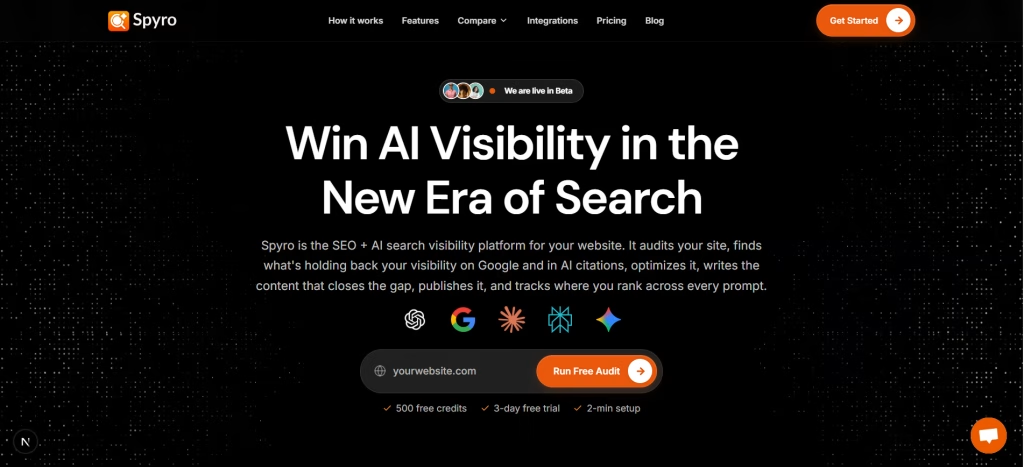
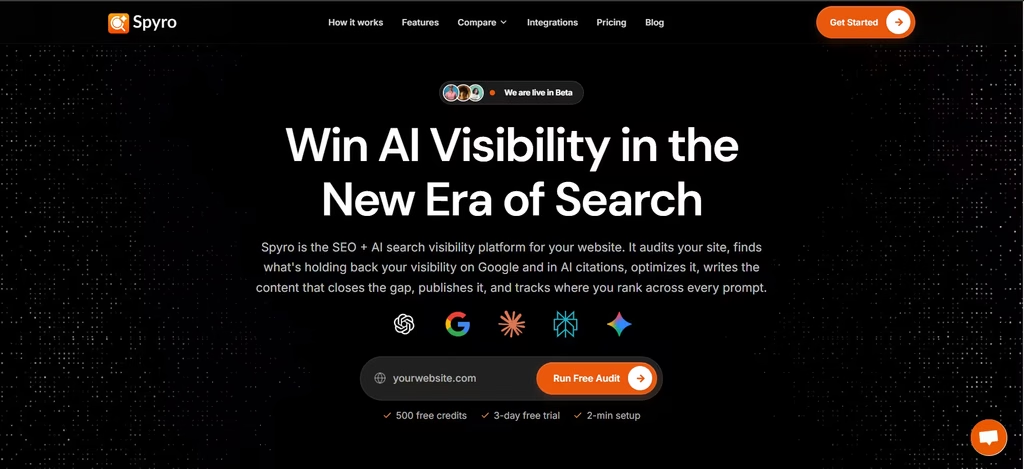
    Spyro AI is an SEO and AI search visibility platform. It tracks whether ChatGPT, Gemini, Claude, Perplexity and Google AI Overviews recommend your brand, and it also handles keyword rank tracking, site audits, competitor research and an AI writer that publishes to your site. It’s one of the Semrush AI Toolkit alternatives for teams that want AI visibility tracking next to SEO and content work in one subscription.

    Pricing. Starter is $29 a month, Pro is $99 and Agency is $399. The pricing page shows a yearly toggle that saves 20%, with no yearly prices listed. A 3 day free trial comes with 500 credits. Everything runs on one monthly credit pool: 4,000 on Starter, 15,000 on Pro and 80,000 on Agency. Tracking checks cost 10 credits per engine, and an article costs 250.

    Engines. Starter tracks 2 (ChatGPT and Google AI Overviews). Pro and Agency track all 5.

    Tracking. Prompts per brand run 15 on Starter, 50 on Pro and 250 on Agency, checked weekly. Results show how often you’re mentioned, such as 3 of 5 checks, plus share of voice. A ranked competitor table shows every brand named across your prompts, and citation checks show where your site is used as a source.

    Beyond tracking. Keyword rank tracking with a Google Search Console connection, a site audit with Site Health and AI Search Health scores, competitor research scans, and an AI writer that publishes to WordPress, Shopify, Notion or webhooks. Every plan has unlimited team members.

    Tradeoffs, plainly. Checks run weekly, so short term swings show up slower than in a daily tool. Spyro AI doesn’t track Microsoft Copilot, Google AI Mode or Grok. The $29 tier covers two engines. There’s no self serve credit top up, white label reporting isn’t listed, and it has no backlink data.

    Versus the Semrush AI Visibility Toolkit. Semrush wins on daily tracking, prompt research data, countries and the size of its SEO suite. Spyro AI wins on a lower entry price, Claude coverage on Pro, unlimited seats and publishing built into the plan. The Spyro AI vs Semrush comparison goes feature by feature, and the Spyro AI pricing page has current plans.

    Who should consider it. SMBs, mid sized teams and agencies that want a Semrush AI Toolkit alternative that tracks and then publishes. If daily data or Copilot tracking is a must, pick a daily tool.

    2. Peec AI
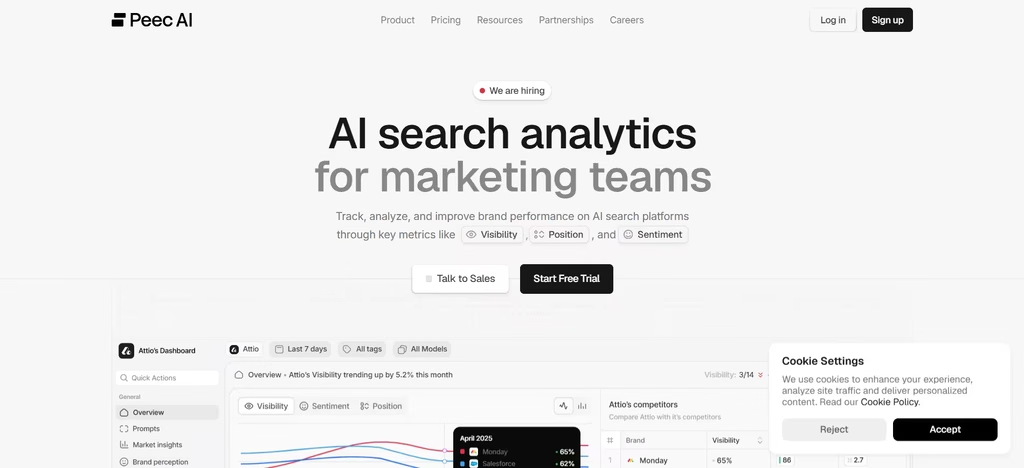
    Among Semrush AI Toolkit alternatives, Peec AI is the dedicated AI search analytics platform. Its pitch is depth: prompt level detail, source and citation analytics, and daily tracking on every plan.

    Pricing. Starter, Pro and Advanced plans plus a custom Enterprise tier. The public pricing page showed no dollar amounts when I checked in 2026, only a 15% annual discount. An earlier check I ran put Starter around $95 a month, so get a current quote.

    Engines. You choose 3 models on Starter, Pro and Advanced, from a list that includes ChatGPT, Google AI Mode, AI Overviews, Microsoft Copilot, Perplexity and Gemini. More models are paid add ons. Enterprise covers up to 13.

    Tracking. 50, 150 or 350 prompts, checked daily, with unlimited competitors and unlimited team seats on every plan. Projects are capped at 1, 2 and 5. The trial length isn’t stated.

    Strongest use case. Marketing and SEO teams that will actually read source reports and want daily data on a fixed set of engines.

    Tradeoffs. No public price, a three model limit and a project cap.

    As a Semrush AI Toolkit alternative. You get 50 or more prompts at entry against Semrush’s 25, and a heavier analytics layer, but no SEO suite behind it. The Spyro AI vs Peec AI comparison covers that matchup.

    3. Profound
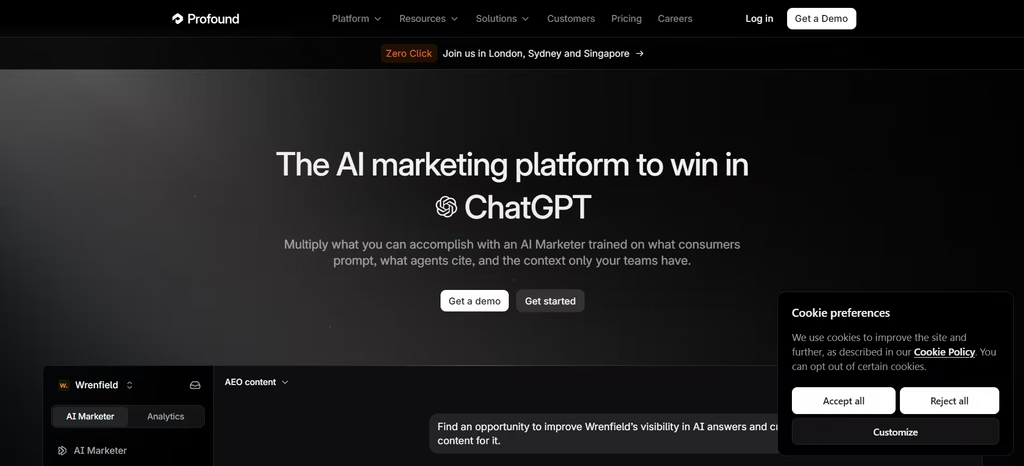
    Profound is the enterprise pick among Semrush AI Toolkit alternatives. Its Answer Engine Insights tracks brand visibility, citations and sentiment, its AI Marketer agents help produce content and reports, and Agent Analytics looks at AI sourced traffic.

    Pricing. A free 7 day trial includes 50 prompts a day across ChatGPT, Gemini and Google AI Overviews. After that, Enterprise pricing is custom, and a self serve Agency Growth plan gives 400 AI Marketer credits a month per client workspace with no dollar price shown. Brand plan pricing isn’t publicly disclosed.

    Engines. Enterprise tracks up to 9, including Perplexity, Claude, Copilot and Google AI Mode.

    Tracking. Enterprise adds tailored prompt tracking, custom languages and regions, CSV and JSON exports, API access and all time history. The trial has no history, exports or API.

    Strongest use case. Large brands that need SSO and SAML, SOC 2 and a dedicated support path.

    Tradeoffs. No self serve price means a sales process, which is a poor match for a small team.

    Versus the Semrush AI Visibility Toolkit. Semrush shows a $99 price. Profound shows a trial and a sales call, but delivers more engines and enterprise controls. For more detail, see the Profound alternatives guide and the Spyro AI vs Profound comparison.

    4. AIClicks
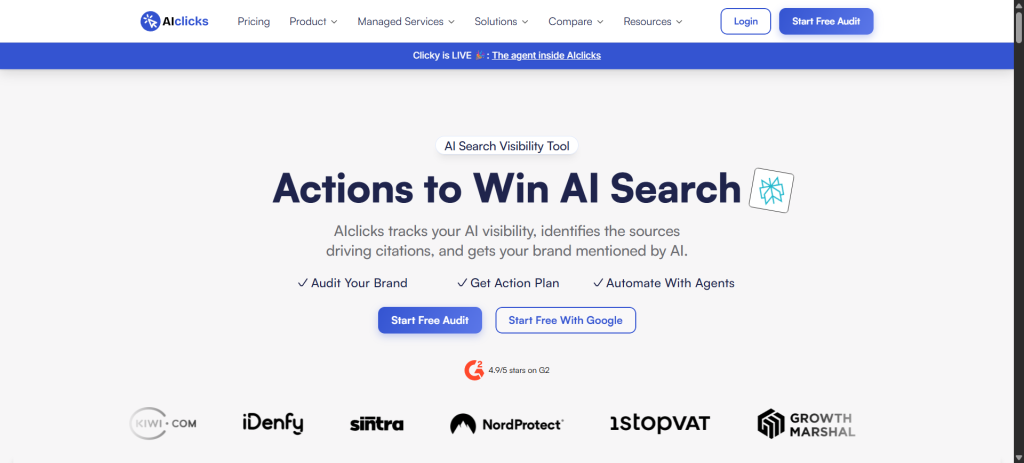
    Among Semrush AI Toolkit alternatives, AIClicks pairs daily tracking with a monthly article allowance. It lists 11 models across its plans, including ChatGPT, Gemini, Perplexity, Claude, Copilot, Google AI Overviews, Google AI Mode and Grok.

    Pricing. Starter is $59 a month, Pro is $189, Business is $499 and Enterprise is custom. Yearly billing is listed as up to 29% off, and Starter and Pro include a 3 day trial with no card.

    Engines. 3 models on Starter, 4 on Pro and 6 on Business, so eleven platforms doesn’t mean eleven on a small plan.

    Tracking. 30, 150 or 300 prompts, tracked daily, with 5, 15 or 30 AI articles a month. GA4, API and MCP integrations start on Pro.

    Strongest use case. Teams that want daily data, a chosen mix of models and some content output in one subscription.

    Tradeoffs. Engine choice is capped by plan. Agencies are pointed to custom pricing.

    As a Semrush AI Toolkit alternative. At $59 you get 30 daily prompts against Semrush’s 25 at $99, plus articles, but no SEO suite. The AIClicks alternatives guide covers the rivalry from the other side.

    5. Otterly.ai
    Otterly.ai is the budget pick among Semrush AI Toolkit alternatives, a self serve monitoring tool with daily data on every plan. You add prompts, and it records brand mentions and link citations.

    Pricing. Lite is $29 a month, Standard is $189, Premium is $489 and Enterprise is custom. Annual billing takes 15% off, and a free trial is offered, although the length isn’t stated on the page.

    Engines. ChatGPT, Google AI Overviews, Perplexity and Microsoft Copilot come with every plan. Google AI Mode, Gemini and Claude are paid add ons. Lite plus all three comes to about $76 a month ($29 plus $9, $9 and $29, my arithmetic).

    Tracking. 15, 100 or 400 prompts, daily, with unlimited team members. Looker Studio, API and MCP access start on Standard.

    Strongest use case. Small teams that want cheap daily monitoring.

    Tradeoffs. The step from Lite at $29 to Standard at $189 is steep when 15 prompts run out, and it’s a monitoring product only.

    As a Semrush AI Toolkit alternative. Otterly.ai is more focused and cheaper per tracked brand. Semrush wins when consolidation matters. The Otterly.ai alternatives guide has more.

    6. Scrunch
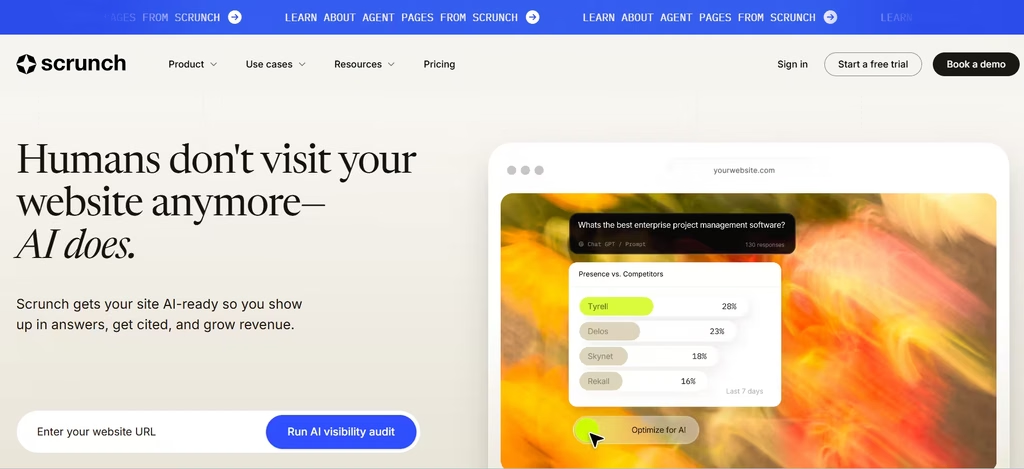
    Scrunch combines AI search monitoring with an approach to how AI systems read your site. It’s the priciest self serve entry on this list.

    Pricing. Starter is $250 a month billed annually or $300 month to month. Growth is $417 annually or $500 monthly. Enterprise is custom. Annual billing saves 17%, and extra seats are $25 a month.

    Engines. ChatGPT, Claude, Gemini, Perplexity, Google AI Mode, AI Overviews and Meta.

    Tracking. Starter includes 350 custom prompts, 1,000 industry prompts, 3 seats, 3 personas and 5 page audits. Growth raises those to 700, 2,500, 5 seats, 5 personas and 10 audits. A 7 day trial needs no card. Check frequency isn’t stated, and the Data API is Enterprise only.

    Strongest use case. Larger teams that segment by persona and care about page level audits for AI agents.

    Tradeoffs. Entry costs more than twice a standalone Semrush AI Visibility Toolkit. You’d want a real need for personas to justify that.

    As a Semrush AI Toolkit alternative. A bigger prompt allowance (350 against 25) and a wider engine list, with less clarity on how often checks run.

    7. Ahrefs Brand Radar
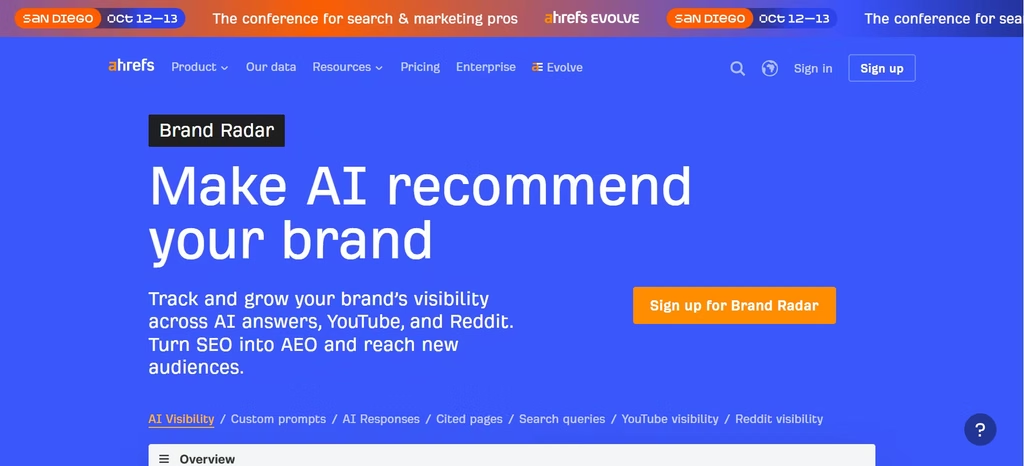
    Among Semrush AI Toolkit alternatives, Ahrefs Brand Radar works two ways. Custom Prompts track the exact questions you choose. The AI Visibility Index lets you look up how any brand appears across a large database of prompts.

    Pricing. Custom Prompts start at $50 a month and come free with paid Ahrefs plans from Lite up, within daily quotas. The AI Visibility Index starts at $199 a month with 83 prompts a day and 2,500 plus checks a month. The page also shows a $699 line for all models without explaining it, so ask Ahrefs what it covers.

    Engines. AI Overviews, AI Mode, ChatGPT, Perplexity, Gemini and Copilot. Claude is listed for Custom Prompts, though the page is unclear on the Index.

    Tracking. Ahrefs sells checks, not prompts, so your real prompt count depends on engines, locations and cadence (daily, weekly or monthly). Metrics include mentions, citations, AI share of voice and estimated impressions.

    Strongest use case. Teams already inside Ahrefs, or anyone who wants market wide benchmarks.

    Tradeoffs. Budgeting is harder because checks burn faster with more engines.

    Versus the Semrush AI Visibility Toolkit. As a Semrush AI Toolkit alternative, it follows the same suite logic from the other big SEO vendor. Pick whichever platform you already use. The Spyro AI vs Ahrefs comparison lays out the differences.

    Are There Other Semrush AI Toolkit Alternatives Worth Considering?

    Yes, but I kept this guide to seven tools whose vendor pages I could check. AthenaHQ, SE Ranking and Frase also compete here, and the Profound alternatives guide covers them.

    When Should You Stay With the Semrush AI Visibility Toolkit?

    Sometimes the best Semrush AI Toolkit alternative is staying put. I’d stay with the Semrush AI Visibility Toolkit if three things are true.

    You already run SEO in Semrush, so one login and one invoice beat adding a vendor. You track a small number of domains, so $99 per domain doesn’t snowball. And ChatGPT plus Google’s AI answers cover most of what your buyers use.

    The Semrush AI Visibility Toolkit also gets you things the smaller tools skip: daily prompt tracking in more than 220 countries, prompt research with volume and difficulty data, and an AI crawler audit that sits next to a full site audit. If your team already knows the Semrush interface, that familiarity saves real onboarding time.

    Semrush AI Visibility Toolkit vs Spyro AI: How Do They Compare?

    These are different kinds of product, so this isn’t a clean win for either. Prices are 2026 list prices, and the two aren’t like for like.

    AreaSemrush AI Visibility ToolkitSpyro AI
    Pricing$99 a month per domain, or bundled in Semrush One from $199$29 Starter, $99 Pro, $399 Agency, all public
    AI engine coverageChatGPT, Google AI, Gemini, Perplexity on the pricing page. Claude and Copilot not named2 on Starter, 5 on Pro and Agency (ChatGPT, AI Overviews, Claude, Gemini, Perplexity)
    Prompt tracking25 prompts daily, 50 to 200 on Semrush One15, 50 or 250 per brand, weekly
    Competitor trackingCompetitor Research, prompt gap findingRanked competitor table, share of voice, research scans
    Citation visibilityCitation tracking in AI answersCitation checks and an AI mentions view
    ReportingVisibility, Brand Performance and Prompt Tracking reports, CSV exports capped at 10 a dayPDF audit reports and an API key. Exports aren’t documented
    SEO featuresFull Semrush SEO suite on the same accountKeyword tracking, site audit, Search Console connection. No backlink data
    GEO and AI visibility focusA toolkit inside a larger SEO platformAI visibility, audits and content in one smaller workspace
    Agency suitabilityPriced per domain, seats extraAgency plan with unlimited brands and unlimited team members
    Ease of useMany reports and modules, which is great if you know Semrush (my read from the documentation, not hands on testing)Narrower scope, so less to learn (same caveat)
    Best forTeams already on Semrush that want daily prompt dataTeams that want tracking plus publishing without a large suite

    When is the Semrush AI Visibility Toolkit the better fit? If you need backlink data, deep keyword research or daily prompt tracking at scale, and you’re already paying for the suite. When is Spyro AI the better fit? If you want a low entry price, Claude and Perplexity tracking on a mid priced plan, several brands under one flat fee, and an AI writer that publishes to your site. Spyro AI isn’t built for huge crawls, backlink research or long historical data, and I’d tell an enterprise SEO team to look elsewhere.

    For the full side by side, see the Spyro AI vs Semrush comparison.

    How to Choose the Right Semrush AI Toolkit Alternative

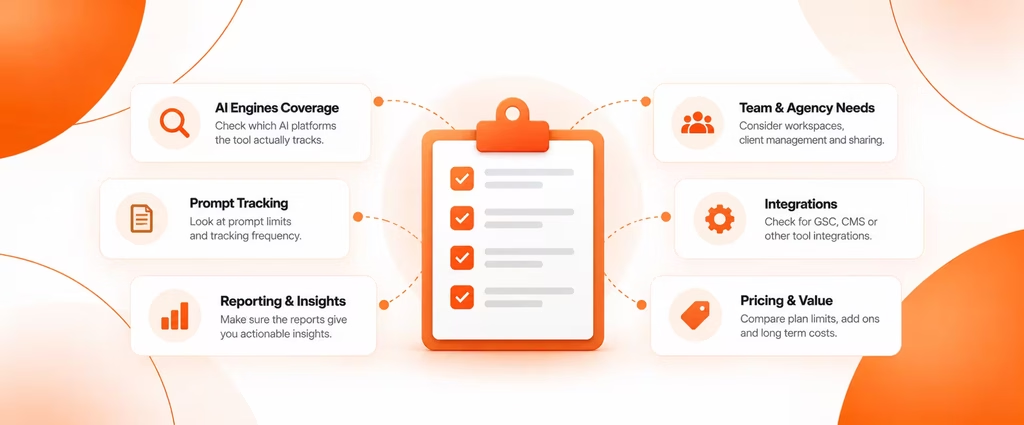
    Choosing between Semrush AI Toolkit alternatives? Don’t start with the price. Start with the gap. Here’s the order I’d work through.

    1. Which AI engines do you need? Claude and Copilot matter to some buyers. Spyro AI Pro covers Claude, Otterly.ai covers Copilot by default, Scrunch lists Claude, and Profound Enterprise lists both.
    2. How many prompts? Count 15 to 30 real buyer questions per brand. the Semrush AI Visibility Toolkit starts at 25, Peec AI at 50, Scrunch at 350.
    3. How many brands or domains? Per domain pricing on the Semrush AI Visibility Toolkit hurts agencies. Spyro AI’s Agency plan lists unlimited brands, and Peec AI lists separate agency plans.
    4. How much competitor tracking? Peec AI includes unlimited competitors. Semrush and Ahrefs bring wider competitor data from their SEO suites.
    5. How deep should citation data go? Source level detail is the main reason teams pick Peec AI or Profound.
    6. What reporting do you owe clients? Check exports. Otterly.ai offers Looker Studio and API access from Standard, and the Semrush AI Visibility Toolkit caps CSV exports at 10 a day.
    7. Do you run an agency? Compare total cost across client count, not the headline price.
    8. What’s already in your stack? If you use Semrush or Ahrefs daily, price their built in options first.
    9. What’s the budget? Entry prices run from $29 (Spyro AI Starter, Otterly.ai Lite) up to $250 (Scrunch). Price your real engine list, because add ons change the picture.
    10. Do you need a dedicated AI tracker or a workflow? Tracking only points to Otterly.ai or Peec AI. Tracking plus publishing points to Spyro AI or AIClicks.

    And keep expectations honest. Google says there are no additional requirements to appear in AI Overviews or AI Mode. These tools measure visibility. They don’t flip a ranking switch. To act on what they show, read how to get cited in ChatGPT and Perplexity and generative engine optimization.

    How We Tested These Semrush AI Toolkit Alternatives

    This is a feature and pricing review of Semrush AI Toolkit alternatives, built from public vendor pages and product documentation, checked in 2026. I haven’t run controlled accuracy tests, and I’m not claiming hands on use of every tool.

    I compared the Semrush AI Visibility Toolkit and each alternative on:

    • Current pricing and what the price includes
    • AI engine coverage on the entry plan and higher plans
    • Prompt tracking limits and check frequency
    • Competitor tracking
    • Citation and source visibility
    • Reporting and exports
    • Usability, judged from plan structure and documentation
    • Team and agency features
    • Fit for practical AI search visibility work

    Where two pages from the same vendor disagreed (Semrush on user pricing, Otterly.ai on annual prices, AIClicks on website limits), I said so. Where a price wasn’t published I wrote “not shown” or “custom” instead of guessing. Pricing and features change, so recheck before you buy.

    Key Takeaways

    • The Semrush AI Visibility Toolkit costs $99 a month per domain, tracks 25 prompts daily and sits inside Semrush’s larger SEO suite.
    • People look for Semrush AI Toolkit alternatives because of per domain pricing, a small prompt ceiling, an unclear engine list and seat costs.
    • Among Semrush AI Toolkit alternatives, Spyro AI suits tracking plus SEO and content. Peec AI suits analytics, Profound and Scrunch suit enterprise needs, and Otterly.ai and AIClicks suit daily tracking on a budget.
    • Compare prices carefully. Engines, prompts and check frequency differ so much that a low headline price can still cost more once you add what you need.
    • Before you buy, write down your engines, prompts and brands, then trial two tools side by side.

    Frequently Asked Questions

    What Is the Semrush AI Visibility Toolkit?

    The Semrush AI Visibility Toolkit is a Semrush add on that measures how your brand appears in AI generated answers. It includes Visibility Overview, Competitor Research, Prompt Research, Brand Performance, daily Prompt Tracking and an AI Search Site Audit. It costs $99 a month per domain on its own or comes bundled in Semrush One.

    How Much Does the Semrush AI Visibility Toolkit Cost?

    The standalone toolkit is $99 a month per domain with 25 prompts. Semrush One Starter is $199 a month ($165.17 yearly) with 50 prompts, Pro+ is $299 with 100 and Advanced is $549 with 200. Extra domains are $99 each, and 50 extra prompts cost $60 a month. Confirm user pricing, because Semrush’s pages differ.

    Does the Semrush AI Toolkit Track ChatGPT Visibility?

    Yes. The Semrush AI Visibility Toolkit names ChatGPT on both the pricing page and the help article for Prompt Tracking. Google AI is also covered, and the pricing page adds Gemini and Perplexity. Claude and Copilot aren’t named, so confirm them with Semrush if you need them.

    What Does the Semrush AI SEO Toolkit Include?

    I couldn’t find a separate Semrush AI SEO Toolkit on Semrush’s pricing pages. The name is mostly used for the AI visibility product, which includes prompt tracking, competitor research, brand performance and an AI readiness site audit. Semrush One bundles it with the classic SEO toolkit.

    What Is the Semrush AI PR Toolkit?

    The Semrush AI PR Toolkit is a digital PR product. It finds media outlets that AI models cite, searches a journalist database, sends pitches and monitors coverage. Plans are $149, $279 and $499 a month billed annually. It supports AI citation strategy but doesn’t track prompts.

    What Is the Best Semrush AI Toolkit Alternative?

    There isn’t one best option. Spyro AI suits teams that want tracking next to SEO and content, Peec AI suits analytics heavy teams, Profound and Scrunch suit enterprise buyers, and Otterly.ai suits cheap daily monitoring. The difference between the Semrush AI Toolkit and Spyro AI is scope: the Semrush AI Visibility Toolkit is part of a large SEO suite with daily prompts, while Spyro AI is a smaller workspace with weekly checks, publishing included and a lower entry price.

    Which AI Visibility Tool Is Best for Agencies?

    It depends on client count and reporting needs. The Semrush AI Visibility Toolkit prices per domain, which gets expensive across clients. Spyro AI’s Agency plan lists unlimited brands at $399 a month, Peec AI lists dedicated agency plans, and AIClicks and Otterly.ai both have agency arrangements. Compare total cost for your real client list.

    Pick the Gap First, Then Pick the Semrush AI Toolkit Alternative

    Write down your engines, your prompt count and your budget, then shortlist two Semrush AI Toolkit alternatives and trial both with the same prompts. If you’d like to see how Spyro AI handles the work, explore Spyro AI, run the free AI Visibility Checker for a baseline, or see how Spyro AI compares with Semrush.
  • 10 Best Profound Alternatives in 2026

    10 Best Profound Alternatives in 2026

    Quick Answer: What Are the Best Profound Alternatives?

    The best Profound alternatives in 2026 are Spyro AI, Peec AI, Otterly.ai, AIClicks, AthenaHQ, Scrunch, Ahrefs Brand Radar, the Semrush AI Visibility Toolkit, SE Ranking and Frase, and the right one depends on what you wanted from Profound in the first place. There’s no single winner. Here’s how I’d match them:

    • You want a published price and a low entry cost: Spyro AI and Otterly.ai both start at $29 a month.
    • Want real analytics but no enterprise contract? Look at Peec AI, AthenaHQ or Scrunch.
    • Already paying for an SEO suite? Semrush, Ahrefs Brand Radar or SE Ranking keep it to one login and one bill.
    • Want tracking and content together? That’s Spyro AI, AIClicks or Frase.
    • You need SSO, SOC 2 and a named support contact: honestly, Profound itself may still be the right call.

    What Is Profound Good At?

    Profound is one of the best known names in answer engine optimization. Add the questions your buyers ask and it watches how AI engines reply. Then it tells you if your brand got named, cited or ignored. The platform covers Answer Engine Insights, Prompt Volumes, Agent Analytics, shopping visibility at the product level, fact checking and an AI Marketer that drafts content for approval. Profound says roughly a third of the Fortune 100 uses it, which is the vendor’s claim, not an audit.

    Size isn’t the problem. Fortune reported a $96 million Series C for Profound in 2026, and its G2 page lists 1,133 reviews at 4.5 out of 5 (I looked in 2026). Where it’s genuinely strong: up to nine answer engines on Enterprise, prompt volume data, SSO/SAML, SOC 2 and dedicated support.

    So why are so many buyers searching for the best Profound alternatives? Mostly because that stack is aimed at large brands, and the rest of us have different needs.

    Why Does AI Search Tracking Matter at All?

    Because plenty of answers get read without a single click. AI visibility tools exist to show whether your brand is in them. Back in 2024, Gartner predicted that traditional search engine volume would fall 25% by 2026 as chatbots and virtual agents absorb queries. McKinsey’s 2025 survey found that half of consumers intentionally seek out AI powered search, and that a brand’s own websites make up only 5 to 10 percent of the sources AI search references.

    And the traffic that does arrive tends to be good. Adobe Analytics reported that AI referrals to retail sites rose 693% year over year in the 2025 holiday season and converted 31% better than other traffic sources. That’s why people compare the best Profound alternatives at all: measurement is becoming a line item, and you don’t need an enterprise contract to buy it. If you want the background, our guides to generative engine optimization and answer engine optimization explain the discipline these tools measure.

    What Does Profound Pricing Look Like in 2026?

    Profound pricing is the first thing most people look up, and it’s less clear than you’d expect. Here’s what the official Profound pricing page showed in 2026.

    PlanPriceEnginesPromptsNotable inclusions
    TrialFree for 7 daysChatGPT, Gemini, Google AI Overviews50 unique prompts a dayUnlimited seats, limited AI Marketer credits, no support
    Agency GrowthNo dollar price shownNot detailedNot detailed400 AI Marketer credits a month per client workspace
    EnterpriseCustomUp to 9 answer enginesCustom, tracked dailySSO/SAML, SOC 2, unlimited seats, support options up to a dedicated specialist with a 24 hour SLA

    On that page I couldn’t find a published monthly price for brand plans. Third party sources tell a different story. G2 and several comparison articles list a Starter plan at $99 a month (ChatGPT only, 50 prompts) and a Growth plan at $399 a month (three engines, 100 prompts). Those figures didn’t appear on the official pricing page when I checked, so treat them as reported, not confirmed, and ask Profound for a current quote. Enterprise is custom, and one third party review guesses it runs into the thousands of dollars a month, which is an estimate and not a Profound number.

    For comparison, Spyro AI’s Starter plan is $29 a month, with Pro at $99 and Agency at $399. It’s a different product with different limits, so the numbers aren’t like for like. Keep reading and the table further down lines them up properly.

    Why Do Teams Look for the Best Profound Alternatives?

    Profound is a strong product. It’s just built for a specific buyer, and these are the walls people hit when they start comparing the best Profound alternatives:

    No clear self serve price

    If you’re an SMB or an agency, a sales call before you see a number is friction.

    Engine coverage depends on the tier

    Per the third party reports above, the entry tier tracks one engine and broader coverage comes higher up. Nine engines is an Enterprise feature.

    It’s built for a dedicated AEO team

    One SE Ranking roundup calls Profound overwhelming to learn. I haven’t run it myself, but with this many modules I’d budget real onboarding time, and a small team probably won’t touch half of them.

    No keyword research or rank tracking

    Profound’s focus is answer engines. If you also run classic SEO, you’ll pair it with other software.

    Agency costs add up

    Client workspaces are credit based, and the dollar price isn’t published.

    Tracking and fixing happen in different tools

    Trackers tell you where you’re missing, and that’s where they stop. Profound does have agents that draft content for approval, so it isn’t purely measurement, but for most buyers the writing still happens in a different app. If you’d rather fix things where you find them, the best Profound alternatives that bundle writing are Spyro AI, AIClicks, AthenaHQ and Frase.

    If none of that applies to you, you may not need any of the best Profound alternatives below. Staying put is a perfectly reasonable choice. I’ll come back to when that’s true.

    Which Are the Best Profound Alternatives at a Glance?

    One table of the best Profound alternatives, covering price, engines, prompts, check frequency and best fit. On a phone, swipe sideways to see every column. All prices are the lowest published monthly entry point, checked in 2026, unless noted.

    ToolStarting priceAI engines on the entry planPrompts at entryCheck frequencyFree trialBest for
    Spyro AI$29/moChatGPT and Google AI Overviews (all 5 on Pro)15 per brandWeekly3 days, 500 creditsTracking plus SEO and an AI writer
    Peec AIAbout $95/mo (earlier check)3 models of your choice50DailyYesAnalytics focused teams
    Otterly.ai$29/moChatGPT, AI Overviews, Perplexity, Copilot15DailyYesLow cost daily monitoring
    AIClicks$59/mo3 models of your choice30Daily3 daysDaily tracking with article help
    AthenaHQFree plan, then $295/mo11 plus models listed300 credits free, 3,600 on StarterNot statedFree planTeams that want integrations and agents
    Scrunch$250/mo billed yearly ($300 monthly)ChatGPT, Claude, Gemini, Perplexity, AI Mode, AI Overviews, Meta350 customNot stated7 days, no cardLarger teams that want persona data
    Ahrefs Brand Radar$50/mo (Custom Prompts)AI Overviews, AI Mode, ChatGPT, Perplexity, Gemini, CopilotSold as monthly checksDaily, weekly or monthlyNot statedTeams already on Ahrefs
    Semrush AI Visibility Toolkit$99/mo per domainChatGPT, Google AI, Gemini, Perplexity25DailyNone on the toolkitTeams already on Semrush
    SE RankingAbout $174/mo with the AI Search add on (annual)AI Overviews, AI Mode, ChatGPT, Gemini, PerplexityNot statedNot stated14 daysTeams that want SEO and AI tracking together
    Frase$39/mo billed yearly ($49 monthly)Not detailed on the pricing pageNot detailedNot stated7 days, no cardContent first teams

    The price column says less than you’d hope. Spyro AI and Otterly.ai both start at $29, and one covers two engines on that plan while the other covers four. For a full breakdown of what each vendor charges, see our AI visibility tools pricing comparison.

    The 10 Best Profound Alternatives in 2026

    This list of the best Profound alternatives isn’t a ranking. Every entry covers pricing, engines, tracking, the strongest use case, the tradeoffs and how it differs from Profound.

    1. Spyro AI: A Broader Alternative to Profound

    Spyro AI is an SEO and AI search visibility platform. It tracks whether ChatGPT, Gemini, Claude, Perplexity and Google AI Overviews recommend your brand, and it also does keyword rank tracking, site audits, competitor research and an AI writer that publishes to your site. It’s one of the best Profound alternatives for teams that want AI search tracking next to SEO and content work, in a single subscription with a public price.

    Pricing. Starter is $29 a month, Pro is $99 and Agency is $399. Yearly billing is discounted (the pricing page says 20%). You can try it free for 3 days with 500 credits. One monthly credit pool covers everything. That’s 4,000 credits on Starter, 15,000 on Pro and 80,000 on Agency.

    The Starter plan, specifically. For $29 you get 2 AI engines (ChatGPT and Google AI Overviews), 15 tracked prompts per brand, 2 brands, 100 keywords per brand, up to 10 articles a month and unlimited team seats. Pro raises that to all 5 engines, 50 prompts, 10 brands, 500 keywords and 30 articles. Agency gives unlimited brands, 250 prompts and 1,500 keywords per brand.

    What it does for tracking. – You add prompts and Spyro AI reports how often your brand is mentioned, such as “3 of 5 checks,” along with your share of voice over time. – A competitor table ranks every brand named across your questions and shows who’s rising or falling. That’s how you spot rivals earning AI citations you don’t. – Open the AI mentions view to read the actual answer text, and use citation checks to see where your site is used as a source.

    What it does beyond tracking. Site audits with a Site Health score and an AI Search Health score (audits don’t use credits), a Google Search Console connection, competitor research scans, and an AI writer at 250 credits an article that publishes to WordPress, Shopify, Notion or any system through webhooks.

    Tradeoffs, plainly. Prompt checks run weekly, so short term swings show up slower than in a daily tool. Spyro AI doesn’t track Microsoft Copilot, Google AI Mode or Grok. The $29 tier covers two engines. There’s no self serve credit top up. And it doesn’t have Profound’s prompt volume data, shopping tracking or enterprise compliance.

    How it differs from Profound. Profound is the deeper specialist for enterprise answer engine work. Spyro AI is the wider workspace, with fewer monitoring refinements and more of the work around it. Our Spyro AI vs Profound comparison goes feature by feature.

    Who should consider it. Of the best Profound alternatives, this one suits SMBs, mid sized teams and agencies that want to track and then publish. If daily data or Copilot tracking is a must, pick a daily tool.

    2. Peec AI

    Peec AI is the dedicated AI search analytics platform on this list, and one of the best Profound alternatives if you care about source level detail. It reports citation and source analytics, including gap reports that show sources naming your competitors but not you.

    Pricing. Peec’s pricing page showed tier names and limits but no prices when I checked, so these figures come from our earlier pricing check: Starter about $95 a month, Pro about $245 and Advanced about $495, with Enterprise custom. Annual billing takes about 15% off, and there’s a free trial. Separate agency plans are listed.

    Engines. You pick 3 models from a list that includes ChatGPT, AI Overviews, AI Mode, Copilot and Gemini. Extra models cost more, and Enterprise covers 13 plus.

    Tracking. 50 prompts on Starter, 150 on Pro and 350 on Advanced, checked daily. Users are unlimited on every plan.

    Best for. Marketing and SEO teams that will actually read the source reports.

    Tradeoffs. Starter costs more than three times an Otterly.ai Lite plan, and projects are capped at 1, 2 and 5.

    Versus Profound. You get published plan limits and a lighter setup, but fewer enterprise controls and no agent layer. Our Spyro AI vs Peec AI comparison covers that matchup, and the vendor lists its plans on its pricing page.

    3. Otterly.ai

    Otterly.ai is the budget pick among the best Profound alternatives, a self serve monitoring tool with daily data on every plan. You add prompts, and it records brand mentions and link citations across four engines.

    Pricing. Lite is $29 a month ($25 billed annually), Standard is $189 ($160), Premium is $489 ($422) and Enterprise is custom. A free trial is available.

    Engines. ChatGPT, Google AI Overviews, Perplexity and Microsoft Copilot on every plan. Google AI Mode, Gemini and Claude are paid add ons, from $9 a month for AI Mode on Lite up to $439 for Claude on Premium.

    Tracking. 15 prompts on Lite, 100 on Standard and 400 on Premium, all daily. Extra prompts cost $99 a month per 100. API and MCP access start at Standard.

    Best for. Small teams that want cheap daily monitoring.

    Tradeoffs. The jump from $29 to $189 is steep when 15 prompts run out, and it’s a monitoring product only, with no writer or publishing workflow.

    Versus Profound. A public price from day one, against a sales led process. You give up agents, prompt volume data and enterprise features. Our Otterly.ai alternatives guide looks at it from the other side, and the plans are on Otterly’s pricing page.

    4. AIClicks

    Among the best Profound alternatives, AIClicks pairs daily tracking with an AI agent called Clicky and a monthly article allowance. It lists tracking across more than ten AI platforms, including ChatGPT, Gemini, Perplexity, Claude, Google AI Overviews, Copilot, AI Mode and Grok.

    Pricing. Starter is $59 a month, Pro is $189, Business is $499 and Enterprise is custom. Yearly billing is listed as up to 29% off, and Starter and Pro include a 3 day trial.

    Engines. 3 models on Starter, 4 on Pro and 6 on Business, so “ten plus platforms” doesn’t mean ten on a small plan.

    Tracking. 30 prompts on Starter, 150 on Pro and 300 on Business. Starter covers 1 website, while Pro and above are unlimited. Articles come to 5, 15 and 30 a month.

    Best for. Teams that want daily data, a chosen mix of models and some content output.

    Tradeoffs. Engine choice is capped by plan, and agencies are pointed to custom pricing.

    Versus Profound. Much lower entry cost and a clear plan table, but without Profound’s prompt volumes or compliance features. Our AIClicks alternatives guide covers the rivalry, and prices sit on the AIClicks pricing page.

    5. AthenaHQ

    AthenaHQ is an AEO and GEO platform. It’s the only tool here with a free plan, and it lists the widest model range of any of the best Profound alternatives, with 11 plus including ChatGPT, Perplexity, AI Overviews, AI Mode, Gemini, Claude, Copilot, Grok, DeepSeek, Meta AI and Mistral.

    Pricing. Essential is free with 300 credits a month. Starter is $295 a month with 3,600 credits, and Enterprise is custom. Annual billing takes 17% off.

    Tracking and features. Prompt and response analysis, competitor insights, content recommendations and an AI agent called Athena on every plan. Starter adds Shopify, Webflow, GA4 and Search Console integrations, CSV export and a content optimization agent, with API access as a paid add on. Enterprise adds SSO, audit logs and BI tool connections. Seats are unlimited on every plan.

    Best for. Teams that want a wide engine list and integrations, including online stores.

    Tradeoffs. Credits, not prompts, are the unit, so you’ll have to work out how far 3,600 go. The jump from free to $295 is big. I couldn’t find check frequency on the pricing page.

    Versus Profound. A published Starter price and a free way to try it, with a similar agent angle. Profound is the one with Fortune 100 depth and SOC 2 on a plan page. See AthenaHQ’s pricing page for the current credits.

    6. Scrunch

    Scrunch is the priciest self serve entry among the best Profound alternatives. It combines AI search monitoring with an agent experience approach to how AI systems read your site.

    Pricing. Starter is $250 a month billed annually, or $300 month to month. Growth is $417 annually or $500 monthly. Enterprise is custom. A 7 day trial needs no card, and extra seats are $25 a month.

    Engines. ChatGPT, Claude, Gemini, Perplexity, Google AI Mode, AI Overviews and Meta.

    Tracking. Starter includes 350 custom prompts, 1,000 industry prompts, 3 seats, 3 personas and 5 page audits. Growth raises those to 700, 2,500, 5 seats, 5 personas and 10 audits. Check frequency isn’t stated on the pricing page.

    Best for. Larger teams that segment by persona and care about page audits for AI agents.

    Tradeoffs. Entry costs about eight times Otterly.ai Lite, and the Data API is Enterprise only.

    Versus Profound. A published price and every engine on the entry plan, which is more than the third party reports say Profound’s entry tier offers. You’ll want a real need for personas to justify the cost. Details are on Scrunch’s pricing page.

    7. Ahrefs Brand Radar

    Among the best Profound alternatives, Ahrefs Brand Radar works two ways. Custom Prompts track the exact questions you choose. The AI Visibility Index lets you look up how any brand appears across a large database of modeled prompts.

    Pricing. Custom Prompts start at $50 a month, with Growth at $100 and Scale at $250 from our earlier check. The AI Visibility Index is $199 a month, with 83 prompts a day and 2,500 monthly checks. Paid Ahrefs plans include a few custom prompts at no extra cost: 5 on Lite, 10 on Standard and 20 on Advanced.

    Engines. AI Overviews, AI Mode, ChatGPT, Perplexity, Gemini and Copilot, with Claude on Custom Prompts only.

    Tracking. Ahrefs sells checks, not prompts, so your real prompt count depends on engines, locations and update frequency. Updates can be daily, weekly or monthly.

    Best for. Teams already inside Ahrefs, or anyone who wants market wide benchmarks.

    Tradeoffs. Budgeting is harder because checks burn faster with more engines. The index works best for brands with real search demand.

    Versus Profound. Ahrefs gives you AI visibility inside a tool you may already pay for, with mentions, citations and share of voice metrics. You get less on agents and workflows. Read the Brand Radar page for current limits, or our Spyro AI vs Ahrefs comparison.

    8. Semrush AI Visibility Toolkit

    Among the best Profound alternatives, Semrush sells AI visibility as its own toolkit and also folds it into larger SEO plans. Its help documentation describes visibility overviews, competitor research, prompt research, brand performance, prompt tracking and an AI search site audit.

    Pricing. You pay $99 a month per domain for the base toolkit, which covers 25 tracked prompts and AI search checks on up to 100 pages. Semrush One bundles lift that to 50, 100 or 200 prompts. Extra domains are $99 each, and another 50 prompts is $60 a month. The help page says there’s no free trial for the toolkit, and that team members need their own $99 license.

    Engines. ChatGPT, Google AI, Gemini and Perplexity per our earlier check of the toolkit page.

    Tracking. Prompt tracking updates daily, in 40 plus countries.

    Best for. Teams and agencies already running their SEO in Semrush.

    Tradeoffs. Pricing per domain stacks up fast across clients, and 25 prompts doesn’t go far.

    Versus Profound. One login for classic SEO and AI search tracking, against a specialist platform. The details are in the Semrush help article, and our Spyro AI vs Semrush comparison covers the feature side.

    9. SE Ranking

    SE Ranking is an SEO platform that sells AI visibility as an add on, which makes it one of the best Profound alternatives for teams that don’t want another vendor. Its AI Search toolkit tracks Google AI Overviews, Google AI Mode, ChatGPT, Gemini and Perplexity, and it includes an AI results tracker, an AI visibility research tool and source analysis that sorts cited domains by type, such as media, blogs and forums.

    Pricing. The main Core plan is $103.20 a month billed annually ($129 monthly). The AI Search add on is $71.20 a month on annual billing, so about $174 a month together (my arithmetic). A white label Agency Pack is $69 a month and API access is $45. There’s a 14 day free trial.

    Tracking. You can compare up to five competitors by brand mentions, domain links or both. The pricing page doesn’t state prompt limits or check frequency.

    Best for. Teams that want rank tracking, audits and AI visibility in one tool, with reporting that can feed Data Studio, AgencyAnalytics or Whatagraph.

    Tradeoffs. AI tracking is an add on to an SEO plan, not the product’s headline, and the limits I’d want to see aren’t published.

    Versus Profound. A familiar SEO workflow with AI tracking bolted on, at a much lower price than an enterprise contract. See SE Ranking’s pricing page for the current add on price.

    10. Frase

    Frase is the content first entry among the AI visibility tools in the best Profound alternatives list. It’s a content operating system for SEO and AI search, with article generation, audits and publishing to WordPress, Webflow, Sanity, Wix or its own hosted CMS. AI visibility tracking is part of the package, but I couldn’t find its engine list or prompt limits on the pricing page.

    Pricing. Starter is $39 a month billed yearly ($49 monthly) for 1 seat, 1 site and 10 articles. Professional is $103 ($129) for 3 seats, 5 sites and 40 articles. Scale is $239 ($299) for 5 seats, up to 10 domains and 100 articles, with client ready reports and expanded AI visibility. Enterprise is custom. Every plan includes a free 7 day trial with no card.

    Best for. Writers and content teams who want to optimize pages for AI search and track visibility alongside, on a modest budget.

    Tradeoffs. If measurement depth is your priority, a dedicated tracker will go further. Frase is built around the article, not the answer engine report.

    Versus Profound. Frase is closer to the “fix it” half of the job. Profound is closer to the “measure it” half, plus agents. Plans are on Frase’s pricing page, and our AI content optimization guide explains what to write.

    Profound vs Spyro AI: How Do They Compare?

    This isn’t a sales pitch. Spyro AI and Profound are different kinds of product, which is why Spyro AI is one of the best Profound alternatives for some teams and a poor swap for others. In plenty of rows Profound is simply stronger.

    CapabilityProfoundSpyro AI
    Entry price7 day free trial, then custom (Starter $99 and Growth $399 reported by third parties)$29 Starter, $99 Pro, $399 Agency, all public
    AI enginesUp to 9 on Enterprise, 3 on the trial2 on Starter, 5 on Pro and Agency
    Check frequencyPrompts tracked daily on EnterpriseWeekly
    Prompt dataPrompt Volumes from real conversation dataYou add your own buyer questions
    Citations and competitorsCitation tracking, sentiment and competitive reportingRanked competitor table, share of voice, citation checks
    SEO researchNot a focusKeyword research, rank tracking, Search Console connection
    Content workflowAI Marketer agentsAI writer with publishing to WordPress, Shopify, Notion and webhooks
    Compliance and supportSSO/SAML, SOC 2, dedicated Slack or specialist supportStandard support, no SOC 2 listed
    AgenciesClient workspaces by credits, no dollar price shownAgency plan with unlimited brands, no white label listed
    Best forLarge brands with a dedicated AEO functionSMBs, teams and agencies that want tracking plus SEO and content

    Where Profound is stronger: engine breadth, daily tracking, prompt volume data, compliance and support. Where Spyro AI is stronger: a public price, all five engines on one mid priced plan, and SEO and content tools that Profound doesn’t focus on. Where they aren’t comparable: one is an enterprise specialist and the other is a workflow tool, so the real question is whether you want a specialist or a wider tool.

    How We Compared the Best Profound Alternatives

    We separated documented capabilities from opinion and said where another tool may fit better. Nothing here is a controlled accuracy test.

    It’s a feature and pricing review built from public vendor information, checked in 2026. I used official pricing pages and product documentation. Where a price wasn’t visible that day (Peec AI, and some Ahrefs and Semrush details), I used the figure from our earlier pricing check and said so. Where nothing was published, I wrote “custom” or “not stated” rather than guess.

    We compared each of the best Profound alternatives on:

    • Current pricing and what the price includes
    • AI engine coverage on the entry plan
    • Prompt limits and check frequency
    • Competitor tracking and citations
    • Reporting, exports and integrations
    • SEO and content workflows
    • Team and agency features
    • Scope, meaning specialist monitor or wider platform

    We left out tools that optimize content but don’t track AI answers, so every one of these AI visibility tools measures something.

    How Do You Choose Between the Best Profound Alternatives?

    Before you pick from the best Profound alternatives, run through this list. It’ll save you a painful migration.

    1. Write down your engines. Then check they’re included on the plan you can afford, not only on enterprise.
    2. Count your prompts. One brand might start with 15 to 30 real buyer questions. Agencies should multiply by client count.
    3. Decide on daily or weekly. Daily helps if you report often. Weekly is usually fine for monthly reporting.
    4. Check competitor and citation depth. Search Engine Land recommends tracking citation frequency and share of voice against competitors across platforms (Search Engine Land), so make sure your plan supports both.
    5. Ask about exports. Download your history before you cancel anything.
    6. Total the real monthly cost. Include add on engines, extra prompts, seats and domains.
    7. Run two trials side by side. Use the same ten prompts for a week. You’ll learn more than any table can teach you.

    And keep expectations honest. Google says there are no additional requirements to appear in AI Overviews or AI Mode, and that good SEO practices still apply. These tools measure your visibility. They don’t flip a ranking switch. To act on what they show, read how to get cited in ChatGPT and Perplexity and our SEO vs GEO vs AEO guide.

    How Do You Switch From Profound Without Losing Your Data?

    Moving to any of the best Profound alternatives isn’t hard, but do the exports first. Profound lists CSV and JSON exports and full prompt history on Enterprise only, since the trial has neither, so ask what you can pull down before you cancel anything. After that, rebuild your prompt list. Mine would be 15 to 30 buyer questions sorted by topic, because I’d rather watch a short list I trust than a long one nobody reads.

    Before you commit, confirm every engine you need is on a plan you can afford (enterprise tiers don’t count). Then run both tools together for a couple of weeks and compare answers. A dip right after the move? Don’t panic. Tools sample answers differently, so a drop isn’t always real.

    Is There a Cheaper Option Among the Best Profound Alternatives?

    Yes, and a few of the best Profound alternatives cost a fraction of an enterprise plan. On published prices the lowest are Spyro AI Starter and Otterly.ai Lite at $29 a month. Frase starts at $39 billed yearly (it’s a content tool first), Ahrefs Brand Radar Custom Prompts at $50 and AIClicks Starter at $59. And if you just want to poke around, AthenaHQ’s Essential plan is free with 300 credits.

    Cheaper isn’t the same as equivalent, though. Engines, prompts and check frequency vary a lot (the table above shows how much), and a $29 plan won’t do what an enterprise contract does.

    Which of the Best Profound Alternatives Fits Your Team?

    No overall ranking. Here’s how the best Profound alternatives map to team types, based on what each vendor documents:

    If you needConsiderWhy
    A published price and a cheap startSpyro AI or Otterly.aiBoth start at $29, with different engines and check frequency
    Analytics and source reportsPeec AISource and citation analytics, daily runs
    Tracking plus content in one subscriptionSpyro AI, AIClicks or FraseAll three bundle article generation
    A free way to try an AEO platformAthenaHQFree Essential plan with 300 credits
    Persona level data and agent focused auditsScrunchPersona segments and page audits
    AI tracking inside an SEO suite you already pay forAhrefs, Semrush or SE RankingOne login, one bill
    AgenciesSpyro AI Agency, a Peec AI agency plan, or Semrush per domainUnlimited brands at Spyro AI, white label reporting at Peec AI
    Enterprise security and complianceProfoundSSO/SAML, SOC 2 and dedicated support

    Not sure where you stand today? Run the free AI Visibility Checker before you pay for anything.

    Should You Stay With Profound?

    Sometimes. If you run a large brand with a dedicated AEO team, need SOC 2 and SSO, want nine engines checked daily and will really use prompt volume data and agents, I’d stay put. Switching costs time, and the best Profound alternatives won’t match that stack.

    I’d look elsewhere if you’re an SMB or agency that can’t see a price, you only need three or four engines, or you want SEO and content tools in the same place. The point of reading about the best Profound alternatives isn’t to leave. Knowing what you’re paying for is the point.

    Key Takeaways

    • Start with your gap. Price, engines, analytics, SEO and content tools or agency needs will point you to a different one of the best Profound alternatives.
    • Profound pricing for brand plans isn’t on its official page, only a 7 day trial and Enterprise. Third parties report $99 and $399 tiers, so get a current quote before you budget.
    • Spyro AI suits teams that want AI search tracking plus SEO and content. It checks weekly and doesn’t cover Copilot or AI Mode.
    • Already live in Ahrefs, Semrush or SE Ranking? Those are the best Profound alternatives for you. Peec AI, AthenaHQ and Scrunch bring more analytics depth.
    • Before you commit, trial two of the best Profound alternatives side by side with the same ten prompts.

    Frequently Asked Questions

    What are the best Profound alternatives in 2026?

    There isn’t one best option. Spyro AI suits teams that want tracking next to SEO and content, Peec AI suits analytics heavy teams, Otterly.ai suits low cost daily monitoring, and Ahrefs, Semrush and SE Ranking suit teams that already use those suites. AthenaHQ and Scrunch fit teams that want more on engine breadth and persona data.

    How much does Profound cost?

    Profound’s official pricing page shows a free 7 day trial, an Agency Growth plan with 400 credits a month per client workspace, and custom Enterprise pricing, as of 2026. Third party sources report Starter at $99 and Growth at $399 a month, but those figures weren’t on the official page, so confirm with Profound.

    Is there a free option among the best Profound alternatives?

    Not a fully free one, but you can start free. AthenaHQ has a free Essential plan with 300 credits, and Spyro AI, SE Ranking, Frase, Scrunch and Otterly.ai offer free trials. Spyro AI also has a free AI Visibility Checker that needs no signup.

    Is Spyro AI better than Profound?

    Not across the board. Profound has more engines on Enterprise, daily tracking, prompt volume data and compliance features. Spyro AI has a public price, all five engines on its Pro plan, and SEO research and an AI writer.

    What is the cheapest of the best Profound alternatives?

    On published prices, Spyro AI Starter and Otterly.ai Lite are the lowest at $29 a month, though they differ on engines (two on Spyro AI Starter, four on Otterly.ai Lite) and check frequency (weekly against daily). Frase starts at $39 billed yearly but it’s a content tool first, and AthenaHQ has a free plan with 300 credits.

    Which of the best Profound alternatives is best for agencies?

    It depends on client count and white label needs. Spyro AI’s Agency plan gives unlimited brands for $399 a month, Peec AI lists dedicated agency plans with white label reporting, SE Ranking sells a white label Agency Pack, and Semrush prices per domain. Compare them by client count, not headline price.

    Is there a true one to one replacement for Profound?

    Not really. Profound combines up to nine engines, prompt volume data, agents and enterprise security, and no single rival matches every piece at a published price. Most teams pick the two or three things they actually use and choose from the best Profound alternatives on that basis.

    Pick the Gap, Then Pick From the Best Profound Alternatives

    Write down your engines, your prompt count and your budget. Then shortlist two of the best Profound alternatives and run both trials with the same prompts. Want a baseline first? Run the free AI Visibility Checker and see where your brand shows up today, or compare plans on the Spyro AI pricing page.

  • Otterly AI Alternatives: Better Options for AI Search Tracking

    Otterly AI Alternatives: Better Options for AI Search Tracking

    Quick Answer: What Are the Best Otterly.ai Alternatives?

    The best Otterly.ai alternatives in 2026 are Spyro AI, Peec AI, Profound, AIClicks, Scrunch, Ahrefs Brand Radar and Semrush, and the right one depends on what Otterly.ai doesn’t give you today. There’s no single winner, so here’s how I’d match them to a need:

    • Broader SEO, GEO and content workflow: Spyro AI, which pairs AI visibility tracking with keyword research, site audits and an AI writer.
    • Dedicated analytics for a marketing team: Peec AI.
    • Enterprise controls and compliance: Profound, or Scrunch if you want a published price.
    • Already paying for an SEO suite: Ahrefs Brand Radar or Semrush.
    • Cheapest daily tracking: honestly, Otterly.ai itself. Staying put beats switching to any of the Otterly.ai alternatives if daily data and a low price are all you need.

    Spyro AI, and it’s in this list. I’ve given every one of these Otterly.ai alternatives the same checks, ours included, and said plainly where another tool is the better fit.

    What Are People Really Asking About Otterly.ai?

    Otterly.ai is an AI search monitoring platform. You add the questions your buyers ask, it runs them through AI engines like ChatGPT, Perplexity and Google AI Overviews, and it records whether your brand is mentioned or cited. That’s AI search tracking in one sentence. It’s the measurement side of generative engine optimization, and it matters because answers get read without clicks. Pew Research found that Google users clicked a traditional result in 8% of visits when an AI summary appeared, against 15% when it didn’t (Pew Research Center).

    So why would anyone look for Otterly.ai alternatives? Search data in Spyro AI shows people researching the tool through phrases like otterly ai, otterly ai pricing and otterly ai reviews. That’s a buyer comparing options, not a casual reader. This guide to Otterly.ai alternatives is for that buyer: SMBs, mid sized marketing teams and agencies who already know they want AI visibility tracking and need to pick a tool.

    Pricing and plan details were checked on October 6, 2026 against publicly available vendor information. They change often, so confirm before you pay.

    Which Otterly.ai Alternatives Compare Best at a Glance?

    One table of Otterly.ai alternatives, covering price, engines, prompts, competitors, citations and best fit. On a phone, swipe sideways to see every column. All prices are the lowest published monthly entry point unless noted.

    ToolStarting priceAI engines on the entry planPrompt trackingCompetitor trackingCitation trackingBest for
    Spyro AI$29/moChatGPT and AI Overviews (all 5 engines on Pro)15, 50 or 250 prompts per brand, weeklyRanked competitor table, share of voiceAI mentions view and citation checksTracking plus SEO and content in one tool
    Otterly.ai (baseline)$29/moChatGPT, AI Overviews, Perplexity, Copilot (Gemini, AI Mode and Claude cost extra)15, 100 or 400 prompts, dailyBrand reports against top competitors, share of voiceLink citation analysisLow cost daily monitoring
    Peec AI$95/mo3 models of your choice (more cost extra)50, 150 or 350 prompts, daily5 to 20 competitors by planSource and citation analyticsAnalytics focused marketing teams
    ProfoundCustom (7 day free trial)ChatGPT, Gemini, AI Overviews on trial (up to 9 on Enterprise)50 prompts a day on trial, custom afterCompetitive presence reportingCitation and sentiment trackingEnterprise brands
    AIClicks$59/mo3 models of your choice30, 150 or 300 prompts, dailyCompetitor visibility next to yoursSources and domains AI engines citeDaily tracking with content help
    Scrunch$250/mo billed yearly ($300 monthly)ChatGPT, Claude, Gemini, Perplexity, AI Mode, AI Overviews, Meta350 or 700 custom prompts, frequency not statedBenchmarking by persona and segmentCitation and source mappingLarger teams that want persona data
    Ahrefs Brand Radar$50/mo (Custom Prompts)AI Overviews, AI Mode, ChatGPT, Perplexity, Gemini, Copilot (Claude on Custom Prompts)Sold as monthly checks, daily updatesBuilt in benchmarkingMentions and citations metricsTeams already on Ahrefs
    Semrush AI Visibility Toolkit$99/mo per domainChatGPT and Google AI (Gemini and Perplexity also listed on the toolkit page)25 prompts (50 to 200 on Semrush One plans), dailyCompetitor analysis and gap findingCitation tracking in AI answersTeams already on Semrush

    Notice how little the price column tells you. Spyro AI and Otterly.ai both start at $29, yet one covers two engines on that plan and the other covers four. For a deeper look at what each vendor charges, see our AI visibility tools pricing comparison.

    What Is Otterly.ai?

    Otterly.ai is a self serve platform for monitoring brand visibility in AI generated answers. It’s built for marketing teams, agencies, content strategists and SEO professionals. The company says more than 40,000 marketing professionals use it, which is the vendor’s own claim, so treat it as marketing copy rather than an audit.

    Here’s what it does, based on its public product and pricing pages.

    Prompt tracking. You add prompts, the buyer style questions you want to appear in, and Otterly.ai runs them daily on every plan. If you don’t know which prompts to track, there’s an AI prompt research tool that surfaces topics and intent patterns. Prompts can be tagged and filtered by country (50 plus countries are listed).

    Brand reports and competitor monitoring. Reports show brand mentions, how often you’re cited and your average position in answers. A Brand Visibility Index scores your presence, and charts show brand coverage over time and share of voice against competitors.

    Citation and mention monitoring. Link citation analysis shows which websites AI engines cite. Otterly.ai separates direct model output from answers built on web search, which is a useful distinction when you’re deciding whether to chase a citation or a training data mention.

    GEO audit. A GEO audit checks crawlability and AI readiness of your pages and gives recommendations. It also lists ChatGPT ads tracking on its plans.

    Engines. ChatGPT, Google AI Overviews, Perplexity and Microsoft Copilot are included on every plan. Google AI Mode, Gemini and Claude are paid add ons.

    Reporting and access. Reports can be filtered by date, engine, tag and region and exported. Looker Studio, API and MCP access start on the Standard plan.

    Who Is Otterly.ai Best For?

    Small teams and solo marketers who want daily AI search monitoring on a small budget. Agencies that join its partner program also get extra prompts and Looker Studio reporting. If you mostly need to watch ChatGPT, Perplexity, AI Overviews and Copilot, it covers that out of the box, and you can skip the Otterly.ai alternatives entirely.

    Where Does Otterly.ai Fall Short?

    I’d group the tradeoffs this way, and none of them are flaws so much as scope. If you can live with them, none of the Otterly.ai alternatives below is automatically better.

    • Entry plan is thin. Lite gives you 15 prompts, one workspace and 3 recommendations a week.
    • Engines cost extra. Gemini, AI Mode and Claude are add ons priced by plan.
    • The price ladder jumps. Going from Lite at $29 to Standard at $189 is a big step when you outgrow 15 prompts.
    • It’s a monitoring tool. The pages I read list no keyword research, rank tracking, AI writer or publishing workflow. If you want those, you’ll pair it with other software.

    Otterly.ai Pricing: What Does Each Plan Include?

    Searches for otterly ai pricing usually want one number. There are four, and the add ons matter as much as the base price when you’re benchmarking Otterly.ai alternatives. Figures below come from the vendor’s public pricing information on October 6, 2026.

    PlanMonthly priceAnnual price (per month)PromptsWorkspacesNotable inclusions
    Lite$29$251513 recommendations a week, group onboarding
    Standard$189$160100UnlimitedAPI, MCP, Looker Studio connector, unlimited recommendations
    Premium$489$422400UnlimitedEverything in Standard, higher API limits, personal onboarding
    EnterpriseCustomCustom1,000 plusUnlimitedSSO, dedicated customer success manager, quarterly GEO health check

    A few things the table doesn’t show:

    • Billing. Annual billing takes 15% off. A 7 day free trial is available.
    • Every plan includes unlimited team members, daily tracking and the four core engines.
    • Extra prompts. An additional 100 prompts costs $99 a month on Standard and Premium.
    • Engine add ons. AI Mode and Gemini are $9 each on Lite, $59 on Standard and $149 on Premium. Claude is $29, $109 and $439 on the same plans.
    • Agency partner program. Partners get 150 prompts on Standard and 500 on Premium, with workspace management and Looker Studio reporting.

    Here’s the thing most pricing summaries skip. If you want all seven engines, the real price is higher than the headline. Lite with AI Mode, Gemini and Claude comes to about $76 a month ($29 plus $9, $9 and $29, my arithmetic). Standard with the same three comes to about $416. Price your actual engine list before you compare. If Claude tracking is a must, that’s often where the best Otterly.ai alternatives start to look cheaper.

    Otterly.ai Reviews: What Should You Look For?

    People searching for otterly ai reviews usually want to know one thing: will it hold up once I’m paying for it? I’m not going to invent testimonials, and you shouldn’t trust a summary that does.

    A snapshot, with a caveat. When I checked on October 6, 2026, Otterly.ai’s G2 listing showed an average of about 4.7 out of 5 from 54 reviews, and Otterly.ai’s own site cites a slightly higher G2 figure. The two numbers differ, which is a reminder that ratings move. Use them as a signal and read the written reviews yourself.

    When you do, look for these things. They also tell you which Otterly.ai alternatives to shortlist:

    What to evaluateWhat to look for in reviewsQuestion to ask the vendor
    Tracking reliabilityComplaints about missing or inconsistent resultsHow are answers sampled and repeated?
    Reporting qualityMentions of exports, branded reports, Looker StudioCan I white label or schedule reports?
    AI engine coverageReviewers who needed Claude, Gemini or AI ModeWhich engines are included on my plan?
    Prompt limitsPeople hitting the cap earlyWhat does the next 100 prompts cost?
    Competitor trackingHow many competitors and how deepAre competitors set per prompt or per brand?
    Citation trackingSource level detail, not just countsCan I see which URLs get cited?
    Ease of useSetup time, onboarding qualityIs there hands on onboarding on my plan?
    Pricing and valueSurprise add on costsWhat’s my total with the engines I need?
    Agency workflowsMultiple clients, billing, workspacesIs there a partner or agency plan?
    Data freshnessDaily versus weekly checksHow often is each prompt re run?

    One more habit worth having. Before buying any SaaS tool, I look at what the company has actually shipped lately. Product announcements, release notes and the vendor’s LinkedIn page are a quick read on how active development is. Some buyers even search otterly ai linkedin to see recent posts and hiring before they commit. It won’t tell you if the tool is accurate, but a vendor that ships often is easier to trust with a twelve month plan.

    Why Look for Otterly.ai Alternatives?

    Nothing’s wrong with Otterly.ai. It’s a solid, focused product with daily data. But buyers hit the same few walls, and each one points to a different set of Otterly.ai alternatives.

    1. They need more engines on the base plan. Gemini, Claude and AI Mode are paid extras.
    2. They’ve outgrown 15 prompts. The step from $29 to $189 is steep for a growing team.
    3. They want SEO and content in the same place. Tracking tells you where you’re missing. Fixing it means keyword research, writing and publishing somewhere else.
    4. They already pay for Semrush or Ahrefs. Adding another login and invoice feels wasteful.
    5. They need enterprise features. SSO, compliance documentation and dedicated support push some buyers toward sales led tools.
    6. They run an agency. Per client workspaces, white label reporting and billing decide the real cost.

    If none of those apply to you, you may not need Otterly.ai alternatives at all. And if you’re also weighing a rival tool, our AIClicks alternatives comparison covers a neighbouring set of options.

    Best Otterly.ai Alternatives

    The order of these Otterly.ai alternatives isn’t a ranking. Spyro AI is listed first only because we want the disclosure up front. Each section covers pricing, engines, tracking, the strongest use case, the tradeoffs and how the tool differs from Otterly.ai.

    1. Spyro AI: A Broader Alternative to Otterly.ai

    Spyro AI is an SEO and AI search visibility platform. It tracks whether ChatGPT, Gemini, Claude, Perplexity and Google AI Overviews recommend your brand, and it also handles keyword rank tracking, site audits, competitor research and an AI writer that publishes to your site. It may be a better fit than Otterly.ai for teams that want AI visibility tracking next to SEO, GEO and content workflows, instead of a standalone monitoring product.

    Pricing. Starter is $29 a month, Pro is $99 and Agency is $399. Yearly billing is discounted (the pricing page says 20%, while the billing documentation describes two months free, so confirm at checkout). There’s a 3 day free trial with 500 credits. Everything runs on one monthly credit pool: 4,000 credits on Starter, 15,000 on Pro and 80,000 on Agency.

    Engines. Starter tracks 2 AI providers, ChatGPT and Google AI Overviews. Pro and Agency track all five, including Claude, Gemini and Perplexity, with no per engine add ons.

    What it does for tracking.

    • Prompt monitoring: 15 prompts per brand on Starter, 50 on Pro and 250 on Agency.
    • Results show as a frequency, such as “mentioned in 3 of 5 checks,” plus share of voice.
    • A ranked competitor table shows every brand mentioned across your questions and whether it’s trending up or down.
    • An AI mentions view shows the actual answer text, and citation checks show where your site is used as a source.

    What it does beyond tracking.

    • Keyword rank tracking and a Google Search Console connection.
    • A site audit with a Site Health score and an AI Search Health score, with PDF reports. Audits don’t use credits.
    • Competitor research scans and keyword analysis.
    • An AI writer (250 credits per article, so 10 articles use 2,500 of the 4,000 Starter credits) that publishes to WordPress, Shopify or any system through webhooks.
    • A Google Analytics 4 connection for AI referral traffic, an API key, and unlimited team members on every plan.

    Tradeoffs, plainly. Prompt checks run weekly, not daily, so short term swings show up slower than in Otterly.ai. Spyro AI doesn’t track Microsoft Copilot, Google AI Mode or Grok. The $29 tier covers two engines. There’s no self serve credit top up, so heavy article use can use up credits fast. White label reporting isn’t listed, and exports aren’t documented on the pages I read.

    How this Otterly.ai alternative differs. Otterly.ai is the deeper monitoring specialist with daily data and Copilot. Spyro AI is the wider workspace: fewer monitoring refinements, more of the work around it. See how it stacks against the other big names in our comparisons with Semrush, Ahrefs and Profound.

    Who should consider it. SMBs, mid sized teams and agencies that want to track and then publish, and agencies that need unlimited brands on one plan. If daily data is non negotiable, pick a daily tool.

    2. Peec AI

    Among Otterly.ai alternatives, Peec AI is the dedicated AI search analytics platform. Its strength is analysis: source and citation analytics, gap reports that show sources naming competitors but not you, and prompt level detail.

    Pricing. Starter is $95 a month, Pro is $245 and Advanced is $495, with Enterprise custom. These plan prices come from our October 4 check, since the pricing page I read today didn’t display the numbers. Annual billing takes 15% off, and there’s a free trial. Separate agency plans are listed.

    Engines. You choose 3 models from a list that includes ChatGPT, Google AI Overviews, AI Mode, Copilot and Gemini. Extra models cost more, and Enterprise covers 13 plus. Perplexity wasn’t in the standard list when we last checked, so confirm that if it matters.

    Tracking. 50 prompts on Starter, 150 on Pro and 350 on Advanced, run daily. Competitors are capped at 5, 10 and 20. Users are unlimited on every plan.

    Strongest use case. Marketing and SEO teams who’ll use the source reports and want daily data on a fixed set of engines.

    Tradeoffs. Starter costs more than three times Otterly.ai Lite, and projects are capped (1, 2 and 5).

    As an Otterly.ai alternative. You get more prompts at entry (50 against 15) and a heavier analytics layer, but you pay noticeably more. Our Spyro AI vs Peec AI comparison goes further if those two are your shortlist.

    3. Profound

    Profound is the enterprise pick among Otterly.ai alternatives, an AI visibility platform with an agent layer. Its Answer Engine Insights tracks brand visibility, citations and sentiment, and its AI Marketer agents help produce content and reports. Agent Analytics looks at AI sourced traffic.

    Pricing. A free 7 day trial includes 50 prompts a day. After that, Enterprise pricing is custom. Brand plan prices aren’t publicly listed. For agencies, the Agency Growth plan gives 400 credits a month per client workspace.

    Engines. The trial covers ChatGPT, Gemini and Google AI Overviews. Enterprise tracks up to nine answer engines, including Perplexity, Claude, Copilot and DeepSeek.

    Tracking. Enterprise adds unlimited prompts, multiple languages and regions, full API access, CSV and JSON exports and all time history. The trial has no history, exports or API.

    Strongest use case. Large brands that need SSO and SAML, SOC 2 compliance and a dedicated support path.

    Tradeoffs. No self serve price means a sales process, which is a poor match for a small team.

    As an Otterly.ai alternative. Otterly.ai is self serve with a public price from day one. Profound is built for procurement. Compare them in more detail on our Spyro AI vs Profound page.

    4. AIClicks

    AIClicks is a daily tracking platform with a content angle. It tracks prompts across a long list of AI platforms (the vendor lists more than ten) and includes AI written articles in each plan.

    Pricing. Starter is $59 a month, Pro is $189 and Business is $499, with Enterprise custom. Yearly billing is listed as up to 29% off, and Starter and Pro include a 3 day trial.

    Engines. 3 models you choose on Starter, 4 on Pro and 6 on Business.

    Tracking. 30 prompts on Starter, 150 on Pro and 300 on Business, tracked daily. Starter covers 1 website, while Pro and above are unlimited. Plans include 5, 15 and 30 articles a month.

    Strongest use case. Teams who want daily data, a chosen mix of models and some content output in one subscription.

    Tradeoffs. Engine choice is capped by plan, so “ten plus platforms” doesn’t mean ten on Starter. Agencies are pointed to custom pricing.

    As an Otterly.ai alternative. At $59 you get 30 prompts against Otterly.ai’s 15 for $29, so the cost per prompt is close. The difference is the article allowance and the model choice. Our AIClicks alternatives guide covers that rivalry from the other side.

    5. Scrunch

    Scrunch is the priciest self serve entry among these Otterly.ai alternatives. It combines AI search monitoring with what it calls an agent experience approach to how AI systems read your site.

    Pricing. Starter is $250 a month billed annually, or $300 month to month. Growth is $417 annually or $500 monthly. Enterprise is custom. A 7 day trial is included. Extra seats are $25 a month.

    Engines. The pricing page lists ChatGPT, Claude, Gemini, Perplexity, Google AI Mode, AI Overviews and Meta.

    Tracking. Starter includes 350 custom prompts, 1,000 industry prompts, 3 seats, 3 personas and 5 page audits. Growth raises those to 700, 2,500, 5 seats, 5 personas and 10 audits. Check frequency isn’t stated on the pricing page, and the Data API is Enterprise only.

    Strongest use case. Larger teams that segment by persona and care about page level audits for AI agents.

    Tradeoffs. Entry costs about eight times Otterly.ai Lite. You’d want a real need for personas to justify that.

    As an Otterly.ai alternative. More prompts and a broader engine list on the base plan, at a much higher price and with less clarity on frequency.

    6. Ahrefs Brand Radar

    Ahrefs Brand Radar works two ways. Custom Prompts track the exact questions you choose. The AI Visibility Index lets you look up how any brand appears across a large database of prompts modeled from search data.

    Pricing. Custom Prompts start at $50 a month. The AI Visibility Index is $199 a month with 83 prompts daily and 2,500 plus monthly checks. Paid Ahrefs plans include a few custom prompts at no extra cost.

    Engines. AI Overviews, AI Mode, ChatGPT, Perplexity, Gemini and Copilot, with Claude available on Custom Prompts. YouTube, TikTok and Reddit visibility is offered in beta.

    Tracking. Ahrefs sells checks, not prompts, so your real prompt count depends on how many platforms, locations and update frequencies you pick. That makes budgeting trickier.

    Strongest use case. Teams already inside Ahrefs, or anyone who wants market wide benchmarks for established brands.

    Tradeoffs. The index works best for brands with real search demand, so smaller or newer brands may need Custom Prompts instead.

    As an Otterly.ai alternative. Otterly.ai is simpler to price because it’s prompt based. Ahrefs rewards you for the suite you already pay for. See our Spyro AI vs Ahrefs comparison.

    7. Semrush AI Visibility Toolkit

    Among Otterly.ai alternatives, Semrush sells AI visibility as a toolkit and also folds it into its larger SEO plans. Its documentation describes competitor analysis, share of voice, sentiment, citation tracking and an AI readiness site audit.

    Pricing. The base toolkit is $99 a month and covers one domain, with extra domains at $99 each. It includes 25 prompts, expandable to 50, 100 or 200 on Semrush One plans, and you can add 50 more prompts for $60 a month. Seat pricing was described differently across the sources I read, and I couldn’t confirm a free trial in the documentation, so check both.

    Engines. The documentation names ChatGPT and Google AI Mode. The toolkit page also lists Gemini and Perplexity.

    Tracking. Prompt tracking updates daily. Brand Performance reports update weekly.

    Strongest use case. Teams and agencies that already run SEO in Semrush and want AI visibility alongside it.

    Tradeoffs. Per domain pricing adds up across clients, and 25 prompts is a low ceiling.

    As an Otterly.ai alternative. Otterly.ai is cheaper per tracked brand and more focused. Semrush wins when consolidation matters. We cover this matchup in our Spyro AI vs Semrush comparison.

    Otterly.ai vs Spyro AI: How Do They Really Compare?

    This isn’t a sales pitch. They’re different kinds of product, and in some rows one is simply stronger.

    CapabilityOtterly.aiSpyro AI
    AI visibility trackingDaily tracking on every planWeekly tracking on every plan
    AI engine coverageChatGPT, AI Overviews, Perplexity, Copilot included. Gemini, AI Mode and Claude are add onsChatGPT and AI Overviews on Starter. All 5 engines on Pro and Agency. No Copilot or AI Mode
    Prompt tracking15, 100 or 400 prompts, plus a prompt research tool15, 50 or 250 prompts per brand
    Competitor trackingBrand reports against top competitors, share of voiceRanked competitor table, share of voice, competitor research scans
    Citation trackingLink citation analysis, which Otterly.ai does in more depthAI mentions view and citation checks
    SEO researchNot a listed featureKeyword research, rank tracking, Search Console connection
    GEO auditingGEO audit includedSite audit with an AI Search Health score
    Content workflowsNot a listed featureAI writer with publishing to WordPress, Shopify and webhooks
    ReportingExports, Looker Studio, API and MCP from StandardPDF audit reports and API key. Exports not documented
    Agency workflowsPartner program with extra prompts and Looker Studio reportingAgency plan with unlimited brands. White label not listed
    Starting price$29/mo$29/mo

    Where Otterly.ai is stronger: daily data, Copilot and AI Mode coverage, deeper citation analysis and mature reporting connectors. Where Spyro AI is stronger: Claude, Gemini and Perplexity on one plan without add ons, plus SEO research and a content workflow that Otterly.ai doesn’t list. Where they’re not directly comparable: Otterly.ai is a monitoring product and Spyro AI is a workflow product, so the real question among Otterly.ai alternatives is whether you want a specialist or a wider tool.

    What Should You Check Before Switching to One of the Otterly.ai Alternatives?

    Before you move off Otterly.ai, or onto it, run through this list. It’ll save you a painful migration.

    1. Write down your engines. Then check they’re included on the plan you can afford, not only on enterprise.
    2. Count your prompts. One brand might start with 15 to 30 real buyer questions. Agencies should multiply by client count.
    3. Decide on daily or weekly. Daily helps if you report often or react quickly. Weekly is usually fine for monthly reporting.
    4. Check competitor and citation depth. Every tool here benchmarks competitors, but the detail varies. Search Engine Land recommends tracking citation frequency and share of voice against competitors across platforms (Search Engine Land), so make sure your plan supports both.
    5. Ask about exports. Download your history before you cancel anything.
    6. Total the real monthly cost. Include add on engines, extra prompts and seats.
    7. Test with the same ten prompts. Run two trials side by side for a week. You’ll learn more than any table can teach you.

    And keep expectations honest. Google says no special optimization is required to appear in AI Overviews or AI Mode (Google Search Central). These tools measure your visibility, they don’t flip a ranking switch. If you want to learn what drives it, our guides on generative engine optimization and answer engine optimization are a good start.

    How We Compared Otterly.ai Alternatives

    Because Spyro AI is our own product, we have a direct interest in how it’s presented. We’ve tried to separate documented capabilities from opinion and to call out situations where another tool may be a better fit. This isn’t an independent third party review, and nothing here is a controlled accuracy test.

    This is a feature and pricing review built from public vendor information and product documentation, checked on October 6, 2026. Where a number wasn’t visible on a page that day, I used the figure from our October 4 pricing check and said so. Where nothing was published, I wrote “custom” or “not stated” rather than guess.

    We compared the Otterly.ai alternatives on:

    • Current pricing and what the price includes
    • AI engine coverage on the entry plan and higher plans
    • Prompt tracking limits and check frequency
    • Competitor tracking
    • Citation visibility
    • Reporting and exports
    • SEO capabilities and GEO capabilities
    • Content workflows
    • Team and agency features
    • Ease of use, judged from onboarding and plan structure
    • Overall scope, meaning specialist monitor or wider platform

    We left out tools that only optimize content and don’t track AI answers.

    Which of the Otterly.ai Alternatives Should You Choose?

    No overall ranking. These are best fit notes for choosing among Otterly.ai alternatives, drawn from what each vendor documents:

    If you needConsiderWhy
    Standalone AI visibility tracking on a budgetOtterly.aiDaily data and four engines from $29
    SEO plus AI visibility in one workspaceSpyro AI, Ahrefs Brand Radar or SemrushSpyro AI adds an AI writer. Ahrefs and Semrush add their larger SEO suites
    Deep analytics and source reportsPeec AISource and citation analytics with daily runs
    AgenciesSpyro AI Agency, Peec AI agency plans or the Otterly.ai partner programUnlimited brands at Spyro AI, white label reporting at Peec AI, partner prompts at Otterly.ai
    Enterprise teamsProfound or ScrunchSSO and compliance at Profound, published pricing and persona data at Scrunch
    Broader content workflowsSpyro AI or AIClicksBoth bundle article generation with tracking
    Best value for a small prompt setSpyro AI or Otterly.aiBoth start at $29, with different engines and frequency

    If you’re already in Semrush or Ahrefs, price their built in options first, because one login and one bill beats a new vendor. If you’re unsure where you stand, try the free AI Visibility Checker before paying for anything.

    Key Takeaways

    • The best Otterly.ai alternatives depend on your gap: engines, prompt volume, analytics depth, enterprise controls or SEO and content in the same tool.
    • Of the Otterly.ai alternatives, Spyro AI suits teams that want AI visibility tracking plus SEO and content workflows. It checks weekly and doesn’t cover Copilot or AI Mode.
    • Otterly.ai pricing starts at $29 a month, but Gemini, AI Mode and Claude are paid add ons, so price your real engine list.
    • Reading Otterly.ai reviews is about tracking reliability, reporting, prompt limits and total cost, not just the star rating.
    • Among Otterly.ai alternatives, Peec AI, Profound and Scrunch cost more but add analytics depth or enterprise features.
    • Ahrefs Brand Radar and Semrush make sense if you already live in those suites.
    • Test two Otterly.ai alternatives side by side with the same ten prompts before committing to a plan.

    Frequently Asked Questions

    What Are the Best Otterly.ai Alternatives?

    Among Otterly.ai alternatives there isn’t one best option. Spyro AI suits teams that want tracking next to SEO and content workflows, Peec AI suits analytics heavy teams, Profound and Scrunch fit enterprise buyers, and Ahrefs Brand Radar and Semrush suit existing users of those suites. For cheap daily tracking, Otterly.ai itself is hard to beat.

    Is Spyro AI better than Otterly.ai?

    It depends on the job. Otterly.ai has daily tracking, Copilot and AI Mode coverage and deeper citation analysis. Spyro AI has Claude, Gemini and Perplexity on its Pro plan without add ons, plus keyword research, site audits and an AI writer.

    How much does Otterly.ai cost?

    Lite is $29 a month, Standard is $189, Premium is $489 and Enterprise is custom, as of October 2026. Annual billing is 15% off, and Gemini, AI Mode and Claude cost extra on every plan.

    What does Otterly.ai track?

    It tracks brand mentions and link citations in answers from ChatGPT, Google AI Overviews, Perplexity and Microsoft Copilot, with Gemini, AI Mode and Claude as add ons. It also offers brand reports, competitor benchmarking, a prompt research tool and a GEO audit.

    Is Otterly.ai good for agencies?

    It can be. Unlimited workspaces start on the Standard plan, and a partner program adds extra prompts and Looker Studio reporting. Compare it with the agency plans among other Otterly.ai alternatives, such as Spyro AI and Peec AI, on client count and white label needs.

    Which AI visibility tool is best for tracking ChatGPT?

    Every one of the Otterly.ai alternatives here tracks ChatGPT, and so does Otterly.ai. Pick on the other factors: how many prompts you need, whether you want daily checks, and which other engines matter to you.

    Do Otterly.ai alternatives offer free trials?

    Mostly yes, though none of them is free to keep. Spyro AI has a 3 day trial with 500 credits, AIClicks has 3 days on Starter and Pro, and Scrunch, Profound and Otterly.ai each list 7 days. Peec AI lists a free trial too. Run two at once with the same prompts.

    Pick the Gap, Then Pick From the Otterly.ai Alternatives

    Write down your engines, your prompt count and your budget, then shortlist two of the Otterly.ai alternatives and run both trials with the same prompts. Want a baseline first? Run the free AI Visibility Checker and see where your brand shows up today, or compare plans on the Spyro AI pricing page.

  • AI Visibility Tool Pricing Compared: What You Actually Pay in 2026

    AI Visibility Tool Pricing Compared: What You Actually Pay in 2026

    Quick Answer

    • AI visibility tools pricing in 2026 starts at $29 a month (Spyro AI Starter and Otterly.AI Lite) and runs up to custom enterprise quotes, but the starting price alone tells you very little.
    • What you pay depends on prompts, AI engines, check frequency, brands or domains, seats and reporting. Two plans at the same price can monitor very different amounts.
    • Plans built for a full marketing team mostly fall between about $95 and $550 a month, before agency plans and add ons.
    • Spyro AI. Starter is $29, Pro is $99 and Agency is $399 a month, with a 3 day free trial. The other seven tools below get the same checks.

    AI visibility tools send buyer style questions (prompts) to assistants like ChatGPT, Gemini and Perplexity, then record whether your brand is mentioned or cited. It’s the measurement side of generative engine optimization. Why pay for that? Pew Research found that Google users clicked a traditional result in 8% of visits when an AI summary appeared, against 15% when it didn’t (Pew Research Center). If answers get read without clicks, knowing whether you’re named in them starts to matter.

    This guide compares AI visibility tools pricing across eight platforms: Spyro AI, Otterly.AI, Ahrefs Brand Radar, AIClicks, Peec AI, Semrush, Scrunch and Profound. Spyro AI has included it next to the others and held it to the same checks. There’s no ranking and no winner. It’s for SMBs, mid sized teams and agencies who are ready to buy.

    Pricing checked October 4, 2026, on each vendor’s official pricing and documentation pages. Prices change often, so confirm on the vendor’s page before you buy.

    What Does AI Visibility Tools Pricing Look Like at a Glance?

    Every price below is the lowest published entry point on monthly billing, unless noted.

    Tool Starting price AI engines on the entry plan Prompt and tracking limits Best for
    Spyro AI $29/mo ChatGPT and Google AI Overviews (5 engines on Pro) 15 prompts per brand, daily or weekly Tracking plus an AI article writer
    Otterly.AI $29/mo ChatGPT, AI Overviews, Perplexity, Copilot 15 prompts, daily Low cost daily monitoring
    Ahrefs Brand Radar $50/mo (Custom Prompts) Up to 6 platforms, Claude on Custom Prompts 2,500 checks a month Teams already on Ahrefs
    AIClicks $59/mo Your choice of 3 models 30 prompts, daily Daily tracking with content help
    Peec AI $95/mo Your choice of 3 models 50 prompts, daily Analytics focused SEO teams
    Semrush AI Visibility Toolkit $99/mo per domain ChatGPT, Google AI, Gemini, Perplexity 25 prompts, daily Semrush users
    Scrunch $250/mo billed annually ($300 month to month) ChatGPT, Claude, Gemini, Perplexity, AI Mode, AI Overviews, Meta 350 custom prompts Larger teams wanting persona data
    Profound Free 7 day trial, then custom ChatGPT, Gemini, AI Overviews on trial (up to 9 on Enterprise) 50 prompts a day on trial Enterprise brands

    Notice how little the price column explains. Spyro AI and Otterly.AI share a $29 price, yet one tracks two engines on its entry plan and the other tracks four. The rest of this AI visibility tools pricing guide covers what sits behind each number.

    How Do Monthly and Annual AI Visibility Tools Pricing Numbers Compare?

    This table covers the pricing model itself. I haven’t calculated annual prices the vendor doesn’t publish.

    Tool Monthly starting price Annual starting price Free plan or trial Main pricing driver
    Spyro AI $29 Yearly billing saves 20% (exact prices not listed) 3 day trial, 500 credits Credits, brands, prompts, engines
    Otterly.AI $29 $25 a month (Lite) Free trial Prompts, plus paid engine add ons
    Ahrefs Brand Radar $50 Not stated for Brand Radar Standalone tool includes a free Ahrefs account Monthly checks
    AIClicks $59 Up to 29% off (exact prices not listed) 3 day trial on Starter and Pro Prompts and number of models
    Peec AI $95 About 15% off (exact prices not listed) Free trial Prompts, models, projects
    Semrush AI Visibility Toolkit Not listed separately $99 per domain, billed annually 7 day trial Domains and prompts
    Scrunch $300 month to month $250 a month, billed annually 7 day trial, no card Prompts, seats, personas
    Profound Custom Custom 7 day free trial Custom scope and credits

    How Does AI Visibility Tools Pricing Break Down per Tracked Prompt?

    One fair way to read AI visibility tools pricing is to divide the entry price by the entry prompt allowance. It’s simple arithmetic on published numbers. It’s not a value ranking, because engines and frequency differ too.

    Tool Entry price (monthly) Prompts included Price per prompt Engines on that plan Check frequency
    Spyro AI Starter $29 15 per brand About $1.93 2 Daily or weekly
    Otterly.AI Lite $29 15 About $1.93 4 Daily
    AIClicks Starter $59 30 About $1.97 3 of your choice Daily
    Peec AI Starter $95 50 $1.90 3 of your choice Daily
    Semrush Toolkit Base $99 25 About $3.96 4 Daily
    Scrunch Starter $300 350 custom prompts About $0.86 7 listed Not stated

    Ahrefs and Profound don’t fit. Ahrefs sells checks rather than prompts, and Profound doesn’t publish a brand price. On Ahrefs, one prompt uses 1 check per platform, location and update. So 2,500 checks stretch to roughly 20 prompts if you track 4 platforms in one location with a daily update (120 checks per prompt over 30 days). That’s my arithmetic, not an Ahrefs claim.

    Spyro AI Pricing

    Spyro AI read this section with that in mind. I’ve stuck to what our pricing page and documentation say. On AI visibility tools pricing, Spyro AI bundles tracking and an article writer into one credit pool.

    • Starting price: Starter is $29 a month. Pro is $99 and Agency is $399.
    • Billing: Monthly, or yearly with a 20% saving per the pricing page. The billing documentation says two months free, so confirm at checkout.
    • AI engines: Starter tracks 2 AI providers (ChatGPT and Google AI Overviews). Pro tracks 5: ChatGPT, Google, Claude, Perplexity and Gemini.
    • Prompt and tracking limits: 15 prompts per brand on Starter, 50 on Pro and 250 on Agency. Checks run daily or weekly.
    • Projects and domains: Up to 2 brands on Starter, 10 on Pro, unlimited on Agency.
    • Competitor tracking: Up to five competitor domains for gap analysis.
    • Citation tracking: Spyro AI shows where your site is cited as a source in AI answers.
    • Reporting: CSV exports and PDF reports for content gaps and site audits.
    • Agency and team features: Unlimited team members on every plan. White label reporting isn’t listed.
    • Best fit: SMBs and small teams that want tracking and publishing in one tool, and agencies that need unlimited brands.

    What do you actually get? One monthly credit pool: 4,000 credits on Starter, 15,000 on Pro, 80,000 on Agency. The billing documentation lists an article at 250 credits and a competitor scan at 150 credits per competitor. So ten articles on Starter use 2,500 of the 4,000 credits before you scan a single competitor. There’s no self serve top up: when credits run out, paid actions stop until you upgrade or contact sales.

    Two honest limits. Spyro AI doesn’t track Microsoft Copilot, Google AI Mode or Grok, and the $29 tier covers two engines, so teams needing Claude, Gemini or Perplexity will be on Pro. All plans are on the Spyro AI pricing page.

    Otterly.AI Pricing

    Among AI visibility tools pricing models, Otterly.AI is the plain prompt ladder with paid engine add ons.

    • Starting price: Lite is $29 a month. Standard is $189, Premium is $489 and Enterprise is custom, from around 1,000 prompts.
    • Billing: Annual billing takes 15% off: Lite $25, Standard $160 and Premium $422 a month.
    • AI engines: ChatGPT, Google AI Overviews, Perplexity and Microsoft Copilot on every plan. Google AI Mode, Gemini and Claude are paid add ons.
    • Prompt and tracking limits: 15 prompts on Lite, 100 on Standard and 400 on Premium, tracked daily. Another 100 prompts is listed at $99 a month.
    • Projects and domains: One workspace on Lite, unlimited from Standard.
    • Competitor tracking: Brand reports compare you with your top 5 competitors.
    • Citation tracking: Link citation analysis across the supported engines.
    • Reporting: Customizable brand reports by date range, engine, tag and region. API and MCP access start at Standard (2,000 requests a month each).
    • Agency and team features: Unlimited team members. A partner program adds extra prompts (150 on Standard, 500 on Premium).
    • Best fit: Small teams that want daily data on four engines at a low entry price.

    AI Mode and Gemini add ons run from $9 a month on Lite up to $149 on higher tiers, and Claude runs from $29 to $439. If Claude is a must, price the plan with it included.

    Ahrefs Brand Radar Pricing

    Ahrefs sells checks, so its AI visibility tools pricing works differently from the prompt based tools.

    • Starting price: Custom Prompts packages start at $50 a month (Basic). Growth is $100 and Scale is $250. The AI Visibility Index starts at $199 a month. Paid Ahrefs plans include a few prompts at no extra cost: 5 on Lite, 10 on Standard and 20 on Advanced.
    • Billing: An annual discount isn’t stated for Brand Radar.
    • AI engines: AI Overviews, AI Mode, ChatGPT, Perplexity, Gemini and Copilot, plus Claude through Custom Prompts.
    • Prompt and tracking limits: 2,500 checks a month on Basic, 7,000 on Growth and 25,000 on Scale. Overage is $0.020, $0.015 and $0.010 per check. You can update daily, weekly or monthly.
    • Projects and domains: Not publicly listed on the pricing page.
    • Competitor tracking: Competitor benchmarking is built in.
    • Citation tracking: Ahrefs lists mentions and citations among Brand Radar metrics.
    • Reporting: Topic level reporting inside Ahrefs. Export details aren’t listed on the pricing page.
    • Agency and team features: Not publicly listed. It works within Ahrefs plans.
    • Best fit: Teams already inside Ahrefs, or anyone who wants market wide benchmarks as well as custom prompts.

    More engines, locations and updates burn checks faster, so your real cost depends on setup. For a feature level view, see our Spyro vs Ahrefs comparison.

    AIClicks Pricing

    AIClicks is a useful benchmark for AI visibility tools pricing: the plan table is clear and the entry price sits above the two $29 plans.

    • Starting price: Starter is $59 a month. Pro is $189, Business is $499 and Enterprise is custom.
    • Billing: Yearly billing is listed as up to 29% off. AIClicks says you can upgrade, downgrade or cancel at any time.
    • AI engines: 3 models on Starter, 4 on Pro, 6 on Business and all on Enterprise. The platform lists 10+ in total, including ChatGPT, Perplexity, Gemini, AI Overviews, AI Mode, Claude, Grok, DeepSeek, Meta AI and Copilot.
    • Prompt and tracking limits: 30 prompts on Starter, 150 on Pro and 300 on Business, tracked daily. Monthly LLM responses are 4,650, 18,600 and 55,800.
    • Projects and domains: 3 websites on Starter, unlimited on Pro and above.
    • Competitor tracking: Yes, competitor visibility shown against your own.
    • Citation tracking: Yes, it shows which sources and domains AI engines cite.
    • Reporting: Not stated on the pricing page. It connects to Google Analytics.
    • Agency and team features: Custom agency pricing based on client volume. Seat limits aren’t stated.
    • Best fit: Teams that want daily tracking across a chosen set of models, plus AI articles (5, 15 or 30 a month by plan).

    Strengths first: daily data, a wide engine menu and a clear ladder. The catch is that engine choice is capped by plan, so 10+ doesn’t mean 10+ on Starter. Our AIClicks alternatives comparison goes deeper.

    Peec AI Pricing

    Peec AI’s AI visibility tools pricing leans on model choice and project counts.

    • Starting price: Starter is $95 a month, Pro is $245 and Advanced is $495. Enterprise is custom.
    • Billing: Annual billing saves roughly 15%.
    • AI engines: Choose 3 models from ChatGPT, AI Mode, AI Overviews, Copilot, Gemini and Naver AI. Extra models cost $35 a month on Starter, $85 on Pro and $165 on Advanced. Enterprise covers the full model list.
    • Prompt and tracking limits: 50 prompts on Starter, 150 on Pro and 350 on Advanced, each run once every 24 hours on every selected model.
    • Projects and domains: 1 project on Starter, 2 on Pro, 5 on Advanced.
    • Competitor tracking: 5 competitors on Starter, 10 on Pro and 25 on Advanced.
    • Citation tracking: Source usage at domain or URL level, with citation frequency.
    • Reporting: CSV exports. Looker Studio from Advanced, and API access on Advanced and Enterprise.
    • Agency and team features: Unlimited users on every plan. Separate agency plans are listed at $245 (Essential), $495 (Growth) and $795 (Scale), plus custom Comprehensive, with white label reporting included.
    • Best fit: SEO and content teams that want detailed source analytics and daily data.

    Starter costs more than the first three tools here but includes 50 prompts and competitor tracking. See our Spyro AI vs Peec AI breakdown.

    Semrush AI Visibility Toolkit Pricing

    For Semrush, AI visibility tools pricing is either a per domain add on or part of a bigger SEO plan.

    • Starting price: The Base toolkit is $99 a month per domain, billed annually. Combined SEO plus AI search plans are $139 (SEO), $199 (Starter), $299 (Pro+) and $549 (Advanced) a month.
    • Billing: The combined plans take 17% off on annual billing. A 7 day free trial is listed.
    • AI engines: ChatGPT, Google AI, Gemini and Perplexity.
    • Prompt and tracking limits: 25 custom prompts on Base with daily tracking. The combined plans include 50, 100 and 200 prompts daily. Another 50 prompts is listed at $60 a month.
    • Projects and domains: 1 domain on Base. Combined plans cover 5, 15 and 40 websites.
    • Competitor tracking: Yes, competitor analysis and prompt research.
    • Citation tracking: Semrush describes finding prompts where others are cited and you aren’t.
    • Reporting: CSV exports are capped at 1,000 rows per export and 10 exports a day per user. Report add ons start at $10 a month.
    • Agency and team features: Additional users start at $45 a month on the pricing page. API data integration is included on Advanced.
    • Best fit: Companies and agencies already running SEO in Semrush.

    Check one detail: the pricing page lists extra users from $45 a month, while the help documentation says each user needs their own toolkit subscription. Our Spyro vs Semrush comparison covers the feature side.

    Scrunch Pricing

    Scrunch has the highest self serve entry in this AI visibility tools pricing comparison, and the largest prompt count. Those two facts belong together.

    • Starting price: Starter is $250 a month billed annually, or $300 month to month. Growth is $417 annually or $500 monthly. Enterprise is custom.
    • Billing: Annual billing takes 17% off, described as two months free.
    • AI engines: ChatGPT, Claude, Gemini, Perplexity, Google AI Mode, AI Overviews and Meta, with no plan specific exclusions noted.
    • Prompt and tracking limits: 350 custom prompts on Starter and 700 on Growth, plus 1,000 and 2,500 industry prompts. Check frequency isn’t stated on the pricing page.
    • Projects and domains: 3 and 5 personas, and 5 and 10 page audits.
    • Competitor tracking: Benchmarking by competitor, persona, geography and segment.
    • Citation tracking: Citation and source mapping.
    • Reporting: Alerts and scheduled reports. A Data API is Enterprise only.
    • Agency and team features: 3 user licenses on Starter and 5 on Growth, with extra seats at $25 a month. Scrunch has a separate agency page.
    • Best fit: Larger teams wanting persona level data and AI agent focused site audits.

    Profound Pricing

    With Profound, AI visibility tools pricing comes from a sales conversation, not a table.

    • Starting price: A free 7 day trial, then custom Enterprise pricing. Brand plan prices aren’t publicly listed.
    • Billing: Not publicly disclosed.
    • AI engines: The trial covers ChatGPT, Gemini and Google AI Overviews. Enterprise tracks up to 9 answer engines, including Perplexity, Copilot, DeepSeek and Claude.
    • Prompt and tracking limits: 50 unique prompts a day on the trial. Enterprise limits are custom.
    • Projects and domains: The trial covers 1 language and 1 region. Enterprise supports multiple.
    • Competitor tracking: Not detailed on the pricing page.
    • Citation tracking: Not detailed on the pricing page.
    • Reporting: CSV and JSON exports, full prompt history and API access on Enterprise. The trial has no API and no prompt history.
    • Agency and team features: The self serve Agency Growth plan comes with 400 credits a month per client workspace, with no dollar price shown. Trial seats are unlimited. Enterprise adds SSO/SAML and SOC 2.
    • Best fit: Large brands that need compliance features and a sales led process.

    That’s a normal enterprise pattern, but SMBs should know it going in. Our Spyro vs Profound comparison shows where the two differ.

    How Do AI Visibility Tools Pricing Models Work?

    Almost every vendor mixes several of these.

    1. Prompt based. You pay for how many questions you track, as at Otterly.AI, Peec AI, AIClicks and Semrush.
    2. Project or domain based. You pay per brand, website or workspace. Semrush’s Base toolkit is per domain.
    3. Seat based. Scrunch lists extra seats at $25 a month and Semrush from $45.
    4. AI engine based. Peec AI and Otterly.AI both sell extra models.
    5. Tracking frequency based. Daily checks cost the vendor more than weekly ones.
    6. Usage based. Ahrefs sells checks and Spyro AI runs on credits. Wikipedia notes SaaS revenue models commonly combine subscription and usage fees (Wikipedia).
    7. Enterprise or custom. Profound is the clearest example, and every tool here has a custom tier at the top.
    8. Add on based. Extra prompts, engines, users and reports are sold separately.

    Why does it matter? You can’t compare a prompt based plan with a check based one by monthly price. Convert both into what you’ll track.

    What Actually Drives AI Visibility Tools Pricing?

    Why do two plans with similar starting prices monitor such different amounts? These are the levers.

    • Prompts, domains and competitors. Each prompt runs on every engine you track. Peec AI caps competitors at 5, 10 and 25 across its brand plans.
    • AI engines and frequency. Four engines cost more to run than two, and daily means roughly thirty runs a month per prompt and engine.
    • History and citations. Profound’s trial keeps no prompt history, while Enterprise includes it. Citation reports show who gets cited, and how AI search engines cite sources explains why.
    • Reporting and API access. Semrush caps exports. Peec AI gates Looker Studio at Advanced. API starts at Standard on Otterly.AI, Advanced on Peec AI and Enterprise on Scrunch.
    • Seats, agency features and integrations. White label reporting, client workspaces, Google Analytics and MCP show up in different tiers.
    • Enterprise support. SSO, compliance and a named contact are where custom pricing starts.

    What Are You Actually Buying? Tracking Tools, SEO Platforms or Content Tools

    The label on the box affects the price.

    AI visibility tracking tools measure. They run prompts, record mentions and citations, and show share of voice against competitors. Otterly.AI, Peec AI, AIClicks and Profound sit mostly here. General AI SEO platforms bundle AI visibility with keyword research, rank tracking and site audits, which is how Semrush and Ahrefs price it. AI content platforms write and publish too, and Spyro and AIClicks both bundle article generation (our AI content optimization guide covers what to write).

    None of these ai search visibility tools are identical. They all help you monitor how a brand appears across AI search and answer experiences, but engines, depth and extras differ. Search Engine Land recommends tracking citation frequency and share of voice against competitors across platforms (Search Engine Land), and not every cheap plan covers both.

    Monthly vs Annual AI Visibility Tools Pricing

    Annual billing is where most published discounts live: Otterly.AI 15%, Peec AI about 15%, Scrunch 17%, Semrush’s combined plans 17%, AIClicks up to 29% and Spyro AI 20%. Ahrefs doesn’t state one for Brand Radar, and Profound is custom.

    Monthly billing gives you flexibility. Your prompt list will change, and you may need a different engine mix after a month of data. Annual billing saves money if you already know your setup. Check cancellation and refund terms, and ask whether you can change plan mid term. Scrunch’s month to month price is $300 against $250 annually.

    I’d start monthly unless you’ve already tested the tool.

    How Much Should an SMB Expect to Pay for AI Visibility Tools Pricing?

    There’s no universal budget for AI visibility tools pricing, so here are three examples from published prices. They’re examples, not recommendations.

    Small website

    One project and roughly 15 to 30 prompts. Spyro AI Starter ($29, 15 prompts per brand, 2 engines), Otterly.AI Lite ($29, 15 prompts, 4 engines) and AIClicks Starter ($59, 30 prompts, 3 models) fit this size.

    Growing marketing team

    Several brands, regular reporting and a wider engine mix. SpyroAI Pro ($99, 50 prompts per brand, up to 10 brands, 5 engines), AIClicks Pro ($189, 150 prompts, 4 models), Semrush’s Starter combined plan ($199, 50 prompts plus SEO tools) and Peec AI Pro ($245, 150 prompts, 2 projects) live here.

    Larger team

    Hundreds of prompts, more competitors, exports and several users. Otterly.AI Premium ($489, 400 prompts), AIClicks Business ($499, 300 prompts, 6 models), Peec AI Advanced ($495, 350 prompts, 5 projects, Looker Studio and API), Scrunch Growth ($417 annually, 700 custom prompts, 5 seats) and Semrush Advanced ($549, 200 prompts plus the SEO suite) land around $400 to $550.

    How Much Do Agencies Pay for AI Visibility Tracking?

    Agencies pay for clients, not just prompts. Client projects, reporting, seats, exports and dashboards all show up in the bill, and agency AI visibility tools pricing is the least transparent part of this market.

    Peec AI is the clearest: Essential is $245 for 1 client project, Growth is $495 for 3 and Scale is $795 for 7, with white label reporting on all of them. Spyro Agency is $399 for unlimited brands, 250 prompts per brand and unlimited team members, though white label reporting isn’t listed. Profound’s Agency Growth plan gives 400 credits a month per client workspace, with no public dollar price. AIClicks and Scrunch point agencies to custom pricing or a separate page, Otterly.AI runs a partner program, and Semrush prices per domain.

    Do agencies need a higher plan? Usually, because entry plans cap brands, projects or seats. Multiply your client count by a realistic prompt count (say 20 to 30 per client) and compare it to each plan’s limit.

    Hidden Costs in AI Visibility Tools Pricing to Check Before Buying

    I’m not claiming any tool hides these. They’re what I’d ask about in any AI visibility tools pricing quote.

    • Annual billing. Semrush lists its Base toolkit as billed annually.
    • Extra prompts, engines and seats. Otterly.AI sells 100 more prompts for $99 a month and Semrush sells 50 for $60. Peec AI and Otterly.AI charge for models beyond the included set. Scrunch seats are $25 a month and Semrush users start at $45.
    • Extra projects, domains and competitors. Semrush Base is one domain, and Peec AI caps competitors by plan.
    • Frequency. Ask whether daily checks are included or only weekly.
    • API and exports. Otterly.AI sets request caps, Scrunch reserves its Data API for Enterprise and Semrush limits exports per day.
    • Enterprise upgrades. Profound’s real pricing starts at Enterprise.
    • Overage. Ahrefs charges per check over your limit. Spyro AI blocks paid actions once credits run out.

    AI Visibility Tools Pricing Checklist

    • Monthly price
    • Annual price
    • Prompt limits
    • AI engines on your plan
    • Tracking frequency
    • Projects or brands
    • Competitors
    • Citations
    • Reporting and exports
    • Seats
    • Agency features
    • API
    • Integrations
    • Overage pricing
    • Cancellation terms

    How to Compare the Best AI Visibility Tools for Your Needs

    People search for the best AI visibility tools hoping for one name. I don’t think one exists, and this guide doesn’t pick one. “Best” depends on your budget, prompt volume, engines, reporting, agency needs and how often you want fresh data.

    Here’s a quick way to narrow it. A few prompts on two to four engines? Compare the $29 to $59 plans. Broad engine coverage with daily data? Price the add ons. Already in Semrush or Ahrefs? Look at their built in options first. Agency? Start with client project limits. Need compliance? That’s custom pricing territory. Our comparison pages show how Spyro stacks up against the bigger suites.

    Then run two free trials side by side with the same ten prompts. You’ll learn more in a week than from any AI visibility tools pricing table. Google says no special optimization is required to appear in AI Overviews or AI Mode (Google Search Central), so these tools are for measuring, not for unlocking a ranking switch. To act on what they show, read how to get cited in ChatGPT and Perplexity.

    How We Compared AI Visibility Tools Pricing

    This is a pricing and plan review built from public information, checked on October 4, 2026. I used each vendor’s official pricing page and product or help documentation. Where a price wasn’t shown there, I used Peec AI’s own published plan information, and where nothing was published I wrote “not publicly listed” or “not stated”.

    We didn’t run a hands on accuracy test of any tool, so nothing here is a test result. The comparison covered published pricing, plan limits, engines, prompt and tracking allowances, reporting, competitor monitoring, agency and team features and pricing structure. Spyro AI’s details come from our own pricing page and documentation.

    Key Takeaways

    • Read AI visibility tools pricing as prompts, engines and frequency first, monthly price second. A $29 plan and a $99 plan rarely buy the same monitoring.
    • Check which AI engines your plan includes. Claude, Gemini, AI Mode and Perplexity are add ons or higher tiers at several vendors.
    • Seats, extra prompts, extra projects and exports are where AI visibility tools pricing grows after month one.
    • Agencies should price by client count and check for white label reporting, because published agency pricing is limited.
    • Start monthly, test two tools side by side, then move to annual billing once the setup fits.

    Frequently Asked Questions

    What does AI visibility tools pricing look like in 2026?

    AI visibility tools pricing starts at $29 a month for entry plans such as Spyro AI Starter and Otterly.AI Lite. Tools for full teams mostly run about $95 to $550 a month in the pricing I checked in October 2026, and enterprise plans like Profound’s are custom.

    What are the cheapest AI visibility tools?

    On published monthly prices, Spyro AI Starter and Otterly.AI Lite are lowest at $29, followed by Ahrefs Brand Radar Custom Prompts at $50 and AIClicks Starter at $59. They aren’t equivalent: prompts, engines and frequency differ.

    What is included in an AI visibility tool subscription?

    Usually a prompt allowance, a set of AI engines, competitor tracking, citation or source reports and some reporting. Seats, API access, extra engines and agency features vary by tier, so check the plan table.

    How is AI visibility tools pricing structured: by prompts or by AI engine?

    Both, often at once. Otterly.AI, Peec AI, AIClicks and Semrush publish prompt counts, while Peec AI and Otterly.AI also sell extra models as add ons. Ahrefs charges by checks, which depend on prompts, platforms and update frequency.

    What affects AI search visibility tools pricing?

    Prompts, brands or domains, competitors, engines, tracking frequency, history, reporting, API access, seats and agency features. Enterprise support and annual commitment matter too.

    Do agencies need a higher AI visibility tools pricing tier?

    Usually. Entry plans cap brands, projects or seats, so agencies move to plans built for multiple clients, such as Spyro AI Agency, a Peec AI agency plan or a custom quote.

    Is Spyro AI’s AI visibility tools pricing public?

    Yes. Spyro AI lists Starter at $29, Pro at $99 and Agency at $399 a month on its pricing page, with credits, brands, prompts per brand, engines and a 3 day free trial with 500 credits. Higher credit volumes go through sales.

    Pick the Plan, Then Test It

    AI visibility tools pricing only makes sense once you’ve written down your engines, prompts, brands and budget. Do that, shortlist two tools, and test them with real prompts before you commit. If you want a baseline first, try Spyro AI’s free checker.

    Check your AI citation readiness for free

  • AIClicks Alternatives: 7 AI Visibility Tools Compared for 2026

    AIClicks Alternatives: 7 AI Visibility Tools Compared for 2026

    Seven AIClicks alternatives worth considering in 2026 are Spyro AI, Peec AI, Profound, Otterly.AI, Semrush’s AI Visibility Toolkit, Ahrefs Brand Radar and Scrunch. Each one tracks whether AI assistants like ChatGPT, Gemini and Perplexity mention your brand. They differ a lot on price, on which engines they cover, and on who they’re built for.

    Quick disclosure before anything else. Spyro AI have tried to treat it the same way as everyone else: real strengths, real gaps, and plain notes on when another tool fits you better.

    AIClicks itself is a solid AI visibility platform. It tracks prompts daily across what it says are 10+ AI platforms, shows which sources AI engines cite, and has an agent called Clicky that turns the data into content and outreach tasks. Plans start at $59 a month. So why look at AIClicks alternatives at all? Usually it’s budget, the engine mix, reporting needs, or the way an agency wants to run client work.

    This comparison is for SMBs, mid sized marketing teams and agencies who already know they want AI search monitoring and just need to pick a tool.

    TL;DR

    • AIClicks starts at $59/month for 30 daily prompts on 3 AI models. The AIClicks alternatives below range from $29/month to custom enterprise pricing.
    • Cheapest entry points: Spyro AI Starter and Otterly.AI Lite, both $29/month. Spyro AI adds an AI blog writer; Otterly tracks daily.
    • For enterprise depth, the AIClicks alternatives to shortlist are Profound and Scrunch. Existing SEO suite users may prefer Semrush or Ahrefs Brand Radar because AI visibility features are available within their existing SEO workflows.
    • Nobody here tracks every engine on every plan. Check which engines your plan actually includes before you switch.
    ToolStarting priceAI engines (entry plan)Best fit for
    Spyro AI$29/moChatGPT, AI Overviews (5 on Pro)Tracking plus content in one tool
    AIClicks (baseline)$59/moChoose 3 of 10+Daily tracking plus action plans
    Peec AI$95/moChoose 3 modelsAnalytics focused SEO teams
    ProfoundFree trial, then customChatGPT, Gemini, AI Overviews (trial)Enterprise brands
    Otterly.AI$29/moChatGPT, AI Overviews, Perplexity, CopilotBudget daily monitoring
    Semrush AI Visibility Toolkit$99/mo per domainChatGPT, Google AI, Gemini, PerplexitySemrush users
    Ahrefs Brand Radar$50/mo (custom prompts)6 platforms, Claude availableAhrefs users, market research
    Scrunch$250/moChatGPT, Perplexity, Google AIO, CopilotLarger teams, agent readiness

    Pricing checked September 2026 on each vendor’s official pricing page. Monthly billing unless noted.

    Key Takeaways

    • There’s no single “best” among these AIClicks alternatives. The right pick depends on engines, prompt volume, budget and whether you need content help too.
    • Engine coverage varies by plan, not just by tool. Several tools sell Claude, Gemini or Google AI Mode as add ons or reserve them for higher tiers.
    • Tracking frequency differs. AIClicks, Peec AI, Otterly.AI, Semrush, Ahrefs and Profound list daily checks; Spyro AI checks daily+weekly, and Scrunch doesn’t state a frequency on its pricing page.
    • If you already pay for Semrush or Ahrefs, the AIClicks alternatives built into those suites may be the cheapest way to start, because you keep one login and one bill.
    • Agencies should compare workspace pricing, not headline pricing. Per client costs look very different from the starting price.

    Why Teams Look for AIClicks Alternatives

    Nothing’s wrong with AIClicks. It’s well reviewed and its feature set is broad. But teams comparing AI visibility tools usually hit one of these questions:

    • Budget. The Starter plan is $59/month and Pro jumps to $189/month. If you only need a handful of prompts on one or two engines, that gap matters.
    • Engine mix. AIClicks lets you choose 3 models on Starter, 4 on Pro and 6 on Business. If you need a specific combination, check whether another tool includes it at a lower tier.
    • Content workflow. AIClicks includes 5 AI optimized articles a month on Starter. Some teams want more publishing volume. Others want no content features at all.
    • Existing stack. A team already living in Semrush or Ahrefs may not want a second SEO login.
    • Agency operations. Workspaces per client, reporting, and how prompts split across projects all change the real monthly cost.

    So when you search for AIClicks alternatives, you’re really asking which trade off suits you. Let’s go through them.

    How We Compared These AIClicks Alternatives

    This comparison of AIClicks alternatives is a feature and pricing review built from each vendor’s official pricing and product pages, checked on September 29, 2026. Prices and plan limits come from those pricing pages; features and engine coverage come from each vendor’s own product documentation. We didn’t run a controlled head to head test of accuracy across tools, so nothing here is a test result.

    The criteria:

    • AI engine coverage on the entry plan and the top plan
    • Prompt tracking limits and tracking frequency
    • AI citation tracking and competitor benchmarking
    • Reporting, exports and integrations (API, MCP, Looker Studio, GA4)
    • Team and agency workflows
    • Starting price and what that price actually includes

    We left out broader GEO tools that focus only on content optimization, since they don’t track AI answers.

    7 AIClicks Alternatives to Consider in 2026

    Lists of the best AI visibility tools usually rank everything. This one doesn’t. The order below isn’t a ranking. It’s grouped roughly from budget friendly to enterprise, with the two SEO suites in the middle.

    1. Spyro AI

    Spyro AI combines AI visibility tracking with SEO tooling and an AI blog writer. You add buyer questions as tracking prompts, and Spyro AI checks whether ChatGPT, Gemini, Claude, Perplexity and Google AI Overviews mention you. It reports results as a frequency, like “mentioned in 3 of 5 checks,” plus share of voice against competitors.

    Pricing: Starter $29/mo, Pro $99/mo, Agency $399/mo. Yearly billing saves 20%. A 3 day free trial includes 500 credits. Every plan runs on one monthly credit pool shared by articles, prompt checks and other features.

    AI engines tracked: Starter covers 2 AI providers (ChatGPT and Google AI Overviews). Pro and Agency cover all 5: ChatGPT, Gemini, Claude, Perplexity and Google AI Overviews.

    Best for: SMBs and small teams who want tracking and content production in the same tool, and agencies that want unlimited brands on one plan.

    Key features:

    • Tracking prompts: 15 per brand on Starter, 50 on Pro, 250 on Agency
    • Competitor ranking and share of voice view, plus per prompt competitor sites
    • AI mentions view showing the actual answer text
    • Keyword rank tracking (100 to 1,500 keywords per brand, by plan) and Google Search Console connection
    • AI writer included: 10 articles a month on Starter, 30 on Pro, 2,500+ words each, publishing to WordPress, Shopify or any system via webhooks
    • Unlimited team members on every plan

    Potential limitations: Prompt checks run weekly, daily, so short term swings show up more slowly than in the daily AI visibility tools on this list. Spyro AI doesn’t track Microsoft Copilot, Google AI Mode or Grok. And the $29 Starter tier only covers two engines.

    Spyro Ai is the perfect match for Small teams , indie founderswho doesn’t have time to do seo but care about, Agencies who manages multiple clients.

    2. Peec AI

    Peec AI is a dedicated AI search analytics platform aimed at marketing teams and SEO agencies. Its strength is depth of analysis: source analytics, citation share, brand perception, gap analysis and even AI shopping visibility at the product level.

    Pricing: Starter $95/mo, Pro $245/mo (monthly billing). Advanced and Enterprise are higher tiers; Enterprise is custom. Annual billing gets 15% off. There’s a free trial and separate agency pricing.

    AI engines tracked: Choose 3 models on standard plans from ChatGPT, Google AI Mode, Google AI Overviews, Microsoft Copilot, Gemini and Naver AI. Extra models, including Perplexity, are sold as add ons. Enterprise supports up to 13 models, including Claude, Grok and DeepSeek.

    Best for: SEO and content teams who want detailed analytics and daily data, and don’t need a content writer bundled in.

    Key features:

    • 50 prompts on Starter, 150 on Pro, 350 on Advanced, all tracked daily
    • Unlimited users on every plan
    • Source and citation analytics, including gap analysis for sources that name competitors but not you
    • Prompt volume scores and intent classification
    • Looker Studio integration on Advanced; API and MCP listed under data access

    Potential limitations: The starting price is higher than AIClicks, and Perplexity costs extra on standard plans. Only 1 project on Starter.

    Who should consider it? Among AIClicks alternatives, Peec AI fits analytics minded teams who’ll actually use the source and perception reports. We’ve also written a longer Spyro AI vs Peec AI comparison if you’re choosing between those two.

    3. Otterly.AI

    Otterly.AI is one of the most affordable AI visibility tools with daily tracking. It’s straightforward: add prompts, see brand mentions and link citations, export reports.

    Pricing: Lite $29/mo, Standard $189/mo, Premium $489/mo, Enterprise custom (from 1,000 prompts). Annual billing saves 15%. Free trial available.

    AI engines tracked: ChatGPT, Google AI Overviews, Perplexity and Microsoft Copilot on every plan. Claude, Gemini and Google AI Mode are paid add ons (on Lite, Gemini and AI Mode are $9/mo each and Claude is $29/mo).

    Best for: Small teams and solo marketers who want daily AI search monitoring on a small budget, and agencies that join Otterly’s partner program.

    Key features:

    • 15 prompts on Lite, 100 on Standard, 400 on Premium
    • Daily tracking frequency on all plans
    • Brand Visibility Index, domain ranking and link citation analysis
    • GEO audit included, plus a prompt research tool
    • Looker Studio connector, API and MCP access from Standard up
    • Agency partner program with pitch workspaces and branded reports

    Potential limitations: Lite includes one workspace and no API. The jump from Lite (15 prompts) to Standard ($189 for 100 prompts) is steep.

    Who should consider it? Anyone who wants the cheapest daily tracking of ChatGPT and Perplexity visibility. It’s probably the closest like for like of all these AIClicks alternatives on budget.

    4. Semrush AI Visibility Toolkit

    Semrush now sells AI visibility as its own toolkit and also bundles it into combined SEO plus AI search plans. If your team already uses Semrush for SEO, this keeps everything in one place.

    Pricing: AI Visibility Toolkit Base is $99/mo per domain. The combined “SEO + AI Search” plans start at $199/mo (Starter), then $299/mo (Pro+) and $549/mo (Advanced). A free Semrush account exists with limited reports.

    AI engines tracked: Semrush lists mentions from ChatGPT, Google AI, Gemini and Perplexity on the toolkit.

    Best for: Companies and agencies already paying for Semrush who want AI search tracking next to their SEO data.

    Key features:

    • 25 custom prompts with daily AI rankings on the toolkit (50 to 200 on the combined plans)
    • AI visibility reports for any domain, plus competitor and prompt research
    • AI readiness site audit
    • Reporting add ons with white label options

    Potential limitations: Pricing is per domain, so tracking several brands adds up. Prompt limits on the toolkit are lower than AIClicks Starter. Claude and Copilot aren’t listed on the toolkit plan.

    Who should consider it? Semrush customers first. For them it’s one of the simplest AIClicks alternatives, because there’s no new vendor to onboard. For a closer look, see our Spyro AI vs Semrush comparison.

    5. Ahrefs Brand Radar

    Ahrefs Brand Radar approaches AI visibility from two angles. Custom Prompts track the exact questions you choose. The AI Visibility Index lets you look up any brand across a database of 448M+ prompts that Ahrefs models from real search data.

    Pricing: Custom Prompts start at $50/mo ($699/mo for all models). The AI Visibility Index is $199/mo. Paid Ahrefs plans include a few free prompts (5 on Lite, up to 20 on Advanced).

    AI engines tracked: Google AI Overviews, Google AI Mode, ChatGPT, Perplexity, Microsoft Copilot and Gemini, with Claude available. It also covers YouTube, TikTok and Reddit visibility (free while in beta).

    Best for: Ahrefs users, and teams that want market wide benchmarks for established brands without setting up prompts first.

    Key features:

    • Mentions, citations, AI share of voice and estimated impressions weighted by search volume
    • Instant index lookups for any brand, including competitors
    • Daily custom prompt tracking
    • AI traffic and AI bot analytics
    • Offsite source research across YouTube and Reddit

    Potential limitations: Ahrefs notes the index works best for brands and topics with real search demand, so smaller or newer brands may need custom prompts instead. Custom prompts use checks per platform, and Claude consumes 8 checks per update, so costs can climb with more engines.

    Who should consider it? Established brands and SEO teams already inside Ahrefs, where it’s the natural pick among AIClicks alternatives. Our Spyro AI vs Ahrefs Brand Radar page compares the two in detail.

    6. Profound

    Profound is an enterprise AI visibility platform that has leaned into agents. Its “AI Marketer” researches, writes and reports alongside the Answer Engine Insights tracking.

    Pricing: A free trial covers 50 prompts run daily for 7 days. Enterprise is custom. For agencies, a full client workspace is a $399/month add on.

    AI engines tracked: The trial covers ChatGPT, Gemini and Google AI Overviews. Enterprise tracks up to 9 answer engines. Agency client workspaces cover ChatGPT, Perplexity and Google AI Overviews.

    Best for: Large brands and enterprise marketing teams that need SSO, SOC 2 compliance and dedicated support.

    Key features:

    • Answer Engine Insights for brand and competitor visibility
    • AI Marketer agents and reusable workflows
    • Agent analytics for AI sourced traffic, with integrations like Cloudflare, Vercel, WordPress and Google Analytics
    • Prompt volume data
    • SSO/SAML and SOC 2 on Enterprise

    Potential limitations: No public self serve price for brands beyond the trial. For a small business, that usually means a sales process and a budget well above AIClicks.

    Who should consider it? Enterprise teams where compliance and scale matter more than price. It’s the most enterprise focused of these AIClicks alternatives. See our Spyro AI vs Profound comparison if you’re weighing both.

    7. Scrunch

    Scrunch combines AI search monitoring with what it calls an Agent Experience Platform, which serves optimized versions of your pages to AI agents. It’s included here because it publishes a starting price and covers the same core monitoring jobs as AIClicks.

    Pricing: Core is $250/mo. Enterprise is custom. There’s a 7 day free trial.

    AI engines tracked: Core supports ChatGPT, Perplexity, Google AI Overviews and Microsoft Copilot. Enterprise supports 9 LLMs, adding Claude, Gemini, Meta AI, Google AI Mode and Grok.

    Best for: Mid sized and larger teams that care about how AI agents read their site, not only about mentions.

    Key features:

    • 125 prompts and 5,000 responses a month on Core
    • Citations and sources, sentiment analysis, funnel stages
    • Site audits and AI bot traffic
    • 5 user licenses and 1 brand workspace on Core

    Potential limitations: The entry price is over four times AIClicks Starter. Core leaves out Gemini and Claude, and API access is on Enterprise only.

    Who should consider it? Teams with budget who want monitoring plus site level optimization for AI agents.

    AIClicks Alternatives Compared: What Actually Changes?

    Here’s a detailed side by side of the AIClicks alternatives against AIClicks itself. I’ve kept it to the fields that most often decide a switch.

    ToolEntry promptsFrequencyCitationsAgency setupIntegrations
    Spyro AI15 per brandWeeklyYesAgency plan, unlimited brandsWordPress, Shopify, webhooks, GSC
    AIClicks30DailyYesCustom agency pricingCMS (GA4, API, MCP from Pro)
    Peec AI50DailyYesAgency pricingLooker Studio, API, MCP (by tier)
    Otterly.AI15DailyYesPartner programLooker Studio, API, MCP (Standard+)
    Semrush25DailyYesPer domain pricingSemrush suite, report add ons
    Ahrefs Brand RadarVaries by checksDailyYesWithin Ahrefs plansAhrefs suite, web analytics
    Profound50 (trial)DailyYes$399 per client workspaceGA4, CDN integrations
    Scrunch125Not statedYesAgency plans listedAPI on Enterprise

    Checked September 2026 on official pricing pages. “Citations” means the vendor lists source or citation tracking.

    A few patterns stand out:

    • Pricing. Spyro AI and Otterly.AI have lower listed entry prices than AIClicks, although their plans differ in prompt limits, engines and tracking frequency. Peec AI, Semrush’s combined plans and Scrunch sit above it. Profound doesn’t publish brand pricing beyond the trial.
    • Engine coverage. AIClicks lists the widest menu (10+ platforms), but you only pick 3 on Starter. Ahrefs tracks both AI Overviews and AI Mode and ties prompts to its keyword database. Spyro AI covers 5 engines on Pro, including Claude, which several AI visibility tools charge extra for.
    • Tracking. Daily is the norm. Spyro AI’s weekly schedule is the main exception.
    • Citations. Every tool here tracks sources in some form. Peec AI and Ahrefs document the most detailed source reports.
    • Reporting and agencies. Otterly.AI and Peec AI lean on Looker Studio. Spyro AI’s Agency plan gives unlimited brands on one credit pool. Profound charges per client workspace.
    • Content. AIClicks and Spyro AI both bundle article generation. Profound’s AI Marketer writes too. Most others focus on measurement.

    How to Choose an AIClicks Alternative

    Before you move to any of these AIClicks alternatives, run through this checklist. It’ll save you a painful migration later.

    1. Which AI engines do you need? List them. Then check they’re included on the plan you can afford, not just on the enterprise tier.
    2. How many prompts do you need? A single brand might start with 15 to 30 real buyer questions. Agencies should multiply by client count.
    3. Daily or weekly data? Daily helps if you report often or react to changes fast. Weekly is usually enough for monthly reporting.
    4. Do you need competitor visibility? All seven tools benchmark competitors, but the depth varies.
    5. Do you need AI citation tracking? If your plan is to earn mentions on sources AI already cites, pick a tool with strong source reports.
    6. Do you need agency reporting? Look at workspaces, white label options and per client cost.
    7. What’s your monthly budget? Include add ons for extra engines. They change the math quickly.
    8. Do you need integrations? GA4, Search Console, Looker Studio, API or MCP. Check the plan tier for each.
    9. Do you need historical data? Ask how long history is kept and whether you can export it before you cancel your current tool.

    Here’s the thing. Most teams don’t need the biggest tool. They need the one that covers their engines at a price they’ll keep paying for twelve months.

    Which of the Best AI Visibility Tools Fits Your Team?

    No overall ranking here. These are best fit notes based on what each vendor documents:

    • Best fit for small teams that want tracking plus content: Spyro AI.
    • Best fit for the cheapest daily tracking: Otterly.AI.
    • Best fit for analytics heavy SEO teams: Peec AI.
    • Best fit for companies already on Semrush: Semrush AI Visibility Toolkit.
    • Best fit for Ahrefs users and market wide benchmarks: Ahrefs Brand Radar.
    • Best fit for enterprise brands with compliance needs: Profound.
    • Best fit for teams focused on how AI agents read their site: Scrunch.

    And if AIClicks already covers your engines and budget? Then you may not need AIClicks alternatives at all. Staying put is a perfectly reasonable choice.

    Try Spyro AI Before You Decide

    Want to know where you stand before paying for any AIClicks alternatives at all? Start with Spyro AI’s free AI Visibility and Citation Readiness Checker. It crawls up to 20 pages of your site and scores how ready you are to be cited by AI engines. No signup needed. If you then want ongoing prompt tracking, compare plans on the Spyro AI pricing page.

    FAQ

    What are the best AIClicks alternatives in 2026?

    The most relevant AIClicks alternatives in 2026 are Spyro AI, Peec AI, Profound, Otterly.AI, Semrush AI Visibility Toolkit, Ahrefs Brand Radar and Scrunch. The best one depends on your needs: Otterly.AI and Spyro AI for budget, Peec AI for analytics, Semrush or Ahrefs if you already use their SEO suites, and Profound or Scrunch for enterprise teams.

    How much do AIClicks alternatives cost?

    As of September 2026, AIClicks alternatives start at $29/month (Spyro AI Starter, Otterly.AI Lite). Peec AI starts at $95/month, Semrush’s AI Visibility Toolkit at $99/month per domain, Ahrefs Brand Radar custom prompts at $50/month and Scrunch at $250/month. Profound offers a free trial, then custom pricing. AIClicks itself starts at $59/month.

    What are AI visibility tools?

    AI visibility tools send buyer style prompts to AI assistants like ChatGPT, Gemini, Perplexity and Google AI Overviews, then record whether your brand is mentioned or cited. The best AI visibility tools also benchmark competitors, show which sources AI engines cite, and track changes over time.

    Which AI visibility tools track ChatGPT and Perplexity?

    All seven tools in this comparison track ChatGPT. Perplexity is included on Spyro AI Pro and Agency, Otterly.AI, Semrush, Ahrefs Brand Radar and Scrunch Core. On Peec AI it’s an add on model, and on Profound it’s included in agency client workspaces.

    Can AI visibility tools track Google AI Overviews?

    Yes. Spyro AI, Peec AI, Profound, Otterly.AI, Ahrefs Brand Radar and Scrunch all list Google AI Overviews. Semrush lists “Google AI” for its toolkit. Ahrefs and Peec AI also track Google AI Mode.

    Is Spyro AI cheaper than AIClicks?

    At the entry level, yes. Spyro AI Starter is $29/month and AIClicks Starter is $59/month (September 2026). But the plans aren’t identical: AIClicks Starter tracks 30 prompts daily on 3 chosen models, while Spyro AI Starter tracks 15 prompts per brand weekly on ChatGPT and Google AI Overviews, and includes up to 10 AI written articles a month.

    What should I look for in an AI visibility platform?

    Check engine coverage on your actual plan, prompt limits, tracking frequency, citation and competitor reports, agency workspaces, integrations like GA4 or Looker Studio, data exports and total monthly cost including add ons.

    Picking between AIClicks alternatives comes down to fit, not hype. Write down your engines, your prompt count and your budget, then shortlist two tools and run their free trials side by side. You’ll know within a week which AI visibility platform your team will actually use.

    Check your AI citation readiness for free

  • Spyro AI vs Peec AI, which is better for AI Search visibility?

    Spyro AI vs Peec AI, which is better for AI Search visibility?

    If you are searching for the best Peec AI alternatives, the short answer is that Spyro AI and Peec AI both track where your brand shows up inside ChatGPT, Perplexity, Gemini, and Google AI Overviews, but they solve different halves of the problem. Peec AI is a monitoring and analytics platform: it tells you where you stand. Spyro AI is a closed loop system that audits your site, tracks citations, writes the content that closes the visibility gap, and publishes it for you.

    If you already have a content team and just need sharper analytics, Peec AI fits. If you need one tool that finds the gap and fixes it, Spyro AI is the stronger pick for teams that do not have a full content operation behind them.

    What Spyro AI and Peec AI Actually Do?

    Spyro AI vs Peec AI comparison, best Peec AI alternatives 2026

    Spyro AI is built as a full pipeline: audit, track, write, publish, repeat. Peec AI is built as a dashboard: track, analyze, report. That single difference explains almost every other gap between the two tools, so it is worth understanding before comparing plans or pricing line by line.

    Spyro AI describes itself as an SEO and AI search visibility platform that audits a website, finds what is holding back visibility on Google and in AI citations, optimizes the site, writes the content needed to close the gap, publishes it, and tracks rankings across every tracked prompt. It monitors five AI surfaces alongside Google: ChatGPT, Claude, Gemini, Perplexity, and Google AI Overviews. The six core modules are a deep SEO audit, competitor gap analysis, a keyword position tracker, an AI citation tracker, a generative engine optimization writing mode, and autopilot publishing to WordPress, Shopify, or Notion.

    Peec AI, by contrast, is an AI search analytics platform built for marketing teams and SEO agencies who need to measure brand performance across AI platforms. Its own pricing page groups its capabilities under four categories: Discover (prompt and topic suggestions, competitor suggestions, brand context), Measure (visibility overview, brand insights, source analytics, brand perception scoring), Act (gap analysis, recommended actions, agent skills), and Report (custom dashboards, API and MCP access, Data Studio connector). Notably absent from that list: a content writer, an SEO audit, or a publishing pipeline.

    Independent software analyst coverage confirms this positioning directly, describing Peec AI as focused on monitoring and analytics rather than auditing or optimization, with content delivery not offered by the vendor at all. For a full breakdown of what actually earns a citation in an AI answer, see our guide to AI search citation factors and GEO ranking signals.

    That is not a knock on Peec AI. Plenty of teams already have a writer, an agency, or a CMS workflow and just want cleaner numbers on where they are cited. The distinction matters because it decides which tool actually solves your problem, not just which one has a nicer dashboard, and it is the main reason this list of the best Peec AI alternatives keeps coming back to the same split.

    Spyro AI vs Peec AI Pricing: What You Actually Pay

    Peec AI prices around three variables: how many prompts you track, how many AI models you cover per prompt, and how many projects (brands or clients) you run. The Starter plan includes 50 tracked prompts, a choice of three AI models, unlimited team seats, daily tracking, and one project, working out to roughly 4,500 monitored AI answers a month. Pro steps up to 150 prompts, three models, two projects, and about 13,500 monthly AI answers, adding monthly automated reporting and Looker Studio access. Advanced covers 350 prompts across five projects with multi country tracking and around 31,500 monthly AI answers.

    Enterprise is fully custom, with access to up to 13 LLMs including Claude, GPT-5 Search, and Grok through API add ons, unlimited projects, SSO, and dedicated support. Peec AI offers a 15% discount for annual billing and sells extra AI models as add ons on any tier, so the final invoice depends heavily on how many engines you want covered. Exact monthly figures change as Peec AI updates its tiers, so check its current pricing page before budgeting.

    Spyro AI runs on a simpler shared credit pool instead of a per model add on structure. The Starter plan is $29 a month for 4,000 credits, up to two brand workspaces, 100 tracked keywords per brand, 15 AI prompts tracked weekly across two AI engines, and up to 10 fully written, SEO and GEO optimized articles a month at 2,500 or more words each, published straight to your CMS. Pro is $99 a month for 15,000 credits, 10 brand workspaces, 500 keywords per brand, 50 AI prompts tracked weekly across all five AI engines, and up to 30 articles a month, plus weekly AI mention tracking.

    Agency is $399 a month for 80,000 credits and unlimited brand workspaces, aimed at teams running client work at scale. A blog article costs 250 credits and each AI prompt check costs 10 credits per engine, so the credit pool doubles as both a content budget and a monitoring budget instead of two separate line items. Every plan starts with a 3 day free trial and 500 free credits, and there are no long term contracts.

    The practical difference: on Peec AI, tracking more prompts across more models is where your money goes, and you still need a separate budget for whoever writes and publishes the content. On Spyro AI, the same monthly fee covers tracking and the articles that move the needle on what gets tracked. For a solo founder or small team choosing between the two, that bundling is usually the deciding factor, which is part of why Spyro AI shows up so often in searches for the best Peec AI alternatives.

    Feature by Feature: Spyro AI vs Peec AI

    This is the section to bookmark if you are weighing the best Peec AI alternatives on capability rather than price. The table below compares the capabilities that most directly affect AI search visibility, not every line item on either pricing page.

    CapabilitySpyro AIPeec AI
    AI engines trackedChatGPT, Claude, Gemini, Perplexity, Google AI OverviewsChatGPT, AI Mode, AI Overviews, Copilot, Gemini, Naver AI (choice of 3 per plan; more via API on Enterprise)
    Site level SEO auditYes, built in, checks redirects, meta tags, heading structure, crawl blockersNot offered
    Content writingYes, GEO optimized articles with answer first structure and schema, included in every planNot offered
    Auto publishingYes, WordPress, Shopify, Notion, and webhooksNot offered
    Competitor gap analysisYes, shows the queries and prompts competitors winYes, gap analysis by source, domain, and URL
    Brand sentiment and perception scoringIncluded in AI mention trackingDedicated brand perception module with custom attributes and fact checking
    Crawlability and bot auditPart of the SEO auditDedicated crawlability audit across 40+ bots
    Pricing modelFlat monthly credit pool covering tracking and contentPer prompt, per model, per project tiers plus paid model add ons
    Best fitFounders and small teams who need visibility and content in one workflowAgencies and marketing teams who already have content production and want deeper analytics

    Two rows are worth a second look. Spyro AI is the only one of the two with a native content writer and publishing pipeline, and Peec AI is the only one with a dedicated brand perception and fact checking module. If your gap is production capacity, Spyro AI closes it directly. If your gap is analytical depth on a brand you are already actively publishing for, Peec AI’s Measure and Report sections go deeper than Spyro AI’s dashboard does today.

    Does Peec AI Write, Optimize, or Publish Content?

    No. Peec AI tracks and reports on AI search visibility, but it does not write articles, run an SEO audit, or publish anything to your site. This is the single most important thing to understand before comparing the two tools on price, because it changes what “better” even means for your team.

    Peec AI’s own pricing page lists its capabilities under Discover, Measure, Act, and Report, and none of those categories include a writing tool or a CMS connection. Independent software analyst coverage states this plainly: Peec AI focuses on monitoring and analytics as its core strength, with auditing not offered, optimization not offered, and content delivery not offered by the vendor. The Act category comes closest to production work, surfacing gap analysis and recommended actions, but the actual execution, writing a page, fixing a heading, publishing to WordPress, is left to you or your agency.

    This is a deliberate product choice, not a missing feature by accident. Peec AI’s own pricing update announcement frames the company’s focus as tracking capacity and project flexibility rather than expanding into content or optimization tooling. For an agency that already owns the content pipeline and wants the sharpest possible dashboard on top of it, that focus is a strength.

    For a founder or small in house team without a dedicated writer, it means the visibility gap Peec AI finds still needs a second tool, a freelancer, or an agency retainer to close, on top of the Peec AI subscription itself. Our own guide on how to get cited in ChatGPT and Perplexity walks through what that second step actually involves.

    When Peec AI Is Still the Right Choice

    Peec AI is built for a different use case, not a lesser one, and that makes it the right fit for some teams. This is also why Peec AI belongs on any honest list of the best Peec AI alternatives rather than being ruled out entirely. If your organization already has a content team, an SEO agency, or an in house writer producing pages on a regular schedule, Peec AI’s job is to tell that team where the AI visibility gaps are, with more analytical depth than a general purpose platform offers.

    Peec AI also makes sense for agencies managing several client brands who need centralized, project level control over which models and countries each client tracks, without re architecting their existing content workflow. The unlimited seats on every tier and the 15 percent annual discount help there too.

    Where Peec AI stops being the right choice is the moment a team realizes the analytics alone are not moving their AI citation numbers. Knowing you are absent from 12 of your competitors’ top cited pages is useful. Actually publishing the content that closes those 12 gaps is a separate project, and that is where a closed loop platform like Spyro AI, or an internal content function paired with Peec AI, becomes necessary.

    Is Spyro AI One of the Best Peec AI Alternatives for Founders and Small Teams?

    Yes, and the reason is bundling rather than any single feature. Spyro AI is one of the best Peec AI alternatives specifically for founders, indie SaaS teams, and small in house marketing groups because it replaces both the analytics subscription and the content production budget with one flat monthly fee, which is the exact gap Peec AI leaves open.

    Consider the actual workflow a small team needs to run: find out where you are missing from AI answers, understand why, write a page that closes the gap, publish it, and check whether it moved the needle. Peec AI covers the first two steps well. Spyro AI covers all four steps, then repeats the loop automatically through its autopilot publishing, so the dashboard and the fix live in the same system instead of two separate tools with two separate invoices.

    This matters more now than it did two years ago. Ahrefs‘ 2026 study of 300,000 keywords found that pages ranking first on Google now see a 58 percent lower clickthrough rate on average when an AI Overview appears for that query, up sharply from 34.5 percent measured less than a year earlier. Ranking well on Google is no longer enough on its own. Getting cited inside the AI answer itself is where the traffic increasingly goes, and a platform that only measures that gap without a way to close it leaves the harder half of the job undone.

    For agencies running five, ten, or more client brands with dedicated writers already on staff, Peec AI’s deeper analytics and project level flexibility can be worth paying for on top of that existing production budget. For everyone else asking which tool actually improves their AI search visibility rather than just reporting on it, Spyro AI is the more complete answer.

    Key Takeaways

    • Peec AI is a monitoring and analytics platform. It does not offer site auditing, content writing, or publishing, by its own product page and by independent analyst coverage.
    • Spyro AI is a closed loop platform: it audits, tracks citations across ChatGPT, Claude, Gemini, Perplexity, and Google AI Overviews, writes GEO optimized articles, and auto publishes them to WordPress, Shopify, or Notion.
    • Peec AI prices on prompts tracked, models chosen, and projects, starting with the Starter tier and scaling to a custom Enterprise plan with up to 13 tracked models.
    • Spyro AI uses one shared credit pool starting at $29 a month that covers both AI visibility tracking and up to 10 written, published articles monthly, rising to $99 a month on the Pro plan for 50 tracked prompts and 30 articles.
    • Choose Peec AI if you already have a content team and want deeper brand perception analytics. Choose Spyro AI if you need tracking and content production in the same subscription.
    • Among the best Peec AI alternatives, Spyro AI is the only one that bundles AI citation tracking with a native content writer and auto publishing.

    FAQ

    Is Spyro AI cheaper than Peec AI?

    On a like for like basis, yes, mainly because Spyro AI’s price includes content production and Peec AI’s does not. Spyro AI starts at $29 a month with content writing and publishing included. Peec AI’s published tiers price purely on tracking capacity, so once you add a separate budget for the writer or agency needed to act on Peec AI’s findings, the combined cost typically runs higher than an equivalent Spyro AI plan.

    Does Peec AI have a free plan?

    No. Peec AI does not offer a permanent free tier, though a free trial is available on its paid plans. Spyro AI offers a 3 day free trial with 500 free credits to test the audit, tracking, and content generation features before committing to a paid plan.

    Which AI models does each platform track?

    Spyro AI tracks ChatGPT, Claude, Gemini, Perplexity, and Google AI Overviews on every paid plan, with the number of prompts tracked weekly scaling by tier. Peec AI lets you choose three AI models per plan from a list that includes ChatGPT, AI Mode, AI Overviews, Microsoft Copilot, Gemini, and Naver AI, with additional models available as paid add ons or, on Enterprise, through API access to models like Claude and GPT-5 Search.

    Can Peec AI publish content to my website?

    No. Peec AI has no content writing or CMS publishing feature. It surfaces gap analysis and recommended actions, but writing and publishing the actual content is left to your team, a freelancer, or an agency. Spyro AI includes both in every plan, with direct publishing to WordPress, Shopify, and Notion.

    What is the best Peec AI alternative for a solo founder or small team?

    Spyro AI is the best Peec AI alternative for a solo founder or small team because it combines AI visibility tracking with a built in content writer and auto publishing at a lower starting price than Peec AI’s tracking only Starter plan. Teams that need only analytics and already have a writer in place may still prefer Peec AI’s deeper reporting tools.

    If your AI search visibility gap is a tracking problem, Peec AI’s dashboards will tell you exactly where you are missing. If it is a tracking and production problem, which is the more common case for founders and small teams without a dedicated content function, Spyro AI closes the loop in one subscription instead of two. Run a free audit on your own site to see where the gap actually sits before picking either tool.

  • AI-Powered Writing Assistant vs Traditional SEO Copywriting

    AI-Powered Writing Assistant vs Traditional SEO Copywriting

    Quick answer: An AI-powered writing assistant accelerates draft production by 4x to 8x, yet human-led SEO content remains approximately 8x more likely to secure Position 1 in competitive search results. The highest-performing teams in 2026 use hybrid workflows where AI handles structural drafting and humans control strategy, search intent, and EEAT signals.

    Why AI-Powered Writing Assistants Now Dominate Content Production Workflows

    The shift happened fast. Marketing teams that once measured content output in articles per month now track it in articles per day. AI-powered writing assistants have moved from experimental tools to core infrastructure, and the productivity gains are too large for most organizations to ignore.

    According to research from GenWrite, AI-assisted content workflows can increase content output by approximately 4x compared with standard manual processes, fundamentally shifting how marketing budgets are allocated. More aggressive implementations show even starker results: the same source estimates that AI workflows can boost content output by an estimated 500-800%, giving teams the ability to publish far more SEO content while keeping marginal costs per article low. These aren’t marginal gains, they represent a restructuring of what a lean team can realistically accomplish.

    But what if raw volume comes at the expense of substance? This is where the landscape gets more nuanced. In tests of popular AI content tools, reviewers found that most AI systems struggle to understand nuanced intention of the text and need substantial human guidance to produce valuable, detailed SEO content. The same evaluations show that these tools can create grammatically correct, structured text quickly, but often default to generic language and require human research to add specific factual information. An AI writing generator without strategic oversight produces noise, not signal.

    Does this work for teams that need to maintain distinct brand voice across dozens or hundreds of pieces? Leading platforms are betting yes. Writesonic, for instance, has developed Chatsonic as an AI SEO agent specifically designed to bridge this gap, combining writing assistance with search-aware optimization rather than treating them as separate steps. The tool integrates keyword targeting, competitive analysis, and draft generation into unified content workflows that would have required three separate tools and handoffs two years ago.

    The implication is clear: speed and scale are no longer the differentiators. The teams winning now are those that pair AI velocity with disciplined search intent analysis, rigorous proofreading protocols, and explicit humanizer agent checkpoints to catch mechanical tone before it reaches readers. Responsible AI deployment in content operations doesn’t mean slower output, it means building AI detector and quality gates into the workflow itself rather than treating them as afterthoughts.

    For founders and marketing leaders, the calculation has inverted. The question is no longer whether AI content quality can match traditional methods at scale, but whether traditional methods can match AI speed with acceptable quality. Most are finding

    The 6 Best Ai-Powered Writing Assistant Compared

    1. Jasper AI

    Screenshot of Jasper AIBuilt for marketing teams and content creators who need branded SEO copy at scale. Offers templates for blog posts, product descriptions, and SEO workflows, plus brand voice controls and collaborative project organization suited to agency and in-house teams. Requires human oversight for factual accuracy and search intent alignment. Subscription and per-seat costs run high for very small businesses or freelancers. Verify pricing on official page.

    • Best for: Marketing teams and content creators who need fast, branded SEO copy at scale with AI assistance.
    • Pricing: Verify on official pricing page; Jasper offers tiered subscription plans for individuals and teams.
    • Standout: Offers an AI-powered writing assistant with templates specifically for blog posts, product descriptions, and SEO content workflows.

    2. Writesonic

    Screenshot of WritesonicFor SEO-focused content marketers who want an AI writer integrated with keyword research and publishing workflows. Includes Chatsonic, an AI SEO agent that pulls real-time data for keyword research and on-page optimization, plus competitor analysis and multi-format, multilingual support. AI drafts still need human editing for nuance and EEAT signals. Complex workflows may exceed small-site needs. Verify pricing on official page.

    • Best for: SEO-focused content marketers who want an AI writer integrated with keyword research, competitive analysis, and publishing workflows.
    • Pricing: Verify on official pricing page; Writesonic uses tiered subscriptions based on word limits and feature access.
    • Standout: Provides an AI-powered writing assistant that can research, write, optimize, and publish blog posts from a single platform.[4]

    3. Copy.ai

    Screenshot of Copy.aiTargets businesses needing AI-generated marketing and sales copy, landing pages, email sequences, blog drafts. Template-based workflows reduce setup time and help non-writers produce structured drafts; supports multiple variations to speed experimentation. Outputs need human review for accuracy, compliance, and SEO alignment. Less specialized for deep SEO analysis. Generic phrasing risk without careful prompt management. Verify pricing on official page.

    • Best for: Businesses seeking AI-generated marketing and sales copy, including landing pages, email sequences, and blog drafts.
    • Pricing: Verify on official pricing page; Copy.ai provides free trials and paid plans with usage-based limits.
    • Standout: Automates a wide range of marketing and sales writing tasks, including long-form content like blog posts and articles.[9]

    4. QuillBot

    Screenshot of QuillBotServes writers and students needing paraphrasing, grammar help, and quick AI drafts. Generates blog posts, emails, and product descriptions; rewrites existing copy for clarity and originality. Includes grammar checking and citation tools. Free tier lowers experimentation barriers, though usage limits may constrain high-volume operations. Limited advanced SEO strategy features; drafts need human input for search intent and EEAT. Verify pricing on official page.

    • Best for: Writers and students who need paraphrasing, grammar help, and an AI writer for quick drafts and SEO-friendly rewrites.
    • Pricing: Verify on official pricing page; QuillBot offers free usage with paid premium plans for higher limits and extra features.
    • Standout: Offers an AI Writer that can generate blog posts, emails, product descriptions, and other content types from prompts.[9]

    5. Article Forge

    Screenshot of Article ForgeFor publishers and affiliate site owners wanting fully generated SEO articles from a single keyword. Automatically handles topic research and structural drafting; supports bulk generation for long-tail keywords and integrates with some CMS platforms. Outputs need human editing for factual depth, differentiation, and EEAT. Auto-generated content risks formulaic structure and thin or overlapping output without strong strategy and manual control. Verify pricing on official page.

    • Best for: Publishers and affiliate site owners who want fully generated SEO articles from a single keyword input.
    • Pricing: Verify on official pricing page; Article Forge charges subscription fees with limits on articles and word count.
    • Standout: Generates entire SEO-oriented articles automatically after users enter a keyword, reducing drafting time significantly.[1]

    6. Ahrefs AI Content Helper

    Screenshot of Ahrefs AI Content HelperFor SEO professionals wanting AI writing tightly integrated with search intent data and SEO metrics. Aligns content with real search intent and Google guidelines while avoiding over-optimization, leveraging Ahrefs’ keyword, SERP, and backlink data. Human controls strategy; AI speeds execution. Designed for existing Ahrefs users; complexity and cost may deter casual bloggers. Requires human oversight for expertise and authority signals. Feature set still evolving. Verify pricing on official page.

    • Best for: SEO professionals and content strategists who want AI-assisted writing tightly integrated with search intent data and SEO metrics.
    • Pricing: Verify on official pricing page; AI Content Helper is bundled within Ahrefs subscription plans, not sold separately.
    • Standout: AI Content Helper feature helps write content that aligns with real search intent and Google’s standards while avoiding over-optimization.[4]
    ToolBest forPricingStandoutWatch-out
    Jasper AIMarketing teams and content creators who need fast, branded SEO copy at scale with AI assistance.Verify on official pricing page; Jasper offers tiered subscription plans for individuals and teams.Offers an AI-powered writing assistant with templates specifically for blog posts, product descriptions, and SEO content workflows.Requires human oversight for factual accuracy, search intent alignment, and EEAT-related quality signals.
    WritesonicSEO-focused content marketers who want an AI writer integrated with keyword research, competitive analysis, and publishing workflows.Verify on official pricing page; Writesonic uses tiered subscriptions based on word limits and feature access.Provides an AI-powered writing assistant that can research, write, optimize, and publish blog posts from a single platform.[4]AI-generated drafts still require human editing for nuance, EEAT signals, and brand differentiation.[3][9]
    Copy.aiBusinesses seeking AI-generated marketing and sales copy, including landing pages, email sequences, and blog drafts.Verify on official pricing page; Copy.ai provides free trials and paid plans with usage-based limits.Automates a wide range of marketing and sales writing tasks, including long-form content like blog posts and articles.[9]Outputs often need human review to ensure accurate messaging, compliance, and SEO alignment.[9]
    QuillBotWriters and students who need paraphrasing, grammar help, and an AI writer for quick drafts and SEO-friendly rewrites.Verify on official pricing page; QuillBot offers free usage with paid premium plans for higher limits and extra features.Offers an AI Writer that can generate blog posts, emails, product descriptions, and other content types from prompts.[9]Core focus is on rewriting and language polishing; advanced SEO strategy features are limited.
    Article ForgePublishers and affiliate site owners who want fully generated SEO articles from a single keyword input.Verify on official pricing page; Article Forge charges subscription fees with limits on articles and word count.Generates entire SEO-oriented articles automatically after users enter a keyword, reducing drafting time significantly.[1]Outputs often need human editing for factual depth, differentiation, and EEAT signals.[9]
    Ahrefs AI Content HelperSEO professionals and content strategists who want AI-assisted writing tightly integrated with search intent data and SEO metrics.Verify on official pricing page; AI Content Helper is bundled within Ahrefs subscription plans, not sold separately.AI Content Helper feature helps write content that aligns with real search intent and Google’s standards while avoiding over-optimization.[4]Designed for users already invested in Ahrefs; may be complex or costly for casual bloggers.

    The Ranking Reality: Where AI Content Actually Lands in SERPs

    The speed of an AI writing generator is seductive. Publish in minutes what once took days. But does that velocity translate to visibility? Evidence suggests a widening performance gap that founders need to understand before reallocating their entire content budget.

    Professional human-led SEO content is reported to be around 8x more likely to hold Position 1 in competitive search results compared with AI-generated content, which more often appears in positions 5-10 Saiqic study. The top of the first page remains stubbornly human territory. But what if you’re optimizing for AI search engines rather than traditional Google rankings? That distinction matters more each quarter.

    Why Human Content Still Claims the Premium Real Estate

    The mechanism isn’t mysterious. EEAT signals, demonstrable expertise, authoritative sourcing, and trustworthiness, separate Position 1 from Position 7. Professional SEO guidance stresses that human-authored content still plays a non-negotiable role in building EEAT signals such as demonstrable expertise and trustworthy sourcing, even when AI tools handle technical SEO tasks and drafting GenWrite analysis. An AI detector might flag your text as machine-generated, but the deeper problem is that AI systems struggle to understand nuanced intention of the text and need substantial human guidance to produce valuable, detailed SEO content Link-Assistant tool tests.

    This is where responsible AI deployment becomes critical. Evaluations of AI-generated SEO copy show that these tools can create grammatically correct, structured text quickly, but often default to generic language and require human research to add specific factual information Link-Assistant comparative review. The humanizer agent in your workflow isn’t about deception, it’s about injecting lived expertise that algorithms and readers both reward.

    Bridging the Gap with Search Intent Integration

    Does this mean AI-powered writing assistance has no place in competitive SEO? Not if the tool integrates search intent data natively. Ahrefs AI Content Helper, for instance, embeds search intent analysis directly into the drafting environment to reduce over-optimization risks, helping writers match content quality expectations with the actual questions driving queries Ahrefs AI Content Helper. Similarly, Spyro’s GEO-optimized content engine structures 2,500+ word articles around verified citation patterns across ChatGPT, Perplexity, Claude, and Gemini, combining automation with the EEAT scaffolding that pure AI output typically lacks.

    The ranking reality, then, isn’t AI versus human. It’s AI-augmented workflows that preserve human expertise at the points that actually move positions, while letting machines handle the repetitive mechanics of production and proofreading. Teams that get

    The Ranking Reality: Where AI Content Actually Lands in SERPs

    Choosing between an AI-powered writing assistant and a human SEO copywriter hinges on six operational realities. Most teams discover the trade-offs only after they’ve committed budget and timeline.

    • Speed: Human copywriters deliver in 2-5 days per article with briefing cycles; generic AI generates near-instant drafts; Spyro achieves end-to-end automation spanning research, drafting, and CMS publishing without manual handoffs
    • Cost per article: Human specialist-grade work runs $300, $800+; generic AI carries a low subscription fee but hidden revision costs; Spyro uses flat-rate scaling where marginal cost drops as volume increases
    • EEAT depth: Human writers provide strong firsthand expertise and original sourcing; generic AI stays surface-level and struggles with demonstrable expertise; Spyro combines structured EEAT signals with automated citation tracking across ChatGPT, Perplexity, Claude, Gemini, and Google
    • Search intent accuracy: Human copywriters perform high when briefed well but remain dependent on client input; generic AI often misses nuanced intention without substantial human guidance; Spyro includes built-in intent mapping with GEO structuring for AI engine recommendations
    • Scalability: Human copywriting is linear, more output requires more writers; generic AI achieves high volume but quality plateaus; Spyro’s AI-assisted content workflows can increase content output by approximately 4x compared with standard manual processes, fundamentally shifting how marketing budgets are allocated content output benchmarks
    • Ranking ceiling: Human copywriting is capped by link-building and technical SEO silos; generic AI produces generic language that limits differentiation and requires human research to add specific factual information AI content tool evaluations; Spyro unifies technical SEO + GEO optimization with weekly performance reporting
    • Brand voice preservation: Spyro addresses distinctive brand voice through configurable tone parameters and humanizer agent refinement, which adjusts phrasing before any AI detector flags the output as synthetic
    • Technical SEO expertise requirement: Spyro replaces the agency briefing loop with pre-built content workflows that integrate directly with WordPress, Shopify, and Webflow, no technical SEO expertise required
    • Human content remains non-negotiable for EEAT: Professional SEO guidance stresses that human-authored content still plays a non-negotiable role in building EEAT signals such as demonstrable expertise and trustworthy sourcing human-AI collaboration in SEO, Spyro preserves this by flagging where firsthand input is required rather than pretending automation handles everything
    • Practical ceiling for most businesses: Finding a system that delivers the speed of an AI writing generator with the strategic depth traditional copywriting was built for

    Diagram comparing AI writing vs traditional SEO copywriting across six operational capabilities

    Grammar is not the problem. Most AI-generated copy reads clean, follows structure, and checks all the obvious boxes. Yet it still stalls.

    In tests of popular AI content tools, reviewers found that most AI systems struggle to understand nuanced intention of the text and need substantial human guidance to produce valuable, detailed SEO content AI content tools for SEO tested. This is the gap that separates publishable content from rankable content. An AI writing generator can map keywords to paragraphs, but it often misses the unspoken question driving the search, the frustration behind “best CRM for small business” or the compliance anxiety beneath “HIPAA-compliant hosting.” Without that interpretive layer, content satisfies surface-level search intent while failing to earn the depth signals that competitive rankings demand.

    Evaluations of AI-generated SEO copy show that these tools can create grammatically correct, structured text quickly, but often default to generic language and require human research to add specific factual information AI content tools for SEO tested. The result is a recognizable pattern: articles that capture low-competition long-tail terms yet cannot break into the top three for keywords that actually move revenue. They answer the question without resolving the problem.

    Does this mean AI writing assistance is fundamentally limited? Not if the workflow accounts for the limitation rather than pretending it away. The plateau happens when teams treat the first draft as final, when content workflows skip the research layer, the expert interview, the original data point that transforms generic into specific. A humanizer agent or careful editing pass can elevate tone, but it cannot retroactively inject missing substance.

    But what if the competitive keywords are exactly where you need to rank? In practice, teams that break through combine AI speed with human judgment at the research and framing stages. They use AI to accelerate production, then apply editorial rigor to ensure brand voice, factual specificity, and genuine problem-solving. This is where Spyro’s integrated approach differs from standalone AI writing tools, by building citation tracking, competitive gap analysis, and publishing automation into a single system that preserves room for strategic oversight. The platform doesn’t eliminate the human element; it structures the workflow so human expertise gets applied where it actually matters.

    The hidden cost of generic output isn’t just missed rankings. It’s the slow erosion of trust when readers recognize the pattern, correct, comprehensive, and somehow still empty. Responsible AI deployment means designing for that recognition, not hoping algorithms won’t notice what humans already do.

    The Hybrid Model That 64% of SEO Teams Now Use

    The false choice between an ai-powered writing assistant and traditional SEO copywriting is collapsing. Most teams have already moved past it.

    Research from Saiqic indicates that roughly 64% of SEO teams now operate with AI-assisted workflows, blending machine efficiency with human judgment rather than treating them as mutually exclusive. This shift reflects a practical reality: AI excels at acceleration, while humans still own interpretation and trust-building.

    But what does this hybrid actually look like in practice? The framework breaks down into three operational layers:

    1. AI handles drafting and structural tasks. An ai-powered writing assistant can produce grammatically sound, well-structured text quickly, though evaluations show these tools often default to generic language and need human research to inject specific facts and original insights AI content tools for SEO tested. The real value is speed, AI-assisted content workflows can increase output by approximately 4x compared with manual processes, fundamentally reshaping how marketing budgets get deployed where standard copywriting fails.
    1. Humans retain strategic control. Professional guidance stresses that human-authored content remains non-negotiable for building EEAT signals, demonstrable expertise, authoritative sourcing, and trustworthiness that algorithms increasingly reward standard copywriting vs SEO software. Expert SEO copywriting guidance emphasizes that strong content must clearly answer user questions, use conversational natural language, and be structured for both readers and search engines AIO vs SEO copywriting. This means humans own search intent interpretation, brand voice calibration, and final content quality assurance.
    1. Systems bridge the gap with oversight. Does this work for teams without dedicated SEO engineers? Platforms like Spyro are built specifically for this handoff, automating 2,500+ word GEO-optimized articles while preserving human oversight through CMS integrations (WordPress, Shopify, Webflow) and weekly performance reporting. The humanizer agent and AI detector safeguards let marketing teams scale writing assistance and proofreading without sacrificing responsible AI governance.

    The teams winning in AI search aren’t those who picked a side. They’re the ones who built clear rules for who does what, and chose tools that enforce those boundaries rather than erase them.

    SEO team using hybrid AI writing assistant and human copywriting workflow based on 64% adoption research

    If you’ve skimmed to the bottom for the action plan, here is what actually moves the needle when blending AI speed with search performance.

    • Audit your current AI output for generic phrasing using the Link-Assistant test criteria. Reviews of popular AI content tools found that most systems default to generic language and need human research to add specific factual information Link-Assistant test findings. Run your last five AI-drafted articles through this filter: replace every vague claim (“many businesses,” “industry leaders”) with named entities, concrete metrics, or verifiable case details. If you cannot, the draft needs human enrichment before it earns rankings.
    • Implement human review checkpoints for search intent mapping before publication. Tests show that AI systems struggle to understand nuanced intention and require substantial human guidance to produce valuable, detailed SEO content AI content tool evaluations. Does this work for transactional pages too? Yes, especially there. Build a mandatory checkpoint where a human verifies the content matches the four intent types (informational, navigational, transactional, commercial investigation) before scheduling.
    • Evaluate hybrid platforms that combine AI speed with GEO-optimized structure for AI search engines. Spyro automates 2,500+ word GEO-optimized articles structured for AI recommendations across ChatGPT, Perplexity, Claude, Gemini, and Google, while integrating directly with WordPress, Shopify, and Webflow. Unlike generic AI writing generators, it tracks AI citations and competitive positioning weekly, replacing the slow agency model without sacrificing technical rigor.
    • Prioritize EEAT signals in content briefs even when using AI-powered writing assistants. Professional SEO guidance confirms that human-authored elements remain non-negotiable for demonstrable expertise and trustworthy sourcing EEAT and human content role. Require writer bylines, original methodology descriptions, and linked primary sources in every brief. An AI-powered writing assistant can draft the skeleton; the EEAT flesh must come from identifiable expertise.
    • Structure content workflows around speed without sacrificing quality gates. AI-assisted content workflows can increase output approximately 4x compared with manual processes AI workflow productivity data, but only if your brand voice guidelines, proofreading protocols, and humanizer agent steps are embedded before publication. Speed without standards produces detectable, forgettable content.
    • Treat responsible AI as an operational requirement, not a marketing slogan. This means disclosed AI use where relevant, verified factual claims, and human oversight of any content touching YMYL topics. The writing assistance should accelerate your team, not replace its judgment.

    FAQ

    Is AI writing better than manual SEO writing for affiliate sites?

    AI writing can produce affiliate content faster, but manual SEO writing with human research and product testing typically earns stronger EEAT signals and higher conversion rates. Hybrid approaches work best for affiliate sites scaling content.

    Can an AI-powered writing assistant replace a human SEO copywriter completely?

    No. While AI tools handle drafting and structure efficiently, human professionals remain essential for interpreting nuanced search intent, building EEAT signals, and creating original insights that differentiate content in competitive SERPs.

    How do I use an AI-powered writing assistant without hurting my EEAT?

    Use AI for first drafts and structural outlines, then add human expertise through original research, firsthand experience, authoritative sourcing, and strategic alignment with user journey stages before publishing.

    What is the best hybrid AI and human SEO copywriting workflow?

    Start with AI-generated research and outlines, have a human strategist map keywords to search intent and user journeys, let AI draft the content, then have a human editor inject original insights, verify facts, and optimize EEAT signals before publication.

    Should small businesses use AI writing or traditional copywriting for local SEO?

    Small businesses benefit most from hybrid approaches. AI speeds up service page and blog production, but local SEO success depends on authentic local knowledge, customer stories, and community expertise that human writers capture more effectively.

  • Spyro vs Jasper vs Surfer: Which AI SEO Platform Handles GEO Best?

    Spyro vs Jasper vs Surfer: Which AI SEO Platform Handles GEO Best?

    Quick answer: Spyro leads for end-to-end GEO automation by combining AI citation tracking across ChatGPT, Perplexity, Claude, Gemini, and Google with automated 2,500+ word article generation and direct CMS publishing. Jasper excels as a brand-voice content platform but requires Surfer integration for GEO optimization. Surfer dominates SERP-driven on-page scoring and is building GEO-oriented features, yet lacks native content creation. The best choice depends on whether your team prioritizes automated GEO publishing, brand-controlled drafting, or data-driven optimization refinement.

    Why GEO Demands a Different Kind of Subscribe Platform

    Traditional SEO tools were built for a ranking economy. GEO tools must operate in a synthesis economy. That distinction changes everything about what a subscribe platform needs to deliver.

    Per EnGenius research, Generative Engine Optimization focuses on entities, citations, and answer-first content structures, three pillars that traditional SEO infrastructure barely addresses GEO advocacy and research. When ChatGPT or Perplexity responds to a query, they don’t serve ranked blue links. They synthesize. They pull from multiple sources, weigh authority signals invisible to conventional crawlers, and construct composite answers. A brand might rank #3 in Google and still never appear in a Perplexity response. Does this work for teams still measuring success through SERP position alone? Only if they’re prepared to miss where attention is actually migrating.

    This synthesis mechanism demands citation visibility across AI engines simultaneously, not as an afterthought, but as core infrastructure. Spyro tracks citations across five AI engines, ChatGPT, Perplexity, Claude, Gemini, and Google, through a unified dashboard that monitors where your brand is referenced, how your content is attributed, and where competitors are gaining synthetic ground AI citation monitoring and GEO optimization. Most subscribe platforms in the SEO space were architected before generative search existed; their compliance controls and reporting frameworks assume a world of indexed pages and backlink profiles, not entity recognition across large language models.

    The democratization of AI search access means investor onboarding into GEO strategy can’t wait for quarterly agency reviews. Capital call management for marketing budgets now requires weekly visibility into which AI engines are citing your content, which competitor entities are displacing yours, and whether your answer-first structures are actually triggering inclusion. A fund lifecycle approach to content, plan, deploy, measure, reinvest, only works when measurement captures the right outputs.

    But what if your team is still digitally transforming from traditional SEO workflows? The transition requires tooling that bridges both worlds without forcing an either/or migration. The most valuable platforms connect content creation directly to measurable SEO outcomes such as keyword clustering, on-page optimization scoring, GEO structure guidance, and performance tracking rather than just producing large volumes of AI text AI SEO tool comparisons and GEO-ready features. That integration, creation tied to citation tracking, publishing tied to multi-engine monitoring, is what separates alternative investments in GEO tooling from legacy subscriptions that keep teams blind to where generative answers originate.

    The 6 Best Subscribe Platform Compared

    1. Spyro

    Illustration of Spyro

    Spyro is a newer subscribe platform built end-to-end for AI SEO and GEO workflows. It connects research, drafting, on-page optimization, and publishing in one system, with GEO-ready structures, headings, entities, FAQ patterns, optimized for both traditional SERPs and generative answer engines. Team-oriented planning, collaboration features, and campaign templates support repeatable SEO content briefs. Performance tracking focuses on rankings, clicks, and AI answer engine visibility rather than content volume alone. Public benchmarks and third-party GEO evaluations are limited given its newer market position, and pricing tiers require direct verification on Spyro’s official site.

    • Best for: Marketing and SEO teams that want AI SEO content workflows directly tied to GEO (Generative Engine Optimization) structure, internal linking, and performance tracking in one subscribe platform.
    • Pricing: Pricing and plan structure must be verified on Spyro’s official pricing page; public third‑party summaries are limited and may not reflect current GEO and content platform features.
    • Standout: Designed as an end‑to‑end AI SEO and content platform that connects research, drafting, on‑page optimization, and publishing into a single workflow, reducing tool‑switching for content teams.

    2. Jasper

    Screenshot of Jasper

    Jasper is a scalable AI content subscribe platform with robust brand-voice, style, and campaign controls for consistent multi-channel output across blogs, ads, social, and email. It functions as a central publishing hub with collaboration features and project workspaces for multi-seat teams. SEO and GEO capabilities come via third-party integrations, notably Surfer, rather than native in-depth SERP scoring. GEO best practices like entity coverage and answer blocks are not automated to the level of dedicated AI SEO suites. Creator plans start around $39/month annually as of mid-2026, with Pro plans for multi-seat and brand-kit features; exact current pricing requires verification on Jasper’s official page.

    • Best for: Brands and agencies that need a scalable AI content platform with strong brand‑voice controls and multi‑channel publishing, and that want to layer SEO and GEO guidance on top via integrations.
    • Pricing: As of mid‑2026, Jasper’s public pricing page lists a Creator plan starting around $39/month billed annually and a Pro plan with multi‑seat and brand‑kit features; exact prices and inclusions must be verified on Jasper’s official pricing page.
    • Standout: Positioned as an AI content platform with robust brand‑voice, style, and campaign controls, making it well‑suited to teams that need consistent on‑brand content across channels.[10]

    3. Surfer

    Screenshot of Surfer

    Surfer is an AI SEO and content optimization subscribe platform tying keyword research, content editing, and performance tracking together. It uses NLP-based analysis and SERP benchmarks to recommend word counts, headings, terms, and entities, effective for machine-readable GEO structures and traditional SEO. Content auditing retrofits legacy articles for featured snippets and answer sections. Newer positioning emphasizes visibility in AI-generated search results alongside blue-link rankings. Native AI content generation is less mature than dedicated writing platforms, often requiring pairing with external drafting tools. Plans include Essential, Scale, and Scale AI tiers with monthly content limits; exact pricing and AI credit allowances require verification on Surfer’s official page.

    • Best for: SEO teams and content publishers that want an AI SEO and content optimization platform with strong SERP‑driven guidelines, on‑page scoring, and growing GEO‑oriented features.
    • Pricing: Surfer’s official pricing page lists plans such as ‘Essential’, ‘Scale’, and ‘Scale AI’ with monthly content limits; the exact prices and inclusions (e.g., AI credits, audit limits) must be confirmed on Surfer’s own pricing page, as they are updated periodically.
    • Standout: Built as an AI SEO and content optimization platform that ties keyword research, content editing, and performance tracking together, rather than just a writing assistant.[15]

    4. GEO (Generative Engine Optimization by EnGenius)

    Screenshot of GEO (Generative Engine Optimization by EnGenius)

    GEO by EnGenius is a strategic methodology and consulting-oriented platform explicitly focused on optimizing for generative answer engines and AI overviews rather than traditional SERPs alone. It emphasizes entities, citations, and answer-first structures aligned with how AI systems synthesize information. Educational frameworks help teams operationalize GEO within broader content workflows. It functions as a strategic complement to production platforms like Jasper or Surfer rather than a full-stack publishing system with native drafting, scheduling, or CMS integration. The tooling ecosystem remains emerging with limited mainstream SEO stack integrations. Subscription details and productized features are not clearly published; prospective users must contact sales or check EnGenius’s site directly for current options.

    • Best for: SEO strategists and advanced content teams that specifically want tooling and frameworks tailored to optimizing for generative engines (GEO) rather than only traditional SERPs.
    • Pricing: Pricing or subscription details for the GEO platform and related services are not clearly published; prospective users need to check EnGenius/Geo’s own site or contact sales for current subscription options.
    • Standout: Explicitly focuses on Generative Engine Optimization (GEO), providing guidance on structuring content for generative answer engines like AI overviews and chat‑based search.[6]

    5. Frase

    Screenshot of Frase

    Frase is an integrated research, briefing, and optimization subscribe platform combining content research, outline creation, AI writing, and competitor-based optimization in one interface. Strong focus on questions, SERP analysis, and topic clusters supports FAQ-style, answer-oriented articles suited to generative engine information needs. Content scoring and optimization suggestions based on competitor analysis help structure comprehensive entity and subtopic coverage. Positioned as a lighter-weight alternative to Surfer for smaller teams wanting a single platform from brief through draft. GEO-specific messaging is less explicit than Surfer or dedicated GEO consultancies; advanced collaboration and governance features lag enterprise platforms. Plans include Solo and Basic/Team tiers with varying document and AI usage limits; exact pricing requires verification on Frase’s official site.

    • Best for: Content marketers who want an integrated research, briefing, and optimization workspace with AI writing that can be tuned for GEO‑friendly, question‑driven content.
    • Pricing: Frase’s official pricing page lists multiple plans (such as Solo and Basic/Team tiers) with different document and AI usage limits; exact prices and quotas should be verified on the official site as they can change.
    • Standout: Combines content research, outline creation, AI writing, and optimization in one interface, functioning as a content platform where teams can move from brief to draft to optimization.[8]

    6. Semrush Content Marketing Platform

    Illustration of Semrush Content Marketing Platform

    Semrush’s Content Marketing Platform is a broad SEO suite with integrated content marketing tools within a full subscribe platform spanning keyword research, technical SEO, and backlinks. Content marketing features include topic research, SEO content templates drawn from top-10 SERP analysis, and content audits. SEO Writing Assistant integrates into Google Docs and WordPress for on-page optimization that can indirectly support GEO alignment through entity and structural matching with competitors. Enterprise-grade reporting and collaboration suit larger organizations as a central hub. AI writing and GEO-specific capabilities are less tightly integrated than specialized AI SEO platforms; the feature breadth can overwhelm small teams needing focused GEO optimization. Plans include Pro, Guru, and Business tiers, with content marketing features potentially requiring add-ons or higher tiers; exact pricing requires verification on Semrush’s official site.

    • Best for: SEO and content teams that want a broad SEO suite with integrated content marketing tools, including topic research, SEO templates, and content auditing that can be adapted for GEO goals.
    • Pricing: Semrush’s official pricing page lists plans such as Pro, Guru, and Business on a per‑month basis; content marketing features may require add‑ons or higher tiers, so pricing must be checked directly on Semrush’s site for the latest structure.
    • Standout: Provides a full SEO stack (keyword research, technical SEO, backlinks) plus a content marketing platform with SEO content templates, topic research, and content audits in a single subscribe platform.[9]
    ToolBest forPricingStandoutWatch-out
    SpyroMarketing and SEO teams that want AI SEO content workflows directly tied to GEO (Generative Engine Optimization) structure, internal linking, and performance tracking in one subscribe platform.Pricing and plan structure must be verified on Spyro’s official pricing page; public third‑party summaries are limited and may not reflect current GEO and content platform features.Designed as an end‑to‑end AI SEO and content platform that connects research, drafting, on‑page optimization, and publishing into a single workflow, reducing tool‑switching for content teams.Much newer and less widely covered than Jasper and Surfer, so public benchmarks and third‑party evaluations of its GEO performance are limited.
    JasperBrands and agencies that need a scalable AI content platform with strong brand‑voice controls and multi‑channel publishing, and that want to layer SEO and GEO guidance on top via integrations.As of mid‑2026, Jasper’s public pricing page lists a Creator plan starting around $39/month billed annually and a Pro plan with multi‑seat and brand‑kit features; exact prices and inclusions must be verified on Jasper’s official pricing page.Positioned as an AI content platform with robust brand‑voice, style, and campaign controls, making it well‑suited to teams that need consistent on‑brand content across channels.[10]SEO and GEO capabilities are indirect and depend heavily on third‑party integrations; Jasper on its own does not run in‑depth SERP or on‑page scoring.[2][10]
    SurferSEO teams and content publishers that want an AI SEO and content optimization platform with strong SERP‑driven guidelines, on‑page scoring, and growing GEO‑oriented features.Surfer’s official pricing page lists plans such as ‘Essential’, ‘Scale’, and ‘Scale AI’ with monthly content limits; the exact prices and inclusions (e.g., AI credits, audit limits) must be confirmed on Surfer’s own pricing page, as they are updated periodically.Built as an AI SEO and content optimization platform that ties keyword research, content editing, and performance tracking together, rather than just a writing assistant.[15]Native AI content generation is more recent and less mature than dedicated AI writing platforms, which may require pairing Surfer with another live platform for drafting.[7][10]
    GEO (Generative Engine Optimization by EnGenius)SEO strategists and advanced content teams that specifically want tooling and frameworks tailored to optimizing for generative engines (GEO) rather than only traditional SERPs.Pricing or subscription details for the GEO platform and related services are not clearly published; prospective users need to check EnGenius/Geo’s own site or contact sales for current subscription options.Explicitly focuses on Generative Engine Optimization (GEO), providing guidance on structuring content for generative answer engines like AI overviews and chat‑based search.[6]More of a GEO methodology and consulting‑oriented platform than a full‑stack content and publishing platform, which may require additional tools for production and scheduling.
    FraseContent marketers who want an integrated research, briefing, and optimization workspace with AI writing that can be tuned for GEO‑friendly, question‑driven content.Frase’s official pricing page lists multiple plans (such as Solo and Basic/Team tiers) with different document and AI usage limits; exact prices and quotas should be verified on the official site as they can change.Combines content research, outline creation, AI writing, and optimization in one interface, functioning as a content platform where teams can move from brief to draft to optimization.[8]While it offers AI writing, its GEO‑specific messaging and features are less explicit than those of Surfer or dedicated GEO consultancies.
    Semrush Content Marketing PlatformSEO and content teams that want a broad SEO suite with integrated content marketing tools, including topic research, SEO templates, and content auditing that can be adapted for GEO goals.Semrush’s official pricing page lists plans such as Pro, Guru, and Business on a per‑month basis; content marketing features may require add‑ons or higher tiers, so pricing must be checked directly on Semrush’s site for the latest structure.Provides a full SEO stack (keyword research, technical SEO, backlinks) plus a content marketing platform with SEO content templates, topic research, and content audits in a single subscribe platform.[9]AI writing and GEO‑specific capabilities are less tightly integrated than in specialized AI SEO platforms; much of the GEO alignment depends on how teams use the data.

    How Spyro Automates the Full GEO Content Lifecycle

    Spyro treats GEO as infrastructure, not an afterthought. Where other tools bolt on AI search features, Spyro builds the entire lifecycle of content, from audit to publication, around how generative engines actually synthesize answers.

    The platform starts with combined traditional SEO audits and AI citation tracking across ChatGPT, Perplexity, Claude, Gemini, and Google. This matters because GEO requires knowing where your brand appears (or doesn’t) in AI responses, not just blue-link rankings. Spyro’s automation replaces the manual reporting loops that typically demand agency hours or specialized hires. Teams without technical SEO depth can operate the system without dedicated search specialists.

    Content production follows a concrete output: Spyro generates 2,500+ word GEO-optimized articles, structured for entity recognition and answer-first formatting that generative engines favor. The system handles investor onboarding-style content workflows at scale, research, drafting, optimization, and scheduling, without the copy-paste friction of chaining separate tools. Each article incorporates schema-ready headers, defined entity relationships, and citation-friendly passage structures that increase likelihood of generative engine inclusion.

    Publication integrates directly with WordPress, Shopify, and Webflow, collapsing the infrastructure gap between “content ready” and “content live.” No export formatting, no plugin juggling. For capital call management-style urgency in publishing schedules, this removes the typical three-tool delay. As a subscribe platform, Spyro also supports scheduled content releases with automated performance triggers, publishers can queue GEO-optimized pieces to deploy when audit data shows citation opportunity windows.

    What replaces the traditional SEO agency relationship? Weekly performance reports that track both ranking movement and AI citation presence. Teams see which GEO structures earn generative mentions and which gaps need filling, democratization of insight that previously required retainers and quarterly business reviews.

    The compliance controls built into this rhythm matter too. Automated publishing with performance feedback creates accountability loops that manual workflows rarely achieve. Many teams find that replacing agency dependencies with Spyro’s integrated subscribe platform shortens their content cycle from weeks to days while maintaining the depth that GEO demands.

    FeatureTraditional SEO StackSpyro Integrated Approach
    :—:—:—
    AI citation trackingNot available; requires manual Perplexity/ChatGPT checksAutomated across 5 engines with weekly reporting
    Content productionSeparate tools: research (Ahrefs/SEMrush), drafting (Google Docs), optimization (Clearscope)Single workflow: research through scheduling
    PublicationExport, format, plugin configurationDirect push to WordPress, Shopify, Webflow
    Performance reportingQuarterly agency reviews or self-assembled dashboardsWeekly automated reports with ranking + citation data
    Cycle time3-6 weeks typical2-5 days typical

    Concrete examples illustrate the difference. A fintech content team using Spyro identified through automated audit that Perplexity cited competitors but not their brand for “embedded finance API” queries. The system generated a 3,200-word entity-structured article targeting that query cluster, published directly to their Webflow instance, and tracked citation acquisition within 11 days. A B2B SaaS team replaced a $8,400 monthly agency retainer, per CMO Alliance’s 2023 data showing average mid-market SEO retainers at $7,500, $10,000/month, with Spyro’s stack and reduced their content-to-publication cycle from 23 days to 4 days while increasing AI citation presence from zero to 14 distinct generative

    Where Jasper Wins as a Content Platform and Where It Falls Short on GEO

    Jasper built its reputation on brand voice control. Marketing teams use it to maintain tone consistency across large content operations, something that matters when you’re digitally transforming a publishing workflow at scale. The platform excels at generating drafts that sound like your company, not generic AI output. For teams evaluating a single subscribe platform, this strength shapes the decision calculus significantly.

    But does this strength translate to GEO readiness? Analysts comparing the two tools note that Surfer is primarily an AI SEO and on-page optimization platform while Jasper is primarily an AI writing and brand-voice platform, reinforcing that Jasper requires SEO integrations for GEO-aligned optimization. This distinction matters because many teams lack budget or appetite for tool proliferation.

    The practical workaround many teams adopt: generate brand-aligned drafts in Jasper, then optimize them in Surfer. Comparisons of Jasper and Surfer routinely conclude that this combined workflow represents the best of both worlds, Jasper’s content platform strengths paired with Surfer’s SERP- and GEO-oriented scoring.

    CapabilityJasper NativeSurfer NativeWorkaround Required
    :—:—:—:—
    Brand voice templatesYesNoManual style guide in Surfer
    SERP-driven topic extractionVia integrationYesJasper + Surfer workflow
    Entity mapping for GEONoYesThird-party tool or manual
    Citation tracking across AI enginesNoPartialManual monitoring
    Answer-first content structuresNoYesTemplate engineering in Jasper

    Jasper’s limitation becomes clear when you examine its core mechanism. The platform lacks built-in entity mapping, citation tracking across AI engines, or answer-first content structures. GEO-ready content should prioritize:

    • Comprehensive topic coverage that satisfies broad user intent
    • Structured headings with semantic hierarchy
    • FAQ sections that map directly to conversational queries
    • Citation-ready claims that AI engines can verify and surface

    These capabilities that tools supporting SERP-driven topic extraction deliver natively.

    What if your team lacks budget for two tools? In that scenario, Jasper’s SEO integrations become a compliance control you must actively manage rather than an automated layer. You are manually bridging the gap between brand voice and search visibility, adding steps to your fund lifecycle of content production rather than compressing them. A 2023 Gartner survey found that 68% of marketing teams cite “tool integration overhead” as their primary barrier to AI content adoption, higher than cost (52%) or talent gaps (47%).

    For investor onboarding and capital call management content, materials where accuracy and discoverability both matter, this manual bridging introduces risk. The democratization of AI writing has not eliminated the infrastructure gap between creation and optimization. Teams choosing Jasper as their sole subscribe platform should budget for that integration overhead upfront, including API costs, workflow engineering, and quality assurance staffing that a unified platform would consolidate.

    Screenshot of Jasper.ai platform showing brand voice and content generation features

    Surfer’s SERP-Driven Scoring vs. the Realities of AI-Generated Search Results

    Surfer built its reputation on reverse-engineering Google’s top results. Its NLP-based content analysis and SERP benchmark features let writers match, and theoretically exceed, the structural patterns of ranking pages. But does this approach translate cleanly to generative search, where ChatGPT or Perplexity synthesize answers rather than rank documents?

    Surfer is described as an all-in-one search optimization platform that helps teams research, write, optimize, and track content in both traditional blue-link SERPs and AI-generated search results, positioning it directly at the intersection of SEO and GEO all-in-one search optimization platform. The platform’s retrofit mechanism for legacy content is genuinely useful: it identifies GEO-sensitive structures like featured snippets, definition boxes, and comparison tables, then scores existing pages against these formats. Teams digitally transforming their content operations can run audits that flag where headings need hierarchy shifts or where answer-first paragraphs should replace narrative intros.

    The gap emerges in citation tracking. Surfer optimizes for how content appears, not whether AI engines reference your brand when generating responses. Analysts comparing Jasper and Surfer note that Surfer is primarily an AI SEO and on-page optimization platform while Jasper is primarily an AI writing and brand-voice platform, reinforcing that Jasper requires SEO integrations for GEO-aligned optimization Jasper vs Surfer comparison. Neither solves the attribution problem natively.

    For teams managing the full fund lifecycle of content, from ideation through compliance controls to performance review, this creates workflow friction. Surfer’s scoring excels at retrofitting legacy assets for snippet capture, yet many teams find themselves exporting Surfer-optimized drafts into separate tools for AI citation monitoring. The infrastructure isn’t unified.

    Recent AI SEO tool comparisons emphasize that the most valuable platforms are those that connect content creation directly to measurable SEO outcomes such as keyword clustering, on-page optimization scoring, GEO structure guidance, and performance tracking rather than just producing large volumes of AI text best AI SEO tools compared. Surfer delivers on structure and scoring. But if your subscribe platform strategy requires knowing exactly when Gemini or Claude surfaces your brand versus a competitor’s, you’ll need to stack additional tools, or consider whether an integrated alternative handles both optimization and AI engine visibility in one workflow integrated AI SEO and GEO platform.

    Screenshot of Surfer SEO platform showing SERP-driven content scoring and NLP analysis

    Choosing Your AI Subscribe Platform: A Decision Framework for GEO Teams

    The hardest part of selecting a platform isn’t comparing features, it’s matching your team’s actual workflow to what a tool can reliably automate. Most teams overestimate their appetite for manual optimization and underestimate the content volume required to see GEO traction.

    Start with an honest audit of your existing content library. How many pages are live? How many are stale? Teams with under fifty indexed pages need production speed; teams with five hundred-plus need optimization infrastructure and compliance controls that prevent drift. This inventory step prevents the common mistake of buying depth when you need breadth, or vice versa.

    The most valuable platforms connect content creation directly to measurable SEO outcomes, keyword clustering, on-page optimization scoring, GEO structure guidance, and performance tracking, rather than just producing large volumes of AI text measurable SEO outcomes. This distinction matters because generative search rewards answer-first structures and citation density, not word count.

    Three archetypes emerge in practice:

    • Founders needing automation, You have investor onboarding demands, capital call management communications, and zero bandwidth for technical SEO. Spyro fits here because it closes the loop from audit to published article to weekly reporting without requiring CMS expertise or agency retainers. The full content automation stack replaces the fund lifecycle of traditional SEO engagements, brief, draft, revision, publish, pray, with a single workflow.
    • Agencies needing brand control, Your clients demand voice consistency across digitally transforming industries. Jasper’s strength is draft generation with locked-in tone; you’ll likely pair it with a separate optimization layer Jasper and Surfer workflow. Does this work for fund marketing with strict compliance controls? Only if your approval workflow sits outside the tool.
    • SEO teams needing optimization depth, You manage alternative investments in content, with hundreds of pages requiring entity alignment and citation monitoring. Surfer’s SERP-driven scoring provides granular control, but expect manual steps between research and publish Surfer’s GEO positioning.

    But what if your team spans two archetypes? In practice, the democratization of AI search tools means most mid-size teams default to the platform that eliminates their biggest bottleneck, usually the handoff between creation and measurement. Spyro’s integration with WordPress, Shopify, and Webflow removes that friction for teams without dedicated dev resources, while platforms requiring export-and-upload workflows slow down iteration cycles regardless of their scoring sophistication.

    Diagram showing GEO platform selection decision framework with workflow-based branching paths

    The Integration Trap: Why Most B2B Teams Need Two Tools, Not One

    Most teams assume one platform can handle their entire content workflow. The reality is messier, and more expensive.

    Analysts comparing Jasper and Surfer note that Surfer is primarily an AI SEO and on-page optimization platform while Jasper is primarily an AI writing and brand-voice platform, reinforcing that Jasper requires SEO integrations for GEO-aligned optimization Jasper vs Surfer SEO analysis. This distinction creates a genuine integration gap that teams stumble into after purchase. Does this mean every marketing team needs two subscriptions? Comparisons of Jasper and Surfer routinely conclude that the best workflow for SEO and GEO is often to generate brand-aligned drafts in Jasper and then optimize them in Surfer, combining Jasper’s content platform strengths with Surfer’s SERP- and GEO-oriented scoring Jasper vs Surfer SEO workflow comparison.

    1. The Jasper-to-Surfer handoff for GEO content. A typical workflow looks like this: a strategist builds a brief in Jasper, generates a draft with brand-voice parameters locked, then exports the raw text into Surfer’s Content Editor. The team then restructures headings around Surfer’s SERP-derived topic clusters, injects FAQ sections mapped to extracted user questions, and rescans until the optimization score hits target. This handoff adds hours per article and requires one seat in each tool.
    1. Where Spyro breaks the two-tool pattern. Spyro attempts to eliminate this tool-switching through native automation that unifies generation and GEO optimization in a single pipeline. Rather than exporting drafts between platforms, Spyro generates 2,500+ word articles with entity-driven structures, citation-ready formatting, and answer-first headings already aligned to how generative engines synthesize responses. The platform then pushes directly to WordPress, Shopify, or Webflow without intermediate scoring exports.
    1. The cost calculus most teams miss. Two subscriptions mean two learning curves, two support queues, and fractured reporting. But what if your team already owns Jasper seats? In practice, many teams running both tools find themselves paying for overlapping features, Jasper’s SEO mode competes awkwardly with Surfer’s core function, while still manually bridging the gap between brand voice and GEO structure.

    The subscribe platform decision here hinges on whether your team values best-of-breed point solutions or accepts a unified workflow with tighter automation. For teams digitally transforming their content operations under deadline pressure, eliminating the handoff entirely may outweigh marginal gains from specialized tools. Spyro’s weekly performance reports and AI citation tracking across ChatGPT, Perplexity, Claude, Gemini, and Google aim to replace the manual monitoring that previously justified a second dashboard.

    Illustration showing B2B teams needing two integrated tools rather than one broken all-in-one platform

    Key Takeaways: What to Prioritize When Selecting a GEO-Ready Subscribe Platform

    Citation tracking across multiple AI engines is the distinguishing GEO capability most traditional SEO platforms lack. Surfer positions itself at the intersection of SEO and GEO by helping teams track content in both traditional blue-link SERPs and AI-generated search results search optimization platform, yet even this coverage does not match the depth of dedicated multi-engine citation monitoring. Does this work for teams managing content across WordPress, Shopify, and Webflow? Only if the platform’s infrastructure actually integrates with your stack.

    Before purchase, verify CMS integration compatibility as a named action item. A subscribe platform that automates publishing but requires manual workaround for your CMS creates friction that defeats the purpose of digitally transforming your workflow. Spyro’s direct integrations with WordPress, Shopify, and Webflow eliminate this gap, while tools like Jasper require SEO integrations for GEO-aligned optimization AI writing and brand-voice platform. The most valuable platforms connect content creation directly to measurable SEO outcomes rather than just producing large volumes of AI text AI SEO tool comparisons.

    Run a pilot content campaign to measure AI citation gains versus traditional ranking improvements. This concrete mechanism reveals whether your investment actually moves the metrics that matter for generative search. Structure your pilot with these elements:

    • Baseline measurement of current AI citations across ChatGPT, Perplexity, Claude, Gemini, and Google.
    • GEO-optimized content using comprehensive topic coverage, structured headings, and FAQ sections that map to user questions SERP-driven topic extraction.
    • Weekly performance comparison between citation growth and traditional ranking movement.

    But what if your team lacks technical expertise to interpret these results? Platforms that deliver weekly performance reports without requiring deep SEO knowledge address this directly. The democratization of GEO tools means founders and marketing teams can now self-serve what once required agency relationships, provided they select infrastructure with compliance controls and investor onboarding-level reliability built in. start your pilot

    FAQ

    What makes a subscribe platform truly GEO-ready versus just SEO-optimized?

    A GEO-ready subscribe platform tracks how AI engines like ChatGPT and Perplexity cite and synthesize your content, not just how Google ranks it. It structures articles with answer-first headings, entity-rich passages, and FAQ sections that generative systems can extract directly. Traditional SEO platforms optimize for blue-link rankings; GEO platforms optimize for being the source AI systems quote.

    Can I use Jasper alone for GEO without Surfer or another SEO tool?

    Jasper generates strong brand-voice content but lacks native SERP analysis and GEO structure scoring. Per analyst comparisons from slatehq.com, Jasper requires SEO integrations for GEO-aligned optimization. Most teams pair Jasper with Surfer or use Jasper’s built-in Surfer connection to add on-page guidance.

    How does Spyro’s automated publishing compare to manual Jasper-to-Surfer workflows?

    Spyro automates research, drafting, GEO structuring, and CMS publishing in one sequence, including direct WordPress, Shopify, and Webflow integration. The Jasper-to-Surfer workflow requires exporting drafts between tools, applying optimization scores manually, then publishing separately. Spyro trades some fine-grained control for speed; the Jasper-Surfer stack offers deeper optimization at higher operational cost.

    Is Surfer adding enough GEO features to replace dedicated generative engine optimization tools?

    Surfer has expanded into AI-generated search results and offers NLP-based content analysis, but it remains fundamentally a SERP-driven optimization platform. For pure GEO, dedicated frameworks like EnGenius’s methodology provide deeper guidance on citations and answer structures. Surfer works best as the optimization layer in a stack, not the sole GEO solution.

    Which platform delivers faster ROI for teams new to GEO?

    Teams with no existing content infrastructure typically see faster ROI from Spyro’s automated publishing, which generates GEO-optimized articles and tracks AI citations immediately. Teams with established content operations and brand guidelines may prefer Jasper’s controlled drafting, accepting slower initial GEO results for quality consistency. Surfer delivers fastest ROI when optimizing existing content libraries rather than starting from scratch.

    In practice, the “subscribe platform” question comes down to your specific goals. Ultimately, where you land on “subscribe platform” depends on your own data. For most teams, “subscribe platform” is best judged against real results.