Blog

  • 10 Best Profound Alternatives in 2026

    10 Best Profound Alternatives in 2026

    Quick Answer: What Are the Best Profound Alternatives?

    The best Profound alternatives in 2026 are Spyro AI, Peec AI, Otterly.ai, AIClicks, AthenaHQ, Scrunch, Ahrefs Brand Radar, the Semrush AI Visibility Toolkit, SE Ranking and Frase, and the right one depends on what you wanted from Profound in the first place. There’s no single winner. Here’s how I’d match them:

    • You want a published price and a low entry cost: Spyro AI and Otterly.ai both start at $29 a month.
    • Want real analytics but no enterprise contract? Look at Peec AI, AthenaHQ or Scrunch.
    • Already paying for an SEO suite? Semrush, Ahrefs Brand Radar or SE Ranking keep it to one login and one bill.
    • Want tracking and content together? That’s Spyro AI, AIClicks or Frase.
    • You need SSO, SOC 2 and a named support contact: honestly, Profound itself may still be the right call.

    What Is Profound Good At?

    Profound is one of the best known names in answer engine optimization. Add the questions your buyers ask and it watches how AI engines reply. Then it tells you if your brand got named, cited or ignored. The platform covers Answer Engine Insights, Prompt Volumes, Agent Analytics, shopping visibility at the product level, fact checking and an AI Marketer that drafts content for approval. Profound says roughly a third of the Fortune 100 uses it, which is the vendor’s claim, not an audit.

    Size isn’t the problem. Fortune reported a $96 million Series C for Profound in 2026, and its G2 page lists 1,133 reviews at 4.5 out of 5 (I looked in 2026). Where it’s genuinely strong: up to nine answer engines on Enterprise, prompt volume data, SSO/SAML, SOC 2 and dedicated support.

    So why are so many buyers searching for the best Profound alternatives? Mostly because that stack is aimed at large brands, and the rest of us have different needs.

    Why Does AI Search Tracking Matter at All?

    Because plenty of answers get read without a single click. AI visibility tools exist to show whether your brand is in them. Back in 2024, Gartner predicted that traditional search engine volume would fall 25% by 2026 as chatbots and virtual agents absorb queries. McKinsey’s 2025 survey found that half of consumers intentionally seek out AI powered search, and that a brand’s own websites make up only 5 to 10 percent of the sources AI search references.

    And the traffic that does arrive tends to be good. Adobe Analytics reported that AI referrals to retail sites rose 693% year over year in the 2025 holiday season and converted 31% better than other traffic sources. That’s why people compare the best Profound alternatives at all: measurement is becoming a line item, and you don’t need an enterprise contract to buy it. If you want the background, our guides to generative engine optimization and answer engine optimization explain the discipline these tools measure.

    What Does Profound Pricing Look Like in 2026?

    Profound pricing is the first thing most people look up, and it’s less clear than you’d expect. Here’s what the official Profound pricing page showed in 2026.

    PlanPriceEnginesPromptsNotable inclusions
    TrialFree for 7 daysChatGPT, Gemini, Google AI Overviews50 unique prompts a dayUnlimited seats, limited AI Marketer credits, no support
    Agency GrowthNo dollar price shownNot detailedNot detailed400 AI Marketer credits a month per client workspace
    EnterpriseCustomUp to 9 answer enginesCustom, tracked dailySSO/SAML, SOC 2, unlimited seats, support options up to a dedicated specialist with a 24 hour SLA

    On that page I couldn’t find a published monthly price for brand plans. Third party sources tell a different story. G2 and several comparison articles list a Starter plan at $99 a month (ChatGPT only, 50 prompts) and a Growth plan at $399 a month (three engines, 100 prompts). Those figures didn’t appear on the official pricing page when I checked, so treat them as reported, not confirmed, and ask Profound for a current quote. Enterprise is custom, and one third party review guesses it runs into the thousands of dollars a month, which is an estimate and not a Profound number.

    For comparison, Spyro AI’s Starter plan is $29 a month, with Pro at $99 and Agency at $399. It’s a different product with different limits, so the numbers aren’t like for like. Keep reading and the table further down lines them up properly.

    Why Do Teams Look for the Best Profound Alternatives?

    Profound is a strong product. It’s just built for a specific buyer, and these are the walls people hit when they start comparing the best Profound alternatives:

    No clear self serve price

    If you’re an SMB or an agency, a sales call before you see a number is friction.

    Engine coverage depends on the tier

    Per the third party reports above, the entry tier tracks one engine and broader coverage comes higher up. Nine engines is an Enterprise feature.

    It’s built for a dedicated AEO team

    One SE Ranking roundup calls Profound overwhelming to learn. I haven’t run it myself, but with this many modules I’d budget real onboarding time, and a small team probably won’t touch half of them.

    No keyword research or rank tracking

    Profound’s focus is answer engines. If you also run classic SEO, you’ll pair it with other software.

    Agency costs add up

    Client workspaces are credit based, and the dollar price isn’t published.

    Tracking and fixing happen in different tools

    Trackers tell you where you’re missing, and that’s where they stop. Profound does have agents that draft content for approval, so it isn’t purely measurement, but for most buyers the writing still happens in a different app. If you’d rather fix things where you find them, the best Profound alternatives that bundle writing are Spyro AI, AIClicks, AthenaHQ and Frase.

    If none of that applies to you, you may not need any of the best Profound alternatives below. Staying put is a perfectly reasonable choice. I’ll come back to when that’s true.

    Which Are the Best Profound Alternatives at a Glance?

    One table of the best Profound alternatives, covering price, engines, prompts, check frequency and best fit. On a phone, swipe sideways to see every column. All prices are the lowest published monthly entry point, checked in 2026, unless noted.

    ToolStarting priceAI engines on the entry planPrompts at entryCheck frequencyFree trialBest for
    Spyro AI$29/moChatGPT and Google AI Overviews (all 5 on Pro)15 per brandWeekly3 days, 500 creditsTracking plus SEO and an AI writer
    Peec AIAbout $95/mo (earlier check)3 models of your choice50DailyYesAnalytics focused teams
    Otterly.ai$29/moChatGPT, AI Overviews, Perplexity, Copilot15DailyYesLow cost daily monitoring
    AIClicks$59/mo3 models of your choice30Daily3 daysDaily tracking with article help
    AthenaHQFree plan, then $295/mo11 plus models listed300 credits free, 3,600 on StarterNot statedFree planTeams that want integrations and agents
    Scrunch$250/mo billed yearly ($300 monthly)ChatGPT, Claude, Gemini, Perplexity, AI Mode, AI Overviews, Meta350 customNot stated7 days, no cardLarger teams that want persona data
    Ahrefs Brand Radar$50/mo (Custom Prompts)AI Overviews, AI Mode, ChatGPT, Perplexity, Gemini, CopilotSold as monthly checksDaily, weekly or monthlyNot statedTeams already on Ahrefs
    Semrush AI Visibility Toolkit$99/mo per domainChatGPT, Google AI, Gemini, Perplexity25DailyNone on the toolkitTeams already on Semrush
    SE RankingAbout $174/mo with the AI Search add on (annual)AI Overviews, AI Mode, ChatGPT, Gemini, PerplexityNot statedNot stated14 daysTeams that want SEO and AI tracking together
    Frase$39/mo billed yearly ($49 monthly)Not detailed on the pricing pageNot detailedNot stated7 days, no cardContent first teams

    The price column says less than you’d hope. Spyro AI and Otterly.ai both start at $29, and one covers two engines on that plan while the other covers four. For a full breakdown of what each vendor charges, see our AI visibility tools pricing comparison.

    The 10 Best Profound Alternatives in 2026

    This list of the best Profound alternatives isn’t a ranking. Every entry covers pricing, engines, tracking, the strongest use case, the tradeoffs and how it differs from Profound.

    1. Spyro AI: A Broader Alternative to Profound
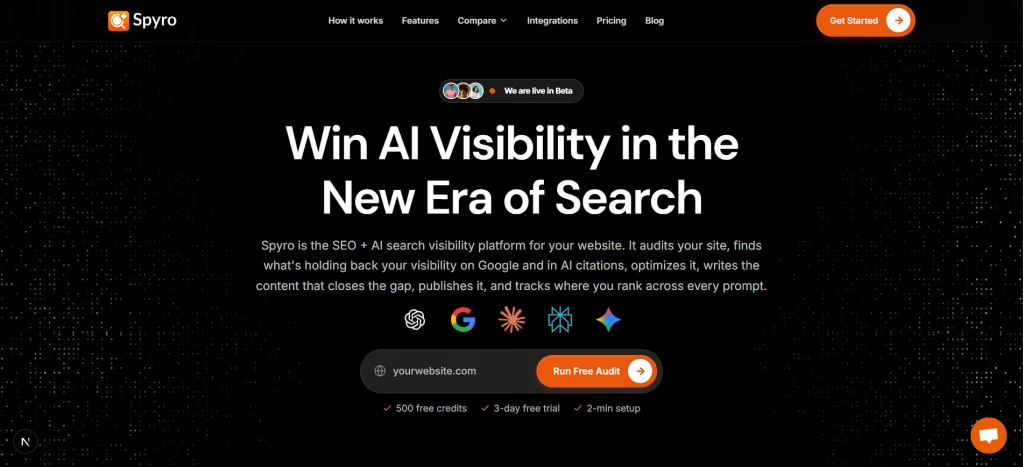
    Spyro AI is an SEO and AI search visibility platform. It tracks whether ChatGPT, Gemini, Claude, Perplexity and Google AI Overviews recommend your brand, and it also does keyword rank tracking, site audits, competitor research and an AI writer that publishes to your site. It’s one of the best Profound alternatives for teams that want AI search tracking next to SEO and content work, in a single subscription with a public price.

    Pricing. Starter is $29 a month, Pro is $99 and Agency is $399. Yearly billing is discounted (the pricing page says 20%). You can try it free for 3 days with 500 credits. One monthly credit pool covers everything. That’s 4,000 credits on Starter, 15,000 on Pro and 80,000 on Agency.

    The Starter plan, specifically. For $29 you get 2 AI engines (ChatGPT and Google AI Overviews), 15 tracked prompts per brand, 2 brands, 100 keywords per brand, up to 10 articles a month and unlimited team seats. Pro raises that to all 5 engines, 50 prompts, 10 brands, 500 keywords and 30 articles. Agency gives unlimited brands, 250 prompts and 1,500 keywords per brand.

    What it does for tracking. – You add prompts and Spyro AI reports how often your brand is mentioned, such as “3 of 5 checks,” along with your share of voice over time. – A competitor table ranks every brand named across your questions and shows who’s rising or falling. That’s how you spot rivals earning AI citations you don’t. – Open the AI mentions view to read the actual answer text, and use citation checks to see where your site is used as a source.

    What it does beyond tracking. Site audits with a Site Health score and an AI Search Health score (audits don’t use credits), a Google Search Console connection, competitor research scans, and an AI writer at 250 credits an article that publishes to WordPress, Shopify, Notion or any system through webhooks.

    Tradeoffs, plainly. Prompt checks run weekly, so short term swings show up slower than in a daily tool. Spyro AI doesn’t track Microsoft Copilot, Google AI Mode or Grok. The $29 tier covers two engines. There’s no self serve credit top up. And it doesn’t have Profound’s prompt volume data, shopping tracking or enterprise compliance.

    How it differs from Profound. Profound is the deeper specialist for enterprise answer engine work. Spyro AI is the wider workspace, with fewer monitoring refinements and more of the work around it. Our Spyro AI vs Profound comparison goes feature by feature.

    Who should consider it. Of the best Profound alternatives, this one suits SMBs, mid sized teams and agencies that want to track and then publish. If daily data or Copilot tracking is a must, pick a daily tool.

    2. Peec AI
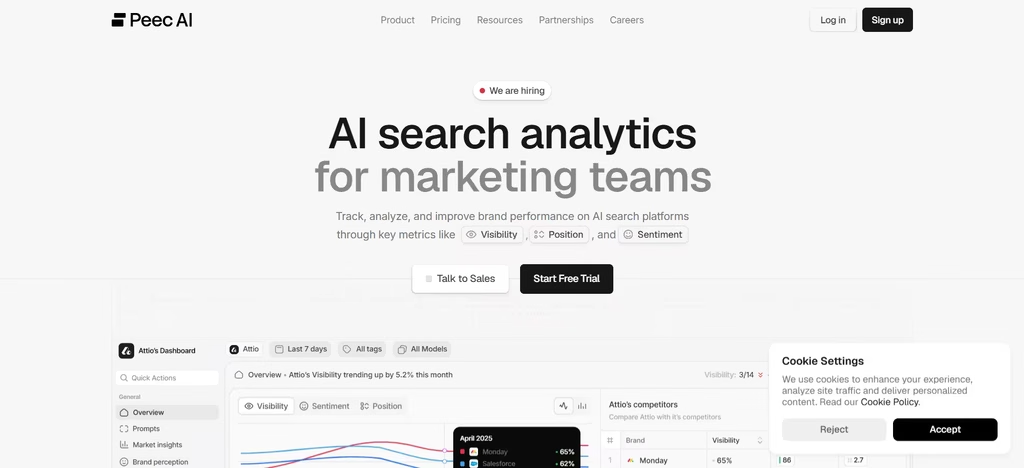
    Peec AI is the dedicated AI search analytics platform on this list, and one of the best Profound alternatives if you care about source level detail. It reports citation and source analytics, including gap reports that show sources naming your competitors but not you.

    Pricing. Peec’s pricing page showed tier names and limits but no prices when I checked, so these figures come from our earlier pricing check: Starter about $95 a month, Pro about $245 and Advanced about $495, with Enterprise custom. Annual billing takes about 15% off, and there’s a free trial. Separate agency plans are listed.

    Engines. You pick 3 models from a list that includes ChatGPT, AI Overviews, AI Mode, Copilot and Gemini. Extra models cost more, and Enterprise covers 13 plus.

    Tracking. 50 prompts on Starter, 150 on Pro and 350 on Advanced, checked daily. Users are unlimited on every plan.

    Best for. Marketing and SEO teams that will actually read the source reports.

    Tradeoffs. Starter costs more than three times an Otterly.ai Lite plan, and projects are capped at 1, 2 and 5.

    Versus Profound. You get published plan limits and a lighter setup, but fewer enterprise controls and no agent layer. Our Spyro AI vs Peec AI comparison covers that matchup, and the vendor lists its plans on its pricing page.

    3. Otterly.ai
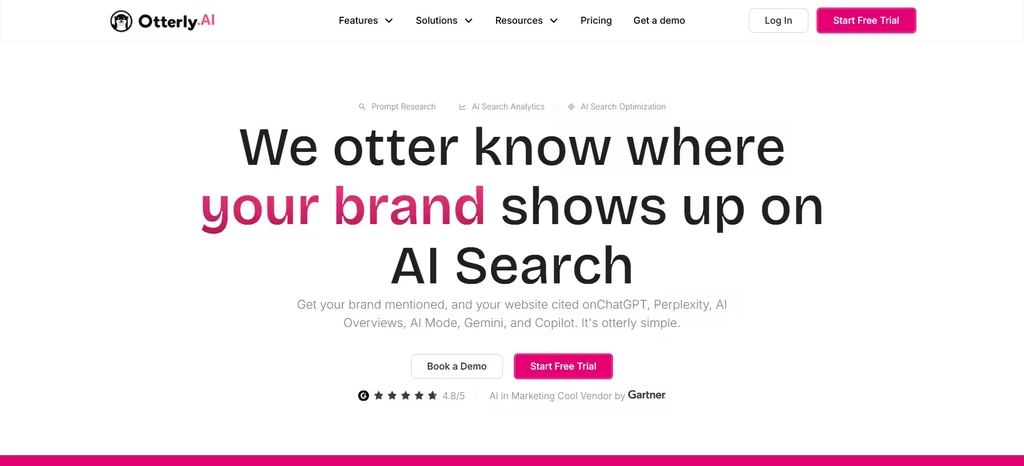
    Otterly.ai is the budget pick among the best Profound alternatives, a self serve monitoring tool with daily data on every plan. You add prompts, and it records brand mentions and link citations across four engines.

    Pricing. Lite is $29 a month ($25 billed annually), Standard is $189 ($160), Premium is $489 ($422) and Enterprise is custom. A free trial is available.

    Engines. ChatGPT, Google AI Overviews, Perplexity and Microsoft Copilot on every plan. Google AI Mode, Gemini and Claude are paid add ons, from $9 a month for AI Mode on Lite up to $439 for Claude on Premium.

    Tracking. 15 prompts on Lite, 100 on Standard and 400 on Premium, all daily. Extra prompts cost $99 a month per 100. API and MCP access start at Standard.

    Best for. Small teams that want cheap daily monitoring.

    Tradeoffs. The jump from $29 to $189 is steep when 15 prompts run out, and it’s a monitoring product only, with no writer or publishing workflow.

    Versus Profound. A public price from day one, against a sales led process. You give up agents, prompt volume data and enterprise features. Our Otterly.ai alternatives guide looks at it from the other side, and the plans are on Otterly’s pricing page.

    4. AIClicks
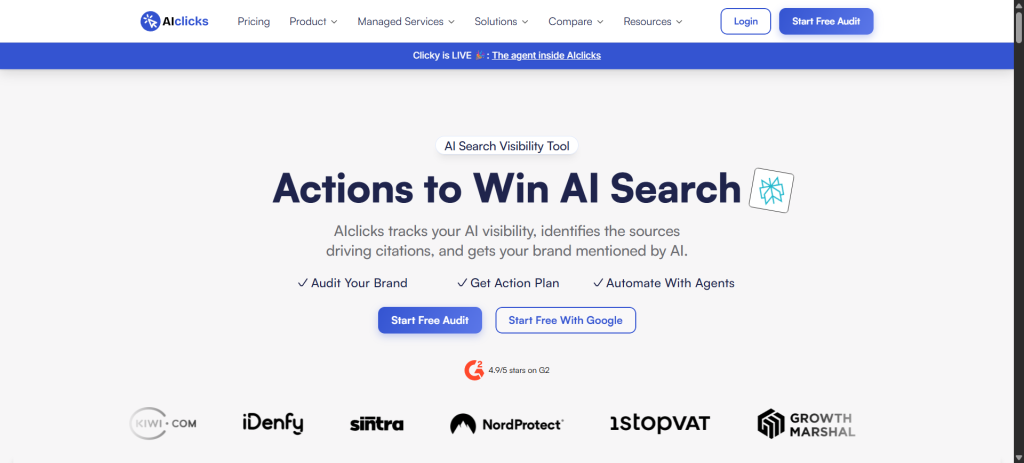
    Among the best Profound alternatives, AIClicks pairs daily tracking with an AI agent called Clicky and a monthly article allowance. It lists tracking across more than ten AI platforms, including ChatGPT, Gemini, Perplexity, Claude, Google AI Overviews, Copilot, AI Mode and Grok.

    Pricing. Starter is $59 a month, Pro is $189, Business is $499 and Enterprise is custom. Yearly billing is listed as up to 29% off, and Starter and Pro include a 3 day trial.

    Engines. 3 models on Starter, 4 on Pro and 6 on Business, so “ten plus platforms” doesn’t mean ten on a small plan.

    Tracking. 30 prompts on Starter, 150 on Pro and 300 on Business. Starter covers 1 website, while Pro and above are unlimited. Articles come to 5, 15 and 30 a month.

    Best for. Teams that want daily data, a chosen mix of models and some content output.

    Tradeoffs. Engine choice is capped by plan, and agencies are pointed to custom pricing.

    Versus Profound. Much lower entry cost and a clear plan table, but without Profound’s prompt volumes or compliance features. Our AIClicks alternatives guide covers the rivalry, and prices sit on the AIClicks pricing page.

    5. AthenaHQ

    AthenaHQ is an AEO and GEO platform. It’s the only tool here with a free plan, and it lists the widest model range of any of the best Profound alternatives, with 11 plus including ChatGPT, Perplexity, AI Overviews, AI Mode, Gemini, Claude, Copilot, Grok, DeepSeek, Meta AI and Mistral.

    Pricing. Essential is free with 300 credits a month. Starter is $295 a month with 3,600 credits, and Enterprise is custom. Annual billing takes 17% off.

    Tracking and features. Prompt and response analysis, competitor insights, content recommendations and an AI agent called Athena on every plan. Starter adds Shopify, Webflow, GA4 and Search Console integrations, CSV export and a content optimization agent, with API access as a paid add on. Enterprise adds SSO, audit logs and BI tool connections. Seats are unlimited on every plan.

    Best for. Teams that want a wide engine list and integrations, including online stores.

    Tradeoffs. Credits, not prompts, are the unit, so you’ll have to work out how far 3,600 go. The jump from free to $295 is big. I couldn’t find check frequency on the pricing page.

    Versus Profound. A published Starter price and a free way to try it, with a similar agent angle. Profound is the one with Fortune 100 depth and SOC 2 on a plan page. See AthenaHQ’s pricing page for the current credits.

    6. Scrunch
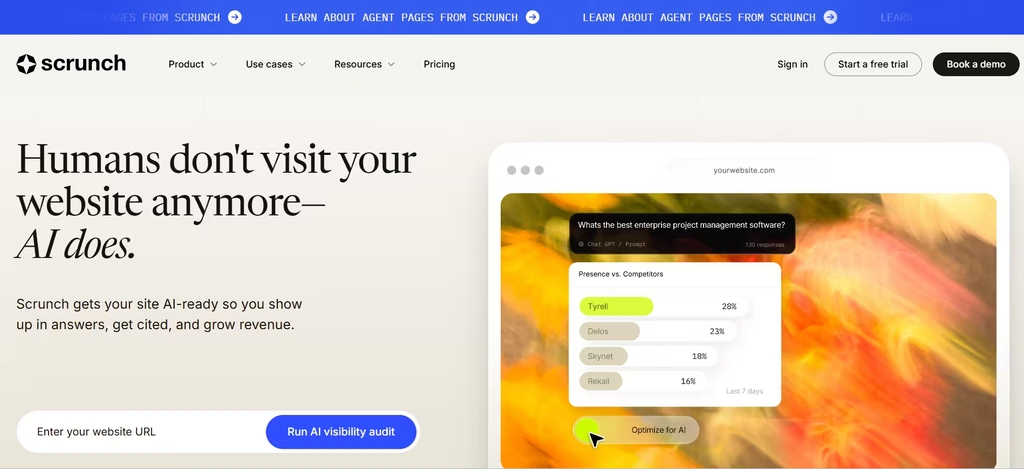
    Scrunch is the priciest self serve entry among the best Profound alternatives. It combines AI search monitoring with an agent experience approach to how AI systems read your site.

    Pricing. Starter is $250 a month billed annually, or $300 month to month. Growth is $417 annually or $500 monthly. Enterprise is custom. A 7 day trial needs no card, and extra seats are $25 a month.

    Engines. ChatGPT, Claude, Gemini, Perplexity, Google AI Mode, AI Overviews and Meta.

    Tracking. Starter includes 350 custom prompts, 1,000 industry prompts, 3 seats, 3 personas and 5 page audits. Growth raises those to 700, 2,500, 5 seats, 5 personas and 10 audits. Check frequency isn’t stated on the pricing page.

    Best for. Larger teams that segment by persona and care about page audits for AI agents.

    Tradeoffs. Entry costs about eight times Otterly.ai Lite, and the Data API is Enterprise only.

    Versus Profound. A published price and every engine on the entry plan, which is more than the third party reports say Profound’s entry tier offers. You’ll want a real need for personas to justify the cost. Details are on Scrunch’s pricing page.

    7. Ahrefs Brand Radar
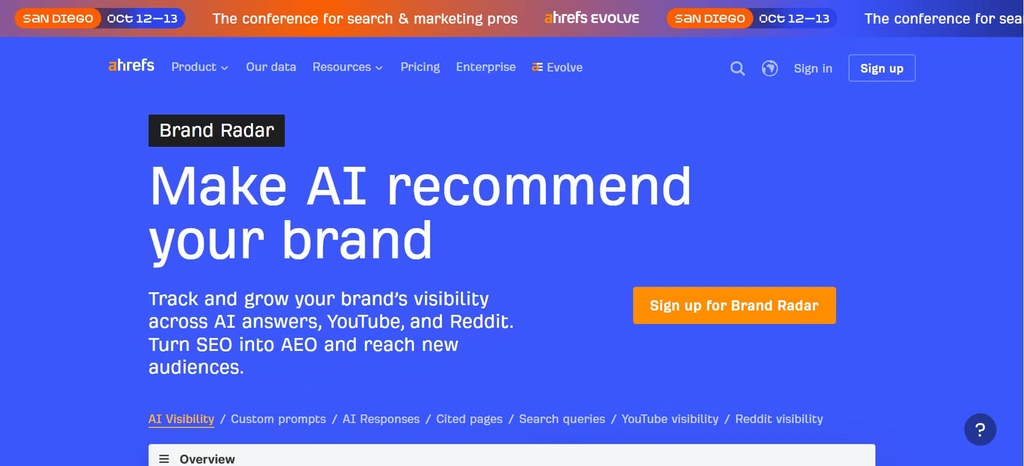
    Among the best Profound alternatives, Ahrefs Brand Radar works two ways. Custom Prompts track the exact questions you choose. The AI Visibility Index lets you look up how any brand appears across a large database of modeled prompts.

    Pricing. Custom Prompts start at $50 a month, with Growth at $100 and Scale at $250 from our earlier check. The AI Visibility Index is $199 a month, with 83 prompts a day and 2,500 monthly checks. Paid Ahrefs plans include a few custom prompts at no extra cost: 5 on Lite, 10 on Standard and 20 on Advanced.

    Engines. AI Overviews, AI Mode, ChatGPT, Perplexity, Gemini and Copilot, with Claude on Custom Prompts only.

    Tracking. Ahrefs sells checks, not prompts, so your real prompt count depends on engines, locations and update frequency. Updates can be daily, weekly or monthly.

    Best for. Teams already inside Ahrefs, or anyone who wants market wide benchmarks.

    Tradeoffs. Budgeting is harder because checks burn faster with more engines. The index works best for brands with real search demand.

    Versus Profound. Ahrefs gives you AI visibility inside a tool you may already pay for, with mentions, citations and share of voice metrics. You get less on agents and workflows. Read the Brand Radar page for current limits, or our Spyro AI vs Ahrefs comparison.

    8. Semrush AI Visibility Toolkit
    Among the best Profound alternatives, Semrush sells AI visibility as its own toolkit and also folds it into larger SEO plans. Its help documentation describes visibility overviews, competitor research, prompt research, brand performance, prompt tracking and an AI search site audit.

    Pricing. You pay $99 a month per domain for the base toolkit, which covers 25 tracked prompts and AI search checks on up to 100 pages. Semrush One bundles lift that to 50, 100 or 200 prompts. Extra domains are $99 each, and another 50 prompts is $60 a month. The help page says there’s no free trial for the toolkit, and that team members need their own $99 license.

    Engines. ChatGPT, Google AI, Gemini and Perplexity per our earlier check of the toolkit page.

    Tracking. Prompt tracking updates daily, in 40 plus countries.

    Best for. Teams and agencies already running their SEO in Semrush.

    Tradeoffs. Pricing per domain stacks up fast across clients, and 25 prompts doesn’t go far.

    Versus Profound. One login for classic SEO and AI search tracking, against a specialist platform. The details are in the Semrush help article, and our Spyro AI vs Semrush comparison covers the feature side.

    9. SE Ranking
    SE Ranking is an SEO platform that sells AI visibility as an add on, which makes it one of the best Profound alternatives for teams that don’t want another vendor. Its AI Search toolkit tracks Google AI Overviews, Google AI Mode, ChatGPT, Gemini and Perplexity, and it includes an AI results tracker, an AI visibility research tool and source analysis that sorts cited domains by type, such as media, blogs and forums.

    Pricing. The main Core plan is $103.20 a month billed annually ($129 monthly). The AI Search add on is $71.20 a month on annual billing, so about $174 a month together (my arithmetic). A white label Agency Pack is $69 a month and API access is $45. There’s a 14 day free trial.

    Tracking. You can compare up to five competitors by brand mentions, domain links or both. The pricing page doesn’t state prompt limits or check frequency.

    Best for. Teams that want rank tracking, audits and AI visibility in one tool, with reporting that can feed Data Studio, AgencyAnalytics or Whatagraph.

    Tradeoffs. AI tracking is an add on to an SEO plan, not the product’s headline, and the limits I’d want to see aren’t published.

    Versus Profound. A familiar SEO workflow with AI tracking bolted on, at a much lower price than an enterprise contract. See SE Ranking’s pricing page for the current add on price.

    10. Frase
    Frase is the content first entry among the AI visibility tools in the best Profound alternatives list. It’s a content operating system for SEO and AI search, with article generation, audits and publishing to WordPress, Webflow, Sanity, Wix or its own hosted CMS. AI visibility tracking is part of the package, but I couldn’t find its engine list or prompt limits on the pricing page.

    Pricing. Starter is $39 a month billed yearly ($49 monthly) for 1 seat, 1 site and 10 articles. Professional is $103 ($129) for 3 seats, 5 sites and 40 articles. Scale is $239 ($299) for 5 seats, up to 10 domains and 100 articles, with client ready reports and expanded AI visibility. Enterprise is custom. Every plan includes a free 7 day trial with no card.

    Best for. Writers and content teams who want to optimize pages for AI search and track visibility alongside, on a modest budget.

    Tradeoffs. If measurement depth is your priority, a dedicated tracker will go further. Frase is built around the article, not the answer engine report.

    Versus Profound. Frase is closer to the “fix it” half of the job. Profound is closer to the “measure it” half, plus agents. Plans are on Frase’s pricing page, and our AI content optimization guide explains what to write.

    Profound vs Spyro AI: How Do They Compare?

    This isn’t a sales pitch. Spyro AI and Profound are different kinds of product, which is why Spyro AI is one of the best Profound alternatives for some teams and a poor swap for others. In plenty of rows Profound is simply stronger.

    CapabilityProfoundSpyro AI
    Entry price7 day free trial, then custom (Starter $99 and Growth $399 reported by third parties)$29 Starter, $99 Pro, $399 Agency, all public
    AI enginesUp to 9 on Enterprise, 3 on the trial2 on Starter, 5 on Pro and Agency
    Check frequencyPrompts tracked daily on EnterpriseWeekly
    Prompt dataPrompt Volumes from real conversation dataYou add your own buyer questions
    Citations and competitorsCitation tracking, sentiment and competitive reportingRanked competitor table, share of voice, citation checks
    SEO researchNot a focusKeyword research, rank tracking, Search Console connection
    Content workflowAI Marketer agentsAI writer with publishing to WordPress, Shopify, Notion and webhooks
    Compliance and supportSSO/SAML, SOC 2, dedicated Slack or specialist supportStandard support, no SOC 2 listed
    AgenciesClient workspaces by credits, no dollar price shownAgency plan with unlimited brands, no white label listed
    Best forLarge brands with a dedicated AEO functionSMBs, teams and agencies that want tracking plus SEO and content

    Where Profound is stronger: engine breadth, daily tracking, prompt volume data, compliance and support. Where Spyro AI is stronger: a public price, all five engines on one mid priced plan, and SEO and content tools that Profound doesn’t focus on. Where they aren’t comparable: one is an enterprise specialist and the other is a workflow tool, so the real question is whether you want a specialist or a wider tool.

    How We Compared the Best Profound Alternatives

    We separated documented capabilities from opinion and said where another tool may fit better. Nothing here is a controlled accuracy test.

    It’s a feature and pricing review built from public vendor information, checked in 2026. I used official pricing pages and product documentation. Where a price wasn’t visible that day (Peec AI, and some Ahrefs and Semrush details), I used the figure from our earlier pricing check and said so. Where nothing was published, I wrote “custom” or “not stated” rather than guess.

    We compared each of the best Profound alternatives on:

    • Current pricing and what the price includes
    • AI engine coverage on the entry plan
    • Prompt limits and check frequency
    • Competitor tracking and citations
    • Reporting, exports and integrations
    • SEO and content workflows
    • Team and agency features
    • Scope, meaning specialist monitor or wider platform

    We left out tools that optimize content but don’t track AI answers, so every one of these AI visibility tools measures something.

    How Do You Choose Between the Best Profound Alternatives?

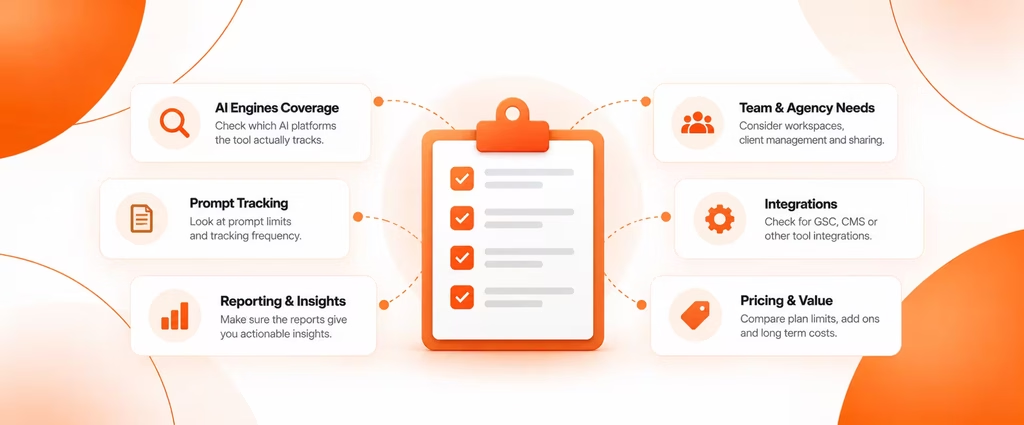
    Before you pick from the best Profound alternatives, run through this list. It’ll save you a painful migration.

    1. Write down your engines. Then check they’re included on the plan you can afford, not only on enterprise.
    2. Count your prompts. One brand might start with 15 to 30 real buyer questions. Agencies should multiply by client count.
    3. Decide on daily or weekly. Daily helps if you report often. Weekly is usually fine for monthly reporting.
    4. Check competitor and citation depth. Search Engine Land recommends tracking citation frequency and share of voice against competitors across platforms (Search Engine Land), so make sure your plan supports both.
    5. Ask about exports. Download your history before you cancel anything.
    6. Total the real monthly cost. Include add on engines, extra prompts, seats and domains.
    7. Run two trials side by side. Use the same ten prompts for a week. You’ll learn more than any table can teach you.

    And keep expectations honest. Google says there are no additional requirements to appear in AI Overviews or AI Mode, and that good SEO practices still apply. These tools measure your visibility. They don’t flip a ranking switch. To act on what they show, read how to get cited in ChatGPT and Perplexity and our SEO vs GEO vs AEO guide.

    How Do You Switch From Profound Without Losing Your Data?

    Moving to any of the best Profound alternatives isn’t hard, but do the exports first. Profound lists CSV and JSON exports and full prompt history on Enterprise only, since the trial has neither, so ask what you can pull down before you cancel anything. After that, rebuild your prompt list. Mine would be 15 to 30 buyer questions sorted by topic, because I’d rather watch a short list I trust than a long one nobody reads.

    Before you commit, confirm every engine you need is on a plan you can afford (enterprise tiers don’t count). Then run both tools together for a couple of weeks and compare answers. A dip right after the move? Don’t panic. Tools sample answers differently, so a drop isn’t always real.

    Is There a Cheaper Option Among the Best Profound Alternatives?

    Yes, and a few of the best Profound alternatives cost a fraction of an enterprise plan. On published prices the lowest are Spyro AI Starter and Otterly.ai Lite at $29 a month. Frase starts at $39 billed yearly (it’s a content tool first), Ahrefs Brand Radar Custom Prompts at $50 and AIClicks Starter at $59. And if you just want to poke around, AthenaHQ’s Essential plan is free with 300 credits.

    Cheaper isn’t the same as equivalent, though. Engines, prompts and check frequency vary a lot (the table above shows how much), and a $29 plan won’t do what an enterprise contract does.

    Which of the Best Profound Alternatives Fits Your Team?

    No overall ranking. Here’s how the best Profound alternatives map to team types, based on what each vendor documents:

    If you needConsiderWhy
    A published price and a cheap startSpyro AI or Otterly.aiBoth start at $29, with different engines and check frequency
    Analytics and source reportsPeec AISource and citation analytics, daily runs
    Tracking plus content in one subscriptionSpyro AI, AIClicks or FraseAll three bundle article generation
    A free way to try an AEO platformAthenaHQFree Essential plan with 300 credits
    Persona level data and agent focused auditsScrunchPersona segments and page audits
    AI tracking inside an SEO suite you already pay forAhrefs, Semrush or SE RankingOne login, one bill
    AgenciesSpyro AI Agency, a Peec AI agency plan, or Semrush per domainUnlimited brands at Spyro AI, white label reporting at Peec AI
    Enterprise security and complianceProfoundSSO/SAML, SOC 2 and dedicated support

    Not sure where you stand today? Run the free AI Visibility Checker before you pay for anything.

    Should You Stay With Profound?

    Sometimes. If you run a large brand with a dedicated AEO team, need SOC 2 and SSO, want nine engines checked daily and will really use prompt volume data and agents, I’d stay put. Switching costs time, and the best Profound alternatives won’t match that stack.

    I’d look elsewhere if you’re an SMB or agency that can’t see a price, you only need three or four engines, or you want SEO and content tools in the same place. The point of reading about the best Profound alternatives isn’t to leave. Knowing what you’re paying for is the point.

    Key Takeaways

    • Start with your gap. Price, engines, analytics, SEO and content tools or agency needs will point you to a different one of the best Profound alternatives.
    • Profound pricing for brand plans isn’t on its official page, only a 7 day trial and Enterprise. Third parties report $99 and $399 tiers, so get a current quote before you budget.
    • Spyro AI suits teams that want AI search tracking plus SEO and content. It checks weekly and doesn’t cover Copilot or AI Mode.
    • Already live in Ahrefs, Semrush or SE Ranking? Those are the best Profound alternatives for you. Peec AI, AthenaHQ and Scrunch bring more analytics depth.
    • Before you commit, trial two of the best Profound alternatives side by side with the same ten prompts.

    Frequently Asked Questions

    What are the best Profound alternatives in 2026?

    There isn’t one best option. Spyro AI suits teams that want tracking next to SEO and content, Peec AI suits analytics heavy teams, Otterly.ai suits low cost daily monitoring, and Ahrefs, Semrush and SE Ranking suit teams that already use those suites. AthenaHQ and Scrunch fit teams that want more on engine breadth and persona data.

    How much does Profound cost?

    Profound’s official pricing page shows a free 7 day trial, an Agency Growth plan with 400 credits a month per client workspace, and custom Enterprise pricing, as of 2026. Third party sources report Starter at $99 and Growth at $399 a month, but those figures weren’t on the official page, so confirm with Profound.

    Is there a free option among the best Profound alternatives?

    Not a fully free one, but you can start free. AthenaHQ has a free Essential plan with 300 credits, and Spyro AI, SE Ranking, Frase, Scrunch and Otterly.ai offer free trials. Spyro AI also has a free AI Visibility Checker that needs no signup.

    Is Spyro AI better than Profound?

    Not across the board. Profound has more engines on Enterprise, daily tracking, prompt volume data and compliance features. Spyro AI has a public price, all five engines on its Pro plan, and SEO research and an AI writer.

    What is the cheapest of the best Profound alternatives?

    On published prices, Spyro AI Starter and Otterly.ai Lite are the lowest at $29 a month, though they differ on engines (two on Spyro AI Starter, four on Otterly.ai Lite) and check frequency (weekly against daily). Frase starts at $39 billed yearly but it’s a content tool first, and AthenaHQ has a free plan with 300 credits.

    Which of the best Profound alternatives is best for agencies?

    It depends on client count and white label needs. Spyro AI’s Agency plan gives unlimited brands for $399 a month, Peec AI lists dedicated agency plans with white label reporting, SE Ranking sells a white label Agency Pack, and Semrush prices per domain. Compare them by client count, not headline price.

    Is there a true one to one replacement for Profound?

    Not really. Profound combines up to nine engines, prompt volume data, agents and enterprise security, and no single rival matches every piece at a published price. Most teams pick the two or three things they actually use and choose from the best Profound alternatives on that basis.

    Pick the Gap, Then Pick From the Best Profound Alternatives

    Write down your engines, your prompt count and your budget. Then shortlist two of the best Profound alternatives and run both trials with the same prompts. Want a baseline first? Run the free AI Visibility Checker and see where your brand shows up today, or compare plans on the Spyro AI pricing page.

  • Otterly AI Alternatives: Better Options for AI Search Tracking

    Otterly AI Alternatives: Better Options for AI Search Tracking

    Quick Answer: What Are the Best Otterly.ai Alternatives?

    The best Otterly.ai alternatives in 2026 are Spyro AI, Peec AI, Profound, AIClicks, Scrunch, Ahrefs Brand Radar and Semrush, and the right one depends on what Otterly.ai doesn’t give you today. There’s no single winner, so here’s how I’d match them to a need:

    • Broader SEO, GEO and content workflow: Spyro AI, which pairs AI visibility tracking with keyword research, site audits and an AI writer.
    • Dedicated analytics for a marketing team: Peec AI.
    • Enterprise controls and compliance: Profound, or Scrunch if you want a published price.
    • Already paying for an SEO suite: Ahrefs Brand Radar or Semrush.
    • Cheapest daily tracking: honestly, Otterly.ai itself. Staying put beats switching to any of the Otterly.ai alternatives if daily data and a low price are all you need.

    Spyro AI, and it’s in this list. I’ve given every one of these Otterly.ai alternatives the same checks, ours included, and said plainly where another tool is the better fit.

    What Are People Really Asking About Otterly.ai?

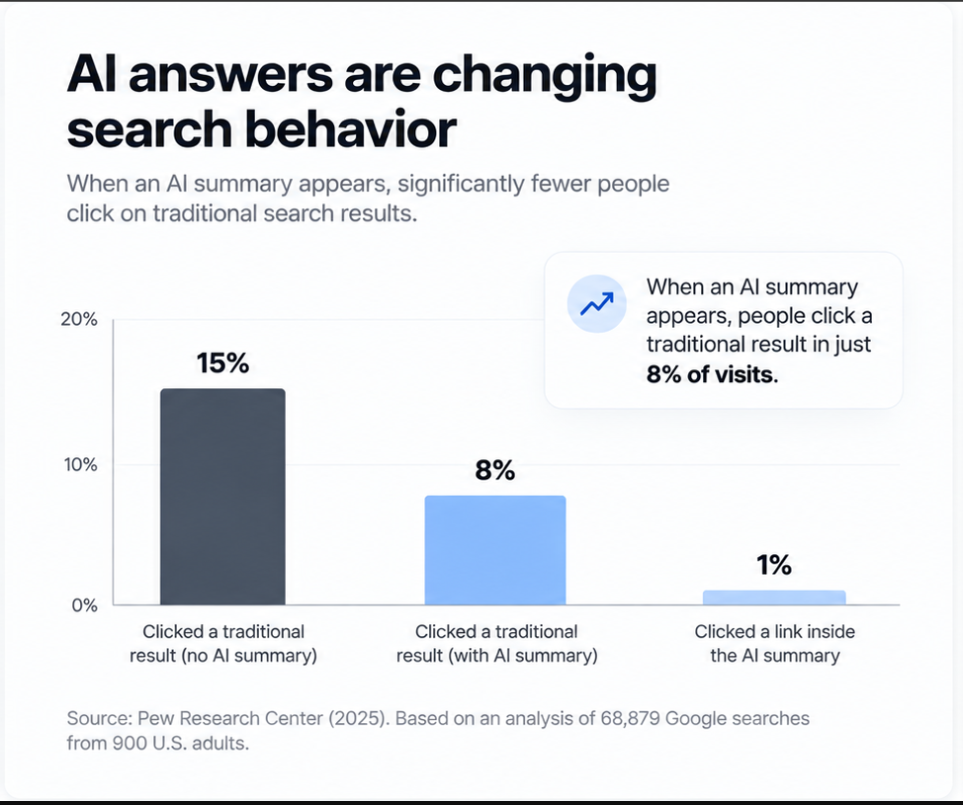
    Otterly.ai is an AI search monitoring platform. You add the questions your buyers ask, it runs them through AI engines like ChatGPT, Perplexity and Google AI Overviews, and it records whether your brand is mentioned or cited. That’s AI search tracking in one sentence. It’s the measurement side of generative engine optimization, and it matters because answers get read without clicks. Pew Research found that Google users clicked a traditional result in 8% of visits when an AI summary appeared, against 15% when it didn’t (Pew Research Center).

    So why would anyone look for Otterly.ai alternatives? Search data in Spyro AI shows people researching the tool through phrases like otterly ai, otterly ai pricing and otterly ai reviews. That’s a buyer comparing options, not a casual reader. This guide to Otterly.ai alternatives is for that buyer: SMBs, mid sized marketing teams and agencies who already know they want AI visibility tracking and need to pick a tool.

    Pricing and plan details were checked on October 6, 2026 against publicly available vendor information. They change often, so confirm before you pay.

    Which Otterly.ai Alternatives Compare Best at a Glance?

    One table of Otterly.ai alternatives, covering price, engines, prompts, competitors, citations and best fit. On a phone, swipe sideways to see every column. All prices are the lowest published monthly entry point unless noted.

    ToolStarting priceAI engines on the entry planPrompt trackingCompetitor trackingCitation trackingBest for
    Spyro AI$29/moChatGPT and AI Overviews (all 5 engines on Pro)15, 50 or 250 prompts per brand, weeklyRanked competitor table, share of voiceAI mentions view and citation checksTracking plus SEO and content in one tool
    Otterly.ai (baseline)$29/moChatGPT, AI Overviews, Perplexity, Copilot (Gemini, AI Mode and Claude cost extra)15, 100 or 400 prompts, dailyBrand reports against top competitors, share of voiceLink citation analysisLow cost daily monitoring
    Peec AI$95/mo3 models of your choice (more cost extra)50, 150 or 350 prompts, daily5 to 20 competitors by planSource and citation analyticsAnalytics focused marketing teams
    ProfoundCustom (7 day free trial)ChatGPT, Gemini, AI Overviews on trial (up to 9 on Enterprise)50 prompts a day on trial, custom afterCompetitive presence reportingCitation and sentiment trackingEnterprise brands
    AIClicks$59/mo3 models of your choice30, 150 or 300 prompts, dailyCompetitor visibility next to yoursSources and domains AI engines citeDaily tracking with content help
    Scrunch$250/mo billed yearly ($300 monthly)ChatGPT, Claude, Gemini, Perplexity, AI Mode, AI Overviews, Meta350 or 700 custom prompts, frequency not statedBenchmarking by persona and segmentCitation and source mappingLarger teams that want persona data
    Ahrefs Brand Radar$50/mo (Custom Prompts)AI Overviews, AI Mode, ChatGPT, Perplexity, Gemini, Copilot (Claude on Custom Prompts)Sold as monthly checks, daily updatesBuilt in benchmarkingMentions and citations metricsTeams already on Ahrefs
    Semrush AI Visibility Toolkit$99/mo per domainChatGPT and Google AI (Gemini and Perplexity also listed on the toolkit page)25 prompts (50 to 200 on Semrush One plans), dailyCompetitor analysis and gap findingCitation tracking in AI answersTeams already on Semrush

    Notice how little the price column tells you. Spyro AI and Otterly.ai both start at $29, yet one covers two engines on that plan and the other covers four. For a deeper look at what each vendor charges, see our AI visibility tools pricing comparison.

    What Is Otterly.ai?

    Otterly.ai is a self serve platform for monitoring brand visibility in AI generated answers. It’s built for marketing teams, agencies, content strategists and SEO professionals. The company says more than 40,000 marketing professionals use it, which is the vendor’s own claim, so treat it as marketing copy rather than an audit.

    Here’s what it does, based on its public product and pricing pages.

    Prompt tracking. You add prompts, the buyer style questions you want to appear in, and Otterly.ai runs them daily on every plan. If you don’t know which prompts to track, there’s an AI prompt research tool that surfaces topics and intent patterns. Prompts can be tagged and filtered by country (50 plus countries are listed).

    Brand reports and competitor monitoring. Reports show brand mentions, how often you’re cited and your average position in answers. A Brand Visibility Index scores your presence, and charts show brand coverage over time and share of voice against competitors.

    Citation and mention monitoring. Link citation analysis shows which websites AI engines cite. Otterly.ai separates direct model output from answers built on web search, which is a useful distinction when you’re deciding whether to chase a citation or a training data mention.

    GEO audit. A GEO audit checks crawlability and AI readiness of your pages and gives recommendations. It also lists ChatGPT ads tracking on its plans.

    Engines. ChatGPT, Google AI Overviews, Perplexity and Microsoft Copilot are included on every plan. Google AI Mode, Gemini and Claude are paid add ons.

    Reporting and access. Reports can be filtered by date, engine, tag and region and exported. Looker Studio, API and MCP access start on the Standard plan.

    Who Is Otterly.ai Best For?

    Small teams and solo marketers who want daily AI search monitoring on a small budget. Agencies that join its partner program also get extra prompts and Looker Studio reporting. If you mostly need to watch ChatGPT, Perplexity, AI Overviews and Copilot, it covers that out of the box, and you can skip the Otterly.ai alternatives entirely.

    Where Does Otterly.ai Fall Short?

    I’d group the tradeoffs this way, and none of them are flaws so much as scope. If you can live with them, none of the Otterly.ai alternatives below is automatically better.

    • Entry plan is thin. Lite gives you 15 prompts, one workspace and 3 recommendations a week.
    • Engines cost extra. Gemini, AI Mode and Claude are add ons priced by plan.
    • The price ladder jumps. Going from Lite at $29 to Standard at $189 is a big step when you outgrow 15 prompts.
    • It’s a monitoring tool. The pages I read list no keyword research, rank tracking, AI writer or publishing workflow. If you want those, you’ll pair it with other software.

    Otterly.ai Pricing: What Does Each Plan Include?

    Searches for otterly ai pricing usually want one number. There are four, and the add ons matter as much as the base price when you’re benchmarking Otterly.ai alternatives. Figures below come from the vendor’s public pricing information on October 6, 2026.

    PlanMonthly priceAnnual price (per month)PromptsWorkspacesNotable inclusions
    Lite$29$251513 recommendations a week, group onboarding
    Standard$189$160100UnlimitedAPI, MCP, Looker Studio connector, unlimited recommendations
    Premium$489$422400UnlimitedEverything in Standard, higher API limits, personal onboarding
    EnterpriseCustomCustom1,000 plusUnlimitedSSO, dedicated customer success manager, quarterly GEO health check

    A few things the table doesn’t show:

    • Billing. Annual billing takes 15% off. A 7 day free trial is available.
    • Every plan includes unlimited team members, daily tracking and the four core engines.
    • Extra prompts. An additional 100 prompts costs $99 a month on Standard and Premium.
    • Engine add ons. AI Mode and Gemini are $9 each on Lite, $59 on Standard and $149 on Premium. Claude is $29, $109 and $439 on the same plans.
    • Agency partner program. Partners get 150 prompts on Standard and 500 on Premium, with workspace management and Looker Studio reporting.

    Here’s the thing most pricing summaries skip. If you want all seven engines, the real price is higher than the headline. Lite with AI Mode, Gemini and Claude comes to about $76 a month ($29 plus $9, $9 and $29, my arithmetic). Standard with the same three comes to about $416. Price your actual engine list before you compare. If Claude tracking is a must, that’s often where the best Otterly.ai alternatives start to look cheaper.

    Otterly.ai Reviews: What Should You Look For?

    People searching for otterly ai reviews usually want to know one thing: will it hold up once I’m paying for it? I’m not going to invent testimonials, and you shouldn’t trust a summary that does.

    A snapshot, with a caveat. When I checked on October 6, 2026, Otterly.ai’s G2 listing showed an average of about 4.7 out of 5 from 54 reviews, and Otterly.ai’s own site cites a slightly higher G2 figure. The two numbers differ, which is a reminder that ratings move. Use them as a signal and read the written reviews yourself.

    When you do, look for these things. They also tell you which Otterly.ai alternatives to shortlist:

    What to evaluateWhat to look for in reviewsQuestion to ask the vendor
    Tracking reliabilityComplaints about missing or inconsistent resultsHow are answers sampled and repeated?
    Reporting qualityMentions of exports, branded reports, Looker StudioCan I white label or schedule reports?
    AI engine coverageReviewers who needed Claude, Gemini or AI ModeWhich engines are included on my plan?
    Prompt limitsPeople hitting the cap earlyWhat does the next 100 prompts cost?
    Competitor trackingHow many competitors and how deepAre competitors set per prompt or per brand?
    Citation trackingSource level detail, not just countsCan I see which URLs get cited?
    Ease of useSetup time, onboarding qualityIs there hands on onboarding on my plan?
    Pricing and valueSurprise add on costsWhat’s my total with the engines I need?
    Agency workflowsMultiple clients, billing, workspacesIs there a partner or agency plan?
    Data freshnessDaily versus weekly checksHow often is each prompt re run?

    One more habit worth having. Before buying any SaaS tool, I look at what the company has actually shipped lately. Product announcements, release notes and the vendor’s LinkedIn page are a quick read on how active development is. Some buyers even search otterly ai linkedin to see recent posts and hiring before they commit. It won’t tell you if the tool is accurate, but a vendor that ships often is easier to trust with a twelve month plan.

    Why Look for Otterly.ai Alternatives?

    Nothing’s wrong with Otterly.ai. It’s a solid, focused product with daily data. But buyers hit the same few walls, and each one points to a different set of Otterly.ai alternatives.

    1. They need more engines on the base plan. Gemini, Claude and AI Mode are paid extras.
    2. They’ve outgrown 15 prompts. The step from $29 to $189 is steep for a growing team.
    3. They want SEO and content in the same place. Tracking tells you where you’re missing. Fixing it means keyword research, writing and publishing somewhere else.
    4. They already pay for Semrush or Ahrefs. Adding another login and invoice feels wasteful.
    5. They need enterprise features. SSO, compliance documentation and dedicated support push some buyers toward sales led tools.
    6. They run an agency. Per client workspaces, white label reporting and billing decide the real cost.

    If none of those apply to you, you may not need Otterly.ai alternatives at all. And if you’re also weighing a rival tool, our AIClicks alternatives comparison covers a neighbouring set of options.

    Best Otterly.ai Alternatives

    The order of these Otterly.ai alternatives isn’t a ranking. Spyro AI is listed first only because we want the disclosure up front. Each section covers pricing, engines, tracking, the strongest use case, the tradeoffs and how the tool differs from Otterly.ai.

    1. Spyro AI: A Broader Alternative to Otterly.ai

    Spyro AI is an SEO and AI search visibility platform. It tracks whether ChatGPT, Gemini, Claude, Perplexity and Google AI Overviews recommend your brand, and it also handles keyword rank tracking, site audits, competitor research and an AI writer that publishes to your site. It may be a better fit than Otterly.ai for teams that want AI visibility tracking next to SEO, GEO and content workflows, instead of a standalone monitoring product.

    Pricing. Starter is $29 a month, Pro is $99 and Agency is $399. Yearly billing is discounted (the pricing page says 20%, while the billing documentation describes two months free, so confirm at checkout). There’s a 3 day free trial with 500 credits. Everything runs on one monthly credit pool: 4,000 credits on Starter, 15,000 on Pro and 80,000 on Agency.

    Engines. Starter tracks 2 AI providers, ChatGPT and Google AI Overviews. Pro and Agency track all five, including Claude, Gemini and Perplexity, with no per engine add ons.

    What it does for tracking.

    • Prompt monitoring: 15 prompts per brand on Starter, 50 on Pro and 250 on Agency.
    • Results show as a frequency, such as “mentioned in 3 of 5 checks,” plus share of voice.
    • A ranked competitor table shows every brand mentioned across your questions and whether it’s trending up or down.
    • An AI mentions view shows the actual answer text, and citation checks show where your site is used as a source.

    What it does beyond tracking.

    • Keyword rank tracking and a Google Search Console connection.
    • A site audit with a Site Health score and an AI Search Health score, with PDF reports. Audits don’t use credits.
    • Competitor research scans and keyword analysis.
    • An AI writer (250 credits per article, so 10 articles use 2,500 of the 4,000 Starter credits) that publishes to WordPress, Shopify or any system through webhooks.
    • A Google Analytics 4 connection for AI referral traffic, an API key, and unlimited team members on every plan.

    Tradeoffs, plainly. Prompt checks run weekly, not daily, so short term swings show up slower than in Otterly.ai. Spyro AI doesn’t track Microsoft Copilot, Google AI Mode or Grok. The $29 tier covers two engines. There’s no self serve credit top up, so heavy article use can use up credits fast. White label reporting isn’t listed, and exports aren’t documented on the pages I read.

    How this Otterly.ai alternative differs. Otterly.ai is the deeper monitoring specialist with daily data and Copilot. Spyro AI is the wider workspace: fewer monitoring refinements, more of the work around it. See how it stacks against the other big names in our comparisons with Semrush, Ahrefs and Profound.

    Who should consider it. SMBs, mid sized teams and agencies that want to track and then publish, and agencies that need unlimited brands on one plan. If daily data is non negotiable, pick a daily tool.

    2. Peec AI

    Among Otterly.ai alternatives, Peec AI is the dedicated AI search analytics platform. Its strength is analysis: source and citation analytics, gap reports that show sources naming competitors but not you, and prompt level detail.

    Pricing. Starter is $95 a month, Pro is $245 and Advanced is $495, with Enterprise custom. These plan prices come from our October 4 check, since the pricing page I read today didn’t display the numbers. Annual billing takes 15% off, and there’s a free trial. Separate agency plans are listed.

    Engines. You choose 3 models from a list that includes ChatGPT, Google AI Overviews, AI Mode, Copilot and Gemini. Extra models cost more, and Enterprise covers 13 plus. Perplexity wasn’t in the standard list when we last checked, so confirm that if it matters.

    Tracking. 50 prompts on Starter, 150 on Pro and 350 on Advanced, run daily. Competitors are capped at 5, 10 and 20. Users are unlimited on every plan.

    Strongest use case. Marketing and SEO teams who’ll use the source reports and want daily data on a fixed set of engines.

    Tradeoffs. Starter costs more than three times Otterly.ai Lite, and projects are capped (1, 2 and 5).

    As an Otterly.ai alternative. You get more prompts at entry (50 against 15) and a heavier analytics layer, but you pay noticeably more. Our Spyro AI vs Peec AI comparison goes further if those two are your shortlist.

    3. Profound

    Profound is the enterprise pick among Otterly.ai alternatives, an AI visibility platform with an agent layer. Its Answer Engine Insights tracks brand visibility, citations and sentiment, and its AI Marketer agents help produce content and reports. Agent Analytics looks at AI sourced traffic.

    Pricing. A free 7 day trial includes 50 prompts a day. After that, Enterprise pricing is custom. Brand plan prices aren’t publicly listed. For agencies, the Agency Growth plan gives 400 credits a month per client workspace.

    Engines. The trial covers ChatGPT, Gemini and Google AI Overviews. Enterprise tracks up to nine answer engines, including Perplexity, Claude, Copilot and DeepSeek.

    Tracking. Enterprise adds unlimited prompts, multiple languages and regions, full API access, CSV and JSON exports and all time history. The trial has no history, exports or API.

    Strongest use case. Large brands that need SSO and SAML, SOC 2 compliance and a dedicated support path.

    Tradeoffs. No self serve price means a sales process, which is a poor match for a small team.

    As an Otterly.ai alternative. Otterly.ai is self serve with a public price from day one. Profound is built for procurement. Compare them in more detail on our Spyro AI vs Profound page.

    4. AIClicks

    AIClicks is a daily tracking platform with a content angle. It tracks prompts across a long list of AI platforms (the vendor lists more than ten) and includes AI written articles in each plan.

    Pricing. Starter is $59 a month, Pro is $189 and Business is $499, with Enterprise custom. Yearly billing is listed as up to 29% off, and Starter and Pro include a 3 day trial.

    Engines. 3 models you choose on Starter, 4 on Pro and 6 on Business.

    Tracking. 30 prompts on Starter, 150 on Pro and 300 on Business, tracked daily. Starter covers 1 website, while Pro and above are unlimited. Plans include 5, 15 and 30 articles a month.

    Strongest use case. Teams who want daily data, a chosen mix of models and some content output in one subscription.

    Tradeoffs. Engine choice is capped by plan, so “ten plus platforms” doesn’t mean ten on Starter. Agencies are pointed to custom pricing.

    As an Otterly.ai alternative. At $59 you get 30 prompts against Otterly.ai’s 15 for $29, so the cost per prompt is close. The difference is the article allowance and the model choice. Our AIClicks alternatives guide covers that rivalry from the other side.

    5. Scrunch

    Scrunch is the priciest self serve entry among these Otterly.ai alternatives. It combines AI search monitoring with what it calls an agent experience approach to how AI systems read your site.

    Pricing. Starter is $250 a month billed annually, or $300 month to month. Growth is $417 annually or $500 monthly. Enterprise is custom. A 7 day trial is included. Extra seats are $25 a month.

    Engines. The pricing page lists ChatGPT, Claude, Gemini, Perplexity, Google AI Mode, AI Overviews and Meta.

    Tracking. Starter includes 350 custom prompts, 1,000 industry prompts, 3 seats, 3 personas and 5 page audits. Growth raises those to 700, 2,500, 5 seats, 5 personas and 10 audits. Check frequency isn’t stated on the pricing page, and the Data API is Enterprise only.

    Strongest use case. Larger teams that segment by persona and care about page level audits for AI agents.

    Tradeoffs. Entry costs about eight times Otterly.ai Lite. You’d want a real need for personas to justify that.

    As an Otterly.ai alternative. More prompts and a broader engine list on the base plan, at a much higher price and with less clarity on frequency.

    6. Ahrefs Brand Radar

    Ahrefs Brand Radar works two ways. Custom Prompts track the exact questions you choose. The AI Visibility Index lets you look up how any brand appears across a large database of prompts modeled from search data.

    Pricing. Custom Prompts start at $50 a month. The AI Visibility Index is $199 a month with 83 prompts daily and 2,500 plus monthly checks. Paid Ahrefs plans include a few custom prompts at no extra cost.

    Engines. AI Overviews, AI Mode, ChatGPT, Perplexity, Gemini and Copilot, with Claude available on Custom Prompts. YouTube, TikTok and Reddit visibility is offered in beta.

    Tracking. Ahrefs sells checks, not prompts, so your real prompt count depends on how many platforms, locations and update frequencies you pick. That makes budgeting trickier.

    Strongest use case. Teams already inside Ahrefs, or anyone who wants market wide benchmarks for established brands.

    Tradeoffs. The index works best for brands with real search demand, so smaller or newer brands may need Custom Prompts instead.

    As an Otterly.ai alternative. Otterly.ai is simpler to price because it’s prompt based. Ahrefs rewards you for the suite you already pay for. See our Spyro AI vs Ahrefs comparison.

    7. Semrush AI Visibility Toolkit

    Among Otterly.ai alternatives, Semrush sells AI visibility as a toolkit and also folds it into its larger SEO plans. Its documentation describes competitor analysis, share of voice, sentiment, citation tracking and an AI readiness site audit.

    Pricing. The base toolkit is $99 a month and covers one domain, with extra domains at $99 each. It includes 25 prompts, expandable to 50, 100 or 200 on Semrush One plans, and you can add 50 more prompts for $60 a month. Seat pricing was described differently across the sources I read, and I couldn’t confirm a free trial in the documentation, so check both.

    Engines. The documentation names ChatGPT and Google AI Mode. The toolkit page also lists Gemini and Perplexity.

    Tracking. Prompt tracking updates daily. Brand Performance reports update weekly.

    Strongest use case. Teams and agencies that already run SEO in Semrush and want AI visibility alongside it.

    Tradeoffs. Per domain pricing adds up across clients, and 25 prompts is a low ceiling.

    As an Otterly.ai alternative. Otterly.ai is cheaper per tracked brand and more focused. Semrush wins when consolidation matters. We cover this matchup in our Spyro AI vs Semrush comparison.

    Otterly.ai vs Spyro AI: How Do They Really Compare?

    This isn’t a sales pitch. They’re different kinds of product, and in some rows one is simply stronger.

    CapabilityOtterly.aiSpyro AI
    AI visibility trackingDaily tracking on every planWeekly tracking on every plan
    AI engine coverageChatGPT, AI Overviews, Perplexity, Copilot included. Gemini, AI Mode and Claude are add onsChatGPT and AI Overviews on Starter. All 5 engines on Pro and Agency. No Copilot or AI Mode
    Prompt tracking15, 100 or 400 prompts, plus a prompt research tool15, 50 or 250 prompts per brand
    Competitor trackingBrand reports against top competitors, share of voiceRanked competitor table, share of voice, competitor research scans
    Citation trackingLink citation analysis, which Otterly.ai does in more depthAI mentions view and citation checks
    SEO researchNot a listed featureKeyword research, rank tracking, Search Console connection
    GEO auditingGEO audit includedSite audit with an AI Search Health score
    Content workflowsNot a listed featureAI writer with publishing to WordPress, Shopify and webhooks
    ReportingExports, Looker Studio, API and MCP from StandardPDF audit reports and API key. Exports not documented
    Agency workflowsPartner program with extra prompts and Looker Studio reportingAgency plan with unlimited brands. White label not listed
    Starting price$29/mo$29/mo

    Where Otterly.ai is stronger: daily data, Copilot and AI Mode coverage, deeper citation analysis and mature reporting connectors. Where Spyro AI is stronger: Claude, Gemini and Perplexity on one plan without add ons, plus SEO research and a content workflow that Otterly.ai doesn’t list. Where they’re not directly comparable: Otterly.ai is a monitoring product and Spyro AI is a workflow product, so the real question among Otterly.ai alternatives is whether you want a specialist or a wider tool.

    What Should You Check Before Switching to One of the Otterly.ai Alternatives?

    Before you move off Otterly.ai, or onto it, run through this list. It’ll save you a painful migration.

    1. Write down your engines. Then check they’re included on the plan you can afford, not only on enterprise.
    2. Count your prompts. One brand might start with 15 to 30 real buyer questions. Agencies should multiply by client count.
    3. Decide on daily or weekly. Daily helps if you report often or react quickly. Weekly is usually fine for monthly reporting.
    4. Check competitor and citation depth. Every tool here benchmarks competitors, but the detail varies. Search Engine Land recommends tracking citation frequency and share of voice against competitors across platforms (Search Engine Land), so make sure your plan supports both.
    5. Ask about exports. Download your history before you cancel anything.
    6. Total the real monthly cost. Include add on engines, extra prompts and seats.
    7. Test with the same ten prompts. Run two trials side by side for a week. You’ll learn more than any table can teach you.

    And keep expectations honest. Google says no special optimization is required to appear in AI Overviews or AI Mode (Google Search Central). These tools measure your visibility, they don’t flip a ranking switch. If you want to learn what drives it, our guides on generative engine optimization and answer engine optimization are a good start.

    How We Compared Otterly.ai Alternatives

    Because Spyro AI is our own product, we have a direct interest in how it’s presented. We’ve tried to separate documented capabilities from opinion and to call out situations where another tool may be a better fit. This isn’t an independent third party review, and nothing here is a controlled accuracy test.

    This is a feature and pricing review built from public vendor information and product documentation, checked on October 6, 2026. Where a number wasn’t visible on a page that day, I used the figure from our October 4 pricing check and said so. Where nothing was published, I wrote “custom” or “not stated” rather than guess.

    We compared the Otterly.ai alternatives on:

    • Current pricing and what the price includes
    • AI engine coverage on the entry plan and higher plans
    • Prompt tracking limits and check frequency
    • Competitor tracking
    • Citation visibility
    • Reporting and exports
    • SEO capabilities and GEO capabilities
    • Content workflows
    • Team and agency features
    • Ease of use, judged from onboarding and plan structure
    • Overall scope, meaning specialist monitor or wider platform

    We left out tools that only optimize content and don’t track AI answers.

    Which of the Otterly.ai Alternatives Should You Choose?

    No overall ranking. These are best fit notes for choosing among Otterly.ai alternatives, drawn from what each vendor documents:

    If you needConsiderWhy
    Standalone AI visibility tracking on a budgetOtterly.aiDaily data and four engines from $29
    SEO plus AI visibility in one workspaceSpyro AI, Ahrefs Brand Radar or SemrushSpyro AI adds an AI writer. Ahrefs and Semrush add their larger SEO suites
    Deep analytics and source reportsPeec AISource and citation analytics with daily runs
    AgenciesSpyro AI Agency, Peec AI agency plans or the Otterly.ai partner programUnlimited brands at Spyro AI, white label reporting at Peec AI, partner prompts at Otterly.ai
    Enterprise teamsProfound or ScrunchSSO and compliance at Profound, published pricing and persona data at Scrunch
    Broader content workflowsSpyro AI or AIClicksBoth bundle article generation with tracking
    Best value for a small prompt setSpyro AI or Otterly.aiBoth start at $29, with different engines and frequency

    If you’re already in Semrush or Ahrefs, price their built in options first, because one login and one bill beats a new vendor. If you’re unsure where you stand, try the free AI Visibility Checker before paying for anything.

    Key Takeaways

    • The best Otterly.ai alternatives depend on your gap: engines, prompt volume, analytics depth, enterprise controls or SEO and content in the same tool.
    • Of the Otterly.ai alternatives, Spyro AI suits teams that want AI visibility tracking plus SEO and content workflows. It checks weekly and doesn’t cover Copilot or AI Mode.
    • Otterly.ai pricing starts at $29 a month, but Gemini, AI Mode and Claude are paid add ons, so price your real engine list.
    • Reading Otterly.ai reviews is about tracking reliability, reporting, prompt limits and total cost, not just the star rating.
    • Among Otterly.ai alternatives, Peec AI, Profound and Scrunch cost more but add analytics depth or enterprise features.
    • Ahrefs Brand Radar and Semrush make sense if you already live in those suites.
    • Test two Otterly.ai alternatives side by side with the same ten prompts before committing to a plan.

    Frequently Asked Questions

    What Are the Best Otterly.ai Alternatives?

    Among Otterly.ai alternatives there isn’t one best option. Spyro AI suits teams that want tracking next to SEO and content workflows, Peec AI suits analytics heavy teams, Profound and Scrunch fit enterprise buyers, and Ahrefs Brand Radar and Semrush suit existing users of those suites. For cheap daily tracking, Otterly.ai itself is hard to beat.

    Is Spyro AI better than Otterly.ai?

    It depends on the job. Otterly.ai has daily tracking, Copilot and AI Mode coverage and deeper citation analysis. Spyro AI has Claude, Gemini and Perplexity on its Pro plan without add ons, plus keyword research, site audits and an AI writer.

    How much does Otterly.ai cost?

    Lite is $29 a month, Standard is $189, Premium is $489 and Enterprise is custom, as of October 2026. Annual billing is 15% off, and Gemini, AI Mode and Claude cost extra on every plan.

    What does Otterly.ai track?

    It tracks brand mentions and link citations in answers from ChatGPT, Google AI Overviews, Perplexity and Microsoft Copilot, with Gemini, AI Mode and Claude as add ons. It also offers brand reports, competitor benchmarking, a prompt research tool and a GEO audit.

    Is Otterly.ai good for agencies?

    It can be. Unlimited workspaces start on the Standard plan, and a partner program adds extra prompts and Looker Studio reporting. Compare it with the agency plans among other Otterly.ai alternatives, such as Spyro AI and Peec AI, on client count and white label needs.

    Which AI visibility tool is best for tracking ChatGPT?

    Every one of the Otterly.ai alternatives here tracks ChatGPT, and so does Otterly.ai. Pick on the other factors: how many prompts you need, whether you want daily checks, and which other engines matter to you.

    Do Otterly.ai alternatives offer free trials?

    Mostly yes, though none of them is free to keep. Spyro AI has a 3 day trial with 500 credits, AIClicks has 3 days on Starter and Pro, and Scrunch, Profound and Otterly.ai each list 7 days. Peec AI lists a free trial too. Run two at once with the same prompts.

    Pick the Gap, Then Pick From the Otterly.ai Alternatives

    Write down your engines, your prompt count and your budget, then shortlist two of the Otterly.ai alternatives and run both trials with the same prompts. Want a baseline first? Run the free AI Visibility Checker and see where your brand shows up today, or compare plans on the Spyro AI pricing page.
  • AI Content Optimization: How to Write Content AI Engines Cite

    AI Content Optimization: How to Write Content AI Engines Cite

    Quick Answer

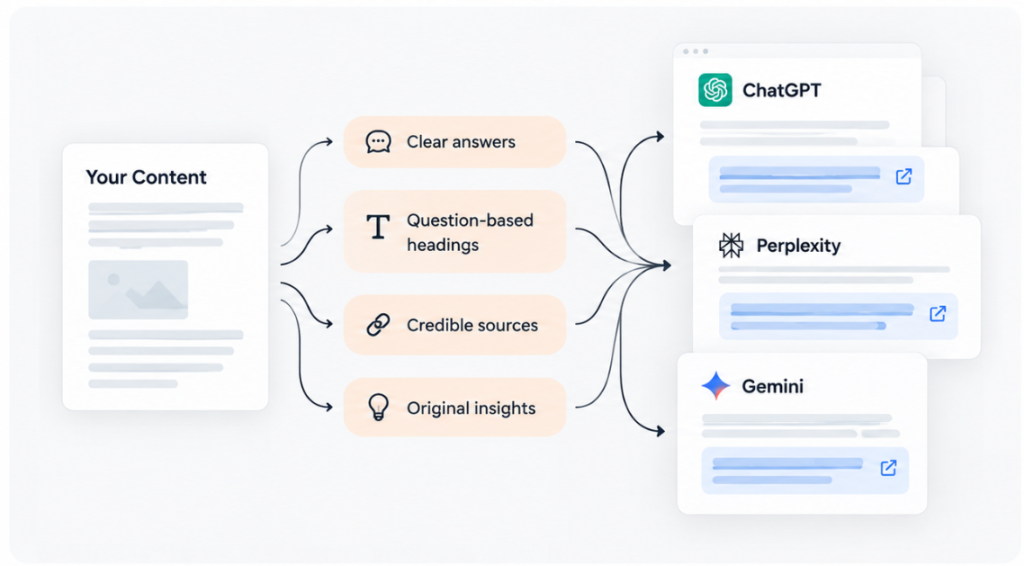
    • What is AI content optimization? It’s about writing a page so that ChatGPT, Gemini, Claude, Perplexity or Google’s AI Overviews can grab one clean passage from it, then name you as the source.
    • It builds on SEO. It doesn’t replace it. Google says its AI features still run on SEO basics. So most of the work is dull, honestly. Crawlable pages. Something original to say. Facts a reader can check.
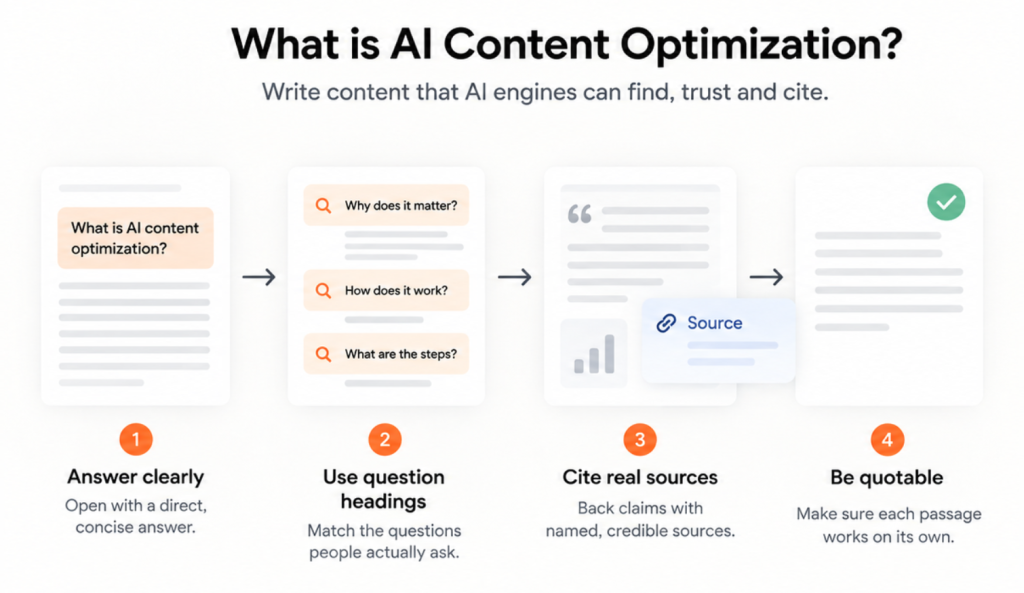
    • Begin AI content optimization with three edits. Open with the answer. Turn headings into questions. Put a named source behind every big claim. And check that each passage still works if someone quotes just that bit. Where you can, add your own data or a real opinion.
    • Startup, SMB, mid sized company or agency, it doesn’t matter. A first pass fits into this week, covering five to ten key pages. Then ask a few AI tools about your category. Who do they name?

    Put simply, AI content optimization is writing in a way that lets an AI engine find you, trust you and quote you when someone asks a question. That’s the whole idea. No plugin. No secret tag. Just an editing habit.

    People use the phrase for two different jobs, and they blur together. One crowd means using AI tools to polish their content. I mean the other one: shaping your content so AI engines cite it. This guide is about that second meaning, and I’ll point you to the first in one short section further down.

    Who’s this for? Maybe you run a startup, a local business, a mid sized company with a pile of product pages, or an agency with twenty clients. Either way, your buyers are already asking AI tools for recommendations. The tool names a few sources in its answer. AI content optimization decides whether one of them is you.

    One disclosure before we start. Spyro is our product. It shows up in one labeled section near the end, and I’ve tried to keep everything else useful with or without it. If you want the wider picture first, our guides on what is generative engine optimization and SEO vs GEO vs AEO sit right next to this one.

    What Is AI Content Optimization?

    In plain terms, AI content optimization is making your content easy for an AI engine to pull apart, trust and quote, so your brand gets named or linked in the generated answer. By “AI engine” I mean anything that writes you an answer in place of ten blue links. ChatGPT search, Perplexity, Gemini, Claude, Google’s AI Overviews and AI Mode all count.

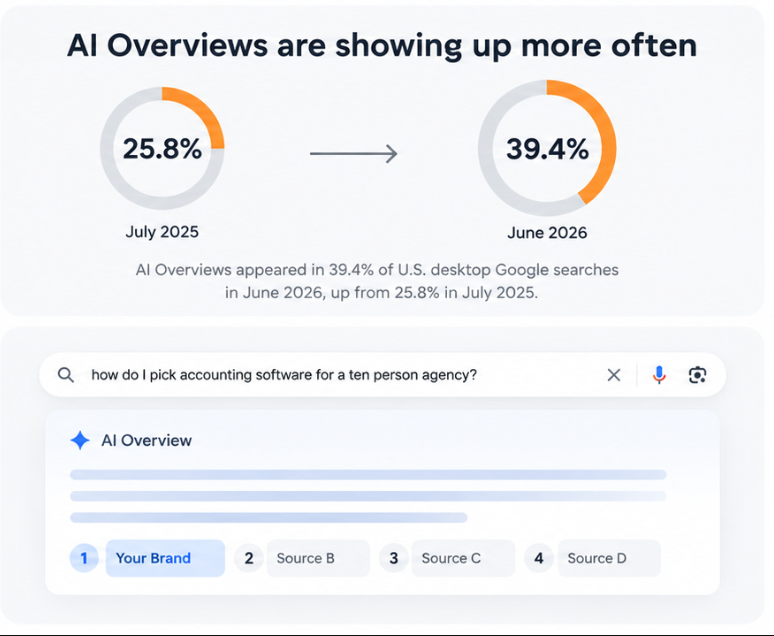
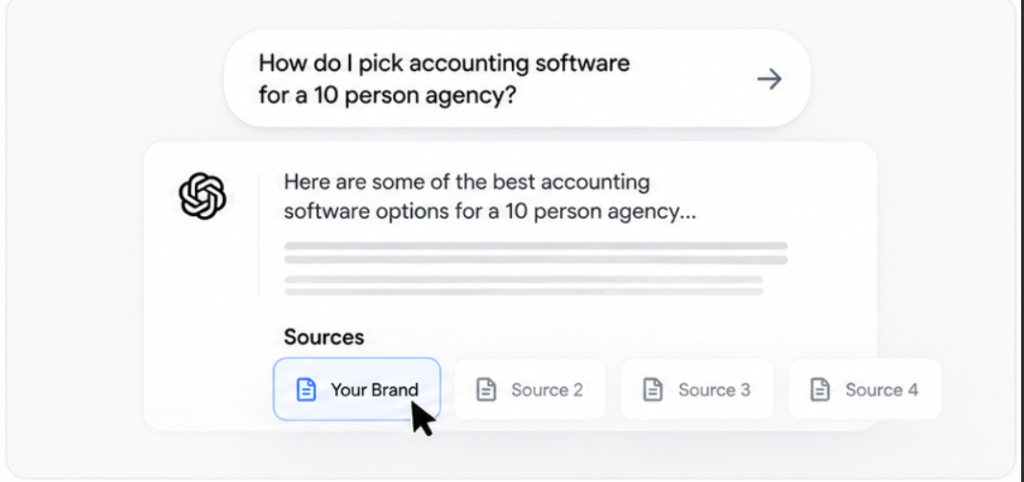
    Say a buyer asks Perplexity, “how do I pick accounting software for a ten person agency?” It answers and cites four sources. AI content optimization is the work of becoming one of them.

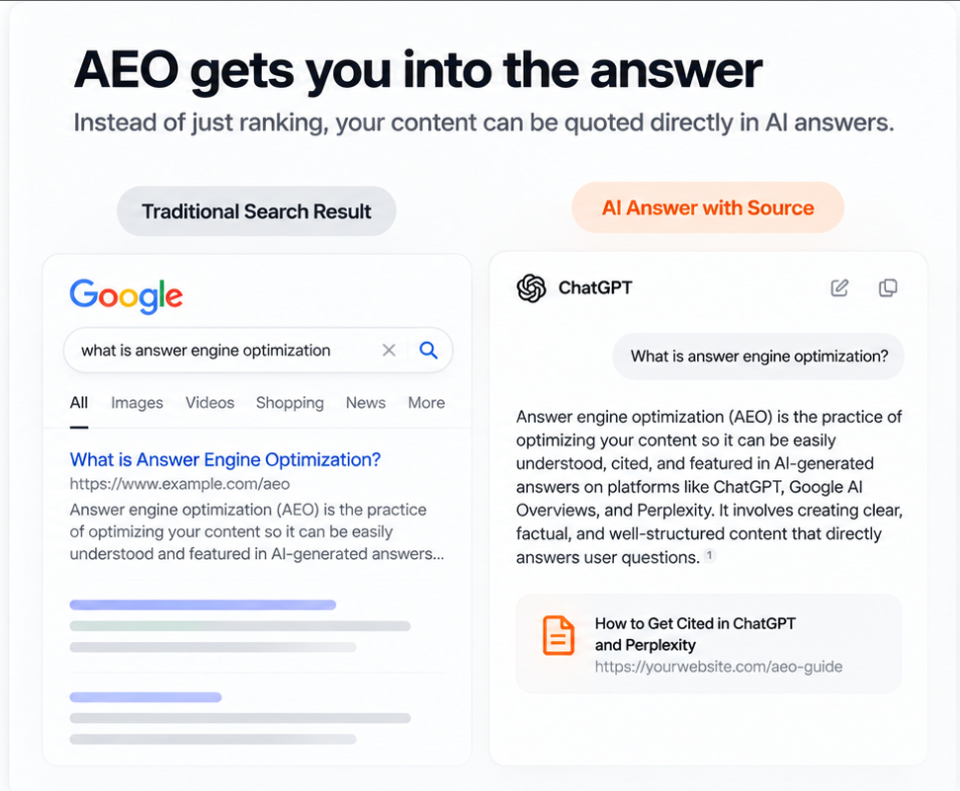
    Is it the same as GEO or AEO? They’re close cousins. GEO (generative engine optimization) is the wider umbrella for how AI tools describe your brand across everything they read. AEO (answer engine optimization) is about winning the direct answer. I think of AI content optimization as the writing and editing side of both: what’s on the page, and how it’s phrased. If you want those definitions in full, here’s our guide to what is answer engine optimization.

    Which meaning of AI content optimization do you need?

    Search the phrase and you’ll see two meanings mixed together. Meaning one is using AI to optimize content: tools that suggest keywords, score a draft or help you write faster. Meaning two is optimizing content for AI: making sure engines cite what you publish. Same words, different jobs.

    Most of this guide covers meaning two, because that’s where the visibility is shifting. The tools side gets its own section below, since the two meet in the middle. You’ll likely use AI somewhere in your editing. You’ll still want engines to cite what comes out.

    Why Does AI Content Optimization Matter in 2026?

    Because people get their answer and leave. Short version, yes. And the numbers back it up.

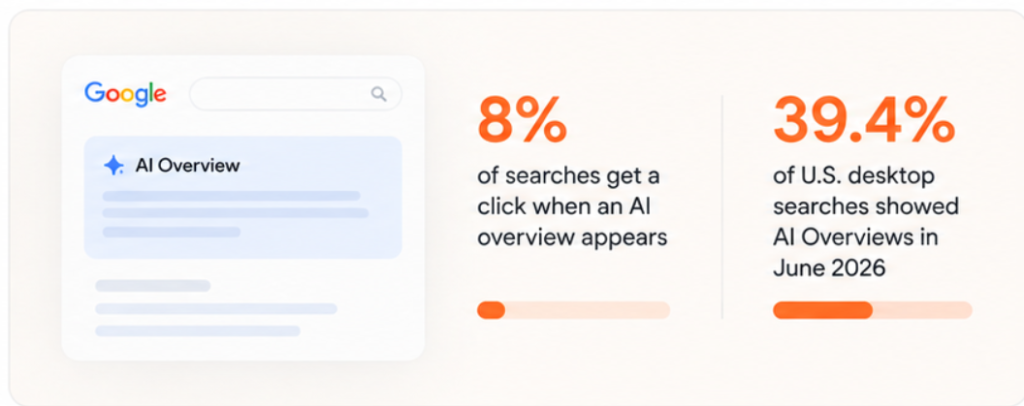
    In March 2025, Pew Research Center tracked 900 US adults across 68,879 real Google searches. On visits where an AI summary showed up, people clicked a normal result link 8% of the time. Without one, it was 15%. And clicks on links inside the summary itself? About 1% of visits (Pew Research Center).

    How often does that summary show up? Comscore’s Q2 2026 report, as covered by Search Engine Land, found AI Overviews on 39.4% of US desktop Google searches in June 2026, up from 25.8% in July 2025 (Search Engine Land). That’s roughly four searches in ten.

    Put those two together. More searches end in an answer. Fewer end in a click. The brands named inside the answer get the attention, and everyone else gets what’s left.

    It isn’t random which searches get an AI answer, either. Ahrefs analyzed 146 million search results and found AI Overviews on 57.9% of question queries, against 15.5% of non question queries (Ahrefs). Your headings should sound like the questions people really ask. That’s where the AI answers are.

    I’m not saying organic search is dying. Lots of buying journeys still end in a click, and rankings still count. What it means is that you’re now writing for two readers: the person, and the engine that summarizes you for the person. AI content optimization is how you serve both with one page.

    How Do AI Engines Decide What to Cite?

    The full recipe? A secret. Every product retrieves and ranks in its own way, and the same prompt may come back different tomorrow. So I’m sticking to what’s documented or measured. Where it’s only a correlation, I’ll tell you. Any AI content optimization advice, this guide included, deserves a test on your own prompts.

    Google says this is still SEO. Its guide to generative AI features, last updated July 10, 2026, explains that its systems ground AI answers in pages from its index. Google also says that, for its own features, optimizing for generative AI search is optimizing for the search experience (Google Search Central). That’s good news. It means most of AI content optimization is craft, not hacks.

    Covering the neighboring questions helps. Google describes query fan out as the model running concurrent, related searches to gather more results. Ahrefs, working with Surfer, found that pages ranking across those fan out queries were 161% more likely to be cited in an AI Overview than pages ranking only for the main term (Ahrefs). One narrow page isn’t enough. Cover the follow ups.

    Rankings help, but they aren’t the whole story. In a March 2026 update covering 863,000 keyword searches and about 4 million AI Overview URLs, Ahrefs found that only 38% of cited pages came from the top 10, down from 76% a year earlier. And 31% of cited pages weren’t in the top 100 for the original query at all (Ahrefs). You can’t rank your way into every answer. You can’t ignore ranking either.

    Being talked about seems to matter. In a 2025 study of 75,000 brands, Ahrefs found that web mentions of a brand correlated with its AI Overview visibility at 0.664, while backlinks sat at 0.218. The authors say plainly that correlation isn’t causation (Ahrefs). Google, for its part, warns that seeking inauthentic mentions across the web isn’t helpful. So earn mentions by being worth quoting.

    Fresher content gets cited more, on average. Ahrefs looked at about 17 million cited URLs. The pages AI assistants cited averaged 1,064 days old. Google’s organic results averaged 1,432 days. That’s about 25.7% fresher. Still, the average cited page is 2.9 years old, and the authors warn against assuming that updating a page causes citations (Ahrefs). Respect content freshness as a signal. Don’t turn it into a trick you run on a calendar.

    Writing style moves the needle on a benchmark. The research paper that gave us the term GEO, first posted in November 2023 and presented at KDD 2024, reported visibility gains of up to 40% in generative engine responses from changing how content is written (arXiv). In its results table, adding quotations, statistics and cited sources were among the stronger methods. Keyword stuffing scored below doing nothing. Treat that as a benchmark result and not a promise for your site. Still, it points the same way as everything else here. Clearer writing with better support wins.

    What Content Works Best in AI Search?

    A clear answer. Something checkable behind it. And a point other pages don’t make. Format matters less than people think. Here’s what I’d put in every page that matters for AI content optimization.

    • A direct answer near the top. Get to the point in your first sentence or two. A definition runs about 40 to 60 words. Then add the detail. It’s the pattern that wins Google featured snippets too, and it hands an engine a clean passage to lift.
    • Original information. Google’s guide asks for a unique point of view, plus expert or experienced takes that go past common knowledge. It sets that against recycled information. Your numbers, your process and your opinions are the bits nobody can copy.
    • Named statistics, quotes and sources. “Pew Research found 8% of visits” is easier for a model to repeat, and easier for a person to trust, than “studies show clicks are down.” The GEO research above points the same way.
    • A shape that matches the question. Use a definition for a “what is” question, numbered steps for a “how to,” and a table for a comparison. I’d match the format to the question and not copy one format everywhere. Be wary of any claim that one format, listicles say, wins on every engine. Engines retrieve differently, so test your own prompts.
    • A visible FAQ for real follow ups. Readers like a FAQ, and it hands you tidy question and answer pairs. Add FAQ markup if your CMS makes that easy. Google does say structured data isn’t required for generative AI search, though. Treat it as housekeeping.

    And what doesn’t work? Padding. Think of a page that spends three paragraphs clearing its throat and then hedges every claim. An engine can’t quote that. Could your intro open any article on any site? Then cut it.

    How Is AI Content Optimization Different From Writing for SEO?

    Mostly in what you’re aiming at. Classic SEO copy tries to rank a whole page. AI content optimization tries to make one passage survive being pulled out of the page and pasted into somebody else’s answer. Here’s the comparison as a table.

    AreaClassic SEO copyAI content optimization
    OpeningA warm up, then the pointThe direct answer in the first one or two sentences
    HeadingsKeyword labels such as “Pricing”Questions people really ask
    Unit you work onThe whole pageThe passage an engine might quote
    Proof“Studies show”A named, linked source and a real figure
    CoverageOne main keyword per pageThe main question plus its fan out follow ups
    Success signalRankings, clicks, trafficCitations, mentions and accurate descriptions

    They overlap heavily. Plenty of AI search optimization advice is ordinary SEO wearing a new badge, and I don’t think that’s a bad thing. Fast pages and correct facts help in both. Where they split is smaller than a page. Think paragraph. Quote one of yours, alone, to a stranger. Does it land? That’s the extra test.

    How Do You Do AI Content Optimization? Eleven Steps

    You don’t need a big team or a six month roadmap. One marketer can finish a decent first pass in a week, mostly by editing pages that already exist, and I’d work through it in this order.

    1. Collect real questions. Your sales team hears them daily. Support tickets are full of them. Google shows them in People Also Ask boxes, and customers type them into chat tools. Write them down the way people say them. They’re your headings.
    2. Plan the follow ups too. Every page needs one main question, but an engine runs related searches behind it, which is query fan out. A page that also answers the two or three neighbors beats a thin page that covers one. Jot the follow ups down before you write a word.
    3. Answer in the first sentence or two. Right under the heading. Then explain, qualify, add examples. If I could make only one edit to a page, it’d be this one. It’s the heart of answer first content.
    4. Make headings say something. A heading like “Pricing” tells nobody much. Compare it with “How much does a roof replacement cost in 2026?” A reader knows what’s coming. So does a machine.
    5. Let every passage stand alone. AI tools tend to lift a piece of a page, not all of it. A paragraph that only works after the three before it will get skipped. So drop the “as mentioned earlier” lines, and say the actual subject where you’d have written “it.” (Google says you don’t need to chop content into tiny pieces for its systems. I’m talking about plain readability here, not a formatting trick.)
    6. Back each key claim with a number, a quote or a named source. Link it. Can’t find one? Soften the claim, or cut it.
    7. Say something nobody else has said. Your own numbers work. So does a teardown, a benchmark, a screenshot walkthrough or an opinion you can defend. Repeat what everyone else says and an engine can summarize you. Add something new and it has a reason to cite you.
    8. Say who you are the same way everywhere. One plain sentence about what you sell and for whom. Reuse it on your homepage, About page, listings and profiles. If every source agrees, an engine can connect you to your topics with less guesswork.
    9. Show who wrote it and when, and keep both honest. A named author and a visible updated date help readers judge a page. Update when something changes. Don’t touch the date just to look fresh.
    10. Keep the technical basics clean. Pages need to be crawlable and indexed, with the key text in the HTML your server sends back. Make sure a firewall isn’t quietly blocking AI crawlers that your robots.txt welcomes. Our free AI Crawler and robots.txt Checker tests that, and our SEO vs GEO vs AEO guide explains which bots do what.
    11. Earn mentions off your site. Reviews, community threads, partner pages, original research other people cite, a useful video. Real mentions take time. Fake ones are a bad bet, because Google says seeking inauthentic mentions isn’t helpful.

    That’s the list. Eleven habits, and not one of them needs a developer. Do steps 3, 4 and 6 on your ten most important pages and you’ve already done more AI content optimization than most of your competitors. Want more on the citation side? Try our guide on how to get cited in ChatGPT and Perplexity, and how AI search engines cite sources for the ranking factors behind it.

    What Does AI Content Optimization Look Like in Practice?

    Here’s a before and after I made up, so AI content optimization looks like an actual edit. It’s an illustration. It isn’t a client result.

    Before: a page headed “Our Story” opens with: “Hi, we’re Acme Books! We love spreadsheets, coffee and happy clients, and we can’t wait to meet you.”

    An engine learns nothing from that. Is Acme Books software or a service? Who’s it for? No idea.

    After: the same page, retitled “What is Acme Books?”, now opens: “Acme Books is accounting software in the cloud for companies of 5 to 50 people, with invoicing, expenses and payroll under one roof. You pay per user.”

    Then add a plan table, a byline, a last updated date and three FAQs. Now an engine has something to quote. Before, it had nothing. The company and the facts haven’t changed, only the page.

    Which Pages Should You Optimize First?

    Don’t overhaul the whole site. That’s weeks of work for little learning. AI content optimization pays off fastest where a buyer’s question meets your offer, so begin there.

    Product and service pages come first, along with pricing, comparisons and “how to choose” guides, since that’s where the money is. Then look at what your sales team keeps getting asked. Buyers put those same questions to chat tools. Finally, check for stale facts, like a price that changed or a feature you dropped.

    Write out your top ten pages. For each, answer four questions:

    1. Which one question is this page really for?
    2. Do the first two sentences answer it?
    3. Is there a named source or a real figure behind the main claim?
    4. Is there a visible author and a date that’s actually current?

    Fail two or more checks and the page makes your first batch, which is about a week of editing. Got hundreds of pages at a mid sized company? Take one product line at a time and give each an owner. Run an agency? Ask the four questions of each client’s top ten pages and deliver the answers as a baseline report.

    How Do You Optimize for AI Search Visibility Beyond Your Own Pages?

    Your site is only part of what an AI engine reads about you. The rest is everything else on the web: reviews, directories, community threads, partner pages, press, videos and other people’s articles. AI content optimization on your own pages gets you quotable. Off site work gets you talked about.

    That’s why the brand mention numbers matter. In the Ahrefs study above, mentions across the web tracked AI Overview visibility much more closely than backlinks did, though it’s a correlation and not proof. I’d read it as a nudge to spend an hour on being genuinely useful in places your buyers already gather.

    What does that look like? A few things I’d do:

    • Keep your facts consistent. Same business name, same one line description, same product names on your site, your listings and your profiles. When an engine reads five sources and they agree, it’s safer for it to repeat you.
    • Publish something others can cite. A small survey, a benchmark, a pricing range you track, a clear process diagram. Original information is what earns links and mentions without begging for them.
    • Answer questions where buyers ask them. Community threads and forums, honestly and with your real name. Not link drops.
    • Collect real reviews. On the sites your customers already use.
    • Don’t fake it. Google’s guide says seeking inauthentic mentions across the web isn’t helpful, and its spam systems are built to catch that kind of thing.

    Engines don’t all pull from the same places. What nudges one may do nothing for another. So test: ChatGPT, Gemini, Claude, Perplexity, Google. Write down which sources each one cites for your topic. Those sources are a map. They show where your category actually gets discussed, and that’s where you want to turn up. Our guide on how AI search engines cite sources covers the factors in more detail.

    Do You Need Schema Markup or llms.txt for AI Content Optimization?

    No. Google’s guide says plainly that generative AI search doesn’t need structured data. It also says Google Search doesn’t use llms.txt files, and that they neither help nor hurt you there. So there’s no switch to flip.

    Structured data isn’t useless, though. It describes your page to machines, and some rich results still depend on it. Keep it honest: the markup should match what readers can see on the page. Our free Schema Markup Validator will check yours.

    Here’s a detail that catches people out. According to Google’s documentation, the FAQ rich result stopped showing in Search on May 7, 2026 (Google Search Central). So don’t add FAQ markup hoping for expandable boxes in Google. I’d still keep a visible FAQ section on key pages, because it gives readers and engines clean question and answer pairs. If you’re curious about llms.txt, the full picture is in our SEO vs GEO vs AEO guide.

    How Often Should You Refresh Content for AI Search?

    Often enough that your facts stay true, and no more. Content freshness shows up as a signal in the Ahrefs data, but the study’s own authors caution that the link between updates and citations is a correlation, and that average cited pages are still nearly three years old.

    Here’s what I’d do. Every quarter, go back through your ten key pages. Correct the prices, features, screenshots and stats that have moved, and add the new question people keep asking. Only then change the visible date, because now it’s true. A page you haven’t touched keeps its old date. Faking it misleads readers, and the Ahrefs study notes that Google’s guidance discourages it.

    Could a brand new page do more than another refresh? Sometimes. When a page is badly out of date, or answers the wrong question entirely, patching won’t cut it. Rewrite it. Your gut will tell you which pages those are.

    What Does AI Content Optimization Mean for SMBs, Startups, Mid Sized Companies and Agencies?

    The basics don’t change with company size. Where you start does.

    • Small and medium businesses: Choose five to ten pages that say what you sell and where. On each, answer your top customer question in plain words before anything else. A short FAQ after that finishes the job. Plenty of local competitors won’t have done this.
    • Startups: Nobody knows your brand yet, so you can’t win on authority. What you can do is publish clear, quotable, well sourced content, plus one piece of original data. It’s one of the few ways to land in the same AI answer as bigger names.
    • Mid sized companies: Consistency is the headache here, with lots of product lines and lots of writers. Make “answer first” a house rule. Give each product line an owner. Then put AI mentions beside organic traffic in the monthly report.
    • Agencies: Your clients are asking about this already. Give them something to buy: a baseline check, a short fix list and a monthly citation report. Promise the work and the reporting, never a citation.

    What About AI Tools for Content Optimization?

    That’s meaning one from earlier: using AI to help you optimize. Tools that score a draft, suggest related terms or speed up writing can genuinely save time. Treat their scores as a hint. Google’s guide says no third party tool can see its internal ranking or AI systems, so a tool that claims to predict a citation is guessing.

    Drafting with AI? Google’s guidance on generative AI content flags two problems. Publishing lots of pages that add no value may run into its scaled content abuse policy. And AI output can contain hallucinations, so Google says to fact check it before publishing, titles and meta descriptions included (Google Search Central). Both come down to editing. Somebody on your team still has to add the original part and check every fact.

    We’ve compared the options in more detail. Spyro is one of the products involved, so keep that in mind. See AI powered writing assistant vs traditional SEO copywriting and Spyro vs Jasper vs Surfer.

    How Do You Measure AI Content Optimization?

    Clicks won’t tell you much here, since a win can happen with no click at all. Here’s what I’d track instead:

    • Citation rate: pick a fixed list of buyer prompts. How often do AI citations point to your site?
    • Mention rate: how often is your brand named, linked or not?
    • Accuracy: when a tool describes you, are the product, pricing and location right?
    • Referral traffic: visits from chat tools, tagged in your analytics.
    • Google’s own report: Search Console now has AI performance reports for AI Overviews and AI Mode. They show impressions by page, country, device and date. No clicks, though (Search Engine Land).

    Measuring AI content optimization is easiest by hand at first. Say you’ve got ten questions a buyer might ask. Paste each into ChatGPT, Gemini, Claude, Perplexity and Google. Who shows up? Jot it down. Answers change between runs. Ask each prompt a few times and log how often you appear, like “mentioned in 3 of 5 checks.” Slow? Yes. But it teaches you quickly. Our free AI Visibility Checker gives a quick read on whether the big engines mention your brand.

    What Are the Most Common AI Content Optimization Mistakes?

    The same five mistakes come up again and again. Each one hurts AI search optimization about as much as it hurts SEO.

    • Burying the answer. Three paragraphs of throat clearing, then the point. The engine quotes whoever got there first.
    • Stuffing keywords. The GEO research ranked it below doing nothing at all. Say it once, plainly.
    • Publishing AI text nobody checked. Google warns about made up statistics and confident errors for a reason. Engines will quote a wrong number as happily as a right one.
    • Aiming at one engine. Each of ChatGPT, Gemini, Claude, Perplexity and Google picks sources its own way. Test all of them.
    • Treating it as a one time project. Sources shift and models update, and competitors catch up. A quick monthly check will do more for you than one heroic rewrite.

    What Does a Four Week AI Content Optimization Plan Look Like?

    This rollout works whether you’re one marketer or twenty. One warning: if your pages can’t be crawled, tracking is pointless, so sort that out before anything else.

    • Week 1, audit and prompts. Pick ten pages. The free SEO and GEO Audit will show whether they have crawl or indexing problems, and you fix those first. Then comes the fun part: 10 to 20 real buyer questions, each one tried in ChatGPT, Gemini, Claude, Perplexity and Google. Who gets named? Write it down. That’s your baseline.
    • Week 2, openings and headings. Start on five of those pages. If an opening takes longer than two sentences to answer the main question, rewrite it. Weak headings become questions. Then read each key passage on its own and ask whether it still works.
    • Week 3, proof and originality. Put a named source or figure behind every main claim, and add one original thing per page, even something small. Then add a short visible FAQ, a named author and a current date.
    • Week 4, recheck and plan. Run the same prompts a second time and lay the results beside week 1. Did anything move? Which engines cite someone else, and who? Let that decide your next five pages.

    Think of month one of AI content optimization as groundwork. Results in month one tend to be small and patchy, so don’t judge it harshly. AI answers shift between runs, and engines are slow to notice edits. Citations won’t spike yet. You’ll have a baseline, five better pages and a routine, which is the point.

    Where Spyro Fits Into AI Content Optimization

    Spyro is our product, so weigh this section accordingly. I’ll stick to what it does today for AI content optimization and say where it doesn’t help.

    • Check your pages first. Run the free SEO and GEO Audit on a page. It checks the opening, the headings, FAQ and HowTo schema, any statistics, freshness dates and bylines, plus whether content reads without JavaScript and whether an llms.txt file exists. No signup.
    • Track whether engines name you. Add your buyer questions as tracking prompts. From there Spyro looks for your brand in ChatGPT, Gemini, Claude, Perplexity and Google AI Overviews. Results come as a frequency, like “mentioned in 3 of 5 checks,” and a competitor view sits alongside.
    • Draft and publish. The AI writer has a GEO mode and publishes to WordPress, Shopify or anything else through webhooks. Original ideas and fact checking are still on you.

    Now the limits. Check your plan first, because Starter covers only two of the five engines, ChatGPT and Google AI Overviews. Prompt checks run weekly, not daily. Spyro doesn’t track Microsoft Copilot, Google AI Mode or Grok, and no tool, ours included, can promise a ranking or a citation. If you’d like to try the tracking, sign up for Spyro. There’s a 3 day free trial.

    Key Takeaways

    • AI content optimization means writing pages an engine can pull a fact from, trust and credit by name.
    • It builds on SEO. For its own AI features, Google says this is still SEO, so crawlable, indexed, honest pages come first.
    • The highest return AI content optimization edits are answer first content, question style headings, named sources and passages that stand alone.
    • Cover the follow ups, not just one keyword. In Ahrefs’ study, pages ranking for the related searches behind a query were far more likely to be cited.
    • Check AI citations and mentions across engines every month, by hand at first. Clicks alone will mislead you about AI content optimization.

    Frequently Asked Questions

    What is AI content optimization?

    AI content optimization is how you get an AI answer to quote you. You edit your pages so engines like ChatGPT, Gemini, Claude, Perplexity and Google AI Overviews can find them, understand them and cite them, and the prize is a mention inside the answer itself. The phrase also gets used for AI editing tools, but that’s a separate job.

    How do you optimize content for AI search in 2026?

    Write your headings as real questions and answer each straight away. Name your sources. Throw in something original, because that’s what gives an engine a reason to pick you. Then make sure crawlers can read the pages, and check your prompts across several engines once a month. Basic, yes, but that’s AI content optimization in a nutshell.

    How can I optimize content to get cited by AI search engines?

    Make it easy to quote you. That’s really all of AI content optimization. Answer each question heading in the first line, back it with a statistic or a named source, and cover the follow ups on the same page. Crawlable pages, visible authors and dates, and mentions on other sites all help. A guarantee? Nobody can give you one.

    What content works best in AI search?

    Pages that answer straight, show checkable facts and say something new. Let the question pick the format for AI content optimization. “What is” wants a definition, “how to” wants steps, and a comparison wants a table. Don’t trust anyone who says a single format wins on every engine. Test your own prompts.

    How do I get my business to show up on AI searches?

    Take your five to ten most important pages. If each opens by answering your main customer question in plain words, you’ve done the core of AI content optimization for a small business. Next, add a short FAQ, describe yourself the same way everywhere and gather reviews. Then ask ChatGPT, Gemini, Claude, Perplexity and Google ten buyer questions and see who they name.

    Is AI content optimization the same as SEO?

    Not quite, although they share a lot. SEO is about ranking and getting clicked. AI content optimization is about getting a passage quoted inside an AI answer. Google says its own AI features are still SEO, and a clear, crawlable, well sourced page usually helps with both.

    Can AI generated content get cited by AI engines?

    It can, as long as a person is in charge. Google’s guidance on generative AI content warns about piles of pages that add no value, and about errors, since AI output can contain hallucinations. Check every fact. Add original information and a real point of view. Then let a human sign off.

    Conclusion

    AI content optimization isn’t a trick. It’s what you get when a page works for a person skimming and an engine quoting. The answer comes first, the facts have names, the follow ups are covered and the basics are healthy. And you’ll mostly be editing pages that already exist.

    So this week, pick your ten most important pages. Rewrite each opening, turn headings into questions and put a named source behind the claims that matter. Then see whether AI tools start naming you. The free SEO and GEO Audit is a quick way to see where each page stands.

  • AI Visibility Tool Pricing Compared: What You Actually Pay in 2026

    AI Visibility Tool Pricing Compared: What You Actually Pay in 2026

    Quick Answer

    • AI visibility tools pricing in 2026 starts at $29 a month (Spyro AI Starter and Otterly.AI Lite) and runs up to custom enterprise quotes, but the starting price alone tells you very little.
    • What you pay depends on prompts, AI engines, check frequency, brands or domains, seats and reporting. Two plans at the same price can monitor very different amounts.
    • Plans built for a full marketing team mostly fall between about $95 and $550 a month, before agency plans and add ons.
    • Spyro AI. Starter is $29, Pro is $99 and Agency is $399 a month, with a 3 day free trial. The other seven tools below get the same checks.

    AI visibility tools send buyer style questions (prompts) to assistants like ChatGPT, Gemini and Perplexity, then record whether your brand is mentioned or cited. It’s the measurement side of generative engine optimization. Why pay for that? Pew Research found that Google users clicked a traditional result in 8% of visits when an AI summary appeared, against 15% when it didn’t (Pew Research Center). If answers get read without clicks, knowing whether you’re named in them starts to matter.

    This guide compares AI visibility tools pricing across eight platforms: Spyro AI, Otterly.AI, Ahrefs Brand Radar, AIClicks, Peec AI, Semrush, Scrunch and Profound. Spyro AI has included it next to the others and held it to the same checks. There’s no ranking and no winner. It’s for SMBs, mid sized teams and agencies who are ready to buy.

    Pricing checked October 4, 2026, on each vendor’s official pricing and documentation pages. Prices change often, so confirm on the vendor’s page before you buy.

    What Does AI Visibility Tools Pricing Look Like at a Glance?

    Every price below is the lowest published entry point on monthly billing, unless noted.

    Tool Starting price AI engines on the entry plan Prompt and tracking limits Best for
    Spyro AI $29/mo ChatGPT and Google AI Overviews (5 engines on Pro) 15 prompts per brand, daily or weekly Tracking plus an AI article writer
    Otterly.AI $29/mo ChatGPT, AI Overviews, Perplexity, Copilot 15 prompts, daily Low cost daily monitoring
    Ahrefs Brand Radar $50/mo (Custom Prompts) Up to 6 platforms, Claude on Custom Prompts 2,500 checks a month Teams already on Ahrefs
    AIClicks $59/mo Your choice of 3 models 30 prompts, daily Daily tracking with content help
    Peec AI $95/mo Your choice of 3 models 50 prompts, daily Analytics focused SEO teams
    Semrush AI Visibility Toolkit $99/mo per domain ChatGPT, Google AI, Gemini, Perplexity 25 prompts, daily Semrush users
    Scrunch $250/mo billed annually ($300 month to month) ChatGPT, Claude, Gemini, Perplexity, AI Mode, AI Overviews, Meta 350 custom prompts Larger teams wanting persona data
    Profound Free 7 day trial, then custom ChatGPT, Gemini, AI Overviews on trial (up to 9 on Enterprise) 50 prompts a day on trial Enterprise brands

    Notice how little the price column explains. Spyro AI and Otterly.AI share a $29 price, yet one tracks two engines on its entry plan and the other tracks four. The rest of this AI visibility tools pricing guide covers what sits behind each number.

    How Do Monthly and Annual AI Visibility Tools Pricing Numbers Compare?

    This table covers the pricing model itself. I haven’t calculated annual prices the vendor doesn’t publish.

    Tool Monthly starting price Annual starting price Free plan or trial Main pricing driver
    Spyro AI $29 Yearly billing saves 20% (exact prices not listed) 3 day trial, 500 credits Credits, brands, prompts, engines
    Otterly.AI $29 $25 a month (Lite) Free trial Prompts, plus paid engine add ons
    Ahrefs Brand Radar $50 Not stated for Brand Radar Standalone tool includes a free Ahrefs account Monthly checks
    AIClicks $59 Up to 29% off (exact prices not listed) 3 day trial on Starter and Pro Prompts and number of models
    Peec AI $95 About 15% off (exact prices not listed) Free trial Prompts, models, projects
    Semrush AI Visibility Toolkit Not listed separately $99 per domain, billed annually 7 day trial Domains and prompts
    Scrunch $300 month to month $250 a month, billed annually 7 day trial, no card Prompts, seats, personas
    Profound Custom Custom 7 day free trial Custom scope and credits

    How Does AI Visibility Tools Pricing Break Down per Tracked Prompt?

    One fair way to read AI visibility tools pricing is to divide the entry price by the entry prompt allowance. It’s simple arithmetic on published numbers. It’s not a value ranking, because engines and frequency differ too.

    Tool Entry price (monthly) Prompts included Price per prompt Engines on that plan Check frequency
    Spyro AI Starter $29 15 per brand About $1.93 2 Daily or weekly
    Otterly.AI Lite $29 15 About $1.93 4 Daily
    AIClicks Starter $59 30 About $1.97 3 of your choice Daily
    Peec AI Starter $95 50 $1.90 3 of your choice Daily
    Semrush Toolkit Base $99 25 About $3.96 4 Daily
    Scrunch Starter $300 350 custom prompts About $0.86 7 listed Not stated

    Ahrefs and Profound don’t fit. Ahrefs sells checks rather than prompts, and Profound doesn’t publish a brand price. On Ahrefs, one prompt uses 1 check per platform, location and update. So 2,500 checks stretch to roughly 20 prompts if you track 4 platforms in one location with a daily update (120 checks per prompt over 30 days). That’s my arithmetic, not an Ahrefs claim.

    Spyro AI Pricing

    Spyro AI read this section with that in mind. I’ve stuck to what our pricing page and documentation say. On AI visibility tools pricing, Spyro AI bundles tracking and an article writer into one credit pool.

    • Starting price: Starter is $29 a month. Pro is $99 and Agency is $399.
    • Billing: Monthly, or yearly with a 20% saving per the pricing page. The billing documentation says two months free, so confirm at checkout.
    • AI engines: Starter tracks 2 AI providers (ChatGPT and Google AI Overviews). Pro tracks 5: ChatGPT, Google, Claude, Perplexity and Gemini.
    • Prompt and tracking limits: 15 prompts per brand on Starter, 50 on Pro and 250 on Agency. Checks run daily or weekly.
    • Projects and domains: Up to 2 brands on Starter, 10 on Pro, unlimited on Agency.
    • Competitor tracking: Up to five competitor domains for gap analysis.
    • Citation tracking: Spyro AI shows where your site is cited as a source in AI answers.
    • Reporting: CSV exports and PDF reports for content gaps and site audits.
    • Agency and team features: Unlimited team members on every plan. White label reporting isn’t listed.
    • Best fit: SMBs and small teams that want tracking and publishing in one tool, and agencies that need unlimited brands.

    What do you actually get? One monthly credit pool: 4,000 credits on Starter, 15,000 on Pro, 80,000 on Agency. The billing documentation lists an article at 250 credits and a competitor scan at 150 credits per competitor. So ten articles on Starter use 2,500 of the 4,000 credits before you scan a single competitor. There’s no self serve top up: when credits run out, paid actions stop until you upgrade or contact sales.

    Two honest limits. Spyro AI doesn’t track Microsoft Copilot, Google AI Mode or Grok, and the $29 tier covers two engines, so teams needing Claude, Gemini or Perplexity will be on Pro. All plans are on the Spyro AI pricing page.

    Otterly.AI Pricing

    Among AI visibility tools pricing models, Otterly.AI is the plain prompt ladder with paid engine add ons.

    • Starting price: Lite is $29 a month. Standard is $189, Premium is $489 and Enterprise is custom, from around 1,000 prompts.
    • Billing: Annual billing takes 15% off: Lite $25, Standard $160 and Premium $422 a month.
    • AI engines: ChatGPT, Google AI Overviews, Perplexity and Microsoft Copilot on every plan. Google AI Mode, Gemini and Claude are paid add ons.
    • Prompt and tracking limits: 15 prompts on Lite, 100 on Standard and 400 on Premium, tracked daily. Another 100 prompts is listed at $99 a month.
    • Projects and domains: One workspace on Lite, unlimited from Standard.
    • Competitor tracking: Brand reports compare you with your top 5 competitors.
    • Citation tracking: Link citation analysis across the supported engines.
    • Reporting: Customizable brand reports by date range, engine, tag and region. API and MCP access start at Standard (2,000 requests a month each).
    • Agency and team features: Unlimited team members. A partner program adds extra prompts (150 on Standard, 500 on Premium).
    • Best fit: Small teams that want daily data on four engines at a low entry price.

    AI Mode and Gemini add ons run from $9 a month on Lite up to $149 on higher tiers, and Claude runs from $29 to $439. If Claude is a must, price the plan with it included.

    Ahrefs Brand Radar Pricing

    Ahrefs sells checks, so its AI visibility tools pricing works differently from the prompt based tools.

    • Starting price: Custom Prompts packages start at $50 a month (Basic). Growth is $100 and Scale is $250. The AI Visibility Index starts at $199 a month. Paid Ahrefs plans include a few prompts at no extra cost: 5 on Lite, 10 on Standard and 20 on Advanced.
    • Billing: An annual discount isn’t stated for Brand Radar.
    • AI engines: AI Overviews, AI Mode, ChatGPT, Perplexity, Gemini and Copilot, plus Claude through Custom Prompts.
    • Prompt and tracking limits: 2,500 checks a month on Basic, 7,000 on Growth and 25,000 on Scale. Overage is $0.020, $0.015 and $0.010 per check. You can update daily, weekly or monthly.
    • Projects and domains: Not publicly listed on the pricing page.
    • Competitor tracking: Competitor benchmarking is built in.
    • Citation tracking: Ahrefs lists mentions and citations among Brand Radar metrics.
    • Reporting: Topic level reporting inside Ahrefs. Export details aren’t listed on the pricing page.
    • Agency and team features: Not publicly listed. It works within Ahrefs plans.
    • Best fit: Teams already inside Ahrefs, or anyone who wants market wide benchmarks as well as custom prompts.

    More engines, locations and updates burn checks faster, so your real cost depends on setup. For a feature level view, see our Spyro vs Ahrefs comparison.

    AIClicks Pricing

    AIClicks is a useful benchmark for AI visibility tools pricing: the plan table is clear and the entry price sits above the two $29 plans.

    • Starting price: Starter is $59 a month. Pro is $189, Business is $499 and Enterprise is custom.
    • Billing: Yearly billing is listed as up to 29% off. AIClicks says you can upgrade, downgrade or cancel at any time.
    • AI engines: 3 models on Starter, 4 on Pro, 6 on Business and all on Enterprise. The platform lists 10+ in total, including ChatGPT, Perplexity, Gemini, AI Overviews, AI Mode, Claude, Grok, DeepSeek, Meta AI and Copilot.
    • Prompt and tracking limits: 30 prompts on Starter, 150 on Pro and 300 on Business, tracked daily. Monthly LLM responses are 4,650, 18,600 and 55,800.
    • Projects and domains: 3 websites on Starter, unlimited on Pro and above.
    • Competitor tracking: Yes, competitor visibility shown against your own.
    • Citation tracking: Yes, it shows which sources and domains AI engines cite.
    • Reporting: Not stated on the pricing page. It connects to Google Analytics.
    • Agency and team features: Custom agency pricing based on client volume. Seat limits aren’t stated.
    • Best fit: Teams that want daily tracking across a chosen set of models, plus AI articles (5, 15 or 30 a month by plan).

    Strengths first: daily data, a wide engine menu and a clear ladder. The catch is that engine choice is capped by plan, so 10+ doesn’t mean 10+ on Starter. Our AIClicks alternatives comparison goes deeper.

    Peec AI Pricing

    Peec AI’s AI visibility tools pricing leans on model choice and project counts.

    • Starting price: Starter is $95 a month, Pro is $245 and Advanced is $495. Enterprise is custom.
    • Billing: Annual billing saves roughly 15%.
    • AI engines: Choose 3 models from ChatGPT, AI Mode, AI Overviews, Copilot, Gemini and Naver AI. Extra models cost $35 a month on Starter, $85 on Pro and $165 on Advanced. Enterprise covers the full model list.
    • Prompt and tracking limits: 50 prompts on Starter, 150 on Pro and 350 on Advanced, each run once every 24 hours on every selected model.
    • Projects and domains: 1 project on Starter, 2 on Pro, 5 on Advanced.
    • Competitor tracking: 5 competitors on Starter, 10 on Pro and 25 on Advanced.
    • Citation tracking: Source usage at domain or URL level, with citation frequency.
    • Reporting: CSV exports. Looker Studio from Advanced, and API access on Advanced and Enterprise.
    • Agency and team features: Unlimited users on every plan. Separate agency plans are listed at $245 (Essential), $495 (Growth) and $795 (Scale), plus custom Comprehensive, with white label reporting included.
    • Best fit: SEO and content teams that want detailed source analytics and daily data.

    Starter costs more than the first three tools here but includes 50 prompts and competitor tracking. See our Spyro AI vs Peec AI breakdown.

    Semrush AI Visibility Toolkit Pricing

    For Semrush, AI visibility tools pricing is either a per domain add on or part of a bigger SEO plan.

    • Starting price: The Base toolkit is $99 a month per domain, billed annually. Combined SEO plus AI search plans are $139 (SEO), $199 (Starter), $299 (Pro+) and $549 (Advanced) a month.
    • Billing: The combined plans take 17% off on annual billing. A 7 day free trial is listed.
    • AI engines: ChatGPT, Google AI, Gemini and Perplexity.
    • Prompt and tracking limits: 25 custom prompts on Base with daily tracking. The combined plans include 50, 100 and 200 prompts daily. Another 50 prompts is listed at $60 a month.
    • Projects and domains: 1 domain on Base. Combined plans cover 5, 15 and 40 websites.
    • Competitor tracking: Yes, competitor analysis and prompt research.
    • Citation tracking: Semrush describes finding prompts where others are cited and you aren’t.
    • Reporting: CSV exports are capped at 1,000 rows per export and 10 exports a day per user. Report add ons start at $10 a month.
    • Agency and team features: Additional users start at $45 a month on the pricing page. API data integration is included on Advanced.
    • Best fit: Companies and agencies already running SEO in Semrush.

    Check one detail: the pricing page lists extra users from $45 a month, while the help documentation says each user needs their own toolkit subscription. Our Spyro vs Semrush comparison covers the feature side.

    Scrunch Pricing

    Scrunch has the highest self serve entry in this AI visibility tools pricing comparison, and the largest prompt count. Those two facts belong together.

    • Starting price: Starter is $250 a month billed annually, or $300 month to month. Growth is $417 annually or $500 monthly. Enterprise is custom.
    • Billing: Annual billing takes 17% off, described as two months free.
    • AI engines: ChatGPT, Claude, Gemini, Perplexity, Google AI Mode, AI Overviews and Meta, with no plan specific exclusions noted.
    • Prompt and tracking limits: 350 custom prompts on Starter and 700 on Growth, plus 1,000 and 2,500 industry prompts. Check frequency isn’t stated on the pricing page.
    • Projects and domains: 3 and 5 personas, and 5 and 10 page audits.
    • Competitor tracking: Benchmarking by competitor, persona, geography and segment.
    • Citation tracking: Citation and source mapping.
    • Reporting: Alerts and scheduled reports. A Data API is Enterprise only.
    • Agency and team features: 3 user licenses on Starter and 5 on Growth, with extra seats at $25 a month. Scrunch has a separate agency page.
    • Best fit: Larger teams wanting persona level data and AI agent focused site audits.

    Profound Pricing

    With Profound, AI visibility tools pricing comes from a sales conversation, not a table.

    • Starting price: A free 7 day trial, then custom Enterprise pricing. Brand plan prices aren’t publicly listed.
    • Billing: Not publicly disclosed.
    • AI engines: The trial covers ChatGPT, Gemini and Google AI Overviews. Enterprise tracks up to 9 answer engines, including Perplexity, Copilot, DeepSeek and Claude.
    • Prompt and tracking limits: 50 unique prompts a day on the trial. Enterprise limits are custom.
    • Projects and domains: The trial covers 1 language and 1 region. Enterprise supports multiple.
    • Competitor tracking: Not detailed on the pricing page.
    • Citation tracking: Not detailed on the pricing page.
    • Reporting: CSV and JSON exports, full prompt history and API access on Enterprise. The trial has no API and no prompt history.
    • Agency and team features: The self serve Agency Growth plan comes with 400 credits a month per client workspace, with no dollar price shown. Trial seats are unlimited. Enterprise adds SSO/SAML and SOC 2.
    • Best fit: Large brands that need compliance features and a sales led process.

    That’s a normal enterprise pattern, but SMBs should know it going in. Our Spyro vs Profound comparison shows where the two differ.

    How Do AI Visibility Tools Pricing Models Work?

    Almost every vendor mixes several of these.

    1. Prompt based. You pay for how many questions you track, as at Otterly.AI, Peec AI, AIClicks and Semrush.
    2. Project or domain based. You pay per brand, website or workspace. Semrush’s Base toolkit is per domain.
    3. Seat based. Scrunch lists extra seats at $25 a month and Semrush from $45.
    4. AI engine based. Peec AI and Otterly.AI both sell extra models.
    5. Tracking frequency based. Daily checks cost the vendor more than weekly ones.
    6. Usage based. Ahrefs sells checks and Spyro AI runs on credits. Wikipedia notes SaaS revenue models commonly combine subscription and usage fees (Wikipedia).
    7. Enterprise or custom. Profound is the clearest example, and every tool here has a custom tier at the top.
    8. Add on based. Extra prompts, engines, users and reports are sold separately.

    Why does it matter? You can’t compare a prompt based plan with a check based one by monthly price. Convert both into what you’ll track.

    What Actually Drives AI Visibility Tools Pricing?

    Why do two plans with similar starting prices monitor such different amounts? These are the levers.

    • Prompts, domains and competitors. Each prompt runs on every engine you track. Peec AI caps competitors at 5, 10 and 25 across its brand plans.
    • AI engines and frequency. Four engines cost more to run than two, and daily means roughly thirty runs a month per prompt and engine.
    • History and citations. Profound’s trial keeps no prompt history, while Enterprise includes it. Citation reports show who gets cited, and how AI search engines cite sources explains why.
    • Reporting and API access. Semrush caps exports. Peec AI gates Looker Studio at Advanced. API starts at Standard on Otterly.AI, Advanced on Peec AI and Enterprise on Scrunch.
    • Seats, agency features and integrations. White label reporting, client workspaces, Google Analytics and MCP show up in different tiers.
    • Enterprise support. SSO, compliance and a named contact are where custom pricing starts.

    What Are You Actually Buying? Tracking Tools, SEO Platforms or Content Tools

    The label on the box affects the price.

    AI visibility tracking tools measure. They run prompts, record mentions and citations, and show share of voice against competitors. Otterly.AI, Peec AI, AIClicks and Profound sit mostly here. General AI SEO platforms bundle AI visibility with keyword research, rank tracking and site audits, which is how Semrush and Ahrefs price it. AI content platforms write and publish too, and Spyro and AIClicks both bundle article generation (our AI content optimization guide covers what to write).

    None of these ai search visibility tools are identical. They all help you monitor how a brand appears across AI search and answer experiences, but engines, depth and extras differ. Search Engine Land recommends tracking citation frequency and share of voice against competitors across platforms (Search Engine Land), and not every cheap plan covers both.

    Monthly vs Annual AI Visibility Tools Pricing

    Annual billing is where most published discounts live: Otterly.AI 15%, Peec AI about 15%, Scrunch 17%, Semrush’s combined plans 17%, AIClicks up to 29% and Spyro AI 20%. Ahrefs doesn’t state one for Brand Radar, and Profound is custom.

    Monthly billing gives you flexibility. Your prompt list will change, and you may need a different engine mix after a month of data. Annual billing saves money if you already know your setup. Check cancellation and refund terms, and ask whether you can change plan mid term. Scrunch’s month to month price is $300 against $250 annually.

    I’d start monthly unless you’ve already tested the tool.

    How Much Should an SMB Expect to Pay for AI Visibility Tools Pricing?

    There’s no universal budget for AI visibility tools pricing, so here are three examples from published prices. They’re examples, not recommendations.

    Small website

    One project and roughly 15 to 30 prompts. Spyro AI Starter ($29, 15 prompts per brand, 2 engines), Otterly.AI Lite ($29, 15 prompts, 4 engines) and AIClicks Starter ($59, 30 prompts, 3 models) fit this size.

    Growing marketing team

    Several brands, regular reporting and a wider engine mix. SpyroAI Pro ($99, 50 prompts per brand, up to 10 brands, 5 engines), AIClicks Pro ($189, 150 prompts, 4 models), Semrush’s Starter combined plan ($199, 50 prompts plus SEO tools) and Peec AI Pro ($245, 150 prompts, 2 projects) live here.

    Larger team

    Hundreds of prompts, more competitors, exports and several users. Otterly.AI Premium ($489, 400 prompts), AIClicks Business ($499, 300 prompts, 6 models), Peec AI Advanced ($495, 350 prompts, 5 projects, Looker Studio and API), Scrunch Growth ($417 annually, 700 custom prompts, 5 seats) and Semrush Advanced ($549, 200 prompts plus the SEO suite) land around $400 to $550.

    How Much Do Agencies Pay for AI Visibility Tracking?

    Agencies pay for clients, not just prompts. Client projects, reporting, seats, exports and dashboards all show up in the bill, and agency AI visibility tools pricing is the least transparent part of this market.

    Peec AI is the clearest: Essential is $245 for 1 client project, Growth is $495 for 3 and Scale is $795 for 7, with white label reporting on all of them. Spyro Agency is $399 for unlimited brands, 250 prompts per brand and unlimited team members, though white label reporting isn’t listed. Profound’s Agency Growth plan gives 400 credits a month per client workspace, with no public dollar price. AIClicks and Scrunch point agencies to custom pricing or a separate page, Otterly.AI runs a partner program, and Semrush prices per domain.

    Do agencies need a higher plan? Usually, because entry plans cap brands, projects or seats. Multiply your client count by a realistic prompt count (say 20 to 30 per client) and compare it to each plan’s limit.

    Hidden Costs in AI Visibility Tools Pricing to Check Before Buying

    I’m not claiming any tool hides these. They’re what I’d ask about in any AI visibility tools pricing quote.

    • Annual billing. Semrush lists its Base toolkit as billed annually.
    • Extra prompts, engines and seats. Otterly.AI sells 100 more prompts for $99 a month and Semrush sells 50 for $60. Peec AI and Otterly.AI charge for models beyond the included set. Scrunch seats are $25 a month and Semrush users start at $45.
    • Extra projects, domains and competitors. Semrush Base is one domain, and Peec AI caps competitors by plan.
    • Frequency. Ask whether daily checks are included or only weekly.
    • API and exports. Otterly.AI sets request caps, Scrunch reserves its Data API for Enterprise and Semrush limits exports per day.
    • Enterprise upgrades. Profound’s real pricing starts at Enterprise.
    • Overage. Ahrefs charges per check over your limit. Spyro AI blocks paid actions once credits run out.

    AI Visibility Tools Pricing Checklist

    • Monthly price
    • Annual price
    • Prompt limits
    • AI engines on your plan
    • Tracking frequency
    • Projects or brands
    • Competitors
    • Citations
    • Reporting and exports
    • Seats
    • Agency features
    • API
    • Integrations
    • Overage pricing
    • Cancellation terms

    How to Compare the Best AI Visibility Tools for Your Needs

    People search for the best AI visibility tools hoping for one name. I don’t think one exists, and this guide doesn’t pick one. “Best” depends on your budget, prompt volume, engines, reporting, agency needs and how often you want fresh data.

    Here’s a quick way to narrow it. A few prompts on two to four engines? Compare the $29 to $59 plans. Broad engine coverage with daily data? Price the add ons. Already in Semrush or Ahrefs? Look at their built in options first. Agency? Start with client project limits. Need compliance? That’s custom pricing territory. Our comparison pages show how Spyro stacks up against the bigger suites.

    Then run two free trials side by side with the same ten prompts. You’ll learn more in a week than from any AI visibility tools pricing table. Google says no special optimization is required to appear in AI Overviews or AI Mode (Google Search Central), so these tools are for measuring, not for unlocking a ranking switch. To act on what they show, read how to get cited in ChatGPT and Perplexity.

    How We Compared AI Visibility Tools Pricing

    This is a pricing and plan review built from public information, checked on October 4, 2026. I used each vendor’s official pricing page and product or help documentation. Where a price wasn’t shown there, I used Peec AI’s own published plan information, and where nothing was published I wrote “not publicly listed” or “not stated”.

    We didn’t run a hands on accuracy test of any tool, so nothing here is a test result. The comparison covered published pricing, plan limits, engines, prompt and tracking allowances, reporting, competitor monitoring, agency and team features and pricing structure. Spyro AI’s details come from our own pricing page and documentation.

    Key Takeaways

    • Read AI visibility tools pricing as prompts, engines and frequency first, monthly price second. A $29 plan and a $99 plan rarely buy the same monitoring.
    • Check which AI engines your plan includes. Claude, Gemini, AI Mode and Perplexity are add ons or higher tiers at several vendors.
    • Seats, extra prompts, extra projects and exports are where AI visibility tools pricing grows after month one.
    • Agencies should price by client count and check for white label reporting, because published agency pricing is limited.
    • Start monthly, test two tools side by side, then move to annual billing once the setup fits.

    Frequently Asked Questions

    What does AI visibility tools pricing look like in 2026?

    AI visibility tools pricing starts at $29 a month for entry plans such as Spyro AI Starter and Otterly.AI Lite. Tools for full teams mostly run about $95 to $550 a month in the pricing I checked in October 2026, and enterprise plans like Profound’s are custom.

    What are the cheapest AI visibility tools?

    On published monthly prices, Spyro AI Starter and Otterly.AI Lite are lowest at $29, followed by Ahrefs Brand Radar Custom Prompts at $50 and AIClicks Starter at $59. They aren’t equivalent: prompts, engines and frequency differ.

    What is included in an AI visibility tool subscription?

    Usually a prompt allowance, a set of AI engines, competitor tracking, citation or source reports and some reporting. Seats, API access, extra engines and agency features vary by tier, so check the plan table.

    How is AI visibility tools pricing structured: by prompts or by AI engine?

    Both, often at once. Otterly.AI, Peec AI, AIClicks and Semrush publish prompt counts, while Peec AI and Otterly.AI also sell extra models as add ons. Ahrefs charges by checks, which depend on prompts, platforms and update frequency.

    What affects AI search visibility tools pricing?

    Prompts, brands or domains, competitors, engines, tracking frequency, history, reporting, API access, seats and agency features. Enterprise support and annual commitment matter too.

    Do agencies need a higher AI visibility tools pricing tier?

    Usually. Entry plans cap brands, projects or seats, so agencies move to plans built for multiple clients, such as Spyro AI Agency, a Peec AI agency plan or a custom quote.

    Is Spyro AI’s AI visibility tools pricing public?

    Yes. Spyro AI lists Starter at $29, Pro at $99 and Agency at $399 a month on its pricing page, with credits, brands, prompts per brand, engines and a 3 day free trial with 500 credits. Higher credit volumes go through sales.

    Pick the Plan, Then Test It

    AI visibility tools pricing only makes sense once you’ve written down your engines, prompts, brands and budget. Do that, shortlist two tools, and test them with real prompts before you commit. If you want a baseline first, try Spyro AI’s free checker.

    Check your AI citation readiness for free

  • SEO vs GEO vs AEO: How to Win Google and AI Answers in 2026

    SEO vs GEO vs AEO: How to Win Google and AI Answers in 2026

    Quick Answer

    • SEO vs GEO vs AEO in short: SEO earns visibility in traditional search results. GEO raises the odds that generative AI tools find, cite and accurately describe your content. AEO structures content so answer engines can lift a concise, correct answer.
    • They overlap heavily. One clear, crawlable, well sourced page can serve all three, and Google says optimizing for generative AI search is “still SEO” from its side.
    • The SEO vs GEO difference is mostly target and scoreboard: rankings and clicks for SEO, citations and mentions for GEO, answer visibility for AEO.
    • GEO and AEO don’t replace SEO. Crawling, indexing and snippet eligibility still sit underneath Google’s AI features.
    • You need one search program with three lenses, not three separate budgets.
    • Start by fixing crawl and index health, put direct answers at the top of key pages, then check how AI tools describe you every month.

    SEO vs GEO vs AEO sounds like three competing jobs. It isn’t. SEO helps your website earn visibility in traditional search results. GEO, short for generative engine optimization, focuses on making content more likely to be discovered, understood, cited or represented accurately by generative AI systems. AEO, short for answer engine optimization, structures content so answer engines can identify it and return a concise answer. The three overlap, but they aren’t identical disciplines. Some people lump them together as AI search optimization.

    Here’s the thesis I’ll defend. The SEO vs GEO debate misses the point, because modern search optimization needs a combined approach: keep the SEO fundamentals strong, and make your content easier for AI systems and answer engines to understand and cite. SEO isn’t dead. GEO doesn’t replace it. AEO doesn’t either.

    I wrote this for startups, SMBs, mid sized companies and agencies who keep hearing all three acronyms in the same meeting. If you want GEO on its own first, read our guide on what is generative engine optimization. One disclosure: Spyro AI appears in one labeled section near the end, and everything else stands without it.

    SEO vs GEO vs AEO at a Glance

    Here’s the SEO vs GEO vs AEO comparison in one table. Read the rows as differences of emphasis, not walls between three separate worlds.

    Area SEO GEO AEO
    Primary goal Visibility, clicks and traffic from traditional search results Being found, cited and described accurately in generative AI answers Being the concise answer, or the source behind it
    Main environment Google and Bing results pages, snippets, other search features ChatGPT search, Perplexity, Gemini, Claude, Google AI Overviews and AI Mode Featured snippets, AI Overviews, voice and chat answers
    Visibility signal Rankings, impressions, clicks Citations, brand mentions, how the brand is described Being quoted or shown as the answer
    Content approach Match search intent, cover topics in depth, earn trust and links Clear facts, consistent entities, supported claims, a presence beyond your site Direct answers under question headings, short passages, FAQs
    Technical focus Crawlability, indexing, speed, canonical URLs, structured data Access for AI crawlers, readable text in the HTML Clean heading structure, semantic clarity, matching markup
    Measurement Search Console, rank tracking, analytics Prompt based monitoring of mentions and citations Question coverage, answer and snippet presence
    Example outcome Your guide ranks on page one A buyer’s prompt names your brand and links your guide The opening lines of your page become the answer to a “what is” query

    Notice how much the rows share, which is why SEO vs GEO is a question of emphasis. A page that ranks well usually has the crawlability and clarity AI tools need. A crisp direct answer helps a snippet, an AI Overview and a human reader at once. And a brand cited in AI answers usually has real authority somewhere on the web, which is an SEO asset too.

    What Is SEO?

    Search engine optimization is the practice of improving how visible your site and pages are in search engine results. It’s the oldest of the three terms and the base layer for the other two.

    Google describes search in three stages: crawling, indexing and serving. Any stage can fail. A page that can’t be crawled can’t be indexed, and a page that isn’t indexed can’t rank. Google’s SEO starter guide is blunt about limits: no secret automatically ranks a site first, and indexing isn’t guaranteed.

    Rankings come from many signals working together: relevance to the query and its intent, authority, content quality and page experience. Nobody outside Google knows the exact mix, so be wary of anyone who says one factor decides everything.

    SEO work usually falls into five buckets:

    • Technical SEO: crawlability, indexability, site architecture, canonical URLs, speed, mobile usability and Core Web Vitals.
    • On page SEO: titles, headings, copy, internal links and structured data that describes the page honestly.
    • Search intent: working out whether the searcher wants a definition, a comparison, a product or a how to.
    • Authority: backlinks, mentions and visible authorship.
    • Measurement: impressions, clicks, rankings and conversions, mostly from Search Console and analytics.

    What changed in 2026 isn’t the definition. It’s the results page. AI Overviews now appear above the links on many searches, and AI Mode adds a conversational answer experience of its own. That’s why the other two acronyms exist. In any SEO vs GEO comparison, SEO is the layer everything else stands on.

    What Is GEO?

    Generative engine optimization is the practice of making your content and brand easier for generative AI systems to find, understand, cite and represent correctly when they answer a question. If SEO asks “can this page rank?”, GEO asks “will an AI tool use this page, and will it describe us accurately?”

    The term has a traceable origin. A November 2023 paper, GEO: Generative Engine Optimization, later presented at KDD 2024, reported that some content changes raised visibility in generative responses by up to 40% in the authors’ own tests. That’s a research result on a benchmark, not a promise for your site, and it says nothing about search rankings.

    GEO usually covers these pieces:

    • AI generated answers and source selection: which pages a tool retrieves, links or quietly uses.
    • Citations and brand mentions: whether you’re named, linked or both.
    • Entity understanding: whether a system can tell who you are and what you sell. Consistent names and descriptions help.
    • Factual clarity and structure: specific, checkable statements under descriptive headings.
    • Topical relevance: covering a subject and its neighboring questions.
    • AI visibility: the result of all of the above, observed through prompt based monitoring.

    That last item is where SEO vs GEO work really diverges. AI answers vary between runs and products, so a rank tracker can’t show your standing. You test buyer prompts across ChatGPT, Gemini, Claude and Perplexity, record whether you’re mentioned or cited, and watch the trend.

    One honest note. GEO is an evolving field with no agreed ranking formula, and practitioners don’t even agree where GEO ends and AEO begins. I’ll flag thin evidence as we go.

    What Is AEO?

    Answer engine optimization is the practice of structuring content so search and AI systems can extract a direct, concise answer to a question. An answer engine is anything that replies with an answer instead of only a list of links: a featured snippet, an AI Overview, a voice assistant, a chat tool.

    AEO grew out of featured snippets and voice search, and conversational tools widened it because people now type full questions and expect a straight reply. Content that suits answer engines usually has:

    • Direct answers in the first sentence or two under a heading.
    • Question based headings that mirror how people ask.
    • Concise passages, such as a 40 to 60 word definition that’s easy to lift.
    • FAQs for the follow ups buyers actually ask.
    • Structured content and semantic clarity: lists and tables where they help, defined acronyms, consistent terms.

    Next to the broader SEO vs GEO question, AEO is the narrowest of the three. For the focused version, see our guide on what is answer engine optimization. AEO also suits conversational search. When someone asks a follow up in a chat tool, the system needs another clean passage to quote, and pages built around real questions supply them.

    What Is GEO vs SEO?

    If you’ve typed “what is geo vs seo” into a search box, here’s the direct answer. SEO optimizes for visibility in search results, usually measured by rankings and organic traffic. GEO optimizes for visibility in generative AI experiences, where success means being retrieved, cited and described accurately inside an answer.

    The SEO vs GEO answer in short:

    • SEO optimizes for search visibility. GEO optimizes for visibility in generative AI experiences.
    • SEO commonly focuses on ranking and organic search traffic. GEO adds AI generated answers, source selection and citations.
    • Strong SEO fundamentals can support GEO. Crawlable, indexed, clear, trustworthy pages are most of what AI systems need to find you.

    I haven’t promised a GEO formula, because there isn’t one. GEO is evolving, AI systems differ in how they select and present sources, and the same system can answer the same prompt differently on different days.

    Google adds a twist. Its guide to optimizing for generative AI features says that, from Google Search’s perspective, optimizing for generative AI search is optimizing for the search experience, and thus still SEO. That covers Google’s own features, not ChatGPT or Perplexity, where public documentation is thinner. That’s exactly why monitoring matters.

    SEO vs GEO: What’s the Difference?

    The SEO vs GEO comparison gets clearer one dimension at a time. Here are ten.

    SEO vs GEO: Goal

    SEO aims to rank pages and earn clicks. GEO aims to get AI tools to find, use, cite and correctly describe your content. One goal is a position. The other is a presence inside an answer.

    SEO vs GEO: Search Environment

    SEO lives on results pages: links, snippets, maps, video and AI Overviews. GEO lives in generated answers, from Google’s AI features to ChatGPT search, Perplexity, Gemini and Claude, each with its own interface and way of showing sources.

    SEO vs GEO: Content Structure

    SEO rewards topic coverage that matches intent. GEO looks closer at passages, because AI systems often work with pieces of a page. Clear headings and self explanatory facts travel better than tangled paragraphs. Google says you don’t need to chop content into tiny pieces for its systems, so this is plain readability, not a formatting trick.

    SEO vs GEO: Technical Requirements

    SEO needs crawlable, indexable, fast pages. GEO needs that plus a deliberate decision about AI crawlers: which you allow, which a firewall quietly blocks, and whether key text sits in the page source.

    SEO vs GEO: Authority

    SEO authority has long meant links from trusted sites. GEO authority is broader. AI systems can draw on how and where your brand is discussed across the web, though nobody outside the AI companies knows the weighting.

    SEO vs GEO: Citations

    SEO has backlinks, persistent links that pass signals between pages. GEO has citations, references inside a generated answer that can change the next time someone asks.

    SEO vs GEO: Brand Mentions

    SEO values brand awareness but struggles to measure it. GEO makes mentions a first class metric: does the answer name you at all, even without a link?

    SEO vs GEO: User Intent

    SEO serves every intent from quick lookup to purchase. GEO leans toward full sentence questions put to chat tools, such as comparisons and recommendations, where an AI answer replaces a list of links.

    SEO vs GEO: Measurement

    SEO has mature tools: Search Console, rank trackers, analytics. GEO measurement is newer: monitor prompts, record mentions and citations, note competitors. Definitions vary by platform, so write down how you count.

    SEO vs GEO: Optimization Workflow

    SEO runs in cycles of research, publish, build links, track and update. GEO adds a loop: choose prompts, test them across AI tools, find which sources get cited, fix gaps, test again. Both loops can share one content calendar.

    If you keep one idea from this list, make it this: SEO vs GEO is mostly a difference of target and scoreboard, not fundamentals. The same clean, well sourced page serves both.

    SEO vs GEO vs AEO: How the Three Fit Together

    Think of SEO vs GEO vs AEO as three overlapping questions about the same page.

    • SEO asks: can search engines find, index and rank this page? Outcome: visibility in traditional search.
    • GEO asks: will generative AI tools use this page, cite it and represent our brand accurately? Outcome: visibility and representation in generative AI experiences.
    • AEO asks: can a system lift a clear, correct answer from this page? Outcome: visibility as the direct answer or its source.

    These are overlapping optimization practices, not three isolated systems. Descriptive headings, for example, help rankings, snippets and AI retrieval at once.

    They diverge at the edges. Only SEO cares about ranking position. Only GEO cares how an AI tool describes you when nobody clicks. Only AEO cares whether two sentences under a heading stand alone as an answer. Those edges justify three names even when the day to day work is one program. Don’t spend a minute arguing over labels.

    Does GEO Replace SEO?

    No. GEO doesn’t replace SEO, and framing SEO vs GEO as either or is the wrong model. The reason is structural.

    SEO still supports what AI visibility depends on:

    • Crawling and indexing. Google says its generative AI features use publicly accessible, crawlable content, and that a page must be indexed and snippet eligible to appear in them.
    • Search visibility and organic traffic. Many searches still end in a click on a regular result, and organic is still a major measurable channel for most sites.
    • Discoverability. Other AI tools also need to find your pages, often through the same open web signals search engines use.
    • Authority. Trust you build for rankings carries over to how credible your content looks everywhere else.

    GEO adds what SEO reporting doesn’t capture: which sources an AI tool selects, whether it cites you and how it represents your brand. That’s a real gap worth closing. But the SEO vs GEO relationship is layered, with GEO on top. It doesn’t push SEO out.

    Nobody has published a verified model of how the major AI products pick sources, so claims that GEO “works like this” deserve a raised eyebrow. What we can say is that the foundation is shared, and clearer content plus monitoring is cheap next to being absent from answers your buyers read.

    Does AEO Replace SEO?

    No, and the logic is similar. AEO is complementary: the answer shaped part of the larger job. It adds useful ideas:

    • Answer intent. Some queries want a fact, a definition or a short how to. AEO trains you to spot them and answer head on.
    • Featured snippets, where relevant. Google chooses featured snippets automatically from pages it already indexes, so no tag guarantees one. You can control whether your page holds a clean answer worth selecting.
    • Question based content and structured information. Headings and FAQs that mirror real questions, plus lists and tables where the content really is a list or a process.
    • Conversational search. Content that still works as the second or third answer in a back and forth.

    None of it works without the SEO layer. An answer on a page that isn’t crawled, indexed or trusted doesn’t get lifted by anyone. So AEO makes your SEO content more answerable. It doesn’t let you skip SEO.

    How Google Search and AI Answers Differ

    The clearest SEO vs GEO contrast is what the searcher receives. A traditional results page is a ranked list of links plus features. The searcher scans, picks a result and leaves, so position decides who gets attention. An AI generated answer experience gives a written response first, often blending several sources, showing citations and inviting follow up questions that carry context forward. The searcher may never open a source.

    That creates real differences:

    • Ranked links vs generated summaries: you compete for a position in one, and for a place in the synthesis in the other.
    • Citations and source selection: AI answers show a handful of sources, and which ones appear differs by product. An AI product may run several retrieval steps and then write from what it retrieved.
    • Follow up questions and conversational context: the same question can get a different answer depending on what was asked earlier, which is one reason pages that cover neighboring questions get more chances.
    • Multiple sources: one answer can combine several pages, so you’re often optimizing a passage or a fact, not a whole page.

    Don’t assume every AI product works like Google’s. ChatGPT search, Perplexity, Gemini, Claude and Google’s own features use different retrieval systems, crawlers and interfaces, so treat any universal rule as a hypothesis until you’ve tested it.

    How AI Overviews Change SEO

    Google AI Overviews are AI generated summaries on some Google searches, with links to supporting pages. Google says AI Overviews and AI Mode may use query fan out, running several related searches across subtopics to build a response, which can surface a wider set of links.

    How common are they? Comscore data reported by Search Engine Land put AI Overviews on 39.4% of US desktop Google searches in June 2026, up from 25.8% in July 2025. That’s an industry panel measure, not a Google statistic, but the direction is clear.

    And how do people behave? A Pew Research Center study of 900 US adults and 68,879 Google searches in March 2025 found clicks on a traditional result in 8% of visits when a summary appeared, versus 15% when it didn’t. Clicks on a link inside the summary happened in about 1% of visits. One study, one month, one country, so it’s no law of nature.

    So what changes?

    1. Traditional rankings still matter. Google says its AI features are rooted in its core ranking and quality systems, and no special markup or AI file is required.
    2. Being cited or represented adds a second visibility question. Even when you rank, the Overview may answer first.
    3. Nothing is guaranteed. No optimization guarantees an AI Overview citation. Google’s guide warns that no third party tool can see its internal ranking or AI systems.
    4. Monitor both. The SEO vs GEO lines can move in different directions, so watch organic performance and AI visibility separately.

    Google now reports on this too. Per Search Engine Land’s coverage of the August 31, 2026 rollout, Search Console’s AI reports show impressions by page, country, device and date for AI Overviews and AI Mode, but not clicks.

    How AI Systems Choose Sources

    AI systems are proprietary, and their selection can vary by product, query and day. So for SEO vs GEO source selection, here’s what I can responsibly say: these factors can influence which sources get used, based on how retrieval systems generally work and what companies like Google have documented.

    • Relevance: the page has to match the question and often the sub questions behind it.
    • Authority: systems can consider whether a source is established, widely referenced or backed by real expertise.
    • Factual clarity and context: specific, checkable statements are easier to reuse accurately, and the author, date and site focus help judge what a passage means.
    • Content quality: original, well organized pages generally make better source material than thin or duplicated ones.
    • Entity relationships: systems may connect a brand to topics, products and people, and consistent naming helps.
    • Source accessibility: if a crawler can’t fetch the text, it can’t use it.
    • Freshness, where relevant: recent information may carry more weight on topics that change.
    • Corroboration: when several credible places say consistent things about you, a system may be more comfortable repeating them.

    For Google, the picture is clearer. Its guide says its AI features use retrieval that relies on core ranking systems to find relevant, up to date pages, and that seeking inauthentic mentions across the web isn’t as helpful as it might seem. Earn mentions by being worth mentioning.

    For other tools, treat published studies cautiously. Many come from vendors who sell software in this space (Spyro AI included) and report correlations from specific samples, not confirmed algorithms. For more on citation factors, see our article on how AI search engines cite sources.

    Why AI Citations Matter

    An AI citation is a reference an AI answer makes to a source: a link, a footnote, a named site or a source card. Forms differ across tools, so avoid sweeping statements.

    • They can send qualified visibility. Someone who clicks a cited source after reading an answer has usually narrowed the question. Volume is small (remember Pew’s roughly 1%), but those visitors are often further along.
    • They shape how people see your category. When an answer names three vendors and you’re not one, that lost impression never shows up in analytics.
    • Mentions without links still matter. “You could try [your brand]” with no link still plants your name, and that’s often the bigger brand win.
    • They’re measurable. Sample fixed prompts, record when you’re cited, mentioned or missing, and track the trend.

    Citations are where SEO vs GEO reporting diverges most, and they aren’t backlinks. A backlink is a persistent link that search engines can use as a signal. A citation is a reference inside a generated answer that may change next time. And AI citations aren’t a confirmed Google ranking factor, so don’t build a link strategy around them. For practical help, see our guide on how to get cited in ChatGPT and Perplexity.

    Can AI Crawlers Read Your Website?

    If an AI tool can’t fetch your page, nothing else in this guide helps with that tool. So it’s the first check I’d run in any SEO vs GEO audit.

    AI crawlers are automated programs run by AI companies, and they don’t all do the same job. Some collect content that may be used for training, some build an index for AI search, and some fetch a page because a user just asked. Mixing them up is how sites accidentally block the one they wanted to allow. Examples, from each company’s documentation (check current docs before changing anything):

    • OpenAI: OAI-SearchBot surfaces sites in ChatGPT search, GPTBot relates to training, and ChatGPT-User handles user initiated requests. Sites opted out of OAI-SearchBot won’t show in ChatGPT search answers, though they can still appear as navigational links. See OpenAI’s crawler documentation.
    • Anthropic: ClaudeBot relates to training data, Claude-User supports user questions and Claude-SearchBot relates to search quality. Anthropic says its bots honor robots.txt. See Anthropic’s crawler explanation.
    • Perplexity: PerplexityBot surfaces sites in Perplexity search and, per Perplexity, isn’t used for foundation model training. Perplexity-User handles user triggered requests and generally ignores robots.txt. See Perplexity’s bot documentation.

    Bots aren’t used identically across products, so decide per bot, on purpose. Several things control whether they reach you:

    • robots.txt tells crawlers which URLs they may access. Google’s robots.txt introduction stresses it’s advisory: it can’t force a crawler to behave, and it isn’t a way to hide pages from Google.
    • Access controls and server responses. A firewall, CDN or bot protection layer can block AI crawlers even when robots.txt welcomes them, and a 403, a 429 or a challenge page means the crawler never saw your content. It’s a silent block that surprises many teams.
    • Accessibility and JavaScript. Text locked in images or behind logins is hard to use. Google documents how it renders JavaScript, but other crawlers vary and often don’t say, so keep key text in the HTML your server returns.
    • Indexing vs AI retrieval. Being indexed by Google doesn’t mean another AI tool has read you, and blocking a training bot isn’t blocking a search bot.

    Google has its own control too. Per the Search Engine Land coverage above, opting out of its generative AI search features through the new property level setting doesn’t hurt standard rankings, and AI training is governed separately by Google-Extended.

    To check your setup, Spyro AI’s free AI Crawler and robots.txt Checker tests access for GPTBot, ClaudeBot, PerplexityBot and Googlebot and flags servers that block bots robots.txt allows.

    What Is llms.txt and Does Your Site Need It?

    llms.txt is a proposed Markdown file, placed at a site’s root, that gives language models a concise overview of the site and links to its most useful pages. Jeremy Howard proposed it in 2024, and llmstxt.org says it’s meant to help agents use a website by offering information in one accessible place instead of making them wade through navigation and scripts. The project describes an updated version in August 2026.

    So does your site need one? In the SEO vs GEO conversation this is where hype runs highest, so here’s the honest picture.

    • It’s a proposal, not an established standard. robots.txt has years of wide support. llms.txt is an emerging convention that some tools read and many don’t.
    • Google says it isn’t needed. Its generative AI guide says you don’t need new machine readable files, AI text files, markup or Markdown to appear in Google Search, and that they neither help nor harm visibility or rankings.
    • Adoption is hard to pin down. I won’t quote a figure I can’t source. How consistently other AI products read the file is undocumented.
    • It can’t replace robots.txt. The proposal says the two serve different purposes. robots.txt covers what access is acceptable. llms.txt offers information on demand.

    Don’t treat llms.txt as a Google ranking requirement, and don’t expect it to guarantee AI visibility. For developer documentation or a large knowledge base, a clean llms.txt is a reasonable low cost experiment. For a services business with forty pages, spend the time on content and crawl fixes. Do the established standards (robots.txt, sitemaps, canonical tags, structured data) well first, then try emerging proposals.

    How to Optimize Content for SEO, GEO and AEO

    This is the SEO vs GEO workflow I’d run on any important page. Each step helps at least two of the three disciplines.

    1. Identify search intent. Decide what the searcher wants: a definition, comparison, price, how to or recommendation. Search a few target queries, then ask an AI tool the same question and compare the answer shapes.
    2. Build topical coverage. List the neighboring questions a buyer asks before and after the main one. Google says its AI features can run related searches across subtopics, so a page or cluster that handles follow ups has more ways to be useful.
    3. Write clear answers. If a stranger read only that paragraph, would they get the point? If not, rewrite it.
    4. Use descriptive headings. “Pricing” is a label. “How much does a roof replacement cost in 2026?” is a question the paragraph answers.
    5. Put important information near the relevant question. Answer right under the heading, then add context.
    6. Support claims with evidence. “Pew Research found 8% of visits” beats “studies show clicks are falling.”
    7. Use authoritative sources. Prefer official documentation, research, regulators and established news outlets over a competitor’s marketing blog.
    8. Improve entity clarity. Describe who you are and what you sell in the same words across your homepage, About page, listings and profiles.
    9. Keep content current. Show a visible updated date, and actually update. A stale pricing page misleads readers and any tool that repeats it.
    10. Strengthen internal links. Use descriptive anchors, and link pillar pages down to supporting pages and back up.
    11. Make pages crawlable. Check robots.txt, noindex tags, canonicals, server responses and whether the answer is in the HTML.
    12. Monitor organic rankings. Track impressions, clicks and positions for priority queries.
    13. Monitor AI visibility. Test a fixed list of buyer prompts across the AI tools your customers use, on a schedule.
    14. Refresh based on evidence. When a page slips, disappears from AI answers or gets described wrongly, fix the answer, add the missing sub question, correct the stale fact and check again.

    Here’s a hypothetical example of steps 4 and 5. Imagine an agency page headed “Our approach.” A reader, a snippet system and an AI tool learn nothing from that. Rename it “How does an SEO audit work?” and open with two sentences defining the audit, then list what’s checked. Same services, much easier to quote.

    Why Answer First Content Matters

    Answer first content means each section opens with the direct answer to its heading, then explains, qualifies and gives examples. It’s one of the few SEO vs GEO tactics everyone agrees on, and it helps four audiences at once:

    • Readers: most visitors skim for one thing, and they stay for the detail if they want it.
    • Search engines: a clear opening under a descriptive heading makes the page’s purpose obvious and gives snippet systems a clean passage.
    • Answer engines: a system built to return a short answer needs a short answer to return.
    • AI systems: a tool assembling a response from several sources can reuse a self contained passage far more safely than one that says “as mentioned above.”

    The caveat again: answer first writing doesn’t guarantee a snippet, an AI Overview or an AI citation, and Google says you don’t need to write a special way for generative AI search. It’s simply good writing. To check your pages, Spyro AI’s free SEO and GEO Audit lists answer first openings and question style headings among its GEO checks. Or do it by hand: read the first two sentences under each heading and ask whether they answer it alone.

    Technical SEO for GEO and AEO

    Technical SEO remains the foundation, and it’s the part teams neglect when everyone’s excited about AI. If crawlers can’t reach and read your pages, clever writing won’t rescue them.

    • Crawlability and indexability. Link important URLs, list them in your XML sitemap, and hunt for stray noindex tags, soft 404s and thin duplicates. Google says a page must be indexed and snippet eligible to appear in its AI features.
    • robots.txt and canonical URLs. Keep robots.txt short and deliberate, reviewed whenever you change platforms or security layers. Point duplicates at the preferred canonical version.
    • Internal links. Use descriptive anchors and a logical hierarchy.
    • Page speed and mobile usability. Fast, usable pages serve users and cost less to crawl.
    • Structured data. Add schema that accurately describes the page. Google’s guidance says to make sure structured data matches visible text, and that no special schema is needed for AI features. So treat markup as helpful description, not a GEO switch. Spyro AI’s free Schema Markup Validator checks your structured data markup.
    • Clean, accessible HTML. Real headings, lists and tables, alt text and text that isn’t baked into images help people and parsers alike.
    • JavaScript rendering and server reliability. If content only appears after scripts run, test the raw HTML. Frequent errors and timeouts teach crawlers your site is unreliable.

    None of this is new, and that’s the point. In the SEO vs GEO debate, the technical stack barely changes. You keep the old one healthy and add a few checks for AI crawler access.

    Content Quality Signals That Matter Across SEO, GEO and AEO

    Nobody outside the search and AI companies can hand you a verified list of proprietary signals, so I’ll stick to qualities Google documents plus plain sense about what any answer system would rather quote.

    • First hand experience and original information. Specifics, trade offs, your own data and examples give people and AI tools a reason to cite you. Google’s guide asks for a unique point of view and non commodity content.
    • Factual accuracy and source quality. A wrong number gets quoted as often as a right one. Check against primary sources, and link official documentation and original research.
    • Clear authorship. A named author with a real role makes content easier to evaluate.
    • Useful examples and topical depth. Cover a subject well enough that no one needs five other tabs.
    • Freshness. Update pages whose facts or prices age fast, and show the date.
    • Clear terminology and consistent entities. Define acronyms once and keep brand, product and people details identical wherever they appear.

    These matter equally on both sides of SEO vs GEO and don’t depend on any one AI product, which makes them the safest long term investment on the list.

    How to Measure SEO, GEO and AEO

    Measurement is where SEO vs GEO vs AEO looks most different. Report them side by side, but never mash them into one number.

    SEO metrics: organic impressions and clicks, rankings for priority queries over time, click through rate, indexed pages and conversions.

    GEO metrics: AI mentions, AI citations, brand visibility (is the description accurate and current?), prompt visibility (which questions you win), competitor visibility and source frequency, meaning which sites AI tools cite most for your topic.

    AEO metrics: answer visibility, featured answer presence, question coverage (how many real questions have a clear, direct answer on your site) and how well those answer sections hold up over time.

    Three cautions apply. Metrics and definitions vary by platform, so write down your counting rules. AI answers vary between runs, so sample the same prompt several times and look at frequency, such as “mentioned in 3 of 5 checks.” And Google’s AI reporting is young: as noted earlier, Search Console’s AI reports show impressions without clicks.

    For the SEO vs GEO scoreboard, keep it simple: one report, two sections, organic performance and AI visibility. If organic holds steady while AI mentions drop, you’ve found something your rank tracker would never show.

    A Practical SEO + GEO + AEO Strategy for 2026

    This SEO vs GEO sequence works with one marketer or twenty. Each phase builds on the last, so don’t jump to monitoring if your pages can’t be crawled.

    1. Phase 1, technical SEO foundation (weeks 1 and 2). Audit crawlability, indexing, canonicals, robots.txt, speed and mobile. Check which AI crawlers can reach you and fix silent blocks.
    2. Phase 2, search intent and content structure (weeks 2 to 4). Pick your 10 most valuable pages. Map each to one intent, rewrite weak headings and add a visible FAQ where buyers genuinely ask follow ups.
    3. Phase 3, answer first content (weeks 3 to 6). Rewrite section openings to answer the heading in one or two sentences. Make definitions stand alone and replace vague claims with specific ones.
    4. Phase 4, authority and source support (from week 4). Add named, linked sources, publish something original on each key topic and make authorship visible. Earn real mentions through partnerships, reviews and community work.
    5. Phase 5, AI visibility monitoring (start by week 4). Write 20 to 50 buyer prompts. Run them across ChatGPT, Gemini, Claude, Perplexity and Google AI Overviews, and record mentions, citations, descriptions and competitors.
    6. Phase 6, content updates based on observed results (monthly). Find where you’re missing, which sources get cited instead, and what’s described wrongly. Update, then recheck next cycle.

    How it plays out depends on who you are:

    • SMBs: one person in the marketing seat? Run Phases 1 to 3 on five to ten money pages and check 10 buyer prompts by hand each month.
    • Marketing teams: give each priority page an owner and put AI visibility beside organic traffic in the monthly report. Agree an answer first style so writers stay consistent.
    • Agencies: turn the phases into a repeatable SEO vs GEO service: baseline audit, a prompt set agreed with the client, a monthly report with organic and AI sections, and a standard refresh process. Promise the work and the reporting, never rankings or citations.

    SEO vs GEO vs AEO: Which Should You Focus On?

    This table doesn’t rank one discipline above another, because they answer different goals.

    If your goal is… Focus on… Where to begin
    More Google organic traffic SEO Technical health, search intent, internal links, authority
    Better visibility in AI generated answers GEO Crawler access, entity clarity, prompt monitoring, credible mentions
    More direct answers for question based searches AEO Question headings, answer first sections, FAQs
    Your brand is described wrongly by AI tools GEO Consistent facts across your site and the web, plus monitoring
    All three Combined SEO + GEO + AEO The six phase plan above

    Whichever side of SEO vs GEO you lean toward, if you only have time for one thing this month, confirm your important pages are crawlable and indexed. Every other row depends on it.

    Where Spyro AI Fits Into SEO, GEO and AEO

    Spyro AI weigh this section accordingly. I’ll stick to what it does today, per its documentation, and say where it doesn’t help.

    • AI visibility tracking and monitoring. You add buyer questions as tracking prompts, and Spyro AI checks whether ChatGPT, Gemini, Claude, Perplexity and Google AI Overviews mention your brand. Results show frequency, such as mentioned in 3 of 5 checks, and run again every week.
    • Competitor visibility. SEO vs GEO reporting usually misses this: a share of voice view and a ranked table of brands mentioned for your prompts.
    • SEO and GEO auditing. A Site Health score for SEO and an AI Search Health score, issues sorted by severity, history and a PDF. The free SEO and GEO Audit needs no account and crawls up to roughly 20 pages.
    • Free checkers. The AI Crawler and robots.txt Checker and the AI Visibility Checker also work without signup.
    • Rank tracking and content. Keyword tracking with a Google Search Console connection, plus an AI writer with a GEO mode.

    Now the limits. The Starter plan covers two of the five AI engines, so check your plan. Checks run weekly, not daily. Spyro AI doesn’t track Google AI Mode, Microsoft Copilot or Grok, and it doesn’t replace Search Console. No tool, ours included, can promise a ranking, an AI Overview citation or a ChatGPT mention. Google’s own guide warns site owners to be wary of third party tools that promise ranking success or claim to use internal Google metrics, and that applies to every vendor here, including us.

    Tools such as Semrush and Ahrefs also provide AI search related capabilities within their wider SEO suites, and if you already pay for one, that may be the simplest place to start. Our comparison pages show where Spyro AI differs, with real strengths listed for the others.

    Key Takeaways

    • In SEO vs GEO vs AEO, SEO remains the foundation: crawling, indexing, relevance and authority decide who gets found, and GEO and AEO both depend on them.
    • GEO extends the target into AI generated answers (retrieved, cited, described accurately), and AEO focuses on answer shaped content such as direct answers, question headings and FAQs.
    • Clear, factual, well sourced content can serve Google, snippets, AI Overviews and other AI tools at once, so you rarely need separate pages.
    • Nothing here is guaranteed. Neither SEO, GEO, AEO nor llms.txt promises rankings, snippets or AI citations, and AI systems differ in how they choose sources.
    • Measure both worlds: organic performance in Search Console, AI visibility through prompt monitoring, then refresh pages based on what you see.

    Frequently Asked Questions

    What is the difference between SEO and GEO?

    SEO improves visibility in traditional search results, measured by rankings, clicks and traffic. GEO improves how likely generative AI tools are to find, cite and accurately describe your content, measured by mentions and citations. They share many fundamentals, so strong SEO supports GEO.

    What is GEO vs SEO?

    It’s the comparison between optimizing for generative AI answers and optimizing for traditional search results. SEO targets visibility and traffic from listings. GEO adds source selection, citations and brand representation inside AI answers. GEO is evolving, and no single formula is confirmed across AI systems.

    Does GEO replace SEO?

    No. The SEO vs GEO choice isn’t either or. SEO still supports crawling, indexing, discoverability, organic traffic and authority, and Google says its AI features need indexed, snippet eligible pages built on its core ranking systems. GEO adds attention to AI source selection, citations and brand representation.

    What is AEO?

    Answer engine optimization structures content so search and AI systems can extract a direct, concise answer, using answer first writing, question headings, short passages and FAQs. It complements SEO and can’t guarantee a featured snippet.

    What is the difference between SEO, GEO and AEO?

    In the SEO vs GEO vs AEO comparison, SEO aims for visibility in traditional results, GEO for accurate representation in generative AI answers, and AEO for visibility as a direct answer or answer source. One clear, crawlable, well sourced page can serve all three, with different metrics for each.

    Is GEO important for Google?

    Google’s view is that optimizing for generative AI search is optimizing for the search experience, and thus still SEO, so there’s no separate Google GEO checklist. But AI Overviews and AI Mode are part of Google Search now, so clear answers and crawlable content matter there.

    How does GEO affect AI search visibility?

    GEO work can make it more likely that AI tools find, understand and cite your content and describe your brand correctly. The effect varies by product and prompt, and nothing guarantees a citation. That’s why GEO includes monitoring: test real prompts, see what changes and adjust.

    Can SEO help with GEO?

    Yes, a lot. Crawlable, indexed, fast, trustworthy pages with clear structure are the raw material AI tools need, and Google says its AI features rely on indexed, crawlable content. Good SEO won’t guarantee AI visibility, but weak SEO makes it much harder.

    SEO vs GEO: which should a small business start with?

    Start with SEO fundamentals, because pages must be crawlable and indexed before any system can use them. Then add GEO and AEO habits to priority pages, such as answer first openings and question headings, and check a handful of buyer prompts in AI tools each month.

    SEO vs GEO vs AEO: do I need all three?

    You need one search program with three lenses. SEO vs GEO vs AEO describes overlapping goals, so the same crawlable, clear, well sourced page can serve all three. Prioritize SEO health first, then answer first structure for AEO, then AI visibility monitoring for GEO.

    How do I optimize content for AI answers?

    Answer the question directly under a descriptive heading, support claims with named sources, keep brand facts consistent, show authorship and dates, and make sure crawlers can read your pages. Cover neighboring questions too, then test real prompts and refresh what’s missing.

    Does llms.txt improve AI visibility?

    There’s no confirmed evidence that it does. llms.txt is a proposed file, not an established standard, and Google says such files neither help nor harm Google Search visibility. It doesn’t replace robots.txt. For documentation heavy sites it can be a cheap experiment, nothing more.

    Conclusion: SEO, GEO and AEO Work Together

    SEO vs GEO vs AEO isn’t a contest with a winner. SEO remains foundational: it’s how your pages get crawled, indexed, trusted and found. GEO expands the target into AI generated experiences, where being cited and described correctly is its own kind of visibility. AEO focuses on answer oriented visibility, making your content easy to quote when someone asks a question.

    The sensible answer to SEO vs GEO is one integrated search strategy. Keep your technical and content fundamentals strong, write answer first, support claims with real sources, and measure both traditional search and AI visibility. Expect details to keep changing, because the AI products will, and revisit your plan every few months.

    If you want to see how your site performs across SEO and AI visibility signals, try Spyro AI’s free SEO and GEO Audit. It needs no account and gives you a prioritized list of fixes to start with.

    Run the free SEO and GEO Audit

  • What Is Answer Engine Optimization? (AEO Guide 2026)

    What Is Answer Engine Optimization? (AEO Guide 2026)

    Quick Answer

    • What is answer engine optimization (AEO)? It’s writing and structuring your pages so AI answer engines like ChatGPT, Gemini, Perplexity, Claude and Google AI Overviews can lift a clean answer from them and credit you as the source.
    • SEO earns the ranking and the click. AEO earns the mention inside the answer, and that matters more every month because fewer searches end in a click.
    • AEO sits on top of SEO. It doesn’t replace it. Google says there’s no special markup or extra requirement for AI Overviews, so the work is clear writing, real facts and a healthy site.
    • Startups, SMBs, mid sized companies and agencies can all begin this week: list real buyer questions, put a short direct answer at the top of key pages, then check whether AI tools actually name you.

    What is answer engine optimization? It’s the habit of writing a page so an AI tool can grab a clean answer from it and name you as the source. That’s the whole idea. The acronym just makes it sound heavier than it is. It’s also the exact question people type into Google, “what is answer engine optimization”, so let’s answer it properly.

    If you’ve already read our guide on what is generative engine optimization, think of this one as the close up on the answer itself. Same family, narrower job. And no, you don’t need to be an SEO person to use any of this. Maybe you run a local service business, a mid sized company with a dozen product lines, or an agency with twenty clients. Your buyers are asking AI tools questions right now, and AEO decides whether your name is in the reply.

    What Is Answer Engine Optimization? The Plain English Definition

    Answer engine optimization is the practice of making your content easy for an AI system to find, understand, trust and quote when it answers a question. An answer engine is any tool that replies with an answer instead of a list of ten links. Google AI Overviews and AI Mode, ChatGPT search, Perplexity, Gemini and Claude all count.

    So what is answer engine optimization in real life? Picture someone typing “what’s the best way to track my AI search visibility?” into ChatGPT. The reply names three or four sources. AEO is the work of becoming one of them.

    The idea isn’t brand new. It grew out of the featured snippet and voice search days, when winning the one box above the results was the whole game. What changed is the size of the prize. Now the answer box isn’t a small feature on the page. For a growing number of searches, it is the page. What is answer engine optimization fixing? A mismatch: most pages were written to rank, not to be quoted.

    Here’s a quick test. Open ChatGPT, Perplexity or Gemini, then ask the exact question your best page is meant to answer. Does your business show up? If it doesn’t, you’ve found your AEO to do list. You can also type “what is answer engine optimization” into an AI tool and see whose pages it quotes. Those are the pages doing it well.

    What is answer engine optimization not? It’s not a plugin. It’s not a secret tag. And it’s not a weekend project you finish and forget, because the engines change how they pick sources all the time.

    Why Does Answer Engine Optimization Matter in 2026?

    Because people get their answer and leave. That’s the short version, and the data backs it up.

    Pew Research tracked 900 US adults and 68,879 real Google searches in March 2025. When an AI summary appeared, people clicked a regular result link in 8% of visits. Without a summary, it was 15%. And clicks on the links inside the summary itself? Just 1% of visits (Pew Research Center).

    Ahrefs looked at the top ranking spot specifically. Across 300,000 keywords, position one click through rate on searches with an AI Overview was 58% lower than it would have been without one, based on Search Console data from December 2023 to December 2025 (Ahrefs). Ahrefs is upfront that this is a correlation, not proof of cause. I’d still take it seriously.

    Then there’s how often the summary shows up. Comscore’s Q2 2026 report found Google AI Overviews on 39.4% of US desktop searches in June 2026, up from 25.8% a year earlier (Search Engine Land). That’s roughly four searches in ten.

    Put those together. More searches get an AI answer. People click less when they do. So the brands named inside the answer get the attention, and everyone else gets the scraps. That’s why “what is answer engine optimization” has moved from a niche question to a standing item in marketing meetings.

    AEO vs SEO vs GEO: What’s the Difference?

    SEO gets your page ranked. AEO gets a passage from your page quoted. GEO is the wider umbrella for how generative AI tools describe your brand across everything they read.

    People often search “what is answer engine optimization vs SEO”, and a table is the quickest reply:

    DimensionSEOAEOGEO
    GoalRank and earn the clickBe quoted or named inside the answerShape how AI tools represent your brand overall
    Unit you work onThe whole pageA passage, a fact, a definitionYour brand across many sources
    Win looks likePosition, clicks, trafficCitations and mentions in AI answersShare of voice across AI engines
    Typical tacticsKeywords, links, site speedAnswer first writing, question headings, clear factsEverything in AEO plus off site mentions and entity clarity

    So what is answer engine optimization compared with GEO, and where does one stop? People use these terms loosely, and sources disagree on where the lines fall. Some treat AEO as the older, narrower term. Others treat it as a synonym for GEO. I’d treat AEO as the answer writing part of a wider GEO plan, and not argue about the labels. The tactics overlap so much that one good page usually helps with all three.

    The GEO term itself comes from a November 2023 research paper, later accepted to KDD 2024. Its authors reported that changing how content is written can boost visibility in generative engine responses by up to 40% (arXiv). Notice what drove it: clearer, better supported writing. Not tricks.

    How Do Answer Engines Decide What to Cite?

    Nobody outside these companies knows the full recipe. So what is answer engine optimization actually responding to? A few things are measured well enough to act on.

    Pages that cover the related questions win more often. Google’s AI features break one search into several smaller searches behind the scenes (people call it query fan out). Ahrefs found pages ranking for those related sub queries were 161% more likely to be cited than pages ranking only for the main term (Ahrefs). So one narrow keyword page isn’t enough. Cover the neighbors.

    Rankings help, but they’re no longer the whole story. In a March 2026 update covering 863,000 keyword searches and about 4 million AI Overview URLs, Ahrefs found only 38% of cited pages came from the top 10, down from 76% a year earlier. And 31% of cited pages didn’t rank in the top 100 for the original query at all (Ahrefs). Translation? You can’t rank your way into every answer, and you can’t ignore ranking either.

    Question searches trigger AI answers most. Ahrefs analyzed 146 million search results and found AI Overviews on 57.9% of question queries, versus 15.5% of non question queries (Ahrefs). If your headings sound like real questions, you’re fishing where the fish are.

    Being talked about beats being linked to. In a May 2025 Ahrefs study of 75,000 brands, mentions of a brand across the web correlated with its AI Overview visibility at 0.664, while backlinks sat at 0.218 (Ahrefs). Correlation again, not a guarantee. Still, it suggests the old habit of chasing links for their own sake may be the wrong place to spend your next hour.

    And what does Google say? Plainly: there are no additional requirements to appear in AI Overviews or AI Mode, and no special optimizations are needed. Your page has to be indexed and eligible to show a snippet, like any other (Google Search Central). I read that as good news. It means AEO is mostly craft, not hacks. Boil it down and what is answer engine optimization asking for? Clear pages from a brand people already talk about.

    What Is Answer Engine Optimization Worth to SMBs, Mid Sized Companies, Agencies and Startups?

    The basics don’t change with size. Where you start does.

    • Small and medium businesses: Pick your five to ten money pages, the ones that say what you sell and where. Answer the top customer question in plain words, right at the top. That alone puts you ahead of most local competitors.
    • Mid sized companies: Your problem is consistency. Many product lines, many writers. Make “answer first” a house rule, give each product line an owner, and add AI mentions next to organic traffic in the monthly report.
    • Agencies: Clients are already asking you what is answer engine optimization and whether they need it. A baseline check, a short fix list and a monthly citation report turn that question into a service line.
    • Startups: Nobody knows your brand yet, so you can’t win on authority. Clear, quotable, well sourced content is one of the few ways to sit in the same AI answer as bigger names.

    How Do You Do Answer Engine Optimization? Seven Steps

    What is answer engine optimization asking you to change on a page? Mostly the sentences. You don’t need a big team or a six month roadmap. A solo marketer can do a solid first pass in a week, mostly by editing pages you already have.

    1. Collect real questions. Pull them from sales calls, support tickets, Google’s People Also Ask boxes and the questions customers type into chat tools. Full sentences, the way people actually say them.
    2. Write headings as those questions. A heading like “How long does a roof replacement take?” tells a machine exactly what the paragraph below resolves. “Overview” tells it nothing.
    3. Answer in the first one or two sentences. Give a direct answer of roughly 40 to 60 words, then add the detail. Most pages bury the answer under a warm up. Don’t.
    4. Make each passage stand alone. AI tools cut your page into chunks and grab the ones that fit. If a paragraph only makes sense after reading the three above it, it gets skipped. Cut the “as mentioned earlier” lines.
    5. Back claims with named sources. “Pew Research found 8% of visits” is easier for a model (and a person) to trust than “studies show clicks are down.” Link the source.
    6. Cover the neighboring questions. Because of query fan out, a page that answers the main question plus the two or three follow ups beats a thin page that only answers one.
    7. Keep it fresh and findable. Update key pages on a schedule, put a visible date on them, let search crawlers in, and keep important text as real text, not images.

    Ask me what is answer engine optimization in daily practice and that’s my answer: seven habits, none of which needs a developer. One more thing outside your own site: get mentioned. Reviews, community threads, partner pages, guest posts, a YouTube video. The brand mention numbers above are the reason I’d spend real effort there.

    Do You Need Schema Markup, FAQ Schema or Special Files for AEO?

    Everyone asking what is answer engine optimization seems to wonder about schema next. Short answer: it’s not a requirement. Google’s own AI features guidance says no special markup or AI specific file is needed. What it does say is that structured data should match what’s visible on the page.

    Here’s a detail that catches people out. Google’s FAQ rich result is gone: its documentation says the feature stopped showing in Search results, following a May 2026 changelog entry (Google Search Central). So don’t add FAQ schema hoping for expandable boxes in Google.

    I’d still keep a visible FAQ section on key pages. It’s good for readers, and it gives you tidy question and answer pairs that any engine can read. Add the markup if your CMS makes it easy, just don’t expect a ranking boost from it. Think of it as tidy housekeeping, not a growth lever.

    How Do You Measure Answer Engine Optimization?

    What is answer engine optimization worth if you can’t see the clicks? Clicks alone won’t tell you, because some wins happen with no click at all. Track these instead:

    • Citation rate: out of a fixed list of buyer prompts, how often does an AI engine link to your site?
    • Mention rate: how often does it name your brand, linked or not?
    • Referral traffic: visits that arrive from chat tools, tagged in your analytics. Google says traffic from its AI features shows up inside the normal Web results in Search Console, mixed in with everything else.
    • Accuracy: when a tool does describe you, does it get your product, pricing and location right?

    Do the prompt check by hand first. Take 10 questions a buyer would ask, run them across ChatGPT, Gemini, Perplexity, Claude and Google, then write down who gets named. It’s slow, but you’ll learn a lot.

    When you’re ready to stop doing that manually, Spyro (that’s our product, so weigh this accordingly) has a free AI visibility checker for a quick read on whether the big engines mention your brand, plus a free SEO and GEO audit for site health. For ongoing weekly tracking across ChatGPT, Claude, Gemini, Perplexity and Google AI Overviews, that’s what the full platform does.

    Want to go deeper on the citation side? Our guide on how to get cited in ChatGPT and Perplexity covers crawlability and freshness, and how AI search engines cite sources breaks down the ranking factors.

    What Are the Most Common AEO Mistakes?

    Most teams learning what is answer engine optimization trip over the same five things:

    • Burying the answer. Three paragraphs of throat clearing before the point. Engines skip those pages and quote someone who got to it faster.
    • Stuffing keywords. The GEO research found repeating keywords didn’t help. Clear, supported writing did.
    • Optimizing for one engine. ChatGPT, Gemini, Claude, Perplexity and Google don’t pick sources the same way. Test across all of them.
    • Treating it as a one off. Sources shift, competitors catch up, models update. A monthly check beats a heroic one time rewrite.
    • Skipping the basics. If your page isn’t indexed, loads badly or hides its text, nothing above matters.

    Key Takeaways

    • What is answer engine optimization? Writing so an AI tool can pull a fact from your page, trust it and name you as the source.
    • It builds on SEO. Google says no special markup is required, so clear writing and a healthy site do most of the work.
    • AI Overviews appear on about 4 in 10 US desktop searches, and clicks fall when they do, so being named in the answer is worth real effort.
    • Cover related questions, not just one keyword. Pages that rank for the sub queries behind a search are far more likely to be cited.
    • Measure citations and mentions across engines every month. Don’t judge AEO by clicks alone.

    FAQ

    What is answer engine optimization?

    Answer engine optimization (AEO) is the practice of structuring your content so AI answer engines like ChatGPT, Gemini, Perplexity, Claude and Google AI Overviews can find it, understand it and cite it when they respond to a question. The goal is to be named inside the answer, not only listed under it.

    What is AEO in digital marketing?

    In digital marketing, AEO is the channel focused on winning visibility inside AI generated answers, featured snippets and voice replies. It sits next to SEO and content marketing, uses the same fundamentals, and is measured by citations and brand mentions instead of rankings alone.

    How do you do answer engine optimization?

    Collect real buyer questions, use them as headings, answer each in the first one or two sentences, make every passage stand on its own, back claims with named sources, cover the follow up questions and keep key pages fresh. Then check weekly whether AI tools mention you.

    Will AEO replace SEO?

    No. AEO builds on SEO and depends on it. Google says its AI features use the same indexing and snippet eligibility as regular Search, and rankings still decide every search that ends in a click. Most sites need both, and the work overlaps heavily.

    Is AEO real or just SEO with a new name?

    It’s a real shift in emphasis. Most good practice carries over from SEO, but the target changes from ranking a whole page to getting a passage quoted. And the measurement changes too, from clicks to citations. Call it what you like. The behavior it responds to, people reading an AI answer and moving on, is well documented.

    Do you need schema markup for AEO?

    Not as a requirement. Google says no special markup is needed for AI Overviews or AI Mode, and its FAQ rich result was retired in May 2026. Structured data still helps describe your page accurately, as long as it matches what readers see. A visible FAQ section is worth keeping either way.

    What is the best AEO tool?

    There isn’t one best tool, because the job splits into tracking AI mentions, finding questions and writing the content. Decide which you need first, then compare options on the engines they cover and their pricing on the official pages. Spyro is our product and covers ChatGPT, Claude, Gemini, Perplexity and Google AI Overviews.

    So, what is answer engine optimization, once you strip off the jargon? It’s writing like a source worth quoting. Run a free check, find the three questions where a competitor gets named and you don’t, and fix the first one this week.

    Check your AI visibility for free

  • AIClicks Alternatives: 7 AI Visibility Tools Compared for 2026

    AIClicks Alternatives: 7 AI Visibility Tools Compared for 2026

    Seven AIClicks alternatives worth considering in 2026 are Spyro AI, Peec AI, Profound, Otterly.AI, Semrush’s AI Visibility Toolkit, Ahrefs Brand Radar and Scrunch. Each one tracks whether AI assistants like ChatGPT, Gemini and Perplexity mention your brand. They differ a lot on price, on which engines they cover, and on who they’re built for.

    Quick disclosure before anything else. Spyro AI have tried to treat it the same way as everyone else: real strengths, real gaps, and plain notes on when another tool fits you better.

    AIClicks itself is a solid AI visibility platform. It tracks prompts daily across what it says are 10+ AI platforms, shows which sources AI engines cite, and has an agent called Clicky that turns the data into content and outreach tasks. Plans start at $59 a month. So why look at AIClicks alternatives at all? Usually it’s budget, the engine mix, reporting needs, or the way an agency wants to run client work.

    This comparison is for SMBs, mid sized marketing teams and agencies who already know they want AI search monitoring and just need to pick a tool.

    TL;DR

    • AIClicks starts at $59/month for 30 daily prompts on 3 AI models. The AIClicks alternatives below range from $29/month to custom enterprise pricing.
    • Cheapest entry points: Spyro AI Starter and Otterly.AI Lite, both $29/month. Spyro AI adds an AI blog writer; Otterly tracks daily.
    • For enterprise depth, the AIClicks alternatives to shortlist are Profound and Scrunch. Existing SEO suite users may prefer Semrush or Ahrefs Brand Radar because AI visibility features are available within their existing SEO workflows.
    • Nobody here tracks every engine on every plan. Check which engines your plan actually includes before you switch.
    ToolStarting priceAI engines (entry plan)Best fit for
    Spyro AI$29/moChatGPT, AI Overviews (5 on Pro)Tracking plus content in one tool
    AIClicks (baseline)$59/moChoose 3 of 10+Daily tracking plus action plans
    Peec AI$95/moChoose 3 modelsAnalytics focused SEO teams
    ProfoundFree trial, then customChatGPT, Gemini, AI Overviews (trial)Enterprise brands
    Otterly.AI$29/moChatGPT, AI Overviews, Perplexity, CopilotBudget daily monitoring
    Semrush AI Visibility Toolkit$99/mo per domainChatGPT, Google AI, Gemini, PerplexitySemrush users
    Ahrefs Brand Radar$50/mo (custom prompts)6 platforms, Claude availableAhrefs users, market research
    Scrunch$250/moChatGPT, Perplexity, Google AIO, CopilotLarger teams, agent readiness

    Pricing checked September 2026 on each vendor’s official pricing page. Monthly billing unless noted.

    Key Takeaways

    • There’s no single “best” among these AIClicks alternatives. The right pick depends on engines, prompt volume, budget and whether you need content help too.
    • Engine coverage varies by plan, not just by tool. Several tools sell Claude, Gemini or Google AI Mode as add ons or reserve them for higher tiers.
    • Tracking frequency differs. AIClicks, Peec AI, Otterly.AI, Semrush, Ahrefs and Profound list daily checks; Spyro AI checks daily+weekly, and Scrunch doesn’t state a frequency on its pricing page.
    • If you already pay for Semrush or Ahrefs, the AIClicks alternatives built into those suites may be the cheapest way to start, because you keep one login and one bill.
    • Agencies should compare workspace pricing, not headline pricing. Per client costs look very different from the starting price.

    Why Teams Look for AIClicks Alternatives

    Nothing’s wrong with AIClicks. It’s well reviewed and its feature set is broad. But teams comparing AI visibility tools usually hit one of these questions:

    • Budget. The Starter plan is $59/month and Pro jumps to $189/month. If you only need a handful of prompts on one or two engines, that gap matters.
    • Engine mix. AIClicks lets you choose 3 models on Starter, 4 on Pro and 6 on Business. If you need a specific combination, check whether another tool includes it at a lower tier.
    • Content workflow. AIClicks includes 5 AI optimized articles a month on Starter. Some teams want more publishing volume. Others want no content features at all.
    • Existing stack. A team already living in Semrush or Ahrefs may not want a second SEO login.
    • Agency operations. Workspaces per client, reporting, and how prompts split across projects all change the real monthly cost.

    So when you search for AIClicks alternatives, you’re really asking which trade off suits you. Let’s go through them.

    How We Compared These AIClicks Alternatives

    This comparison of AIClicks alternatives is a feature and pricing review built from each vendor’s official pricing and product pages, checked on September 29, 2026. Prices and plan limits come from those pricing pages; features and engine coverage come from each vendor’s own product documentation. We didn’t run a controlled head to head test of accuracy across tools, so nothing here is a test result.

    The criteria:

    • AI engine coverage on the entry plan and the top plan
    • Prompt tracking limits and tracking frequency
    • AI citation tracking and competitor benchmarking
    • Reporting, exports and integrations (API, MCP, Looker Studio, GA4)
    • Team and agency workflows
    • Starting price and what that price actually includes

    We left out broader GEO tools that focus only on content optimization, since they don’t track AI answers.

    7 AIClicks Alternatives to Consider in 2026

    Lists of the best AI visibility tools usually rank everything. This one doesn’t. The order below isn’t a ranking. It’s grouped roughly from budget friendly to enterprise, with the two SEO suites in the middle.

    1. Spyro AI

    Spyro AI combines AI visibility tracking with SEO tooling and an AI blog writer. You add buyer questions as tracking prompts, and Spyro AI checks whether ChatGPT, Gemini, Claude, Perplexity and Google AI Overviews mention you. It reports results as a frequency, like “mentioned in 3 of 5 checks,” plus share of voice against competitors.

    Pricing: Starter $29/mo, Pro $99/mo, Agency $399/mo. Yearly billing saves 20%. A 3 day free trial includes 500 credits. Every plan runs on one monthly credit pool shared by articles, prompt checks and other features.

    AI engines tracked: Starter covers 2 AI providers (ChatGPT and Google AI Overviews). Pro and Agency cover all 5: ChatGPT, Gemini, Claude, Perplexity and Google AI Overviews.

    Best for: SMBs and small teams who want tracking and content production in the same tool, and agencies that want unlimited brands on one plan.

    Key features:

    • Tracking prompts: 15 per brand on Starter, 50 on Pro, 250 on Agency
    • Competitor ranking and share of voice view, plus per prompt competitor sites
    • AI mentions view showing the actual answer text
    • Keyword rank tracking (100 to 1,500 keywords per brand, by plan) and Google Search Console connection
    • AI writer included: 10 articles a month on Starter, 30 on Pro, 2,500+ words each, publishing to WordPress, Shopify or any system via webhooks
    • Unlimited team members on every plan

    Potential limitations: Prompt checks run weekly, daily, so short term swings show up more slowly than in the daily AI visibility tools on this list. Spyro AI doesn’t track Microsoft Copilot, Google AI Mode or Grok. And the $29 Starter tier only covers two engines.

    Spyro Ai is the perfect match for Small teams , indie founderswho doesn’t have time to do seo but care about, Agencies who manages multiple clients.

    2. Peec AI

    Peec AI is a dedicated AI search analytics platform aimed at marketing teams and SEO agencies. Its strength is depth of analysis: source analytics, citation share, brand perception, gap analysis and even AI shopping visibility at the product level.

    Pricing: Starter $95/mo, Pro $245/mo (monthly billing). Advanced and Enterprise are higher tiers; Enterprise is custom. Annual billing gets 15% off. There’s a free trial and separate agency pricing.

    AI engines tracked: Choose 3 models on standard plans from ChatGPT, Google AI Mode, Google AI Overviews, Microsoft Copilot, Gemini and Naver AI. Extra models, including Perplexity, are sold as add ons. Enterprise supports up to 13 models, including Claude, Grok and DeepSeek.

    Best for: SEO and content teams who want detailed analytics and daily data, and don’t need a content writer bundled in.

    Key features:

    • 50 prompts on Starter, 150 on Pro, 350 on Advanced, all tracked daily
    • Unlimited users on every plan
    • Source and citation analytics, including gap analysis for sources that name competitors but not you
    • Prompt volume scores and intent classification
    • Looker Studio integration on Advanced; API and MCP listed under data access

    Potential limitations: The starting price is higher than AIClicks, and Perplexity costs extra on standard plans. Only 1 project on Starter.

    Who should consider it? Among AIClicks alternatives, Peec AI fits analytics minded teams who’ll actually use the source and perception reports. We’ve also written a longer Spyro AI vs Peec AI comparison if you’re choosing between those two.

    3. Otterly.AI

    Otterly.AI is one of the most affordable AI visibility tools with daily tracking. It’s straightforward: add prompts, see brand mentions and link citations, export reports.

    Pricing: Lite $29/mo, Standard $189/mo, Premium $489/mo, Enterprise custom (from 1,000 prompts). Annual billing saves 15%. Free trial available.

    AI engines tracked: ChatGPT, Google AI Overviews, Perplexity and Microsoft Copilot on every plan. Claude, Gemini and Google AI Mode are paid add ons (on Lite, Gemini and AI Mode are $9/mo each and Claude is $29/mo).

    Best for: Small teams and solo marketers who want daily AI search monitoring on a small budget, and agencies that join Otterly’s partner program.

    Key features:

    • 15 prompts on Lite, 100 on Standard, 400 on Premium
    • Daily tracking frequency on all plans
    • Brand Visibility Index, domain ranking and link citation analysis
    • GEO audit included, plus a prompt research tool
    • Looker Studio connector, API and MCP access from Standard up
    • Agency partner program with pitch workspaces and branded reports

    Potential limitations: Lite includes one workspace and no API. The jump from Lite (15 prompts) to Standard ($189 for 100 prompts) is steep.

    Who should consider it? Anyone who wants the cheapest daily tracking of ChatGPT and Perplexity visibility. It’s probably the closest like for like of all these AIClicks alternatives on budget.

    4. Semrush AI Visibility Toolkit

    Semrush now sells AI visibility as its own toolkit and also bundles it into combined SEO plus AI search plans. If your team already uses Semrush for SEO, this keeps everything in one place.

    Pricing: AI Visibility Toolkit Base is $99/mo per domain. The combined “SEO + AI Search” plans start at $199/mo (Starter), then $299/mo (Pro+) and $549/mo (Advanced). A free Semrush account exists with limited reports.

    AI engines tracked: Semrush lists mentions from ChatGPT, Google AI, Gemini and Perplexity on the toolkit.

    Best for: Companies and agencies already paying for Semrush who want AI search tracking next to their SEO data.

    Key features:

    • 25 custom prompts with daily AI rankings on the toolkit (50 to 200 on the combined plans)
    • AI visibility reports for any domain, plus competitor and prompt research
    • AI readiness site audit
    • Reporting add ons with white label options

    Potential limitations: Pricing is per domain, so tracking several brands adds up. Prompt limits on the toolkit are lower than AIClicks Starter. Claude and Copilot aren’t listed on the toolkit plan.

    Who should consider it? Semrush customers first. For them it’s one of the simplest AIClicks alternatives, because there’s no new vendor to onboard. For a closer look, see our Spyro AI vs Semrush comparison.

    5. Ahrefs Brand Radar

    Ahrefs Brand Radar approaches AI visibility from two angles. Custom Prompts track the exact questions you choose. The AI Visibility Index lets you look up any brand across a database of 448M+ prompts that Ahrefs models from real search data.

    Pricing: Custom Prompts start at $50/mo ($699/mo for all models). The AI Visibility Index is $199/mo. Paid Ahrefs plans include a few free prompts (5 on Lite, up to 20 on Advanced).

    AI engines tracked: Google AI Overviews, Google AI Mode, ChatGPT, Perplexity, Microsoft Copilot and Gemini, with Claude available. It also covers YouTube, TikTok and Reddit visibility (free while in beta).

    Best for: Ahrefs users, and teams that want market wide benchmarks for established brands without setting up prompts first.

    Key features:

    • Mentions, citations, AI share of voice and estimated impressions weighted by search volume
    • Instant index lookups for any brand, including competitors
    • Daily custom prompt tracking
    • AI traffic and AI bot analytics
    • Offsite source research across YouTube and Reddit

    Potential limitations: Ahrefs notes the index works best for brands and topics with real search demand, so smaller or newer brands may need custom prompts instead. Custom prompts use checks per platform, and Claude consumes 8 checks per update, so costs can climb with more engines.

    Who should consider it? Established brands and SEO teams already inside Ahrefs, where it’s the natural pick among AIClicks alternatives. Our Spyro AI vs Ahrefs Brand Radar page compares the two in detail.

    6. Profound

    Profound is an enterprise AI visibility platform that has leaned into agents. Its “AI Marketer” researches, writes and reports alongside the Answer Engine Insights tracking.

    Pricing: A free trial covers 50 prompts run daily for 7 days. Enterprise is custom. For agencies, a full client workspace is a $399/month add on.

    AI engines tracked: The trial covers ChatGPT, Gemini and Google AI Overviews. Enterprise tracks up to 9 answer engines. Agency client workspaces cover ChatGPT, Perplexity and Google AI Overviews.

    Best for: Large brands and enterprise marketing teams that need SSO, SOC 2 compliance and dedicated support.

    Key features:

    • Answer Engine Insights for brand and competitor visibility
    • AI Marketer agents and reusable workflows
    • Agent analytics for AI sourced traffic, with integrations like Cloudflare, Vercel, WordPress and Google Analytics
    • Prompt volume data
    • SSO/SAML and SOC 2 on Enterprise

    Potential limitations: No public self serve price for brands beyond the trial. For a small business, that usually means a sales process and a budget well above AIClicks.

    Who should consider it? Enterprise teams where compliance and scale matter more than price. It’s the most enterprise focused of these AIClicks alternatives. See our Spyro AI vs Profound comparison if you’re weighing both.

    7. Scrunch

    Scrunch combines AI search monitoring with what it calls an Agent Experience Platform, which serves optimized versions of your pages to AI agents. It’s included here because it publishes a starting price and covers the same core monitoring jobs as AIClicks.

    Pricing: Core is $250/mo. Enterprise is custom. There’s a 7 day free trial.

    AI engines tracked: Core supports ChatGPT, Perplexity, Google AI Overviews and Microsoft Copilot. Enterprise supports 9 LLMs, adding Claude, Gemini, Meta AI, Google AI Mode and Grok.

    Best for: Mid sized and larger teams that care about how AI agents read their site, not only about mentions.

    Key features:

    • 125 prompts and 5,000 responses a month on Core
    • Citations and sources, sentiment analysis, funnel stages
    • Site audits and AI bot traffic
    • 5 user licenses and 1 brand workspace on Core

    Potential limitations: The entry price is over four times AIClicks Starter. Core leaves out Gemini and Claude, and API access is on Enterprise only.

    Who should consider it? Teams with budget who want monitoring plus site level optimization for AI agents.

    AIClicks Alternatives Compared: What Actually Changes?

    Here’s a detailed side by side of the AIClicks alternatives against AIClicks itself. I’ve kept it to the fields that most often decide a switch.

    ToolEntry promptsFrequencyCitationsAgency setupIntegrations
    Spyro AI15 per brandWeeklyYesAgency plan, unlimited brandsWordPress, Shopify, webhooks, GSC
    AIClicks30DailyYesCustom agency pricingCMS (GA4, API, MCP from Pro)
    Peec AI50DailyYesAgency pricingLooker Studio, API, MCP (by tier)
    Otterly.AI15DailyYesPartner programLooker Studio, API, MCP (Standard+)
    Semrush25DailyYesPer domain pricingSemrush suite, report add ons
    Ahrefs Brand RadarVaries by checksDailyYesWithin Ahrefs plansAhrefs suite, web analytics
    Profound50 (trial)DailyYes$399 per client workspaceGA4, CDN integrations
    Scrunch125Not statedYesAgency plans listedAPI on Enterprise

    Checked September 2026 on official pricing pages. “Citations” means the vendor lists source or citation tracking.

    A few patterns stand out:

    • Pricing. Spyro AI and Otterly.AI have lower listed entry prices than AIClicks, although their plans differ in prompt limits, engines and tracking frequency. Peec AI, Semrush’s combined plans and Scrunch sit above it. Profound doesn’t publish brand pricing beyond the trial.
    • Engine coverage. AIClicks lists the widest menu (10+ platforms), but you only pick 3 on Starter. Ahrefs tracks both AI Overviews and AI Mode and ties prompts to its keyword database. Spyro AI covers 5 engines on Pro, including Claude, which several AI visibility tools charge extra for.
    • Tracking. Daily is the norm. Spyro AI’s weekly schedule is the main exception.
    • Citations. Every tool here tracks sources in some form. Peec AI and Ahrefs document the most detailed source reports.
    • Reporting and agencies. Otterly.AI and Peec AI lean on Looker Studio. Spyro AI’s Agency plan gives unlimited brands on one credit pool. Profound charges per client workspace.
    • Content. AIClicks and Spyro AI both bundle article generation. Profound’s AI Marketer writes too. Most others focus on measurement.

    How to Choose an AIClicks Alternative

    Before you move to any of these AIClicks alternatives, run through this checklist. It’ll save you a painful migration later.

    1. Which AI engines do you need? List them. Then check they’re included on the plan you can afford, not just on the enterprise tier.
    2. How many prompts do you need? A single brand might start with 15 to 30 real buyer questions. Agencies should multiply by client count.
    3. Daily or weekly data? Daily helps if you report often or react to changes fast. Weekly is usually enough for monthly reporting.
    4. Do you need competitor visibility? All seven tools benchmark competitors, but the depth varies.
    5. Do you need AI citation tracking? If your plan is to earn mentions on sources AI already cites, pick a tool with strong source reports.
    6. Do you need agency reporting? Look at workspaces, white label options and per client cost.
    7. What’s your monthly budget? Include add ons for extra engines. They change the math quickly.
    8. Do you need integrations? GA4, Search Console, Looker Studio, API or MCP. Check the plan tier for each.
    9. Do you need historical data? Ask how long history is kept and whether you can export it before you cancel your current tool.

    Here’s the thing. Most teams don’t need the biggest tool. They need the one that covers their engines at a price they’ll keep paying for twelve months.

    Which of the Best AI Visibility Tools Fits Your Team?

    No overall ranking here. These are best fit notes based on what each vendor documents:

    • Best fit for small teams that want tracking plus content: Spyro AI.
    • Best fit for the cheapest daily tracking: Otterly.AI.
    • Best fit for analytics heavy SEO teams: Peec AI.
    • Best fit for companies already on Semrush: Semrush AI Visibility Toolkit.
    • Best fit for Ahrefs users and market wide benchmarks: Ahrefs Brand Radar.
    • Best fit for enterprise brands with compliance needs: Profound.
    • Best fit for teams focused on how AI agents read their site: Scrunch.

    And if AIClicks already covers your engines and budget? Then you may not need AIClicks alternatives at all. Staying put is a perfectly reasonable choice.

    Try Spyro AI Before You Decide

    Want to know where you stand before paying for any AIClicks alternatives at all? Start with Spyro AI’s free AI Visibility and Citation Readiness Checker. It crawls up to 20 pages of your site and scores how ready you are to be cited by AI engines. No signup needed. If you then want ongoing prompt tracking, compare plans on the Spyro AI pricing page.
    FAQ

    What are the best AIClicks alternatives in 2026?

    The most relevant AIClicks alternatives in 2026 are Spyro AI, Peec AI, Profound, Otterly.AI, Semrush AI Visibility Toolkit, Ahrefs Brand Radar and Scrunch. The best one depends on your needs: Otterly.AI and Spyro AI for budget, Peec AI for analytics, Semrush or Ahrefs if you already use their SEO suites, and Profound or Scrunch for enterprise teams.

    How much do AIClicks alternatives cost?

    As of September 2026, AIClicks alternatives start at $29/month (Spyro AI Starter, Otterly.AI Lite). Peec AI starts at $95/month, Semrush’s AI Visibility Toolkit at $99/month per domain, Ahrefs Brand Radar custom prompts at $50/month and Scrunch at $250/month. Profound offers a free trial, then custom pricing. AIClicks itself starts at $59/month.

    What are AI visibility tools?

    AI visibility tools send buyer style prompts to AI assistants like ChatGPT, Gemini, Perplexity and Google AI Overviews, then record whether your brand is mentioned or cited. The best AI visibility tools also benchmark competitors, show which sources AI engines cite, and track changes over time.

    Which AI visibility tools track ChatGPT and Perplexity?

    All seven tools in this comparison track ChatGPT. Perplexity is included on Spyro AI Pro and Agency, Otterly.AI, Semrush, Ahrefs Brand Radar and Scrunch Core. On Peec AI it’s an add on model, and on Profound it’s included in agency client workspaces.

    Can AI visibility tools track Google AI Overviews?

    Yes. Spyro AI, Peec AI, Profound, Otterly.AI, Ahrefs Brand Radar and Scrunch all list Google AI Overviews. Semrush lists “Google AI” for its toolkit. Ahrefs and Peec AI also track Google AI Mode.

    Is Spyro AI cheaper than AIClicks?

    At the entry level, yes. Spyro AI Starter is $29/month and AIClicks Starter is $59/month (September 2026). But the plans aren’t identical: AIClicks Starter tracks 30 prompts daily on 3 chosen models, while Spyro AI Starter tracks 15 prompts per brand weekly on ChatGPT and Google AI Overviews, and includes up to 10 AI written articles a month.

    What should I look for in an AI visibility platform?

    Check engine coverage on your actual plan, prompt limits, tracking frequency, citation and competitor reports, agency workspaces, integrations like GA4 or Looker Studio, data exports and total monthly cost including add ons.

    Picking between AIClicks alternatives comes down to fit, not hype. Write down your engines, your prompt count and your budget, then shortlist two tools and run their free trials side by side. You’ll know within a week which AI visibility platform your team will actually use.

    Check your AI citation readiness for free

  • What Is GEO (Generative Engine Optimization)? A Complete Guide 2026

    What Is GEO (Generative Engine Optimization)? A Complete Guide 2026

    What is generative engine optimization? Short version? It’s getting ChatGPT, Perplexity, Gemini, Claude and Google’s AI Overviews to bring up your business when people ask them stuff. That’s really it. The name sounds a lot heavier than the idea.

    The term is pretty new. A group of researchers (Princeton, Georgia Tech, the Allen Institute for AI and IIT Delhi) coined it in a November 2023 paper. KDD picked it up in 2024. Their finding: tweak how a page is written in a few specific ways, and its visibility in AI answers can jump by up to 40%. Not by gaming anything. Mostly by writing more clearly.

    And no, this isn’t just a founder thing. Maybe you run a small shop, a mid sized company with a dozen product lines, or an agency juggling twenty clients. Either way, your customers are already asking AI for recommendations, and GEO decides whether your name comes up.

    TL;DR

    • What is generative engine optimization (GEO)? Making your content easy for AI tools like ChatGPT, Gemini, Perplexity and Claude to find, trust and quote.
    • It doesn’t replace SEO. SEO gets you ranked and clicked. GEO gets you mentioned and cited, often in answers where nobody clicks at all.
    • SMB, mid sized company, agency, startup? Doesn’t matter. Your buyers are already asking AI tools what to buy.
    • Want to start today? Check your AI search visibility first. Then fix the top of your key pages, add FAQ schema, and keep an eye on AI citations weekly.

    Yes, I know. Another acronym. But here’s the thing. Your buyers are asking ChatGPT the very questions your landing pages were built to answer. Most businesses have no clue whether they show up in those answers. Plenty of them don’t.

    What Is Generative Engine Optimization? The Definition and Where the Term Came From

    Generative engine optimization, or GEO, is writing and structuring your content so an AI system can pull out a fact, quote a line, or summarize a section correctly when it’s answering someone. That’s the working definition I’d give anyone who asks.

    The original paper is literally titled “GEO: Generative Engine Optimization.” Its answer to what is generative engine optimization is more technical than mine. It looks at ChatGPT, Perplexity and friends as a new breed of search engine. Instead of ten blue links, you get one answer pieced together from several sources. The team put together a test set (they called it GEO bench), pushed around 10,000 real queries through it, and looked at which edits made a difference.

    What worked? Adding statistics with sources. Quoting credible sources. Writing in a clean, quotable way. What didn’t? Keyword stuffing, and those vague “we’re the leading experts” claims.

    This is the part people tend to miss. SEO earns you a click by ranking. GEO earns you a mention by being the passage a large language model trusts enough to repeat. Different systems grade those two things, so a page can sit on page one of Google and still never show up in a ChatGPT answer. It happens more often than you’d think.

    So what is generative engine optimization in practical terms? Try this. Open ChatGPT or Perplexity and ask a question your product answers. Does it mention you? If it doesn’t, GEO is the work of fixing that.

    What is generative engine optimization not? It’s not a plugin. It’s not a meta tag. It’s not something you knock out over one weekend and forget about. Think of it as a writing habit, the same way SEO slowly went from a checklist to just how good content gets written. Teams that treat it as a one off usually see a small bump, then watch it fade as competitors catch up and the AI models change how they pick sources.

    You’ll also run into answer engine optimization (AEO). AEO comes from the featured snippet and voice search days, and it’s about winning one direct answer. GEO is wider. It covers how large language model search tools pull from several sources at once, blend them, and cite them. The tactics overlap a lot, so I’d treat AEO as one piece of a GEO plan rather than a separate project.

    SEO vs GEO: Is SEO Being Replaced by AI?

    No. But its job is getting narrower. This is usually the very next thing people ask after what is generative engine optimization, so let’s deal with it.

    Rankings on Google and Bing still matter for any search that ends in a click. GEO covers the other kind: the zero click search, where someone gets their answer inside ChatGPT or an AI Overview and never visits a site. You want to show up in both. Don’t pick one.

    Here’s the SEO vs GEO comparison in one table:

    DimensionTraditional SEOGEO
    GoalRank in the top 10 organic resultsGet quoted or cited inside an AI generated answer
    Unit optimizedWhole page: title, headings, backlinksIndividual facts, sentences, and passages
    Success signalPosition, click through rate, organic trafficCitation frequency, share of AI answers mentioning you
    Primary audienceGoogle’s crawler and ranking algorithmThe retrieval and summarization layers inside an LLM
    Content shape that winsComprehensive, keyword rich pagesSelf contained, quotable, fact dense passages

    The two overlap more than they differ, to be honest. A page that loads properly, gets its facts right and is clearly organized tends to do well in both. That’s why so much GEO advice just sounds like good SEO. Search Engine Land’s analysis lands in the same place: the fundamentals stay put, and the emphasis moves from rankings to citations.

    Where they really split is at the sentence level. SEO rewards covering a topic thoroughly. GEO rewards a paragraph that still makes sense when it’s lifted out on its own. No “as mentioned above.” No “for this reason” that only works if you read the three paragraphs before it.

    Will SEO still exist in five years? Almost certainly. Plenty of buying journeys still end with a search and a click. What’s shrinking is the number of searches where anyone clicks at all, and that’s exactly why GEO became its own thing.

    Why AI Referral Traffic Is Growing Faster Than Anyone Expected

    Next to Google, the numbers are still small. They’re growing fast, though.

    According to Similarweb’s 2026 Generative AI Landscape report, generative AI platforms averaged 9.5 billion web visits a month in the year to May 2026. That’s up 70% on the year before. Meanwhile ChatGPT’s share of that traffic dropped from roughly 76% to about 53%, because Gemini and Claude are eating into it.

    That second point is the one I’d pay attention to. A year ago you could optimize for ChatGPT and call it done. Not anymore. Gemini went from under 9% of generative AI web traffic to around 27% in twelve months. Claude went from close to 2% to nearly 9%, the fastest relative growth of any platform Similarweb tracked. If you’re building AI search visibility in 2026, you’re really writing for four or five different engines.

    AI citations are climbing too, from a low base. Similarweb found the share of US ChatGPT prompts that included a citation went from about 1.6% in June 2025 to roughly 6.8% by May 2026. That’s more than four times in under a year. Over on Google, AI Overviews showed up on 39.4% of US desktop searches in June 2026, up from 25.8% a year earlier, per Comscore’s Q2 2026 AI Intelligence Report (via Search Engine Land). So roughly four in ten searches now show an AI summary before the first blue link.

    Does that mean regular search traffic is about to vanish? No. It means a second channel is opening up faster than most SEO plans were built for. It’s also why “what is generative engine optimization” went from an academic question to something that comes up in normal marketing meetings.

    It isn’t only a startup trend, either. Citation rates vary a lot by industry, from about 23% of Travel and Hospitality prompts down to under 4% in Professional Services, per the same Similarweb data. So an ecommerce brand, a SaaS company, a local service business and the agency working for all three are each playing a slightly different game. Measure your own category. Don’t borrow someone else’s benchmark.

    One more thing. People who land on your site from an AI recommendation have usually compared options inside the chat already. They tend to show up closer to a decision than someone clicking a random organic result. So even a small channel can be worth building on purpose.

    What Is Generative Engine Optimization for SMBs, Mid Sized Companies, and Agencies?

    What is generative engine optimization going to look like for your business, specifically? The basics don’t change with size. Where you start does.

    • Small and medium businesses (SMBs): Start small. Five to ten pages, the ones that say what you sell and where. A local clinic, a D2C brand, a B2B supplier… these usually land their first AI citations by simply answering what customers actually ask, in plain words, right at the top.
    • Mid sized companies: Your problem is consistency. Lots of product lines, lots of writers. Give each product line an owner, make “answer first” a house rule, and put AI search visibility next to organic traffic in your monthly report.
    • Agencies: Your clients are already asking you what is generative engine optimization and whether they need it. If you can show them a baseline, fix the big gaps and report progress every month, you’ve got a new service line.
    • Startups: For early teams asking what is generative engine optimization worth when nobody knows your brand yet, here’s the upside. Clear, quotable content is one of the few ways to show up in AI answers right next to much bigger names.

    Three Concrete Signs Your Site Is Invisible to AI Search

    You can rank decently on Google and still be missing from AI answers entirely. Most businesses don’t find out until they actually check. Here are three quick tells, and you don’t need a paid tool for any of them.

    • Nobody mentions you when you ask. Open ChatGPT, Perplexity, Claude and Gemini. Ask what a real buyer would ask about your category. (If you sell marketing services, try broad ones like “what is generative engine optimization” too.) If your brand never comes up across a handful of honest prompts, well, there’s your answer.
    • Your pages bury the answer. If someone, or some model, has to scroll through three paragraphs of warm up before finding out what the page is about, the AI will usually skip it and quote a competitor who got to the point.
    • No FAQ or schema markup. Without FAQPage, HowTo or Organization schema, and without a visible Q&A section, AI crawlers get far fewer hints about what your page actually answers. That makes you easy to pass over.

    Got an extra hour? Check whether competitors show up for those same prompts. If a rival with a weaker product but clearer content keeps getting mentioned and you don’t, that’s usually a structure problem. Fixable. It’s not some brand authority gap you’re stuck with.

    The quickest way to figure out what is generative engine optimization worth to you is to see where you stand right now. Spyro’s free SEO and GEO audit checks site health and AI visibility in one go, and the AI visibility checker shows whether the big AI engines already mention your brand.

    What Is Generative Engine Optimization Changing on the Page?

    So what is generative engine optimization actually changing about your content? Mostly the sentences. AI tools don’t read your page like a person would, top to bottom. They cut it into chunks. Then they grab whatever bits match the question and stitch them into an answer. Whatever context sat around your paragraph usually gets left behind.

    A few things follow from that:

    • Make paragraphs stand on their own. A definition or key fact should still make sense if it’s the only thing quoted.
    • Use real numbers with real sources. “Similarweb found X” is far easier for a model to trust than “many businesses see results.”
    • Put the answer first. Say the point, then back it up. Don’t make people (or models) wait till the end. It’s the same 40 to 60 word answer first pattern that wins Google featured snippets.
    • Write headings that say something. “Why AI traffic is growing” beats “Overview” every time, because it tells the AI exactly what’s underneath.

    The original GEO researchers saw the same pattern. Citations, quotable structure and named statistics moved visibility. Repeating keywords and vague authority claims didn’t. Nearly three years on, I think that’s still the shortest answer to what is generative engine optimization: write like a source worth quoting, not like a page trying to rank.

    How to Start Doing Generative Engine Optimization This Week

    What is generative engine optimization going to cost you in time? Less than you’d expect. You don’t need a big team or a six month roadmap. A small business owner or a solo marketer can do a solid first pass over a weekend, and most of it is editing stuff you already have. Mid sized teams can split it up by product line. Agencies can run the same pass for each client and report citation share next to rankings.

    1. Run a free audit. See your current AI visibility and which pages are dragging you down. Spyro’s SEO and GEO audit, linked above, is a good place to start.
    2. Write down 3 to 5 real buyer questions. Full questions, the way people actually type into ChatGPT, like “what is generative engine optimization,” not two word keywords.
    3. Rewrite the top of your key pages. Give a straight 40 to 60 word answer to the question each page exists for.
    4. Add an FAQ section with schema using the questions from step 2, worded the way a buyer would really say them.
    5. Track citations every week across ChatGPT, Perplexity, Gemini and Claude. Otherwise you’re just guessing whether any of it worked.

    Want more detail on steps 3 and 4? Our guide on how to get cited in ChatGPT and Perplexity goes deeper on crawlability, schema and freshness. And if you’re curious why AI engines pick one source over another, how AI search engines cite sources breaks down the ranking factors.

    Key Takeaways

    • What is generative engine optimization? Writing so an AI model can pull a fact from your page, trust it and repeat it. Not just so Google ranks you.
    • SEO and GEO work together. A clean, clearly written page usually wins at both.
    • AI referral traffic is still small but growing fast across ChatGPT, Gemini and Claude, and Google’s AI Overviews now show up on about 4 in 10 US desktop searches.
    • No AI mentions, no clear answer at the top of your pages, and no FAQ schema are the three fastest signs you’re invisible to AI search.
    • SMBs, mid sized companies, startups and agencies can all start this weekend with a free audit, a short list of real buyer questions, and a rewritten opening on their most important pages.

    FAQ

    What is generative engine optimization?

    GEO (generative engine optimization) is shaping your content so ChatGPT, Google AI Overviews, Perplexity, Claude and Gemini can find it, get it right and cite it when someone asks them something. The name comes from a November 2023 paper by researchers at Princeton, Georgia Tech, the Allen Institute for AI and IIT Delhi, later presented at KDD 2024.

    What is generative engine optimization for small businesses?

    For a small business, it’s about getting AI tools to mention you when a relevant customer asks for a recommendation. Put a clear, direct answer at the top of your main service pages, add an FAQ section with schema, and check every month whether ChatGPT, Gemini and Perplexity name you.

    What is generative engine optimization vs answer engine optimization (AEO)?

    AEO is about winning one direct answer, like a featured snippet or a voice assistant reply. GEO is broader. It covers how large language model search tools pull from several sources, combine them and cite them. The tactics overlap, so most teams treat AEO as part of GEO.

    Is SEO being replaced by AI?

    No. SEO still decides whether you rank and get clicked on a normal results page. GEO decides whether an AI tool mentions you when the search ends inside a generated answer instead. Most sites need both.

    SEO vs GEO: what is the difference?

    SEO works on a whole page so it ranks, and you measure it by clicks and organic traffic. GEO works on individual facts and passages so they get cited in AI answers, and you measure it by how often you’re mentioned. Clear, accurate, well structured content helps with both.

    Will SEO exist in five years?

    Yes. Its share of search will probably keep shrinking as more questions get answered right inside AI tools, but rankings still matter for every search that ends in a click. That’s why it makes sense to run SEO and GEO together.

    Can ChatGPT do SEO for you?

    Partly. It’s handy for drafts, heading ideas and summarizing research. What it can’t do is audit your technical SEO, track your actual rankings, or tell you if AI engines are citing your brand over time. You’ll need a tool that checks your live site and watches AI answers regularly for that.

    Still wondering what is generative engine optimization and whether it applies to you? It does, whatever your size. It’s not SEO with a new label, and it’s not a fad. It’s what decides whether your business is part of the answer when a buyer skips Google and just asks an AI. Now that you know what is generative engine optimization, run a free audit, find your three biggest gaps, and fix the first one this week.

    Check your AI visibility for free

  • Spyro AI vs Peec AI, which is better for AI Search visibility?

    Spyro AI vs Peec AI, which is better for AI Search visibility?

    If you are searching for the best Peec AI alternatives, the short answer is that Spyro AI and Peec AI both track where your brand shows up inside ChatGPT, Perplexity, Gemini, and Google AI Overviews, but they solve different halves of the problem. Peec AI is a monitoring and analytics platform: it tells you where you stand. Spyro AI is a closed loop system that audits your site, tracks citations, writes the content that closes the visibility gap, and publishes it for you.

    If you already have a content team and just need sharper analytics, Peec AI fits. If you need one tool that finds the gap and fixes it, Spyro AI is the stronger pick for teams that do not have a full content operation behind them.

    What Spyro AI and Peec AI Actually Do?

    Spyro AI vs Peec AI comparison, best Peec AI alternatives 2026

    Spyro AI is built as a full pipeline: audit, track, write, publish, repeat. Peec AI is built as a dashboard: track, analyze, report. That single difference explains almost every other gap between the two tools, so it is worth understanding before comparing plans or pricing line by line.

    Spyro AI describes itself as an SEO and AI search visibility platform that audits a website, finds what is holding back visibility on Google and in AI citations, optimizes the site, writes the content needed to close the gap, publishes it, and tracks rankings across every tracked prompt. It monitors five AI surfaces alongside Google: ChatGPT, Claude, Gemini, Perplexity, and Google AI Overviews. The six core modules are a deep SEO audit, competitor gap analysis, a keyword position tracker, an AI citation tracker, a generative engine optimization writing mode, and autopilot publishing to WordPress, Shopify, or Notion.

    Peec AI, by contrast, is an AI search analytics platform built for marketing teams and SEO agencies who need to measure brand performance across AI platforms. Its own pricing page groups its capabilities under four categories: Discover (prompt and topic suggestions, competitor suggestions, brand context), Measure (visibility overview, brand insights, source analytics, brand perception scoring), Act (gap analysis, recommended actions, agent skills), and Report (custom dashboards, API and MCP access, Data Studio connector). Notably absent from that list: a content writer, an SEO audit, or a publishing pipeline.

    Independent software analyst coverage confirms this positioning directly, describing Peec AI as focused on monitoring and analytics rather than auditing or optimization, with content delivery not offered by the vendor at all. For a full breakdown of what actually earns a citation in an AI answer, see our guide to AI search citation factors and GEO ranking signals.

    That is not a knock on Peec AI. Plenty of teams already have a writer, an agency, or a CMS workflow and just want cleaner numbers on where they are cited. The distinction matters because it decides which tool actually solves your problem, not just which one has a nicer dashboard, and it is the main reason this list of the best Peec AI alternatives keeps coming back to the same split.

    Spyro AI vs Peec AI Pricing: What You Actually Pay

    Peec AI prices around three variables: how many prompts you track, how many AI models you cover per prompt, and how many projects (brands or clients) you run. The Starter plan includes 50 tracked prompts, a choice of three AI models, unlimited team seats, daily tracking, and one project, working out to roughly 4,500 monitored AI answers a month. Pro steps up to 150 prompts, three models, two projects, and about 13,500 monthly AI answers, adding monthly automated reporting and Looker Studio access. Advanced covers 350 prompts across five projects with multi country tracking and around 31,500 monthly AI answers.

    Enterprise is fully custom, with access to up to 13 LLMs including Claude, GPT-5 Search, and Grok through API add ons, unlimited projects, SSO, and dedicated support. Peec AI offers a 15% discount for annual billing and sells extra AI models as add ons on any tier, so the final invoice depends heavily on how many engines you want covered. Exact monthly figures change as Peec AI updates its tiers, so check its current pricing page before budgeting.

    Spyro AI runs on a simpler shared credit pool instead of a per model add on structure. The Starter plan is $29 a month for 4,000 credits, up to two brand workspaces, 100 tracked keywords per brand, 15 AI prompts tracked weekly across two AI engines, and up to 10 fully written, SEO and GEO optimized articles a month at 2,500 or more words each, published straight to your CMS. Pro is $99 a month for 15,000 credits, 10 brand workspaces, 500 keywords per brand, 50 AI prompts tracked weekly across all five AI engines, and up to 30 articles a month, plus weekly AI mention tracking.

    Agency is $399 a month for 80,000 credits and unlimited brand workspaces, aimed at teams running client work at scale. A blog article costs 250 credits and each AI prompt check costs 10 credits per engine, so the credit pool doubles as both a content budget and a monitoring budget instead of two separate line items. Every plan starts with a 3 day free trial and 500 free credits, and there are no long term contracts.

    The practical difference: on Peec AI, tracking more prompts across more models is where your money goes, and you still need a separate budget for whoever writes and publishes the content. On Spyro AI, the same monthly fee covers tracking and the articles that move the needle on what gets tracked. For a solo founder or small team choosing between the two, that bundling is usually the deciding factor, which is part of why Spyro AI shows up so often in searches for the best Peec AI alternatives.

    Feature by Feature: Spyro AI vs Peec AI

    This is the section to bookmark if you are weighing the best Peec AI alternatives on capability rather than price. The table below compares the capabilities that most directly affect AI search visibility, not every line item on either pricing page.
    CapabilitySpyro AIPeec AI
    AI engines trackedChatGPT, Claude, Gemini, Perplexity, Google AI OverviewsChatGPT, AI Mode, AI Overviews, Copilot, Gemini, Naver AI (choice of 3 per plan; more via API on Enterprise)
    Site level SEO auditYes, built in, checks redirects, meta tags, heading structure, crawl blockersNot offered
    Content writingYes, GEO optimized articles with answer first structure and schema, included in every planNot offered
    Auto publishingYes, WordPress, Shopify, Notion, and webhooksNot offered
    Competitor gap analysisYes, shows the queries and prompts competitors winYes, gap analysis by source, domain, and URL
    Brand sentiment and perception scoringIncluded in AI mention trackingDedicated brand perception module with custom attributes and fact checking
    Crawlability and bot auditPart of the SEO auditDedicated crawlability audit across 40+ bots
    Pricing modelFlat monthly credit pool covering tracking and contentPer prompt, per model, per project tiers plus paid model add ons
    Best fitFounders and small teams who need visibility and content in one workflowAgencies and marketing teams who already have content production and want deeper analytics

    Two rows are worth a second look. Spyro AI is the only one of the two with a native content writer and publishing pipeline, and Peec AI is the only one with a dedicated brand perception and fact checking module. If your gap is production capacity, Spyro AI closes it directly. If your gap is analytical depth on a brand you are already actively publishing for, Peec AI’s Measure and Report sections go deeper than Spyro AI’s dashboard does today.

    Does Peec AI Write, Optimize, or Publish Content?

    No. Peec AI tracks and reports on AI search visibility, but it does not write articles, run an SEO audit, or publish anything to your site. This is the single most important thing to understand before comparing the two tools on price, because it changes what “better” even means for your team.

    Peec AI’s own pricing page lists its capabilities under Discover, Measure, Act, and Report, and none of those categories include a writing tool or a CMS connection. Independent software analyst coverage states this plainly: Peec AI focuses on monitoring and analytics as its core strength, with auditing not offered, optimization not offered, and content delivery not offered by the vendor. The Act category comes closest to production work, surfacing gap analysis and recommended actions, but the actual execution, writing a page, fixing a heading, publishing to WordPress, is left to you or your agency.

    This is a deliberate product choice, not a missing feature by accident. Peec AI’s own pricing update announcement frames the company’s focus as tracking capacity and project flexibility rather than expanding into content or optimization tooling. For an agency that already owns the content pipeline and wants the sharpest possible dashboard on top of it, that focus is a strength.

    For a founder or small in house team without a dedicated writer, it means the visibility gap Peec AI finds still needs a second tool, a freelancer, or an agency retainer to close, on top of the Peec AI subscription itself. Our own guide on how to get cited in ChatGPT and Perplexity walks through what that second step actually involves.

    When Peec AI Is Still the Right Choice

    Peec AI is built for a different use case, not a lesser one, and that makes it the right fit for some teams. This is also why Peec AI belongs on any honest list of the best Peec AI alternatives rather than being ruled out entirely. If your organization already has a content team, an SEO agency, or an in house writer producing pages on a regular schedule, Peec AI’s job is to tell that team where the AI visibility gaps are, with more analytical depth than a general purpose platform offers.

    Peec AI also makes sense for agencies managing several client brands who need centralized, project level control over which models and countries each client tracks, without re architecting their existing content workflow. The unlimited seats on every tier and the 15 percent annual discount help there too.

    Where Peec AI stops being the right choice is the moment a team realizes the analytics alone are not moving their AI citation numbers. Knowing you are absent from 12 of your competitors’ top cited pages is useful. Actually publishing the content that closes those 12 gaps is a separate project, and that is where a closed loop platform like Spyro AI, or an internal content function paired with Peec AI, becomes necessary.

    Is Spyro AI One of the Best Peec AI Alternatives for Founders and Small Teams?

    Yes, and the reason is bundling rather than any single feature. Spyro AI is one of the best Peec AI alternatives specifically for founders, indie SaaS teams, and small in house marketing groups because it replaces both the analytics subscription and the content production budget with one flat monthly fee, which is the exact gap Peec AI leaves open.

    Consider the actual workflow a small team needs to run: find out where you are missing from AI answers, understand why, write a page that closes the gap, publish it, and check whether it moved the needle. Peec AI covers the first two steps well. Spyro AI covers all four steps, then repeats the loop automatically through its autopilot publishing, so the dashboard and the fix live in the same system instead of two separate tools with two separate invoices.

    This matters more now than it did two years ago. Ahrefs‘ 2026 study of 300,000 keywords found that pages ranking first on Google now see a 58 percent lower clickthrough rate on average when an AI Overview appears for that query, up sharply from 34.5 percent measured less than a year earlier. Ranking well on Google is no longer enough on its own. Getting cited inside the AI answer itself is where the traffic increasingly goes, and a platform that only measures that gap without a way to close it leaves the harder half of the job undone.

    For agencies running five, ten, or more client brands with dedicated writers already on staff, Peec AI’s deeper analytics and project level flexibility can be worth paying for on top of that existing production budget. For everyone else asking which tool actually improves their AI search visibility rather than just reporting on it, Spyro AI is the more complete answer.

    Key Takeaways

    • Peec AI is a monitoring and analytics platform. It does not offer site auditing, content writing, or publishing, by its own product page and by independent analyst coverage.
    • Spyro AI is a closed loop platform: it audits, tracks citations across ChatGPT, Claude, Gemini, Perplexity, and Google AI Overviews, writes GEO optimized articles, and auto publishes them to WordPress, Shopify, or Notion.
    • Peec AI prices on prompts tracked, models chosen, and projects, starting with the Starter tier and scaling to a custom Enterprise plan with up to 13 tracked models.
    • Spyro AI uses one shared credit pool starting at $29 a month that covers both AI visibility tracking and up to 10 written, published articles monthly, rising to $99 a month on the Pro plan for 50 tracked prompts and 30 articles.
    • Choose Peec AI if you already have a content team and want deeper brand perception analytics. Choose Spyro AI if you need tracking and content production in the same subscription.
    • Among the best Peec AI alternatives, Spyro AI is the only one that bundles AI citation tracking with a native content writer and auto publishing.

    FAQ

    Is Spyro AI cheaper than Peec AI?

    On a like for like basis, yes, mainly because Spyro AI’s price includes content production and Peec AI’s does not. Spyro AI starts at $29 a month with content writing and publishing included. Peec AI’s published tiers price purely on tracking capacity, so once you add a separate budget for the writer or agency needed to act on Peec AI’s findings, the combined cost typically runs higher than an equivalent Spyro AI plan.

    Does Peec AI have a free plan?

    No. Peec AI does not offer a permanent free tier, though a free trial is available on its paid plans. Spyro AI offers a 3 day free trial with 500 free credits to test the audit, tracking, and content generation features before committing to a paid plan.

    Which AI models does each platform track?

    Spyro AI tracks ChatGPT, Claude, Gemini, Perplexity, and Google AI Overviews on every paid plan, with the number of prompts tracked weekly scaling by tier. Peec AI lets you choose three AI models per plan from a list that includes ChatGPT, AI Mode, AI Overviews, Microsoft Copilot, Gemini, and Naver AI, with additional models available as paid add ons or, on Enterprise, through API access to models like Claude and GPT-5 Search.

    Can Peec AI publish content to my website?

    No. Peec AI has no content writing or CMS publishing feature. It surfaces gap analysis and recommended actions, but writing and publishing the actual content is left to your team, a freelancer, or an agency. Spyro AI includes both in every plan, with direct publishing to WordPress, Shopify, and Notion.

    What is the best Peec AI alternative for a solo founder or small team?

    Spyro AI is the best Peec AI alternative for a solo founder or small team because it combines AI visibility tracking with a built in content writer and auto publishing at a lower starting price than Peec AI’s tracking only Starter plan. Teams that need only analytics and already have a writer in place may still prefer Peec AI’s deeper reporting tools.

    If your AI search visibility gap is a tracking problem, Peec AI’s dashboards will tell you exactly where you are missing. If it is a tracking and production problem, which is the more common case for founders and small teams without a dedicated content function, Spyro AI closes the loop in one subscription instead of two. Run a free audit on your own site to see where the gap actually sits before picking either tool.

  • How to Get Cited in ChatGPT & Perplexity: 2026 Guide

    How to Get Cited in ChatGPT & Perplexity: 2026 Guide

    Quick answer: To get cited in ChatGPT and Perplexity, your page must be discoverable by their retrieval systems, competitive in mainstream web search, and structured so a specific passage directly answers a query. Add clean FAQ, HowTo, and Article schema, keep content fresh, and write self-contained answers near the top of each section. Both engines pull from a filtered pool of top-ranking, well-formatted, recently updated pages rather than the open web at large.

    Why Do ChatGPT and Perplexity Cite Some Pages and Ignore Others?

    Citation isn’t a lottery, and it isn’t purely a ranking contest either. It’s the output of a retrieval pipeline that filters out most of the web before a model ever references anything. Understanding that pipeline changes how you think about optimization, because by the time relevance and writing quality matter, a huge share of pages have already been eliminated on technical grounds.

    Perplexity’s own help documentation describes the process in plain terms: it runs a web search, filters the results, and cites only a small subset of what it finds, so it is never reading “the whole internet” for a given question (Perplexity’s help center). ChatGPT’s browsing behavior follows a related but distinct logic. Rather than running its own independent crawl-and-rank system, its source pool is shaped heavily by an underlying web search index, and a page has to already be indexed and competitive in ordinary web search before ChatGPT can retrieve it at all (OpenAI’s documentation on ChatGPT search). An analysis of retrieval traffic by Ahrefs found that ChatGPT sources roughly 88% of the URLs it ends up citing from its general search index, well ahead of Reddit, YouTube, news, and academic sources combined (Ahrefs’ analysis of ChatGPT citation data). If you’re not in that search selection pool, structure and freshness never get the chance to matter.

    How Does Perplexity Decide Which Sources Make the Citation List?

    Perplexity doesn’t rank sources the way Google ranks a results page. It runs a filtering pipeline that starts broad and narrows aggressively, and most of the pages that get retrieved never make it into the final answer. Getting cited in ChatGPT and Perplexity comes down to surviving that pipeline, which asks for different signals than classic search ranking does.
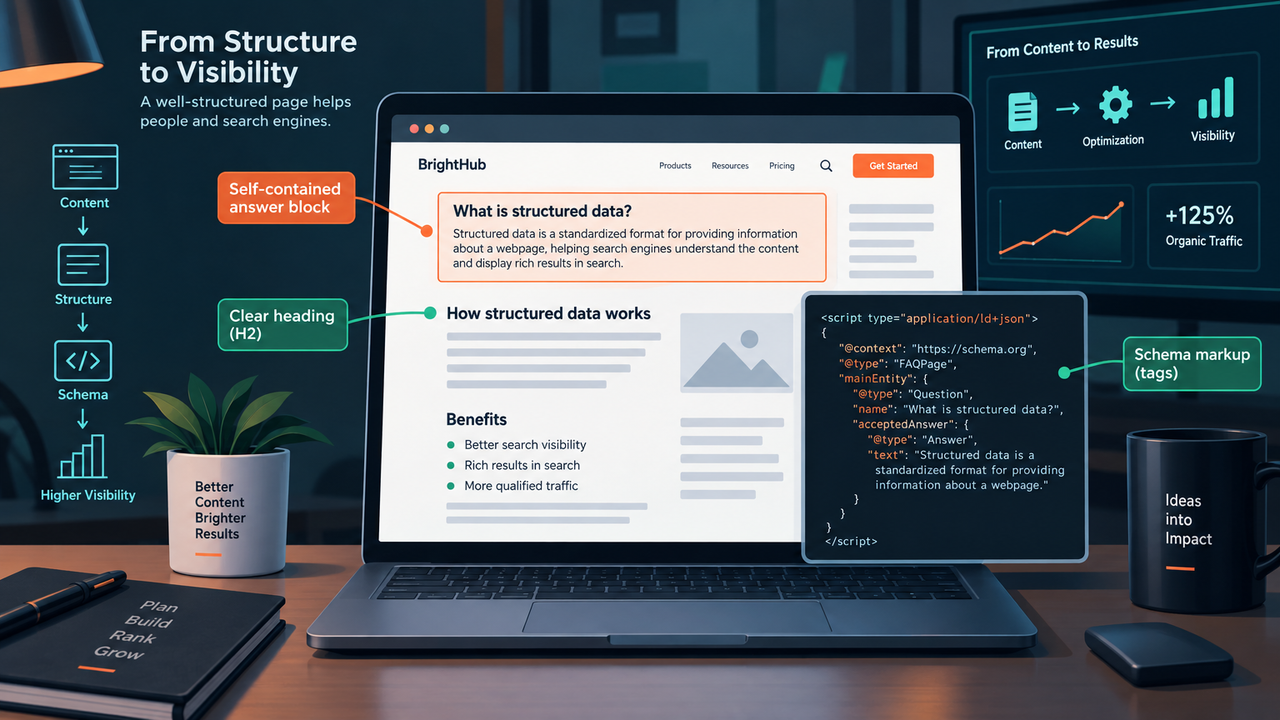
    The Retrieval Funnel: From Sub-Queries to 3-4 Citations

    Perplexity breaks a single question into several sub-queries, runs each one separately, and only carries the strongest passages forward into the final answer, so a page can rank well for one sub-query and still get cut before the answer is assembled (Perplexity’s help center). Ranking first in Google is a starting condition for citation, not a guarantee of it. AI search visibility depends on surviving multiple filtering passes, not a single ranking signal.

    Source Quality Labels: What Perplexity Checks at the Site Level

    Beyond the query-matching stage, Perplexity applies quality evaluation at the site level rather than the page level. Its help documentation describes checking whether a site corrects mistakes, identifies its authors, and separates news reporting from opinion or sponsored content, treating those as trust signals independent of any single page’s wording (Perplexity’s help center).

    Diagram of Perplexity's retrieval pipeline narrowing from broad web results to final cited sources

    What Structural Fixes Actually Get You Cited in AI Answers?

    AI citation engines respond to specific structural signals, and most of them can be verified or fixed in an afternoon. Here’s what actually moves the needle, in order of impact.

    1. Lead with a self-contained answer, not a windup. For a page to be cited, it first has to be retrieved for the query, then selected because it contains a clear passage that directly answers the question rather than diffuse or buried information. Practically, this means the first 40-60 words under any H2 or H3 should stand alone as a complete answer, with no throat-clearing and no “in this section we’ll explore.”
    2. Support that answer with clearly labeled subsections. Place the concise, direct answer near the top of the page, then back it with deeper context organized under clearly labeled headings. Headings act as retrieval anchors: they help the AI’s decomposition step match a sub-query to the right chunk of your page.
    3. Add structured data that names your content type. Structured data types like Article, FAQPage, HowTo, and DefinedTerm give AI systems a machine-readable signal for what kind of information sits on the page, making it easier to extract citation-friendly facts. A DefinedTerm block around a glossary term, for instance, tells the crawler exactly what’s being defined without forcing it to parse surrounding prose.
    Diagram showing structural fixes on a webpage that help AI engines cite it, including a self-contained answer block, clear headings, and schema markup

    Does Content Freshness Really Change Whether You Get Cited?

    Yes, and it works as a moving target rather than a one-time badge. A page optimized once in January and left untouched won’t hold its citation share through the year, because freshness is evaluated relative to what else is available at query time, not as a fixed score attached to your URL.

    A page that was accurate and well-cited six months ago can quietly drop out of the filtered set simply because a competing page was updated more recently and now looks like the more current answer. That’s a relative comparison, not a penalty: nothing about the older page changed, but its position in the ranking did. Treat this as a maintenance cadence rather than a launch task. Revisit your highest-intent pages on a fixed schedule, update figures and examples that have aged, and refresh the publish date only when the content itself actually changed.

    Freshness alone doesn’t guarantee selection, either. Fast loading times and clean indexation are baseline requirements Perplexity’s own documentation names as part of what makes a page eligible for retrieval in the first place (Perplexity’s help center). A recently updated page that loads slowly or sits behind indexation problems can still lose out to an older but technically clean competitor, so content freshness and technical health work best as a paired maintenance task rather than two separate projects.

    ChatGPT vs. Perplexity: Which Citation Signals Matter Most?

    ChatGPT and Perplexity don’t weigh the same signals equally, so treating them as one target wastes effort. Understanding where each engine puts its emphasis lets you prioritize fixes instead of chasing every optimization tactic at once, which is the practical core of answer engine optimization versus generic SEO.

    SignalChatGPTPerplexity
    Primary mechanismRetrieval from underlying web search index, then selection based on passage clarityNumbered citations tied to specific claims, drawn from its own filtered retrieval pipeline
    What matters mostConcise, self-contained answers near the top of the pageDiscrete, attributable facts rather than vague claims
    GatekeeperMust already rank competitively in mainstream web searchAI crawler access to the page, plus site-level trust signals
    • ChatGPT prioritizes passage clarity. For ChatGPT to cite a page, it must first be retrieved for the query, then selected because it contains a clear, self-contained passage that directly answers the question rather than diffuse or buried information. Place concise, direct answers near the top of the page, supported by deeper context in clearly labeled sections underneath.
    • Perplexity prioritizes attributable facts. Because Perplexity ties numbered citations to specific claims rather than to a page as a whole, content built around discrete, checkable statements gets pulled into answers more often than content that makes the same point in one long, unbroken paragraph.

    Key Takeaways: How to Get Cited in ChatGPT and Perplexity

    Everything in this guide reduces to a small number of repeatable actions. None of them guarantee a citation, since no one outside Perplexity or OpenAI knows the exact selection formula, but each one improves your odds based on observed behavior.

    • Audit crawler access before touching content. Check robots.txt and server configs to confirm AI crawlers can actually reach your pages; a page that’s technically blocked from retrieval will never be eligible for citation, regardless of quality. Spyro’s AI crawler robots checker is built for exactly this pre-flight check.
    • Get indexed and rank competitively in mainstream web search. Since both ChatGPT’s browsing feature and Perplexity’s retrieval layer lean on general web indexes, invisibility in traditional search means invisibility in AI answers too.
    • Lead with a direct, self-contained answer. Place the concise response near the top of the page, then support it with structured context underneath using clear headings and lists.
    • Treat freshness as ongoing maintenance, not a one-time fix. Stale pages lose ground to more recently updated competitors even when nothing else about them changes, so revisit high-intent pages on a set schedule.
    • Add structured data deliberately. Article, FAQPage, HowTo, and DefinedTerm markup help AI systems parse content type and extract citation-friendly facts rather than guessing at structure.
    • Fix the boring technical stuff. Slow load times and indexation gaps quietly disqualify pages before content quality ever enters the equation.
    • Build topical authority over time. Repeated, in-depth coverage of a niche makes it more likely that AI systems encounter, and trust, your domain across multiple queries, not just one lucky page.

    FAQ

    How do I get cited by AI search tools like ChatGPT and Perplexity?

    Make sure your page is indexed and competitive in mainstream web search, structure a clear self-contained answer near the top, add FAQ and HowTo schema, and keep the content updated so freshness signals stay strong.

    Is Perplexity AI free to use?

    Yes, Perplexity offers a free tier with limited daily searches, alongside a paid Pro plan that unlocks additional models and higher usage limits.

    How do I appear in ChatGPT’s browsing answers specifically?

    Since ChatGPT’s browsing source pool is shaped largely by the underlying web search index, your page needs strong organic rankings first, plus a concise passage that directly answers the likely query.

    Is Perplexity considered an LLM, or something else?

    Perplexity is an AI answer engine that combines large language models with real-time web retrieval; it is not itself a foundation LLM but a product layered on top of one or more models.

    Does adding schema markup guarantee a citation in AI answers?

    No single tactic guarantees citation, but structured data like FAQPage, HowTo, and Article schema helps AI systems parse and extract citation-ready facts, improving your odds meaningfully.

    Conclusion

    Getting cited in ChatGPT and Perplexity comes down to being retrievable, being readable at the passage level, and staying fresh enough to keep beating stale competitors. Start by auditing crawler access and schema on your highest-intent pages, then track whether citations actually appear. Run a free SEO and GEO audit to see exactly where your site stands before making changes.